
Some boys learned to read their mother’s face before they learned to read a book. They could tell by the sound of a car door closing whether the evening would be safe or something else entirely. They tracked tone, posture, silence, the space between words. And they did it with the seriousness of someone whose survival depended on it, because in a way nobody acknowledged at the time, it did.
The conventional understanding of these men is that they’re emotionally intelligent. They get praised for it. Partners, friends, colleagues all comment on how perceptive they are, how attuned, how easy to talk to. What most people miss is that this perceptiveness didn’t develop as a gift. It developed as a defence system. And in adulthood, that system never got the memo that the emergency ended.
The distinction matters. Because a man who reads a room out of curiosity and a man who reads a room out of conditioned fear are doing the same thing with radically different nervous systems. One is engaged. The other is surviving.
The job nobody applied for
Emotional parentification is the clinical term. It describes what happens when a child becomes the emotional caregiver for an adult, absorbing their anxiety, regulating their mood, offering comfort they haven’t yet developed the capacity to give. As a Psychology Today article on emotional parentification has outlined, parents who emotionally parentify a child usually do so in private, away from other adults who could intervene or take the child’s place. The parent often isn’t hiding it deliberately. They’re simply turning to the only person available.
For boys, this often takes a specific shape. The mother confides about money. About the marriage. About loneliness. The boy listens because he loves her, and because nobody told him there was another option. He begins curating his own emotions to avoid adding to her burden. He stops bringing home his problems. He becomes the easy one, the child who doesn’t cause problems.
The adults around him describe him as mature. The phrase “wise beyond their years” is one of the clearest markers of parentification. It sounds like a compliment. It’s a symptom.
What the boy actually learned is that his feelings are secondary. That his value comes from his ability to stabilise someone else. That the room’s emotional temperature is his responsibility. He didn’t choose this belief. It was installed in him before he had the language to question it.
How threat detection becomes identity
Thema Bryant, a psychologist who has researched trauma and recovery, has described hypervigilance as the state of always being guarded, always bracing yourself for things to go wrong, always preparing yourself for the worst. She points to three categories of disruption that follow complex trauma: disrupted identity, difficulty regulating emotions, and difficulty maintaining or creating relationships.
All three land hard on this specific group of men.
The identity disruption is subtle. These men don’t usually describe themselves as traumatised. They describe themselves as good at people, as naturally perceptive. They’ve built careers, friendships, even entire personalities around the vigilance that started in their mother’s kitchen. They became the colleague who notices when someone’s off. The friend everyone calls at 2am. The partner who knows you’re upset before you do.
And they’re exhausted by it. Because reading a room in seconds and being unable to stop reading a room are the same behaviour with very different emotional costs.
Bryant also notes that people with complex trauma histories can go from level one to level ten emotionally, feeling overwhelmed by what seems like a small incident, because they’re already on edge from everything they’ve been carrying. The men I’m describing rarely explode. They over-correct in the other direction. They go flat. They withdraw. They become the person I wrote about recently, the one who goes silent during conflict not to punish but to prevent becoming someone they swore they’d never be.
The body keeps the score, the body also keeps the scan running
The landmark Adverse Childhood Experiences (ACE) Study tracked over 17,000 adults and found that those with four or more categories of adverse childhood experiences had four to twelve times the increased risk of alcoholism, drug abuse, depression, and suicide attempts, and two to four times the increased risk of heart disease, cancer, and stroke compared to those with no ACEs. The study established something that should have changed every conversation about adult health: childhood emotional environments don’t stay in childhood. They become the architecture of the adult body.
Parentified boys carry a specific version of this. Their ACE isn’t always dramatic. Nobody hit them. The house might have looked fine from outside. But the emotional labour was relentless, and it started before their nervous system had finished developing. By adulthood, the hypervigilance isn’t a choice. It’s neurological. The scanning is automatic.
You see it in specific behaviours. They sit facing the door in restaurants. They notice when someone’s tone shifts mid-sentence. They can tell you exactly who in the room is uncomfortable and why. They process social information at a speed that looks like empathy but functions more like radar. And turning it off feels roughly as possible as deciding to stop hearing.
I spent twelve years in management consulting watching men exactly like this operate. They were disproportionately good at client management. They could walk into a boardroom and map the politics in minutes. Senior partners loved them. But they burned out faster and more quietly than anyone else, because they were doing two jobs: the one on their contract and the invisible one their childhood installed in them.
Why the standard “set boundaries” advice fails
The popular guidance for these men tends to be some version of: learn to set boundaries, stop people-pleasing, prioritise your own needs. It’s not wrong, exactly. It’s just incomplete in a way that makes it useless.
Telling a parentified man to set boundaries is like telling someone to stop flinching. The flinch isn’t a decision. The boundary violation isn’t happening because he doesn’t know better. It’s happening because his entire reward system was wired around meeting other people’s needs. The dopamine, the sense of worth, the feeling of safety: they’re all attached to being useful.
When he tries to set a boundary, he doesn’t feel empowered. He feels selfish. He feels dangerous. Because somewhere in his nine-year-old brain, the equation got written: if I stop attending to her pain, something terrible will happen. That equation doesn’t respond to a self-help book’s suggestion to put yourself first.
The injustice of invisible childhood trauma is that the person who experienced it often can’t name it. As Psychology Today has explored, when we lack the words to name or explain an experience, our ability to understand it shrinks. These men frequently arrive in therapy in their thirties or forties, describing vague unhappiness, burnout, or relationship patterns they can’t explain, and discovering for the first time that what happened to them has a name.
Running a solo business after leaving consulting forced me to see this dynamic in myself. Every weakness I’d managed to hide behind a team suddenly had nowhere to go. The procrastination, the people-pleasing, the avoidance of difficult conversations. Therapy helped more than I expected, partly because someone finally asked me questions instead of the other way around.
The listening trap
There’s a downstream effect of parentification that deserves its own attention: the specific loneliness that only hits people who are very good at listening. Everyone trusts them with heavy things. Everyone seeks them out. And nobody thinks to ask how they’re doing, because the role was assigned so early it became invisible.
For parentified men, this dynamic is especially corrosive because masculinity already discourages vulnerability. They’ve been trained twice: once by their family system and once by the culture. The family system taught them that their value is in absorbing other people’s pain. The culture taught them that admitting their own makes them weak.
So they become the person everyone leans on and nobody worries about. They become exceptionally competent at intimacy in one direction. They can hold space for you all night. Ask them what they’re feeling, and you’ll get a well-constructed answer that reveals almost nothing. They learned to intellectualise emotions because it was safer than experiencing them directly.
I eventually had to see that I was sometimes using big conversations about ideas to avoid smaller conversations about feelings. It’s a smooth deflection, almost invisible, and it works especially well if you’re articulate. You can talk for an hour about attachment theory and never actually attach.
What recovery actually looks like
Bryant’s work points toward something important: that interpersonal trauma can have devastating effects, but healthy relationships are a protective factor. The damage was done in relationship. The repair also happens in relationship. Not by finding someone to take care of you the way you took care of your mother, but by being in relationships where the care moves in both directions without anyone keeping score.
Recovery for parentified men doesn’t look like a dramatic breakthrough. It looks like sitting in a room without scanning it. It looks like noticing that your partner is upset and choosing not to fix it immediately. Tolerating the discomfort of someone else’s pain without making it your problem to solve.
It looks like being asked “how are you?” and answering honestly instead of deflecting.
Research from the University of Illinois at Urbana-Champaign has shown that how caregivers respond to children’s negative emotions directly shapes how those children learn to regulate themselves. The study focused on emotional overeating in toddlers, but the underlying principle is broader: children internalise their caregivers’ relationship to difficult emotions. If the caregiver punishes or dismisses the child’s distress, the child learns that their feelings are problems to be managed rather than experiences to be had.
Parentified boys got a particular version of this lesson. Their distress wasn’t punished, exactly. It was simply crowded out by someone else’s bigger need. The implicit message wasn’t that their feelings were wrong, but that their feelings could wait. And they waited. For decades, sometimes.
The uncomfortable truth about what this looks like in relationships
Partners of parentified men often describe the same confusion. He’s incredibly attentive. He notices everything. He seems to understand you on a level nobody else does. And then, at some point, you realise he’s been performing closeness without actually being close. He’s doing intimacy the way he learned to: by tracking your emotional state and adjusting his accordingly. It looks like love. It is love, partly. But it’s also surveillance.
As I wrote in my recent piece on calm adults, the people who become the calmest adults are almost never the ones who had calm childhoods. They learned to regulate the room before they learned to regulate themselves. In romantic relationships, this creates a strange paradox: the man who can de-escalate any conflict often has no idea what he actually feels about the thing being argued about. He went straight to management. His own position never even registered.
This is where partners start to express confusion about who their partner really is. It’s not that he’s hiding. He genuinely doesn’t know either. The self that would have formed in a normal developmental environment got redirected into service of someone else’s emotional needs before it had a chance to solidify.
Psychologist Mark Travers has written about the mother wound, the long-term psychological effects of a toxic or enmeshed relationship with a primary caregiver. Among the signs he identifies: chronic people-pleasing, difficulty trusting your own perceptions, and an outsized sense of responsibility for other people’s emotional states. These aren’t personality traits. They’re adaptations.
What it actually takes to stop scanning
The work, for these men, is not about becoming less perceptive. You can’t un-learn how to read a room. And honestly, the ability itself isn’t the problem. The problem is the compulsive quality of it, the way it runs in the background like software you can’t close.
Bryant describes recovery from complex trauma as involving a return to homecoming: being present in your own body and your own experience, rather than perpetually oriented toward someone else’s. For parentified men, homecoming means learning to sit with your own discomfort instead of immediately scanning for someone else’s.
It means noticing the impulse to fix and choosing to stay still.
It means accepting that the room is not your responsibility.
That last one is the hardest. Because for these men, the room was their responsibility for their entire childhood. Letting go of that vigilance doesn’t feel like freedom. It feels like negligence. Like something bad will happen because they weren’t watching.
Nothing bad happens. But the feeling takes a long time to catch up.
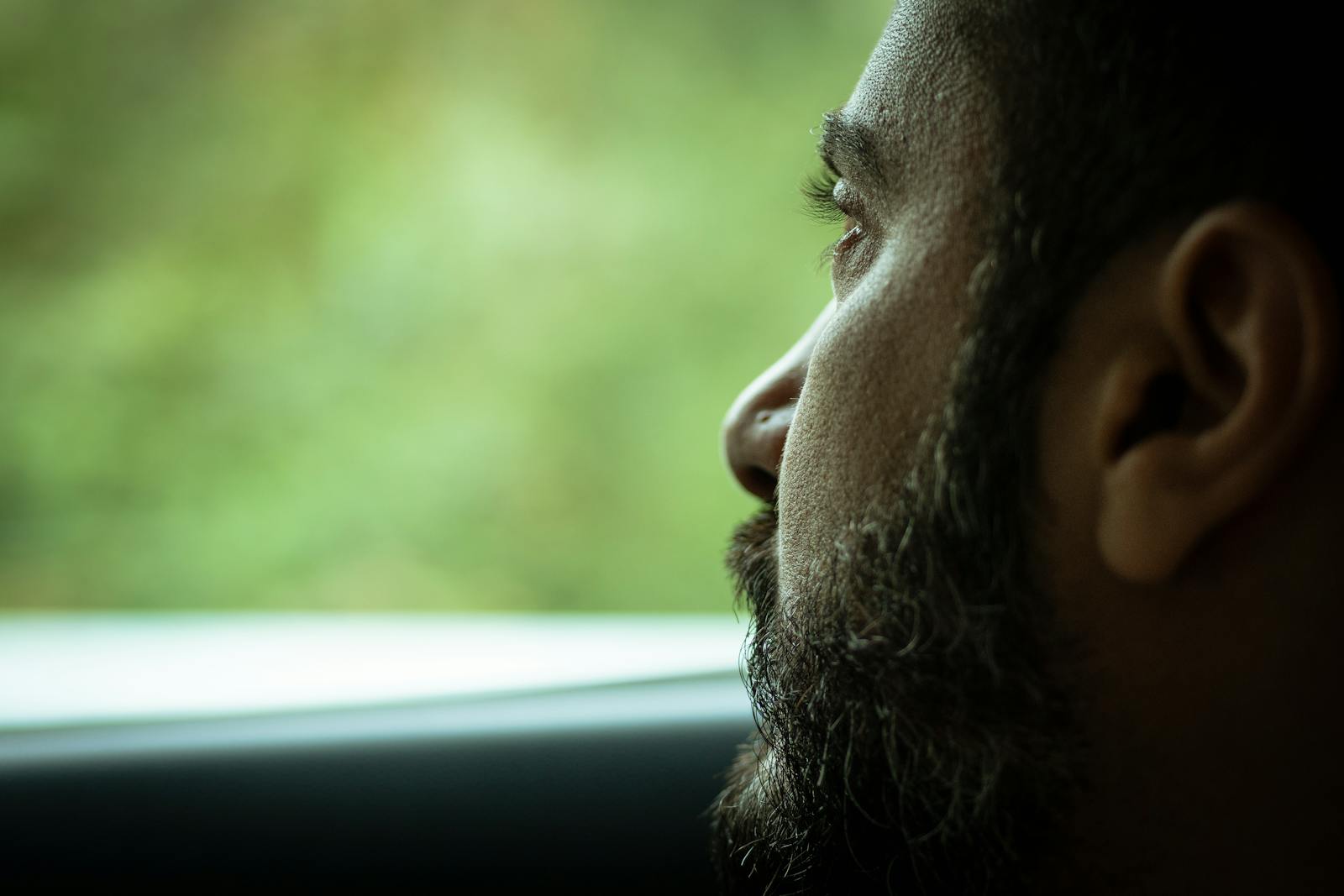
The boys who became their mother’s therapist at nine or ten didn’t do it because they were gifted. They did it because the alternative felt unbearable. And the adults they became carry that same calculus: I will manage your emotions so that mine don’t have to exist in this space. It’s a strategy that works beautifully in every room except the one they actually want to be in.
Recovery is learning that the room can hold both. Their feelings and someone else’s. At the same time. Without the whole thing collapsing.
That’s the part nobody told them when they were twelve. Rooms are stronger than they think.
Feature image by Demeter Attila on Pexels