
No Result
View All Result
SUBMIT YOUR ARTICLES
  • Login
Friday, June 5, 2026
TheAdviserMagazine.com
  • Home
  • Financial Planning
    • Financial Planning
    • Personal Finance
  • Market Research
    • Business
    • Investing
    • Money
    • Economy
    • Markets
    • Stocks
    • Trading
  • 401k Plans
  • College
  • IRS & Taxes
  • Estate Plans
  • Social Security
  • Medicare
  • Legal
  • Home
  • Financial Planning
    • Financial Planning
    • Personal Finance
  • Market Research
    • Business
    • Investing
    • Money
    • Economy
    • Markets
    • Stocks
    • Trading
  • 401k Plans
  • College
  • IRS & Taxes
  • Estate Plans
  • Social Security
  • Medicare
  • Legal
No Result
View All Result
TheAdviserMagazine.com
No Result
View All Result
Home Market Research Startups

People who keep the thermostat colder than everyone else prefers often aren’t just running hot — many grew up in houses where the heating bill was a monthly argument and warmth felt expensive

by TheAdviserMagazine
2 days ago
in Startups
Reading Time: 6 mins read
A A
People who keep the thermostat colder than everyone else prefers often aren’t just running hot — many grew up in houses where the heating bill was a monthly argument and warmth felt expensive
Share on FacebookShare on TwitterShare on LInkedIn


It is 11.47pm and someone in a quiet kitchen is doing the small nightly thing they always do. A glance at the thermostat. A pause. A finger that hovers, considers, and then drops the temperature one degree before bed. The house is already cool. Nobody asked them to. They couldn’t tell you exactly why they did it, except that not doing it would feel wrong in a way they don’t have language for.

This is a person, not a household. Their partner is asleep upstairs under two duvets. The bill is paid. The job is secure. None of the conditions that would justify the gesture are present, and the gesture happens anyway, the way gestures do when they’ve been rehearsed for thirty years.

Most people assume thermostat preferences are biological. Some people run hot, some run cold, and that’s the end of the story. The lived experience tells a more complicated version. Plenty of adults who keep their homes at 17 or 18 degrees are not particularly warm-blooded. They are, instead, replaying a household rule about what comfort costs.

The argument that lived in the hallway

If you grew up in a house where the heating bill arrived and the mood shifted, you already know the texture of this. Someone would open the envelope. Someone else would sigh. A sweater would be produced. A child would be told to put socks on instead of touching the dial.

The thermostat became a moral object.

Adjusting it wasn’t a comfort decision, it was a financial declaration, and children learned quickly that warmth had a price tag attached to it in a way that other forms of comfort didn’t. What’s interesting is how cleanly that lesson survives into adulthood. The same person who can comfortably spend forty euros on a dinner will refuse to push the thermostat past 18 because something in their nervous system still hears a parent doing the math.

Why this isn’t really about temperature

Embodied cognition is the idea that the body and the mind aren’t running separate operations. The body carries the history. Sensations like cold, hunger and tension aren’t just inputs the brain processes neutrally; they’re tangled with the meanings those sensations acquired the first time they showed up.

So when an adult feels a flicker of guilt at the thought of nudging the dial up two degrees, that guilt isn’t irrational. It’s an old association doing exactly what associations do.

The concept of embodied perception suggests sensory experience is never a passive reception of stimuli. The brain is constantly integrating what the body feels with what the body has learned to feel about feeling that way. Cold, for someone who grew up financially anxious, isn’t only cold. It’s also: this is what responsible feels like.

The household economics that shaped a generation

This isn’t a niche pattern. A University of Delaware study published in Frontiers in Psychology in 2026 examined data from nearly 6,000 children and found that poorer parental mental health was significantly linked to more disadvantaged childhood socioeconomic conditions at home and in school.

The lead researchers, doctoral student Jingwen Zhou and assistant professor Stephanie Del Tufo, argue that childhood socioeconomic status doesn’t just shape opportunities. It shapes the texture of daily life. Which rooms you sit in. What you’re allowed to ask for. How much heat the house holds in February. Del Tufo notes that children from socioeconomically disadvantaged backgrounds tend to have access to fewer resources, full stop. That scarcity isn’t abstract. It shows up in the thermostat, the grocery list, the brand of detergent and the temperature at which the bath is run. And the lesson it leaves isn’t really about money. It’s about which sensations a person is permitted to want, and which ones they learn to override before anyone notices they wanted them. By the time the child grows up and starts paying their own bills, the override is automatic. They don’t feel deprived. They feel like themselves.

Photo by Brett Sayles on Pexels

The bill as a recurring family event

In some households the heating bill was simply an expense. In others it was an event. The difference matters.

When a bill becomes an event, the child watching it learns that certain comforts are surveilled. They learn which adult gets quiet and which adult gets loud. They learn that warmth, specifically, is the kind of luxury that adults disagree about in front of children.

This is the same pattern Silicon Canals has covered before, in the observation that the person who keeps the thermostat at the same temperature their parents did may still be living inside a household rule that ended thirty years ago. The rule outlived the house. It usually does.

How the body keeps the receipt

Stress and perception are not independent. Stressful contexts literally change perceptual and cognitive processes. The body recalibrates what counts as safe, what counts as wasteful, what counts as too much.

A child who learns that warmth is too much grows into an adult whose threshold for too much has been set at a different temperature than everyone else’s. They don’t experience their cold house as cold. They experience it as correct.

Partners often discover this the hard way. One person is freezing. The other person genuinely cannot understand why a sweater isn’t the obvious answer. Neither is wrong about their body. They’re disagreeing about what the dial means.

The long shadow of childhood scarcity

Childhood economic conditions don’t just affect psychology. They affect physiology. A multicenter study coordinated by the Research Centre of Applied and Preventive Cardiovascular Medicine at the University of Turku found that low socioeconomic status in childhood is associated with measurable differences in cardiac structure and function in adult life.

The body, in other words, remembers the conditions it grew up in. Not metaphorically. Structurally.

If that’s true of the heart, it’s not absurd to think it’s also true of the small daily reflex of reaching for a thermostat and pulling the hand back.

The frugality that isn’t frugality

Friends and family will sometimes describe the cold-house person as cheap. The cold-house person will sometimes describe themselves as environmentally conscious, or as just naturally warm-blooded, or as someone who sleeps better in the cold.

Some of those things may be true alongside the inherited pattern, but the environmental framing in particular tends to be the most generous account a person can give of a behaviour whose origin they’ve forgotten. The tell is the emotional charge. Genuinely temperature-tolerant people don’t feel anything in particular when someone else turns the heat up. People who absorbed the household argument about the bill feel a small flare of something. Anxiety. Mild resentment. The urge to mention how much energy costs right now. That flare is the giveaway. Preferences don’t usually need defending.
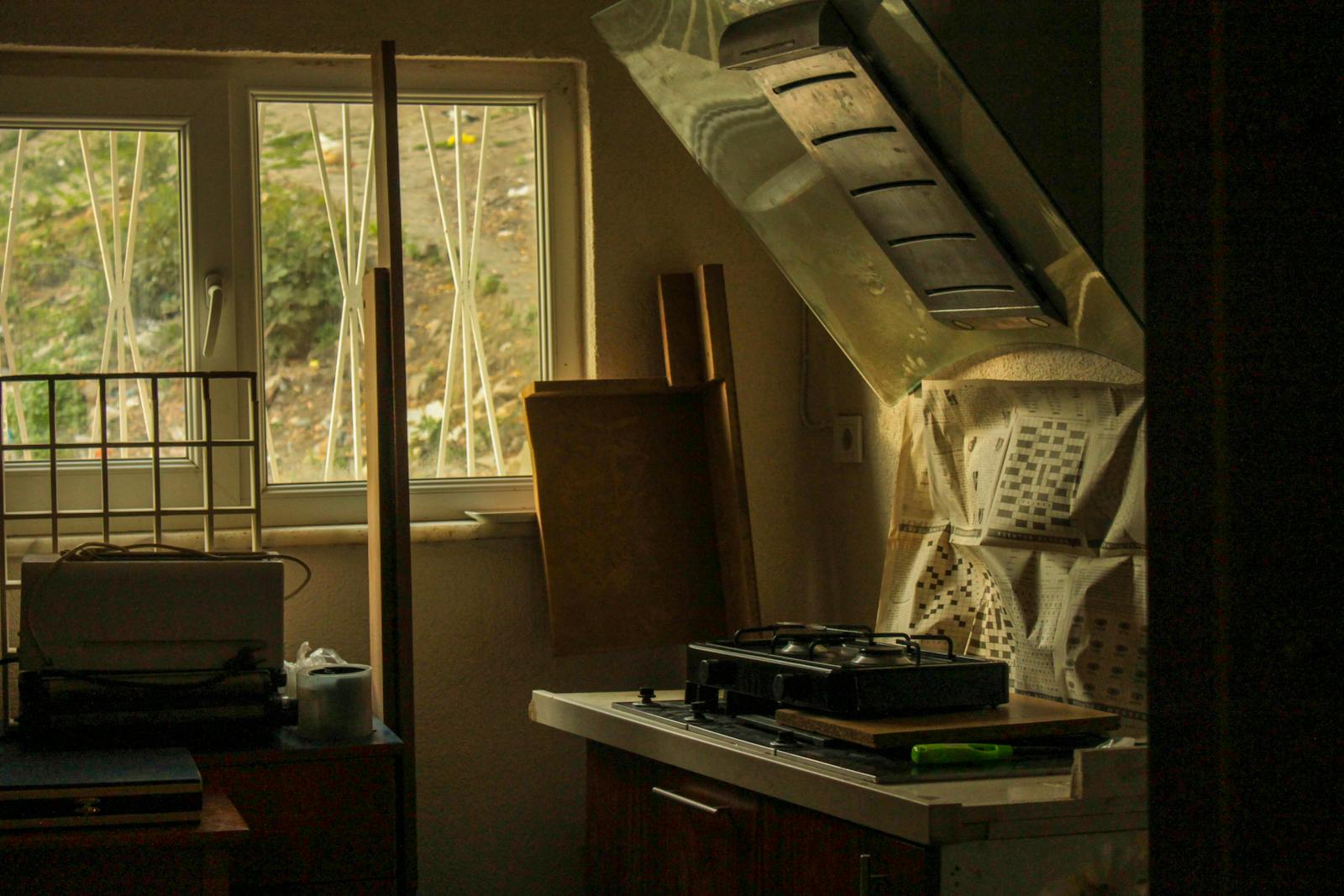
cold kitchen morning
Photo by Gülru Sude on Pexels

What the preference is actually protecting

Keeping the thermostat low is, for some people, a way of staying inside a version of themselves that knows how to be responsible. It’s a daily small act of vigilance. As long as the dial stays at 18, the budget is fine, the parents would approve, the worst-case scenario is held off for another month.

This is the same logic that drives a lot of adult behaviours that look like preferences but are actually disguised reassurances. The observation that adults who insist they don’t have a preference often grew up in homes where having one drew attention they couldn’t afford is the same shape of pattern. The behaviour looks like personality. It’s actually accommodation.

The conversation worth having

None of this means a person needs to start running their house at 22 degrees to prove they’ve healed. The point isn’t the temperature. The point is whether the temperature is being chosen freely or whether it’s being defended against an argument from 1994.

One useful question: would you keep the house this cold if money were not a consideration at all? If the answer is yes, the preference is genuine. If the answer involves a small flinch and a sentence about how it’s not really about the money, the preference is carrying more than it appears to be carrying.

Another useful question: how do you feel when a guest visibly shivers in your living room? Embarrassed? Defensive? Mildly proud? Each of those answers points somewhere different.

The thermostat as a small mirror

People rarely talk about heating habits as emotional inheritance, which is part of why they persist so quietly. They look practical. They sound like good sense. They cost nothing to maintain and they reward the people who keep them with a feeling of doing it right.

The cost shows up elsewhere. In a partner who feels mildly unwelcome in the house. In a child who learns the same lesson their parent learned, one generation later, about how warmth is the kind of thing you have to justify. In the small, ambient sense that comfort is suspicious.

What changes when you notice

Naming the pattern does something, but probably less than the self-help version of this sentence would like to promise. The hand still reaches for the dial. The flinch still arrives on schedule. What changes is only that you can see it happening, which is not the same thing as being free of it.

Some people, after years of noticing, do eventually let the house get warmer. Many don’t. The argument from 1994 turns out to be a stubborn houseguest, and recognising its voice in the room is not the same as asking it to leave.

The dial is just a dial. Whose hand is really on it is a question that tends to outlast the answer.




Source link

Tags: arentargumentbillcolderExpensivefeltGrewHeatingHOTHousesMonthlypeopleprefersRunningThermostatWarmth
ShareTweetShare
Previous Post

The California Count Goes On

Next Post

The Ultimate Guide to Buying Off-Market Properties (As a Complete Beginner)

Related Posts

edit post
How Startups Can Simplify IT Management While Scaling Their Business in 2026

How Startups Can Simplify IT Management While Scaling Their Business in 2026

by TheAdviserMagazine
June 4, 2026
0

When you’re growing fast, IT management is the last thing on your mind until something breaks. One week, you are...

edit post
Many people in their sixties realise on a quiet Sunday that they have been calling themselves a private person for thirty years when the more honest word is unpracticed at being asked anything real

Many people in their sixties realise on a quiet Sunday that they have been calling themselves a private person for thirty years when the more honest word is unpracticed at being asked anything real

by TheAdviserMagazine
June 4, 2026
0

For thirty years, calling oneself a private person sounds like a virtue. It sounds like depth, like discretion, like a...

edit post
A single aspen colony in Utah called Pando covers 106 acres, weighs 6,000 tons, and is genetically one organism connected by a root system that may have been alive for 14,000 years and is now slowly being eaten to death by mule deer

A single aspen colony in Utah called Pando covers 106 acres, weighs 6,000 tons, and is genetically one organism connected by a root system that may have been alive for 14,000 years and is now slowly being eaten to death by mule deer

by TheAdviserMagazine
June 3, 2026
0

Crouch down in the understory at Pando and the story is in the soil. Aspen suckers, finger-thin and pale, push...

edit post
Bonsai Social Joins York IE Labs to Redefine Professional Networking Through AI-Powered Relationship Intelligence.

Bonsai Social Joins York IE Labs to Redefine Professional Networking Through AI-Powered Relationship Intelligence.

by TheAdviserMagazine
June 3, 2026
0

Manchester, NH — June 4, 2026 — York IE, an investment and operating firm, today announced that Bonsai Social has...

edit post
Why Startups Should Test Their Apps In “Bad Network Conditions” Before Launch Day

Why Startups Should Test Their Apps In “Bad Network Conditions” Before Launch Day

by TheAdviserMagazine
June 3, 2026
0

Your app launches to plenty of excitement. Then, before the shine has even worn off, the complaints start rolling in....

edit post
The first U.S. insider trading case tied to a prediction market isn’t really about a Google engineer’s .2M — it’s about what blockchain pseudonymity actually does when prosecutors come knocking

The first U.S. insider trading case tied to a prediction market isn’t really about a Google engineer’s $1.2M — it’s about what blockchain pseudonymity actually does when prosecutors come knocking

by TheAdviserMagazine
June 3, 2026
0

Federal prosecutors in Manhattan have charged Michele Spagnuolo, a 12-year Google software engineer, with insider trading after he allegedly turned...

Next Post
edit post
The Ultimate Guide to Buying Off-Market Properties (As a Complete Beginner)

The Ultimate Guide to Buying Off-Market Properties (As a Complete Beginner)

edit post
The Little-Known Loan That Helped Me Turn K Down into 0K in Equity

The Little-Known Loan That Helped Me Turn $9K Down into $150K in Equity

  • Trending
  • Comments
  • Latest
edit post
Supreme Court Delivers More Bad Redistricting News for Democrats

Supreme Court Delivers More Bad Redistricting News for Democrats

May 19, 2026
edit post
From Maine to Michigan, Democrats Are Making Communism Great Again

From Maine to Michigan, Democrats Are Making Communism Great Again

May 16, 2026
edit post
Minnesota Wealth Tax | Intangible Personal Property Tax

Minnesota Wealth Tax | Intangible Personal Property Tax

May 6, 2026
edit post
It’s Time To Talk About Massie

It’s Time To Talk About Massie

May 23, 2026
edit post
Red Snapper Used as Cudgel by Fed Judge

Red Snapper Used as Cudgel by Fed Judge

May 31, 2026
edit post
10 Cheapest High Dividend Stocks With P/E Ratios Under 10

10 Cheapest High Dividend Stocks With P/E Ratios Under 10

April 13, 2026
edit post
Planet forecasts FY2027 revenue of 5M-1M as it targets Rule of 40 (NYSE:PL)

Planet forecasts FY2027 revenue of $425M-$441M as it targets Rule of 40 (NYSE:PL)

0
edit post
The May jobs report will be released Friday. Here’s what to expect

The May jobs report will be released Friday. Here’s what to expect

0
edit post
Walmart Furniture Deals: Better Homes & Gardens Drum End Table only  shipped (Reg. 9), plus more!

Walmart Furniture Deals: Better Homes & Gardens Drum End Table only $39 shipped (Reg. $119), plus more!

0
edit post
Bitcoin Price Back At ,000 Despite 1.2 Million BTC Absorption

Bitcoin Price Back At $63,000 Despite 1.2 Million BTC Absorption

0
edit post
People who keep the thermostat colder than everyone else prefers often aren’t just running hot — many grew up in houses where the heating bill was a monthly argument and warmth felt expensive

People who keep the thermostat colder than everyone else prefers often aren’t just running hot — many grew up in houses where the heating bill was a monthly argument and warmth felt expensive

0
edit post
Americans Lost .5 Billion to Impersonation Scams Last Year—What to Say When a Caller Claims to Be From Your Bank

Americans Lost $3.5 Billion to Impersonation Scams Last Year—What to Say When a Caller Claims to Be From Your Bank

0
edit post
Planet forecasts FY2027 revenue of 5M-1M as it targets Rule of 40 (NYSE:PL)

Planet forecasts FY2027 revenue of $425M-$441M as it targets Rule of 40 (NYSE:PL)

June 5, 2026
edit post
Bitcoin Price Back At ,000 Despite 1.2 Million BTC Absorption

Bitcoin Price Back At $63,000 Despite 1.2 Million BTC Absorption

June 5, 2026
edit post
Peter Brandt Warns Bitcoin May Drop Further as October Becomes Key Window

Peter Brandt Warns Bitcoin May Drop Further as October Becomes Key Window

June 4, 2026
edit post
India’s long-term growth story intact despite high valuations: Citigroup CEO Jane Fraser

India’s long-term growth story intact despite high valuations: Citigroup CEO Jane Fraser

June 4, 2026
edit post
The Property-Tax Deferral Quietly Offered in Oregon and Minnesota

The Property-Tax Deferral Quietly Offered in Oregon and Minnesota

June 4, 2026
edit post
Zumiez anticipates Q2 sales of 0M-5M amid consumer pressure, while projecting FY2026 operating margin growth of 50-100 bps (NASDAQ:ZUMZ)

Zumiez anticipates Q2 sales of $210M-$215M amid consumer pressure, while projecting FY2026 operating margin growth of 50-100 bps (NASDAQ:ZUMZ)

June 4, 2026
The Adviser Magazine

The first and only national digital and print magazine that connects individuals, families, and businesses to Fee-Only financial advisers, accountants, attorneys and college guidance counselors.

CATEGORIES

  • 401k Plans
  • Business
  • College
  • Cryptocurrency
  • Economy
  • Estate Plans
  • Financial Planning
  • Investing
  • IRS & Taxes
  • Legal
  • Market Analysis
  • Markets
  • Medicare
  • Money
  • Personal Finance
  • Social Security
  • Startups
  • Stock Market
  • Trading

LATEST UPDATES

  • Planet forecasts FY2027 revenue of $425M-$441M as it targets Rule of 40 (NYSE:PL)
  • Bitcoin Price Back At $63,000 Despite 1.2 Million BTC Absorption
  • Peter Brandt Warns Bitcoin May Drop Further as October Becomes Key Window
  • Our Great Privacy Policy
  • Terms of Use, Legal Notices & Disclosures
  • Contact us
  • About Us

© Copyright 2024 All Rights Reserved
See articles for original source and related links to external sites.

Welcome Back!

Login to your account below

Forgotten Password?

Retrieve your password

Please enter your username or email address to reset your password.

Log In
No Result
View All Result
  • Home
  • Financial Planning
    • Financial Planning
    • Personal Finance
  • Market Research
    • Business
    • Investing
    • Money
    • Economy
    • Markets
    • Stocks
    • Trading
  • 401k Plans
  • College
  • IRS & Taxes
  • Estate Plans
  • Social Security
  • Medicare
  • Legal

© Copyright 2024 All Rights Reserved
See articles for original source and related links to external sites.