No Result
View All Result
SUBMIT YOUR ARTICLES
  • Login
Monday, April 20, 2026
TheAdviserMagazine.com
  • Home
  • Financial Planning
    • Financial Planning
    • Personal Finance
  • Market Research
    • Business
    • Investing
    • Money
    • Economy
    • Markets
    • Stocks
    • Trading
  • 401k Plans
  • College
  • IRS & Taxes
  • Estate Plans
  • Social Security
  • Medicare
  • Legal
  • Home
  • Financial Planning
    • Financial Planning
    • Personal Finance
  • Market Research
    • Business
    • Investing
    • Money
    • Economy
    • Markets
    • Stocks
    • Trading
  • 401k Plans
  • College
  • IRS & Taxes
  • Estate Plans
  • Social Security
  • Medicare
  • Legal
No Result
View All Result
TheAdviserMagazine.com
No Result
View All Result
Home Market Research Economy

Don’t Reason from a Quantity Change, Either

by TheAdviserMagazine
2 months ago
in Economy
Reading Time: 4 mins read
A A
Don’t Reason from a Quantity Change, Either
Share on FacebookShare on TwitterShare on LInkedIn


Over winter break, I was back in Massachusetts visiting family for the holidays. The conversation turned toward the difference in cost of living between my home state (Massachusetts) and my adopted state (Louisiana). 

The difference is quite stark. According to the World Population Review’s Cost of Living Index, the overall cost of living in Massachusetts is roughly 1.5x greater than in Louisiana. The difference in housing costs is even greater, with housing in Massachusetts about 2.3x more expensive than in Louisiana. To provide a concrete example of what this looks like, I bought my 1,200 sq ft, 2 bed 1.5 bath condo for $142,000 in August. A similar condo in Worcester, Massachusetts sold for just under $400,000 this past fall. The cost of living in Massachusetts is so high they have a net outflow of about 30,000 residents leaving for other states.

I am a major proponent of free markets and YIMBY (Yes In My Back Yard, a movement to increase housing availability/reduce building restrictions). My position is that Massachusetts should “build, baby, build.” My aunt objected, pointing out that there is a ton of building going on in Massachusetts. And she is right; some 90,000 units are under construction in the state. My response was “It’s still not enough housing.” 

In that response, I made an Econ 101 error: I was reasoning from a quantity change. Reasoning from a quantity change is the companion problem to a problem my former co-blogger Scott Sumner often writes about, reasoning from a price change.

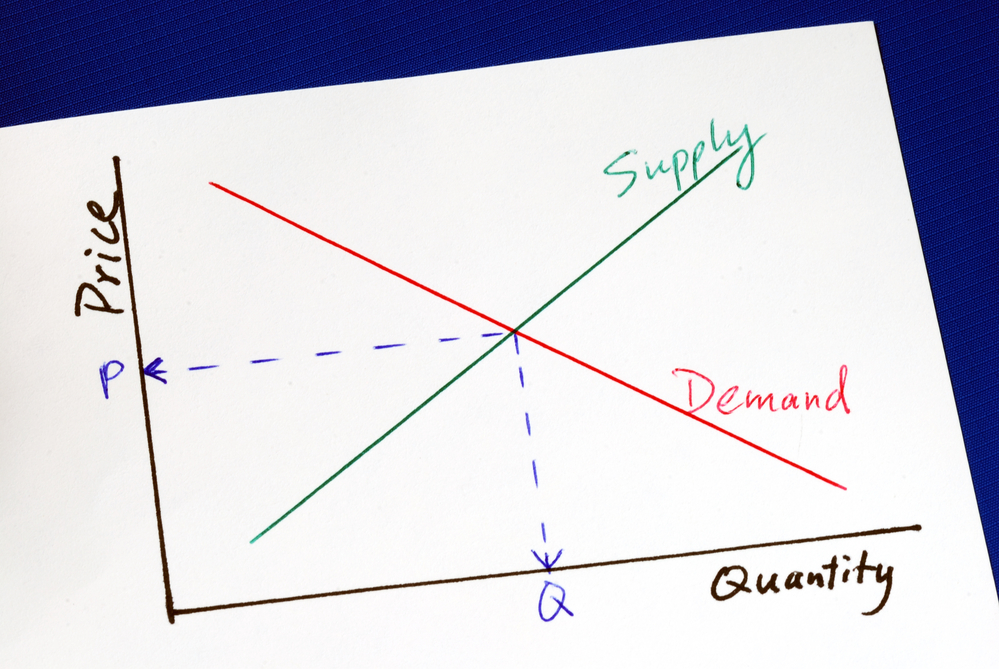
In reasoning from a price change, one makes a determination about the direction of quantity given a change in price. For example, guessing that the quantity demanded in the market will fall because prices are rising. Reasoning from a price change is mistaken because one needs to understand why prices rose in order to make a determination about what will happen to the equilibrium quantity. 

Without understanding the why, one cannot make a reasonable determination about the what. Prices can rise for two reasons: an increase in demand or a decrease in supply. Depending on which event happened, the effect on quantity will differ. If prices rose because of a decrease in supply, then the market quantity will fall because each supplier will now be willing to sell fewer units at any given price. However, if prices rose because of an increase in demand, then the market quantity will increase because buyers as a group are willing to buy more at any given price. 

The same problem applies when reasoning from a quantity change. Just as with reasoning from a price change, in which a change in price does not tell us what a change in quantity to expect would be, a change in quantity does not tell us what the change in price will be.

Changes in quantity also come about from shifts in supply and demand. If demand falls, the quantity exchanged in the market falls, too, because the price is lower. People are willing to buy fewer units at any given price, so producers cut production to lower marginal costs and protect profits. If supply falls, prices rise as it becomes more costly for firms to produce and production falls because it is more costly to produce the marginal unit. 

In the Massachusetts example, there are two explanations for the change in the quantity of housing (that is, all the building): an increase in demand or an increase in supply. 

If housing demand in Massachusetts is increasing, then the price homebuyers are willing to pay for housing is rising, too. Suppliers might be building more just to reach a quantity supplied that matches those rising prices on the shifted demand curve. They see that wannabe homeowners in Massachusetts are willing and able to pay more for housing and are simply providing at those desired prices. 

In contrast, if new homes are being built because supply is increasing, then prices will fall as more homes are constructed. Builders will lower the prices they charge for homes in order to lure buyers to their homes. (Which factors are driving the Massachusetts housing market is not something I am going to speculate on as it is unrelated to this post).

It is possible to temporarily reduce prices by simply increasing the quantity supplied. If quantity supplied exceeds quantity demanded, then the market has a surplus. In that case, firms (and sellers) will lower prices as they look to move the unsold inventory. But the resulting decline in housing prices would only continue until the market reaches equilibrium. The equilibrium price still won’t fall as it would if supply, and not only the quantity supplied, were increasing. 

And so, what I said to my aunt was incorrect. I wish I had said: “If we want to make housing affordable, we need to reduce the costs of building homes in Massachusetts to increase the number of homes that will be supplied if all marketable homes are built. Simply building more won’t make housing more affordable if the demand for housing is rising along with the quantity supplied. One must look at barriers to affordable housing, like the permitting process, zoning, and other construction regulations. Making it less costly to build [that is, increasing supply] is the only sustainable way to reduce housing costs.”



Source link

Tags: ChangeDontQuantityReason
ShareTweetShare
Previous Post

Above or below 6%? Both. Here’s why.

Next Post

No, Governments Don’t Give Money Value

Related Posts

edit post
From Taxation To Confiscation | Armstrong Economics

From Taxation To Confiscation | Armstrong Economics

by TheAdviserMagazine
April 20, 2026
0

Governments always begin with taxation because it is the most straightforward and politically acceptable means of raising revenue, yet history...

edit post
Socrates & The War | Armstrong Economics

Socrates & The War | Armstrong Economics

by TheAdviserMagazine
April 19, 2026
0

QUESTION: Marty, I know you taught Socrates how to analyze rather than what. I remember you saying it checks every...

edit post
What 1971 Set in Motion

What 1971 Set in Motion

by TheAdviserMagazine
April 18, 2026
0

In a free market, the interest rate does one essential job: it tells the truth about time. When households save...

edit post
When AI Agents Trade with AI Agents, Price Discovery Dies

When AI Agents Trade with AI Agents, Price Discovery Dies

by TheAdviserMagazine
April 18, 2026
0

Autonomous AI agents are becoming active economic participants on both sides of market transactions. Enterprise platforms now embed what vendors...

edit post
Central bankers, politicians warn of global risks as Iran war drags on

Central bankers, politicians warn of global risks as Iran war drags on

by TheAdviserMagazine
April 18, 2026
0

A man walks among buildings destroyed in a joint attack by Israel and the United States on April 6, 2026,...

edit post
Fed Governor Waller says Iran war and labor market risks are keeping central bank on hold

Fed Governor Waller says Iran war and labor market risks are keeping central bank on hold

by TheAdviserMagazine
April 17, 2026
0

Christopher Waller, governor of the US Federal Reserve, speaks during the C. Peter McColough Series on International Economics at the...

Next Post
edit post
No, Governments Don’t Give Money Value

No, Governments Don't Give Money Value

edit post
The Best (and Worst) Housing Markets in America

The Best (and Worst) Housing Markets in America

  • Trending
  • Comments
  • Latest
edit post
Massachusetts loses billions in income after millionaire tax

Massachusetts loses billions in income after millionaire tax

March 24, 2026
edit post
Illinois’ Paid Leave for All Workers Act Takes Effect — Every Employee Now Gets Guaranteed Time Off

Illinois’ Paid Leave for All Workers Act Takes Effect — Every Employee Now Gets Guaranteed Time Off

March 27, 2026
edit post
Virginia Permits ADULT MIGRANT MEN To Attend High School

Virginia Permits ADULT MIGRANT MEN To Attend High School

March 30, 2026
edit post
A 58-year-old left NYC for Miami to save on taxes — then retired early thanks to hidden savings. Here’s the math

A 58-year-old left NYC for Miami to save on taxes — then retired early thanks to hidden savings. Here’s the math

March 30, 2026
edit post
Tax Flight Accelerates In Massachusetts

Tax Flight Accelerates In Massachusetts

April 6, 2026
edit post
Property Tax Relief & Income Tax Relief

Property Tax Relief & Income Tax Relief

April 1, 2026
edit post
New Federal Medicaid Rules Require One Month of Work. Some States Demand More.

New Federal Medicaid Rules Require One Month of Work. Some States Demand More.

0
edit post
How AI Improves Billable Hours and Work-Life Balance for Lawyers

How AI Improves Billable Hours and Work-Life Balance for Lawyers

0
edit post
Goldman Sachs’ blunt words for Amazon stock investors after big deal

Goldman Sachs’ blunt words for Amazon stock investors after big deal

0
edit post
Occidental Petroleum Drops 7.5% Amid Sector-Wide Selling

Occidental Petroleum Drops 7.5% Amid Sector-Wide Selling

0
edit post
From Taxation To Confiscation | Armstrong Economics

From Taxation To Confiscation | Armstrong Economics

0
edit post
Solana (SOL) Faces Another Rejection, Is A Deeper Correction Ahead?

Solana (SOL) Faces Another Rejection, Is A Deeper Correction Ahead?

0
edit post
Solana (SOL) Faces Another Rejection, Is A Deeper Correction Ahead?

Solana (SOL) Faces Another Rejection, Is A Deeper Correction Ahead?

April 20, 2026
edit post
From Taxation To Confiscation | Armstrong Economics

From Taxation To Confiscation | Armstrong Economics

April 20, 2026
edit post
Upcoming ‘Bitcoin’ Movie With Casey Affleck, Gal Gadot Probes Satoshi’s Identity

Upcoming ‘Bitcoin’ Movie With Casey Affleck, Gal Gadot Probes Satoshi’s Identity

April 19, 2026
edit post
Oil Price Today (April 20): Crude oil jumps 6%, nears 0 again despite ceasefire hopes. What’s happening?

Oil Price Today (April 20): Crude oil jumps 6%, nears $100 again despite ceasefire hopes. What’s happening?

April 19, 2026
edit post
Global Market Today: Oil jumps, stocks wobble as Mideast ceasefire hangs in the balance

Global Market Today: Oil jumps, stocks wobble as Mideast ceasefire hangs in the balance

April 19, 2026
edit post
Starting Monday, businesses can claim refunds for Trump’s unconstitutional tariffs

Starting Monday, businesses can claim refunds for Trump’s unconstitutional tariffs

April 19, 2026
The Adviser Magazine

The first and only national digital and print magazine that connects individuals, families, and businesses to Fee-Only financial advisers, accountants, attorneys and college guidance counselors.

CATEGORIES

  • 401k Plans
  • Business
  • College
  • Cryptocurrency
  • Economy
  • Estate Plans
  • Financial Planning
  • Investing
  • IRS & Taxes
  • Legal
  • Market Analysis
  • Markets
  • Medicare
  • Money
  • Personal Finance
  • Social Security
  • Startups
  • Stock Market
  • Trading

LATEST UPDATES

  • Solana (SOL) Faces Another Rejection, Is A Deeper Correction Ahead?
  • From Taxation To Confiscation | Armstrong Economics
  • Upcoming ‘Bitcoin’ Movie With Casey Affleck, Gal Gadot Probes Satoshi’s Identity
  • Our Great Privacy Policy
  • Terms of Use, Legal Notices & Disclosures
  • Contact us
  • About Us

© Copyright 2024 All Rights Reserved
See articles for original source and related links to external sites.

Welcome Back!

Login to your account below

Forgotten Password?

Retrieve your password

Please enter your username or email address to reset your password.

Log In
No Result
View All Result
  • Home
  • Financial Planning
    • Financial Planning
    • Personal Finance
  • Market Research
    • Business
    • Investing
    • Money
    • Economy
    • Markets
    • Stocks
    • Trading
  • 401k Plans
  • College
  • IRS & Taxes
  • Estate Plans
  • Social Security
  • Medicare
  • Legal

© Copyright 2024 All Rights Reserved
See articles for original source and related links to external sites.