Key Takeaways:
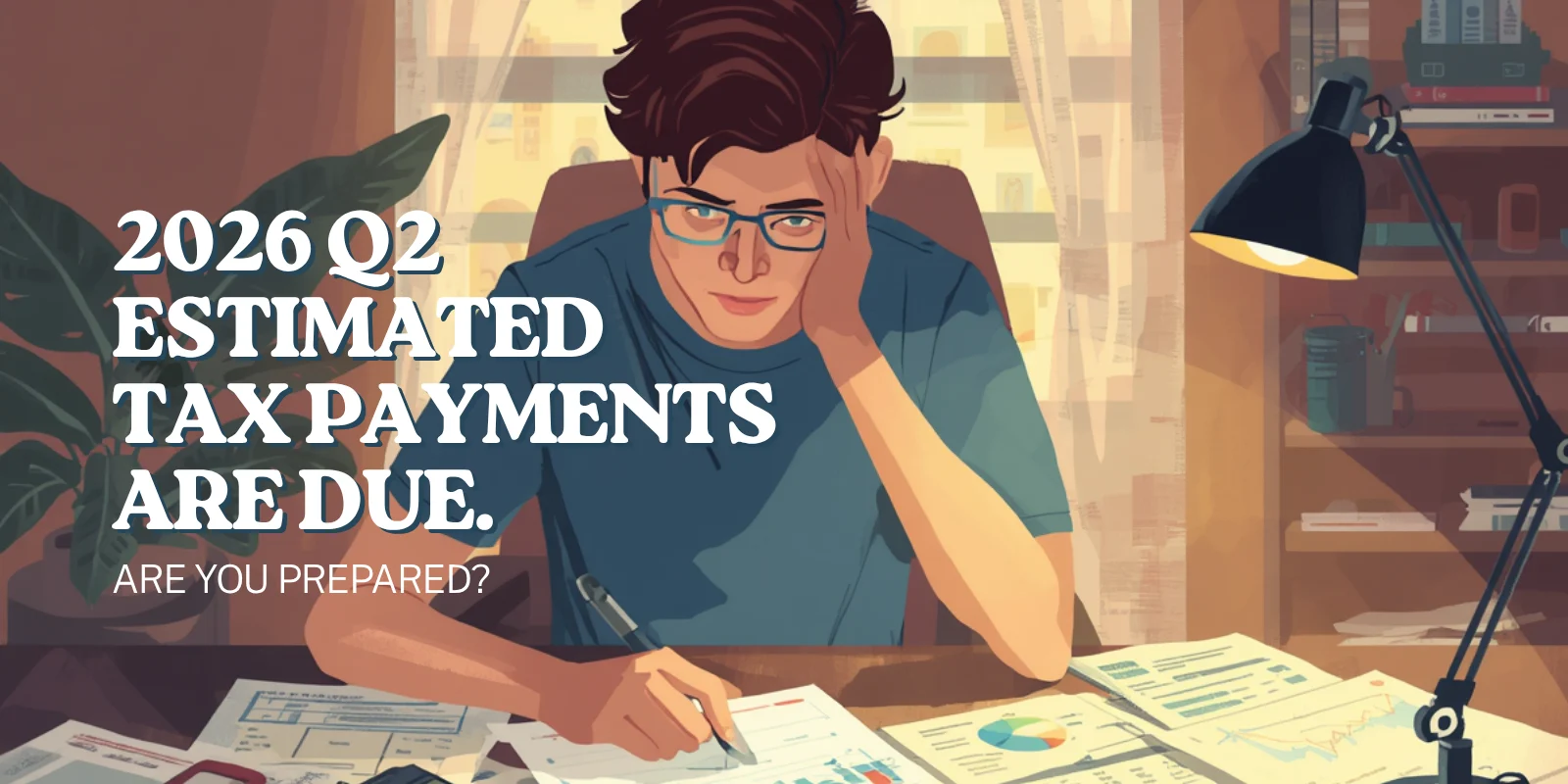
The 2026 estimated tax due dates are April 15, June 15, September 15, 2026, and January 15, 2027, and apply to income not subject to withholding.
Estimated tax payments are required under the IRS “pay-as-you-go” system for freelancers, self-employed individuals, investors, landlords, and others earning untaxed income.
Taxpayers generally must pay estimated taxes if they expect to owe at least $1,000 after withholding and credits.
The Q2 estimated tax deadline (June 15, 2026) is especially important because it covers income earned in April and May and is commonly missed.
Payments can be calculated using a full-year projection or the safe harbor method, which helps avoid underpayment penalties even if income varies.
Missing a payment can result in IRS penalties and daily interest, but partial payments and safe harbor rules may help reduce or avoid penalties.
Understanding the 2026 estimated tax due dates is essential for freelancers, self-employed individuals, investors, and small business owners who do not have taxes automatically withheld from their income. Unlike traditional W-2 employees, these taxpayers are responsible for paying taxes throughout the year in quarterly installments. The second quarter estimated tax deadline often surprises people because it falls in mid-June, a time when taxes are not top of mind. However, missing this deadline can result in penalties, interest charges, and an avoidable year-end tax burden.
This guide explains everything you need to know about the 2026 Q2 estimated tax payment, including who must pay, how it is calculated, how to submit it, and what happens if you miss the deadline.
What Are Estimated Tax Payments?
Estimated tax payments are periodic payments made to the federal government on income that is not subject to withholding. Instead of paying taxes once a year when filing a return, the U.S. tax system requires taxpayers to pay taxes as they earn income.
The system is enforced by the Internal Revenue Service under a “pay-as-you-go” structure. This means that taxes must be paid either through employer withholding or through quarterly estimated payments. If income is not automatically taxed—such as freelance work, business income, or investment earnings—the responsibility falls on the taxpayer to make these payments manually using Form 1040-ES.
Estimated tax payments help ensure taxpayers do not accumulate large balances owed at the end of the year. Instead, liability is spread across four quarterly due dates, reducing the likelihood of underpayment penalties and financial surprises during tax season.
Who Needs to Make Estimated Tax Payments?
Anyone who expects to owe at least $1,000 in federal taxes after withholding and credits may be required to make estimated tax payments. This requirement most commonly applies to individuals and businesses whose income is not subject to automatic withholding.
Self-employed individuals and freelancers are among the most common groups required to pay estimated taxes. Because no employer is withholding taxes on their behalf, they must calculate and submit payments based on their earnings. Small business owners, including sole proprietors, partnerships, and S corporations, also frequently fall into this category, especially when their profits fluctuate throughout the year.
Investors may also be required to make estimated payments when they realize capital gains or earn dividend income. Similarly, landlords collecting rental income typically must estimate taxes owed on net rental profits. Even retirees may be subject to estimated tax rules if Social Security distributions or retirement account withdrawals do not have sufficient withholding.
In short, if income is earned without taxes being automatically deducted, estimated tax payments are likely required.
2026 Estimated Tax Due Dates and Quarterly Schedule
The 2026 estimated tax due dates follow a four-part schedule set by the IRS, although the quarters do not align perfectly with calendar months. Each payment corresponds to income earned during a specific time period, and taxpayers must ensure payments are submitted on time to avoid penalties.
For 2026, the first estimated payment is due April 15, followed by the second quarter payment on June 15, the third on September 15, and the fourth on January 15 of the following year. The Q2 deadline is particularly important because it covers income earned during April and May, a shortened period compared to a traditional quarter.
Note: If you file your 2026 federal tax return and pay any tax owed by February 1, 2027, you can skip the January 15 Q4 estimated payment.
The IRS structured the schedule this way to balance tax collection evenly throughout the year rather than strictly following calendar quarters. While this system can feel confusing, it ensures taxpayers contribute consistently toward their annual tax obligation instead of deferring payment until year-end.
Who Needs to Pay the Q2 Estimated Tax Payment?
The Q2 estimated tax payment applies to a broad range of taxpayers who earn income outside of traditional employment. This includes individuals and businesses that receive income without automatic withholding, which is increasingly common in today’s gig and freelance economy.
Freelancers and independent contractors are one of the largest groups affected. Because clients typically do not withhold taxes, these workers must set aside a portion of each payment to cover federal tax obligations. Small business owners also rely heavily on estimated payments to manage tax liability throughout the year, particularly when revenue varies from month to month.
Investors may also face Q2 estimated tax obligations if they sell stocks at a profit or receive dividend income. A single large transaction during the April–May period can significantly increase estimated tax liability. Rental property owners must also account for rental income after expenses, which is often not subject to withholding.
Even retirees can fall into this category if their income sources, such as pensions or retirement withdrawals, do not have sufficient tax withheld. Ultimately, the determining factor is whether enough tax is being withheld from all income sources to meet annual requirements.
How to Calculate Your 2026 Q2 Estimated Tax Payment
Calculating estimated taxes can be approached in several ways, but most taxpayers use either a full-year projection method or the safe harbor method. Both are designed to help taxpayers stay aligned with the 2026 estimated tax due dates and avoid underpayment penalties.
The full-year projection method involves estimating total income for the year, subtracting deductions, and applying current tax rates to determine total tax liability. From there, taxpayers subtract any withholding or credits and divide the remaining amount into four equal payments. This method works best for individuals with stable and predictable income throughout the year.
For example, if someone expects $90,000 in income with a total tax liability of $15,000 and $3,000 in withholding, they would divide the remaining $12,000 into four quarterly payments of $3,000. Their Q2 estimated payment would therefore be $3,000.
The safe harbor method is often preferred because it reduces the risk of penalties even if income is underestimated. Under this approach, taxpayers must pay either 90% of their current-year tax liability or 100% of the prior year’s tax liability to avoid underpayment penalties. However, if your prior-year adjusted gross income (AGI) exceeded $150,000 — or $75,000 if you are married filing separately — the threshold increases to 110% of last year’s tax liability. This method provides a safeguard against unexpected income fluctuations and is especially useful for freelancers or business owners with variable earnings.
How to Make Your Q2 Estimated Tax Payment
Once the payment amount is calculated, taxpayers must submit it by the June 15 deadline to remain compliant with the 2026 estimated tax due dates. The most efficient way to pay is online through IRS-approved systems.
The IRS offers several electronic payment options, including IRS Direct Pay and the IRS Online Account — both free, easy-to-use options that allow taxpayers to schedule payments in advance and confirm submission instantly. Taxpayers who were previously enrolled in EFTPS may still be able to use that system for now, but the IRS is phasing out EFTPS for individual taxpayers entirely in 2026. Going forward, individuals should use IRS Direct Pay or an IRS Online Account to make estimated tax payments.
While Form 1040-ES paper vouchers with check or money order payments are technically still accepted by the IRS for now, the IRS is actively transitioning to electronic-only payments as part of a broader modernization effort. Taxpayers are strongly encouraged to use IRS Direct Pay or an IRS Online Account instead of mailing payments, as paper checks may not be accepted indefinitely and carry a higher risk of processing delays. If a check is mailed, it should be postmarked by June 15 to be considered on time — but electronic payment is the safer choice.
Many taxpayers also need to consider state estimated tax requirements. Most states require separate estimated payments, and the rules and deadlines can vary. Failing to meet state requirements can result in additional penalties even if federal taxes are paid correctly.
What Happens If You Miss the Q2 Deadline?
Missing the Q2 estimated tax deadline can lead to penalties and interest charges, even if you pay later in the year. The IRS calculates penalties based on how much was underpaid and how long the payment was late.
The IRS charges interest on unpaid balances, and this interest accrues daily until the full amount is paid. As a result, even a short delay can increase the total amount owed.
While penalties can be frustrating, there are some ways to reduce or avoid them. The safe harbor rule is the most common protection, allowing taxpayers to avoid penalties if they meet minimum payment thresholds based on prior-year or current-year tax liability. In some cases, taxpayers with irregular income may also benefit from alternative calculation methods that align payments more closely with actual earnings.
Tips for Staying on Track With 2026 Estimated Tax Deadlines
Staying ahead of the 2026 estimated tax due dates requires consistent planning throughout the year. One of the most effective strategies is setting reminders for all four quarterly deadlines, which helps ensure payments are not missed during busy periods.
Taxpayers should also adjust payments when income changes significantly. For example, a freelancer who lands a large contract in Q2 or an investor who realizes capital gains should increase their estimated payment accordingly. Failing to adjust can lead to underpayment penalties or large year-end tax bills.
Keeping accurate financial records is also essential. Tracking invoices, expenses, investment transactions, and rental income makes it easier to estimate quarterly obligations accurately. Many taxpayers also benefit from working with a tax professional, particularly when income sources are complex or inconsistent.
What If You Can’t Afford Your Estimated Tax Payment?
It is not uncommon for taxpayers to struggle with cash flow when estimated taxes are due. In these situations, it is still better to make a partial payment than to miss the deadline entirely. Even partial payments reduce penalties and show good-faith compliance with IRS requirements.
Taxpayers with both W-2 income and side income may also adjust withholding from their paycheck to help cover estimated tax obligations. This can sometimes simplify the process by reducing the need for separate quarterly payments.
How Optima Tax Relief Can Help
If keeping up with estimated tax payments feels overwhelming or you’re already dealing with tax debt, professional support can make a significant difference. Optima Tax Relief works with taxpayers who are behind on their obligations, helping them explore resolution options and develop a plan to address IRS balances before they grow due to penalties and interest.
For individuals struggling to stay current with the 2026 estimated tax due dates, having a structured strategy in place can reduce stress and help prevent future issues. Optima Tax Relief can assist in reviewing your overall tax situation, identifying potential relief options, and helping you regain compliance so you can stay focused on your income and financial goals.
Frequently Asked Questions
What are the 2026 estimated tax due dates?
The 2026 estimated tax due dates are April 15, June 15, September 15, 2026, and January 15, 2027. These quarterly deadlines apply to income earned without tax withholding.
What income is subject to estimated taxes?
Income that is not automatically taxed through withholding is generally subject to estimated taxes. This includes freelance income, business profits, rental income, and investment gains.
Who is required to make estimated tax payments?
You typically need to make estimated tax payments if you expect to owe at least $1,000 in federal tax after withholding and credits. This most commonly affects self-employed individuals, investors, and small business owners.
Tax Help for People Who Owe
The 2026 estimated tax due dates, especially the June 15 Q2 deadline, play a critical role in staying compliant with federal tax obligations. For freelancers, business owners, and investors, these payments are not optional—they are required to avoid penalties and interest.
By understanding who must pay, how to calculate obligations, and how to submit payments correctly, taxpayers can stay ahead of their tax responsibilities throughout the year. The key is consistency: monitor income regularly, adjust payments when needed, and never miss a quarterly deadline. Proactive planning today can prevent costly tax issues tomorrow. Optima Tax Relief is the nation’s leading tax resolution firm with over $3 billion in resolved tax liabilities.
If You Need Tax Help, Contact Us Today for a Free Consultation.