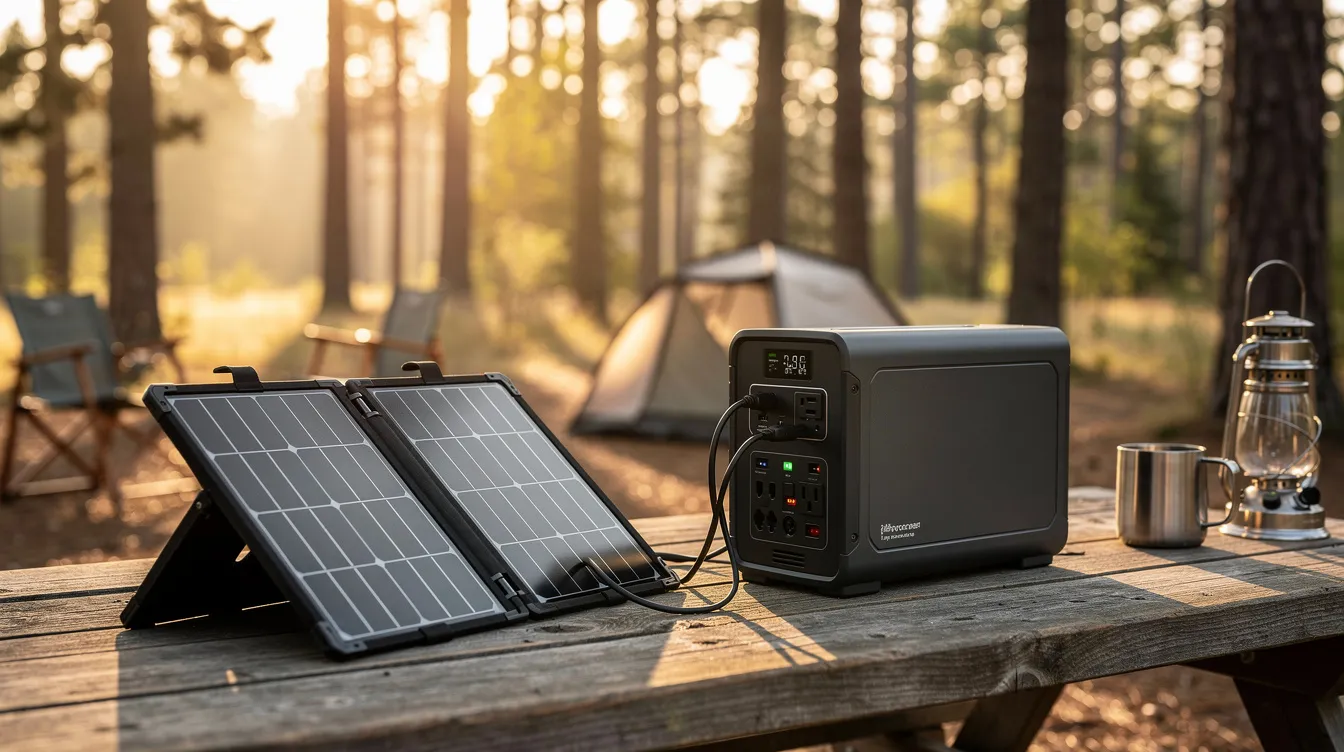
If you are comparing backup batteries for camping, RV travel, CPAP use, or short power outages, Jackery is probably already on your shortlist. These jackery power station reviews focus on what matters in real use: battery capacity, output, charge time, portability, warranty risk, and whether the price makes sense in 2026.
Jackery’s lineup now ranges from compact units that replace a power bank to larger units with expansion batteries for serious backup power. The key is choosing the right unit for your devices instead of buying only by headline capacity.
Quick Answer: Are Jackery Power Stations Any Good?
Yes, Jackery portable power stations are worth buying in 2026 if you want a simple, ready-made power station instead of a DIY battery system. Models like the Explorer 500 V2, Explorer 1000 V2, 1000 Plus, 1500, and 2000 Plus cover casual outdoor use and heavy-duty applications, from charging laptops to keeping a fridge, router, led light, phones, cameras, and cpap machine running.
Jackery is a long-established company, founded in 2012, and it is now one of the most visible brands in solar generators and backup power. It is generally a good brand for plug-and-play portable power stations, especially for camping trips, RVs, and occasional power outages.
The main strengths are dependable performance, rapid solar charging on newer models with dual solar panel inputs, rugged build quality, user-friendly designs, stable power delivery without intimidating interfaces, compact physical size, and frequent discounts. The drawbacks are cost per Wh, older lithium batteries with shorter battery life, and limited expandable batteries on non-Plus models. If you want a ready-made jackery portable power station for camping, CPAP backup, or occasional power outages and don’t want to build a DIY system, Jackery is still one of the safest, easiest options in 2026.
Who Is Jackery? Is Jackery a U.S. Company?
Jackery is a pioneer in consumer portable power stations and solar generator bundles, with millions of units sold worldwide. According to public company background information, Jackery was founded in California in 2012 by a team that included a former Apple battery engineer, and its U.S. office is listed in Fremont, CA.
In practical terms, Jackery is marketed as an American brand with global operations, not a purely domestic U.S. manufacturer. Its headquarters and U.S. presence are in California, while manufacturing and R&D partnerships are strongly connected to China. That is common in consumer electronics, but it is worth knowing before you pay premium money.
Jackery’s product focus is straightforward: the jackery explorer power station line and foldable SolarSaga solar panels. When sold together, Jackery calls the package a solar generator. The brand’s positioning is clean, quiet, portable power for RVing, overlanding, outdoor work, easy storage, and home backup during power outages.
Is Jackery a Good Brand? Real‑World Customer Feedback
Customer sentiment is mixed but generally positive. Many users praise Jackery for reliable power during storms, camping, and RV use, while a minority report failed units, slow support, and warranty friction. Trustpilot shows Jackery’s U.S. site around the high-3 to low-4-star range recently, while popular retailer listings for products like Explorer 500 V2 often sit closer to 4.0–4.6 stars depending on model and seller.
Typical positive themes include:
dependable backup power during storms and outages
effective battery power for RV, van, and off-grid use
fast shipping from major retailers
easy setup, clear display, and quiet operation under 30dB
some customers rating service 90–100/100 after replacements
Negative themes include DOA units, requests for video proof, slow email replies, and warranty difficulty if the product was bought from a non-authorized seller. One positive case involved a customer receiving a same-week replacement for a faulty battery. A negative case involved a customer waiting weeks after returning a non-charging unit. The takeaway: Jackery is widely regarded as a good brand, but register your warranty, save receipts, keep packaging if possible, and buy from authorized sellers.
Jackery Portable Power Station Lineup in 2026
“Jackery power station” usually means the Explorer range, which now includes standard Explorer, V2, Plus, and Pro-style systems. A Jackery portable power station is the battery/inverter unit; a Jackery solar generator is the same unit bundled with panels, usually at a discount.
Here is the simple map:
U.S., UK, and EU model names, AC plug types, and capacity figures can differ, so double-check the regional specs before buying.
Jackery Explorer 500 V2 Review (512Wh LiFePO4)
The Explorer 500 V2 is Jackery’s modernized mid-size unit: 512Wh LiFePO4 battery, 500W continuous output, and 1000W peak AC output. The Explorer 500 has a 500W continuous output, and Jackery’s Explorer 500 has a 500W output limit, so it is not for kettles, large heaters, or full-size appliances.
You get a 120V ac outlet, usb ports, usb c, a 12V car socket/cigarette lighter port, and a portable design suited to car camping rather than backpacking. Early 2026 marketplace listings show roughly 4.6/5-star ratings with dozens of early reviews and hundreds of monthly sales.
Practical use is strong: a weekend of charging laptops and phones, a small 12V fridge, or a Wi-Fi router plus led light during an outage. The Explorer 500 can run a mini fridge for 8-12 hours. The Explorer 500 takes about 7.5 hours to charge from a wall socket; with a compatible solarsaga panel, solar charging can fit into a clear-sky day, though clouds and sun angle matter.
Pros: long-life LiFePO4, quiet, compact, and great for camping. Cons: limited to 500W devices, no expansion batteries, and not ideal for big appliances.
Jackery Explorer 1000 V2 Review
The Explorer 1000 V2 updates Jackery’s classic 1kWh category for campers, RV owners, and homeowners who need more than a 500Wh unit. The classic Jackery Explorer 1000 has a 1000W output capacity, and the Explorer 1000 can surge up to 2000W for short periods; some testing and spec discussions also note Jackery’s Explorer 1000 can handle a 2,200W surge before protection kicks in.
The explorer 1000 class typically offers around 1000Wh capacity, with sale prices often in the mid-$400s to $600s depending on retailer discounts. The Explorer 1000 weighs 22 pounds, making it portable, and Jackery claims the Explorer 1000 can recharge an iPhone 8 100 times.
Useful data points: the Explorer 1000 has an efficiency rating of 87.5%, while newer V2 reviews often show about 87–90% usable capacity under realistic loads. The Jackery Explorer 1000 can run a blender at 500W for 2 hours. The Explorer 1000 can charge fully in 7 hours via AC, and the Explorer 1000 can charge in 7 hours with AC power.
For solar, the Explorer 1000 supports solar charging up to 400W, and the Explorer 1000 supports up to 400 watts of solar input. The Jackery Explorer 1000 recharges in about 4.5 hours with solar, and the Explorer 1000 can recharge in about 4.5 hours with optimal solar input. In real life, panels rarely hit perfect optimal conditions.
What We Like About the Explorer 1000 V2
The best part is balance. It has enough portable power for lights, laptops, small kitchen devices, routers, and a refrigerator within wattage limits, but it is still easy to carry between a garage, RV, and home.
It is also quiet, simple, and non-technical. The display shows the essentials, the inverter behaves predictably, and pass-through charging works when the unit is plugged into a wall or solar. For buyers who want more than a power bank but not a heavy home system, it makes sense.
When discounted during Prime Day-style events or seasonal sales, the Explorer 1000 V2 often becomes one of Jackery’s best value picks.
Where the Explorer 1000 V2 Falls Short
The main limitations are no battery expandability, conservative solar input compared with some rivals, and reduced input under heavy pass-through loads. Marketing can also confuse rated capacity with actual run time, so calculate your own needs.
For daily deep-cycle use or semi-permanent home backup, the 1000 Plus or 2000 Plus is a better fit. The 1000 V2 is excellent for casual campers and occasional power outages, but less ideal as a primary whole-home backup solution.
Jackery Explorer 1000 Plus Review
The Explorer 1000 Plus is Jackery’s compact expandable model. It has about 1264Wh base capacity, a 2000W pure sine-wave inverter, roughly 32 lb weight, and support for up to three expansion batteries for around 5kWh total.
The design is clean: sturdy handle, clear display, useful outlets, and enough power for laptops, fridges, tools, and short-term home backup. Expansion batteries are stackable modules that plug into the main unit, so you can start small and add additional batteries later.
This is useful for a cpap machine overnight with humidifier, a fridge and a few lights through a 24-hour outage, or a work-from-home setup. Pricing is often around $1,000–$1,200 for the core unit, with bundles improving the cost per Wh.
Pros of the Explorer 1000 Plus
The main advantage is combining portability with a serious 2000W inverter. It can run many devices that smaller portable power stations cannot, while still being manageable to move.
Expandability is the selling point. When paired with Jackery solar panels, the 1000 Plus becomes a capable solar generator for RV use, camping, and extended outages without rewiring your house.
Cons of the Explorer 1000 Plus
The upfront price is higher than many non-expandable rivals, the basic display is less detailed than some advanced competitors, and expansion batteries add cost quickly.
If you only need weekend camping power, it may be overkill. If you need multi-day whole-home coverage, the larger Explorer 2000 Plus or dedicated home systems may be better.
Jackery 1500 & 2000 Plus: Solar Generators for Serious Backup Power
The Explorer 1500 and Explorer 2000 Plus are for users who need more robust RV and home backup power. The older Jackery 1500 has around 1534Wh battery capacity, three 120V AC outlets, USB outputs, a 12V socket, and compatibility with up to four SolarSaga 100W panels.
In real trips, users have run a 30A trailer, microwaves, laptops, and cameras over long boondocking stretches, using propane for heavy heating loads. The 1500 also suits CPAP users because solar input can help recharge the battery during the day.
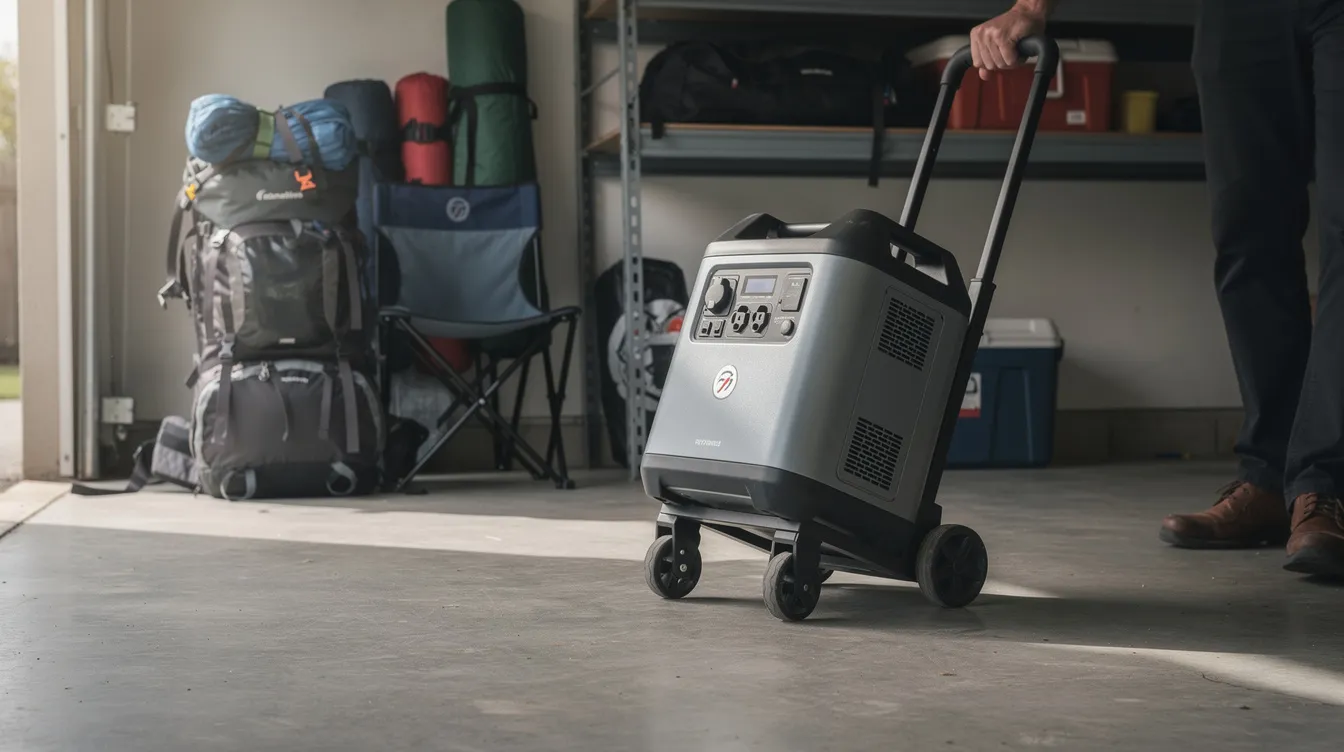
The Explorer 2000 Plus is more modern and modular, with around 2kWh base capacity and support for multiple expansion batteries, reaching roughly 12kWh–24kWh depending on configuration. It weighs around 60 lb but uses wheels and a telescoping handle.
Jackery 2000 Plus: The Good
The best feature is modular growth. You can start with one unit, then add expansion batteries as your future needs increase.
Its wheeled design makes a heavy system manageable in a house, RV, or garage. With discounts, pricing can land around $1/Wh for the core unit and closer to $0.60/Wh for expansions. That makes it practical for key circuits like fridge, router, lights, and some outlets during power outages.
Jackery 2000 Plus: The Bad
The 2000 Plus lacks some flashy extras, such as wireless charging pads, and advanced users may want deeper app monitoring. A single 2000 Plus also cannot output 240V; users need two units for 240V, while some rivals offer different 240V options.
The cost can climb fast once you add several batteries and panels. It is a strong flexible backup system, but technical users may prefer more integrated whole-home setups.
How Does a Jackery Power Station Compare to a Power Bank or Traditional Generator?
A power bank is usually for USB devices. A Jackery Explorer gives you AC outlets, DC car ports, usb ports, and enough output for laptops, fridges, CPAP machines, and small appliances.
Compared with gas generators, Jackery units are quiet, emission-free, and safe indoors. They need no gasoline and can sit beside your bed. The trade-off is finite battery capacity: once empty, you must recharge from a wall socket, car, or solar power.
Traditional generators still win for long, high-load outages. Jackery wins for camping, apartments, medical-device backup, and situations where noise and fumes are unacceptable.
Key Buying Factors: How to Choose the Right Jackery Portable Power Station
Start with capacity, wattage, ports, and charge time. A 500Wh unit running a 50W device may last roughly 8–9 hours after efficiency losses. A 1000Wh unit can run a 100W load overnight.
Match inverter output to your devices. Hair dryers, kettles, and microwaves can exceed 1000W; laptops, routers, lights, and many CPAP setups are lower. Also list the ports you need: AC, USB-A, usb c, 12V, and car output.
Battery chemistry matters. Jackery batteries typically last 500 charge cycles on many older lithium-ion models. Jackery batteries can last 2-3 years with proper care. Avoid fully discharging Jackery batteries to extend lifespan, recharge Jackery units as soon as possible after use, and keep Jackery units out of direct sunlight to prevent overheating. Newer LiFePO4 chemistry offers approximately 4,000 charge cycles before dropping to 70% capacity; by comparison, Bluetti’s LiFePo4 battery lasts up to 17 years.
Sizing a Jackery for CPAP Machines and Medical Devices
Many CPAP machines use 30–60W without humidifier, more with heat and humidity. A 300–500Wh Jackery can cover one night; 1000Wh or more is better for multi-night outages.
Test your CPAP at home before relying on it. Actual run time depends on settings, tubing heat, battery condition, and whether other devices charged from the same unit. Jackery power stations can power devices for up to 14 days only in very low-draw scenarios, so do the math for your own medical setup.
Is Jackery a Good Solar Generator in 2026?
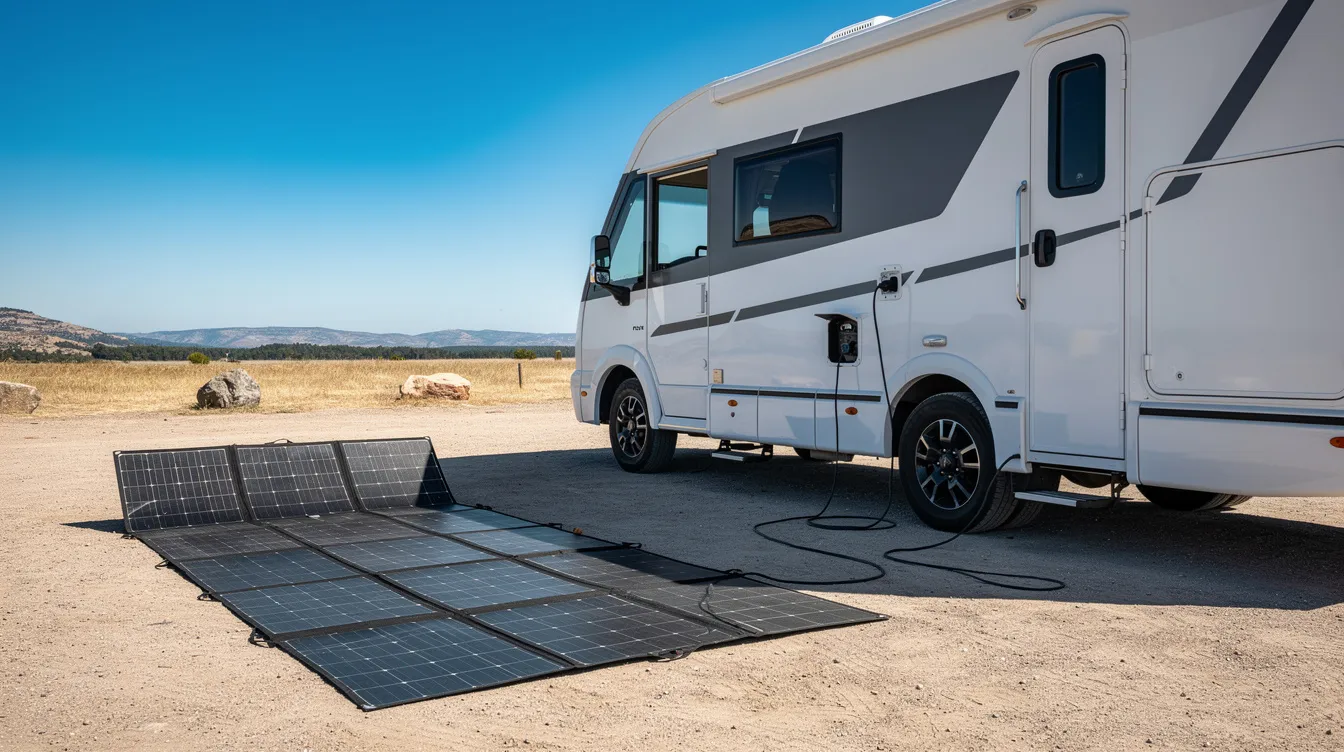
Yes, Jackery is a good solar generator brand for mainstream users. Explorer units and SolarSaga panels are designed to work together, with plug-and-play connectors and MPPT charge controllers that reduce setup mistakes.
DIY solar systems can be cheaper than Jackery power stations, and advanced brands may offer more customization. But Jackery offers polished hardware, simple instructions, and predictable behavior.
If a retailer page opens a modal window with a coupon in the upper left, read the terms before clicking close modal dialog end or closing the pop-up. Bundles can change the final cost significantly.
Best Jackery Discounts, Bundles and When to Buy
Jackery’s value improves when you buy on sale. Watch Black Friday, Cyber Monday, Amazon Prime Day-style events, Jackery Day, and spring/summer outdoor sales.
The best Jackery discounts are often on solar generator bundles that include panels. Also check Jackery’s email list, official Deals or Outlet pages, Amazon coupons, and regional Jackery UK/EU promotions.
A practical tip: choose the capacity and ability you need first, then wait if the purchase is not urgent. Discounts of 10–30% are common, and bundles can save real money.
Final Verdict: Are Jackery Power Stations Worth It for You?
Jackery is not always the cheapest, and some other units offer more advanced monitoring or lower cost per Wh. But Jackery power stations are known for their rugged build quality, easy setup, quiet performance, and reliable power delivery.
For campers and vanlifers, the Explorer 500 V2 and Explorer 1000 V2 are easy recommendations. For CPAP users and homeowners, the 1000 Plus offers a smart upgrade path. For RV boondockers and serious backup power, the 1500 and 2000 Plus make more sense.
Before buying, list your devices, wattage, desired recharge method, and budget. If you value simplicity over tinkering, Jackery remains one of the strongest plug-and-play portable power choices in 2026.
Sizing a Jackery for CPAP Machines and Medical Devices
Many CPAP machines use 30–60W without humidifier, more with heat and humidity. A 300–500Wh Jackery can cover one night; 1000Wh or more is better for multi-night outages.
Test your CPAP at home before relying on it. Actual run time depends on settings, tubing heat, battery condition, and whether other devices charged from the same unit. Jackery power stations can power devices for up to 14 days only in very low-draw scenarios, so do the math for your own medical setup.
Is Jackery a Good Solar Generator in 2026?
Yes, Jackery is a good solar generator brand for mainstream users. Explorer units and SolarSaga panels are designed to work together, with plug-and-play connectors and MPPT charge controllers that reduce setup mistakes.
DIY solar systems can be cheaper than Jackery power stations, and advanced brands may offer more customization. But Jackery offers polished hardware, simple instructions, and predictable behavior.
If a retailer page opens a modal window with a coupon in the upper left, read the terms before clicking close modal dialog end or closing the pop-up. Bundles can change the final cost significantly.
Best Jackery Discounts, Bundles and When to Buy
Jackery’s value improves when you buy on sale. Watch Black Friday, Cyber Monday, Amazon Prime Day-style events, Jackery Day, and spring/summer outdoor sales.
The best Jackery discounts are often on solar generator bundles that include panels. Also check Jackery’s email list, official Deals or Outlet pages, Amazon coupons, and regional Jackery UK/EU promotions.
A practical tip: choose the capacity and ability you need first, then wait if the purchase is not urgent. Discounts of 10–30% are common, and bundles can save real money.
Final Verdict: Are Jackery Power Stations Worth It for You?
Jackery is not always the cheapest, and some other units offer more advanced monitoring or lower cost per Wh. But Jackery power stations are known for their rugged build quality, easy setup, quiet performance, and reliable power delivery.
For campers and vanlifers, the Explorer 500 V2 and Explorer 1000 V2 are easy recommendations. For CPAP users and homeowners, the 1000 Plus offers a smart upgrade path. For RV boondockers and serious backup power, the 1500 and 2000 Plus make more sense.
Before buying, list your devices, wattage, desired recharge method, and budget. If you value simplicity over tinkering, Jackery remains one of the strongest plug-and-play portable power choices in 2026.