Irregulars Quick Take
Paid members get a quick summary of the stocks teased and our thoughts here. Join as a Stock Gumshoe Irregular today (already a member? Log in)
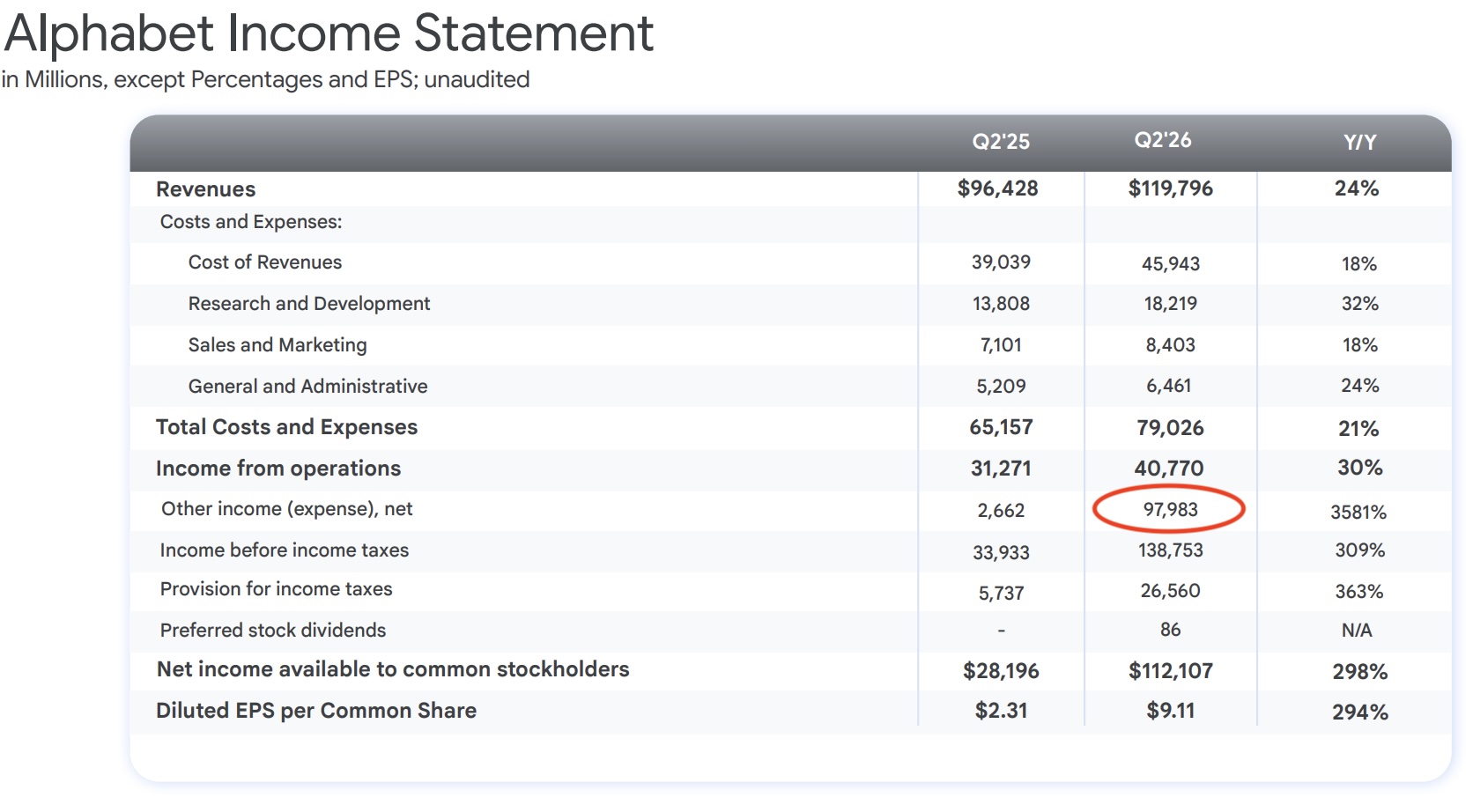
This week was always slated to be a big one for the markets, not just because of the on-again, off-again peace talks and cease-fires and blockades in the Persian Gulf, but because of the fact that five of the six largest publicly traded companies in the world, including several that have been leading the market in recent times, were due to share their quarterly reports.
And then, to add some fire to the expected reports from Amazon, Alphabet, Microsoft and Meta Platforms on Wednesday, (and the somewhat more subdued Apple the next day, since that has so far been less of an “AI” story), we got a shot across the bow regarding what has arguably been the most important private company in the world, in the form of a story in the Wall Street Journal on Tuesday about OpenAI’s financial progress. Or, maybe more accurately, lack of financial progress.
Here’s the headline and the damning lead-in:
“OpenAI Misses Key Revenue, User Targets in High-Stakes Sprint Toward IPO
“The company’s CFO and board have questioned the wisdom of massive data-center spending in the face of slowing growth
“OpenAI recently missed its own targets for new users and revenue, stumbles that have raised concern among some company leaders about whether it will be able to support its massive spending on data centers.
“Chief Financial Officer Sarah Friar has told other company leaders that she is worried the company might not be able to pay for future computing contracts if revenue doesn’t grow fast enough, according to people familiar with the matter.
“Board directors have also more closely examined the company’s data-center deals in recent months and questioned Chief Executive Sam Altman’s efforts to secure even more computing power despite the business slowdown, the people said.”
Why does that matter to investors? After all, almost nobody owns shares of OpenAI, and nobody was under any illusion that they were on the verge of turning profitable.
Well, mostly because what has been propping up the market over the past year, amid concerns about inflation and tariff disputes and the turbulence of the war on Iran (and the likely inflationary aftermath of that), has been the notion that the AI infrastructure buildout is definitely going to keep rolling along, that the desperate thirst for more compute, more NVIDIA chips, more data centers and more power is still in its early stages.
And, if you recall, …