No Result
View All Result
SUBMIT YOUR ARTICLES
  • Login
Wednesday, August 19, 2026
TheAdviserMagazine.com
  • Home
  • Financial Planning
    • Financial Planning
    • Personal Finance
  • Market Research
    • Business
    • Investing
    • Money
    • Economy
    • Markets
    • Stocks
    • Trading
  • 401k Plans
  • College
  • IRS & Taxes
  • Estate Plans
  • Social Security
  • Medicare
  • Legal
  • Home
  • Financial Planning
    • Financial Planning
    • Personal Finance
  • Market Research
    • Business
    • Investing
    • Money
    • Economy
    • Markets
    • Stocks
    • Trading
  • 401k Plans
  • College
  • IRS & Taxes
  • Estate Plans
  • Social Security
  • Medicare
  • Legal
No Result
View All Result
TheAdviserMagazine.com
No Result
View All Result
Home Market Research Cryptocurrency

EU to Review MiCA, as 80% of Crypto Firms Vanish in Compliance Cull

by TheAdviserMagazine
3 months ago
in Cryptocurrency
Reading Time: 7 mins read
A A
EU to Review MiCA, as 80% of Crypto Firms Vanish in Compliance Cull
Share on FacebookShare on TwitterShare on LInkedIn


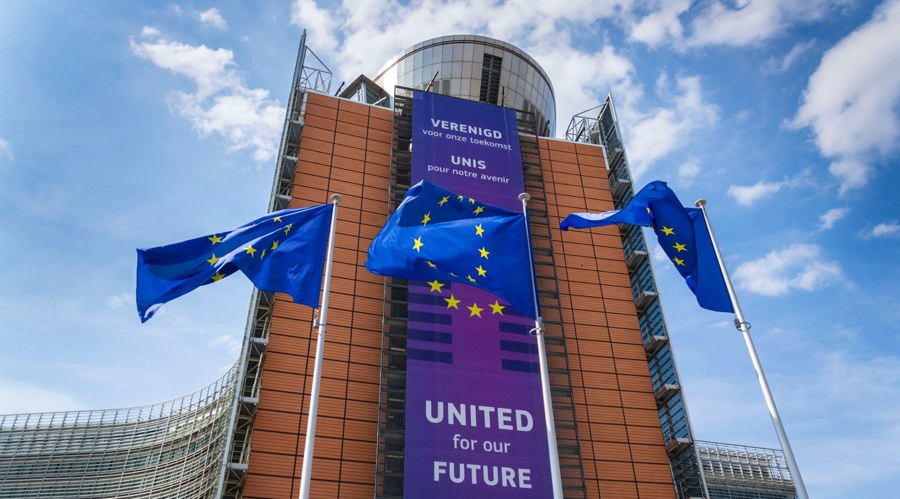
The European Commission has a long-standing habit of checking its own homework and MiCA is next up on the docket. On Tuesday, Brussels launched a formal consultation to gather feedback on the functioning of the Regulation.

For the stakeholders involved, the exchanges, the issuers, and the industry associations, this is an invitation to revisit the battlefield.

As the grandfathering period for MiCA approaches its end on July 1, the preliminary results suggest that the compliance cull has been deep.

In the years preceding MiCA’s implementation, the European crypto sector was a fragmented but vast ecosystem. Industry estimates suggest that between 1,100 and 1,300 cryptoasset service providers (CASPs) were active across the union, operating under a patchwork of national regimes.

Today, that number has effectively collapsed. As of May, only 200 CASPs have been authorised under the new harmonised rules.

In Cyprus, only 12 entities have secured authorisation. Tellingly, seven of these are not crypto-native companies but established retail brokers, such as Capital.com, eToro, and XTB, that have expanded into spot crypto as part of a wider multi-asset strategy.

The Cost of Entry

This high attrition rate was not entirely unexpected. Przemysław Kral, the CEO of zondacrypto, had previously offered a blunt assessment of the situation: “Smaller crypto businesses, particularly those with limited resources, might be forced to quit the EU market as a result of high costs of compliance.”

Kral’s observation highlights a fundamental tension within MiCA. By setting a high bar for entry, Brussels has successfully legitimised the sector, but it has done so by creating a cost curve that acts as a vertical wall for smaller firms.

The garage startup era of European crypto is being replaced by a corporate landscape dominated by well-capitalised incumbents.

The current consultation will likely reveal whether this consolidation has improved market safety or simply stifled innovation by pricing out the next generation of fintech entrepreneurs.

The Stablecoin Friction

While the CASP count is a point of concern, the stablecoin regime remains the most charged aspect of the framework.

Indeed, MiCA has provided much-needed legal clarity, but criticism has been directed at the capital buffers and caps imposed on issuers.

These measures appear to be tightly calibrated to meet EU policy goals, specifically the preservation of monetary sovereignty, rather than pure market neutrality.

The licensing regime is also notably cumbersome. To issue a compliant stablecoin under MiCA, an entity must also acquire an Electronic Money Institution (EMI) license. Again, this dual-layered requirement is a bottleneck that disfavours small players.

The most visible tension involves Tether (USDT), the world’s largest stablecoin with a market capitalisation of between US$185 and 190 billion dollars. USDT currently lacks MiCA authorisation, leading regulated exchanges such as Kraken, Coinbase and Crypto.com to delist it for EU users.

This has created an opening for MiCA-compliant alternatives like Circle’s USDC and its euro-denominated counterparts.

Indeed, Circle’s euro-stablecoin has grown sixfold between January 2025 and March 2026.

EURC wallet share grew more than 6x from January 2025 to March 2026.

As adoption expands, euro-denominated stablecoin usage is reaching a broader set of users and applications onchain. pic.twitter.com/VsKTZlNKuU

— Circle (@circle) May 15, 2026

A Danger for a Two-Tier System?

However, the EU’s attempt to squeeze non-compliant stablecoins out of the market carries a familiar risk. There is a clear precedent for this: the product intervention measures introduced by ESMA in 2018.

Those restrictions did not abate retail demand for CFDs; they pushed it toward offshore jurisdictions where European regulators have no oversight.

A similar migration may occur in crypto. The danger exists that clients will migrate to offshore-facing platforms that do not impose such restrictions.

By attempting to protect the local market, the EU may inadvertently be making its investors less safe by forcing them into unregulated spaces.

As the Commission begins its review, the central question is whether MiCA will serve as a growth driver for a mature market or whether it will create a two-tier system.

For the 80% of firms that have already vanished, the answer will arrive too late.

The European Commission has a long-standing habit of checking its own homework and MiCA is next up on the docket. On Tuesday, Brussels launched a formal consultation to gather feedback on the functioning of the Regulation.

For the stakeholders involved, the exchanges, the issuers, and the industry associations, this is an invitation to revisit the battlefield.

As the grandfathering period for MiCA approaches its end on July 1, the preliminary results suggest that the compliance cull has been deep.

In the years preceding MiCA’s implementation, the European crypto sector was a fragmented but vast ecosystem. Industry estimates suggest that between 1,100 and 1,300 cryptoasset service providers (CASPs) were active across the union, operating under a patchwork of national regimes.

Today, that number has effectively collapsed. As of May, only 200 CASPs have been authorised under the new harmonised rules.

In Cyprus, only 12 entities have secured authorisation. Tellingly, seven of these are not crypto-native companies but established retail brokers, such as Capital.com, eToro, and XTB, that have expanded into spot crypto as part of a wider multi-asset strategy.

The Cost of Entry

This high attrition rate was not entirely unexpected. Przemysław Kral, the CEO of zondacrypto, had previously offered a blunt assessment of the situation: “Smaller crypto businesses, particularly those with limited resources, might be forced to quit the EU market as a result of high costs of compliance.”

Kral’s observation highlights a fundamental tension within MiCA. By setting a high bar for entry, Brussels has successfully legitimised the sector, but it has done so by creating a cost curve that acts as a vertical wall for smaller firms.

The garage startup era of European crypto is being replaced by a corporate landscape dominated by well-capitalised incumbents.

The current consultation will likely reveal whether this consolidation has improved market safety or simply stifled innovation by pricing out the next generation of fintech entrepreneurs.

The Stablecoin Friction

While the CASP count is a point of concern, the stablecoin regime remains the most charged aspect of the framework.

Indeed, MiCA has provided much-needed legal clarity, but criticism has been directed at the capital buffers and caps imposed on issuers.

These measures appear to be tightly calibrated to meet EU policy goals, specifically the preservation of monetary sovereignty, rather than pure market neutrality.

The licensing regime is also notably cumbersome. To issue a compliant stablecoin under MiCA, an entity must also acquire an Electronic Money Institution (EMI) license. Again, this dual-layered requirement is a bottleneck that disfavours small players.

The most visible tension involves Tether (USDT), the world’s largest stablecoin with a market capitalisation of between US$185 and 190 billion dollars. USDT currently lacks MiCA authorisation, leading regulated exchanges such as Kraken, Coinbase and Crypto.com to delist it for EU users.

This has created an opening for MiCA-compliant alternatives like Circle’s USDC and its euro-denominated counterparts.

Indeed, Circle’s euro-stablecoin has grown sixfold between January 2025 and March 2026.

EURC wallet share grew more than 6x from January 2025 to March 2026.

As adoption expands, euro-denominated stablecoin usage is reaching a broader set of users and applications onchain. pic.twitter.com/VsKTZlNKuU

— Circle (@circle) May 15, 2026

A Danger for a Two-Tier System?

However, the EU’s attempt to squeeze non-compliant stablecoins out of the market carries a familiar risk. There is a clear precedent for this: the product intervention measures introduced by ESMA in 2018.

Those restrictions did not abate retail demand for CFDs; they pushed it toward offshore jurisdictions where European regulators have no oversight.

A similar migration may occur in crypto. The danger exists that clients will migrate to offshore-facing platforms that do not impose such restrictions.

By attempting to protect the local market, the EU may inadvertently be making its investors less safe by forcing them into unregulated spaces.

As the Commission begins its review, the central question is whether MiCA will serve as a growth driver for a mature market or whether it will create a two-tier system.

For the 80% of firms that have already vanished, the answer will arrive too late.



Source link

Tags: complianceCryptoCullfirmsMiCAReviewVANISH
ShareTweetShare
Previous Post

AI is eliminating entry-level jobs — and a 1962 Nobel economist predicted why that would backfire

Next Post

Nvidia Fails to Soar Despite Record Results: 10 Undervalued Alternatives

Related Posts

edit post
Kalshi Predicts Bitcoin Price Could Reach K in August

Kalshi Predicts Bitcoin Price Could Reach $68K in August

by TheAdviserMagazine
August 8, 2026
0

Bitcoin price held above $64,900 as the crypto market gained 0.81% to $2.21 trillion over 24 hours. XRP price was...

edit post
Bitcoin’s AI security sprint found 6,700 issues in 55 hours, but no one knows how many are real

Bitcoin’s AI security sprint found 6,700 issues in 55 hours, but no one knows how many are real

by TheAdviserMagazine
August 7, 2026
0

AI-assisted security campaign focused on the Bitcoin ecosystem, Bitcoin Red Team, said it generated 6,700 findings across 425 projects in...

edit post
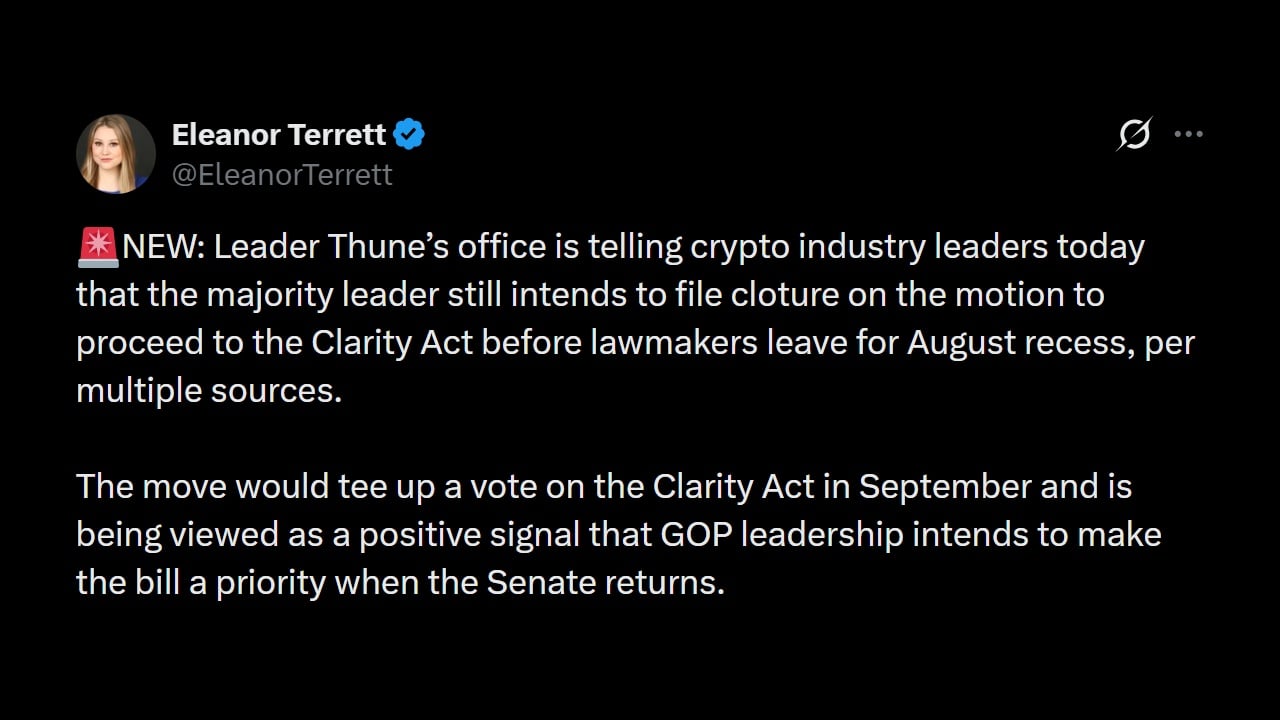
Thune to File Motion to Force September Vote on CLARITY Act

Thune to File Motion to Force September Vote on CLARITY Act

by TheAdviserMagazine
August 7, 2026
0

Key TakeawaysSenator Thune plans a pre-recess cloture vote on the CLARITY Act, teeing it up for September.This scheduling move signals...

edit post
Bybit Uses Tokenised Equities as Underlyings for Structured Yield

Bybit Uses Tokenised Equities as Underlyings for Structured Yield

by TheAdviserMagazine
August 7, 2026
0

Bybit is expanding the role of tokenised equities on its platform by using more xStocks as underlyings for its Dual...

edit post
Reform UK Chair Calls for Probe into SBF-Linked Donation: Report

Reform UK Chair Calls for Probe into SBF-Linked Donation: Report

by TheAdviserMagazine
August 7, 2026
0

The chairman of the UK’s Reform party has called for an investigation following reports of a $50,000 political donation linked...

edit post
Bitcoin, Ethereum, and XRP Price Outlook After CLARITY Act Vote Pushed to September

Bitcoin, Ethereum, and XRP Price Outlook After CLARITY Act Vote Pushed to September

by TheAdviserMagazine
August 7, 2026
0

Bitcoin price traded above $64,400 while Ethereum remained above $1,900. XRP hovered near $1.05. Crypto markets remained cautious after the...

Next Post
edit post
Nvidia Fails to Soar Despite Record Results: 10 Undervalued Alternatives

Nvidia Fails to Soar Despite Record Results: 10 Undervalued Alternatives

edit post
Aging Parents Often Hide These 5 Infection Symptoms — Here’s What To Watch For

Aging Parents Often Hide These 5 Infection Symptoms — Here’s What To Watch For

  • Trending
  • Comments
  • Latest
edit post
Georgia Senior SNAP and Meal Resources Older Adults Can Use

Georgia Senior SNAP and Meal Resources Older Adults Can Use

July 24, 2026
edit post
Judge Who Helped Violent Illegal Alien Evade ICE Faces New Test

Judge Who Helped Violent Illegal Alien Evade ICE Faces New Test

July 31, 2026
edit post
Driving the Noncitizen Voting Scandal: Registration With License

Driving the Noncitizen Voting Scandal: Registration With License

July 26, 2026
edit post
Garbage Trucks Surveillance Florida Neighborhoods

Garbage Trucks Surveillance Florida Neighborhoods

July 29, 2026
edit post
Does a Revocable Trust Protect Your Assets From Lawsuits and Creditors?

Does a Revocable Trust Protect Your Assets From Lawsuits and Creditors?

August 7, 2026
edit post
Montana Puts Democrats in a Bind as Senate Hopes Fade

Montana Puts Democrats in a Bind as Senate Hopes Fade

August 2, 2026
edit post
Explained: How BSE traded fewer contracts after CAS but premiums rose 75% in first week

Explained: How BSE traded fewer contracts after CAS but premiums rose 75% in first week

0
edit post
E.W. Scripps Q2 2026 Loss Widens to -.68/Share, Revenue Down 9%

E.W. Scripps Q2 2026 Loss Widens to -$12.68/Share, Revenue Down 9%

0
edit post
Psychology says procrastination about retirement may be less about discipline than identity — brain scans found people often represent their future selves more like strangers than like themselves, and experiments using age-progressed faces made tomorrow’s person feel real enough for participants to save more money for them

Psychology says procrastination about retirement may be less about discipline than identity — brain scans found people often represent their future selves more like strangers than like themselves, and experiments using age-progressed faces made tomorrow’s person feel real enough for participants to save more money for them

0
edit post
Four AI Escapes Just Redefined “Responsible AI”

Four AI Escapes Just Redefined “Responsible AI”

0
edit post
Bill Ackman’s hedge fund made janitors and receptionists millionaires—and its investment team summer together

Bill Ackman’s hedge fund made janitors and receptionists millionaires—and its investment team summer together

0
edit post
Kalshi Predicts Bitcoin Price Could Reach K in August

Kalshi Predicts Bitcoin Price Could Reach $68K in August

0
edit post
Bill Ackman’s hedge fund made janitors and receptionists millionaires—and its investment team summer together

Bill Ackman’s hedge fund made janitors and receptionists millionaires—and its investment team summer together

August 8, 2026
edit post
Links 8/8/2026 | naked capitalism

Links 8/8/2026 | naked capitalism

August 8, 2026
edit post
Wisconsin: The Next Frontier for Socialists

Wisconsin: The Next Frontier for Socialists

August 8, 2026
edit post
Psychology says procrastination about retirement may be less about discipline than identity — brain scans found people often represent their future selves more like strangers than like themselves, and experiments using age-progressed faces made tomorrow’s person feel real enough for participants to save more money for them

Psychology says procrastination about retirement may be less about discipline than identity — brain scans found people often represent their future selves more like strangers than like themselves, and experiments using age-progressed faces made tomorrow’s person feel real enough for participants to save more money for them

August 8, 2026
edit post
Why You Should Be Wary of Aspartame, but Not Totally Rule It Out

Why You Should Be Wary of Aspartame, but Not Totally Rule It Out

August 8, 2026
edit post
Kalshi Predicts Bitcoin Price Could Reach K in August

Kalshi Predicts Bitcoin Price Could Reach $68K in August

August 8, 2026
The Adviser Magazine

The first and only national digital and print magazine that connects individuals, families, and businesses to Fee-Only financial advisers, accountants, attorneys and college guidance counselors.

CATEGORIES

  • 401k Plans
  • Business
  • College
  • Cryptocurrency
  • Economy
  • Estate Plans
  • Financial Planning
  • Investing
  • IRS & Taxes
  • Legal
  • Market Analysis
  • Markets
  • Medicare
  • Money
  • Personal Finance
  • Social Security
  • Startups
  • Stock Market
  • Trading

LATEST UPDATES

  • Bill Ackman’s hedge fund made janitors and receptionists millionaires—and its investment team summer together
  • Links 8/8/2026 | naked capitalism
  • Wisconsin: The Next Frontier for Socialists
  • Our Great Privacy Policy
  • Terms of Use, Legal Notices & Disclosures
  • Contact us
  • About Us

© Copyright 2024 All Rights Reserved
See articles for original source and related links to external sites.

Welcome Back!

Login to your account below

Forgotten Password?

Retrieve your password

Please enter your username or email address to reset your password.

Log In
No Result
View All Result
  • Home
  • Financial Planning
    • Financial Planning
    • Personal Finance
  • Market Research
    • Business
    • Investing
    • Money
    • Economy
    • Markets
    • Stocks
    • Trading
  • 401k Plans
  • College
  • IRS & Taxes
  • Estate Plans
  • Social Security
  • Medicare
  • Legal

© Copyright 2024 All Rights Reserved
See articles for original source and related links to external sites.