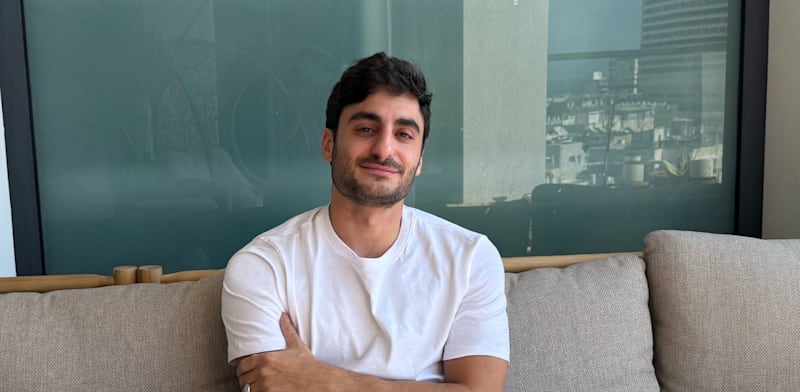
John Eng, a Bronx endocrinologist working at the Veterans Affairs Medical Center, spent years hunting for a hormone that could stabilise blood sugar without crashing it. He found one in an unlikely place: the venom of the Gila monster, a desert lizard that eats only a few times a year. Working from dried venom samples he ordered from a Utah supplier, he isolated a peptide in 1992 that behaved almost exactly like a human gut hormone called GLP-1, only far more stable. His employer, the VA, declined to patent it, so Eng filed for the patent himself and licensed the compound to a small biotech. The first commercial version, exenatide, eventually reached pharmacy shelves as Byetta. That single lizard-venom molecule is the direct ancestor of Ozempic, Wegovy, Mounjaro and Zepbound — a family of drugs that more than one in ten American adults is now taking.
The number is climbing fast enough that survey figures released across 2025 and 2026 keep needing to be revised upward. Recent tallies put roughly one in eight adults on a GLP-1 receptor agonist for weight loss, diabetes, or both — a prevalence that would have sounded absurd when the class was first approved for type 2 diabetes in 2005.
The lizard, the hormone, and the patent nobody wanted
GLP-1 stands for glucagon-like peptide-1, a hormone the human gut releases after a meal to tell the pancreas to make insulin and the brain to stop eating. Its natural version breaks down in the bloodstream within about two minutes, which made it useless as a drug. The Gila monster version Eng isolated — exendin-4 — lasted for hours because the lizard, which eats only a few times a year, evolved a hormone that could hang around and squeeze every calorie out of a rare meal.
When Amylin Pharmaceuticals licensed the compound and brought it to market as Byetta in 2005, the injectable cost patients real money — but the science behind it had come out of federally funded VA research the government itself had passed on. Eng has recounted in interviews that the VA saw no commercial value in the discovery, so he filed the patent himself before licensing it forward, later reimbursed by Amylin for the cost. A discovery the government didn’t want became the seed of a category now generating tens of billions in annual revenue.
From twice-daily injections to a once-weekly shot
Byetta required two injections a day and produced modest weight loss as a side effect that patients kept mentioning to their doctors. Novo Nordisk, the Danish company that had spent decades making insulin, watched the trajectory and built its own longer-acting GLP-1 analogues: liraglutide, sold as Victoza for diabetes in 2010 and Saxenda for weight loss in 2014, then semaglutide, approved as Ozempic in 2017.
Semaglutide only needs to be injected once a week. Chemists at Novo Nordisk attached a fatty acid chain to the peptide that lets it bind to albumin in the blood, hiding from the enzymes that would otherwise chew it up. The result is a molecule that stays active for about seven days and produces weight loss in the range of 15 percent of body mass over roughly a year of use — numbers previously seen only after bariatric surgery.
Wegovy, the higher-dose weight-loss version of semaglutide, was approved by the FDA in 2021. Eli Lilly’s tirzepatide followed as Mounjaro in 2022 and Zepbound in 2023, adding a second hormone target (GIP) that pushed average weight loss above 20 percent in trials.
How one in eight became the number
Prescription volume did not so much rise as detonate. Retail pharmacies in the United States dispensed GLP-1 medications to a small slice of diabetic patients in 2019; by 2023, TikTok videos, celebrity endorsements and a viral off-label market for Ozempic had pushed demand so high that Novo Nordisk warned of global shortages. Compounding pharmacies stepped in with grey-market versions during the FDA-declared shortage. Telehealth companies built their entire business models on prescribing the drugs sight-unseen.
By mid-2026, Forbes Health’s compilation of federal and analyst data put current or recent GLP-1 use among American adults in the low double digits, with women, older adults, and people with obesity heavily overrepresented.
The Medicare pivot of 2026
For most of the drugs’ history, Medicare was legally barred from covering weight-loss medications — a rule inherited from the 2003 legislation that created Medicare Part D, when the memory of fen-phen and other appetite suppressants made lawmakers wary. That began to change with a pilot the Centers for Medicare & Medicaid Services announced on May 6, 2026 and launched on July 1, offering certain Part D beneficiaries GLP-1 prescriptions for a flat $50 monthly copay, according to NPR’s coverage of the rollout.
The pilot, known as the Medicare GLP-1 Bridge, runs through the end of 2027 and applies to Part D enrollees who meet clinical criteria. As CBS News reported, the $50-a-month price applies to brand-name weight-loss drugs made by Novo Nordisk and Eli Lilly, including Wegovy and Zepbound — a steep discount from list prices that once exceeded $1,300 a month.
The pricing shift is partly a market response and partly the result of the Trump administration’s Most-Favored-Nation drug policy framework, which pushes U.S. list prices toward the lower figures paid in other developed countries. A White House analysis published in May 2026 singled out GLP-1s as a leading example of the price reductions the framework was meant to deliver.

The employer backlash
While Medicare opened the door, commercial insurance is quietly closing it. Employers who added GLP-1 coverage in 2022 and 2023 have watched pharmacy spending double or triple, and many are now pulling back. Forbes contributor Bruce Japsen reported in June 2026 that a growing share of health plans and employers are refusing to cover the drugs for weight loss, restricting coverage to diabetes indications or requiring prior authorisation hurdles that most patients cannot clear.
► Watch · Silicon Canals Nobody Owns Ozempic and Almost Nobody Knows Why Silicon Canals traces how a Copenhagen foundation quietly amassed control of the world’s most valuable drugmaker—and why no investor can ever buy it.

The math is brutal for self-funded employers. A workforce of 10,000 with 12 percent GLP-1 uptake at even a discounted net price of $500 a month per patient generates roughly $7.2 million in annual drug spend from a single category. Actuaries at large benefits consultancies have been warning corporate boards since 2024 that GLP-1s could reshape health-plan budgets the way specialty oncology drugs did a decade earlier.
What the drugs actually do inside the body
GLP-1 receptor agonists work on at least three fronts. They slow gastric emptying, so food sits in the stomach longer and satiety signals last longer. They act on the hypothalamus and reward circuits in the brain, dampening what is sometimes called food noise — the constant background chatter about the next meal. And they stimulate insulin release in a glucose-dependent way, which is why they lower blood sugar in diabetics without generally causing hypoglycaemia.
Side effects mirror the mechanism. Nausea, vomiting and constipation are common early on. Rare but serious risks include pancreatitis, gallbladder disease and, in rodent studies, thyroid C-cell tumours — a signal that has kept the drugs contraindicated for patients with a family history of medullary thyroid cancer. Ongoing trials continue to explore benefits that extend well beyond weight, including reductions in major cardiovascular events, slower progression of chronic kidney disease, and preliminary signals in Alzheimer’s and addiction research.
The strange history the numbers erase
The one-in-eight statistic tends to be quoted without its origin. GLP-1 the hormone was identified in the human gut in the 1980s by researchers including Jens Juul Holst in Copenhagen and Daniel Drucker in Toronto, working on a family of proglucagon-derived peptides. Holst has told interviewers that when he presented early findings suggesting GLP-1 could treat diabetes, senior figures in the field dismissed the peptide as too fragile to matter.
It took a desert lizard, a Bronx endocrinologist willing to spend his own money on a patent filing, and a Danish insulin company with a very long time horizon to turn the fragile peptide into a shelf-stable weekly injection. Amylin Pharmaceuticals, the company that first commercialised the drug, was acquired by Bristol-Myers Squibb in 2012 for $5.3 billion — a valuation built in large part on the lizard-venom molecule Eng had struggled for years to give away.
What the injection means at the population level
An unusual thing happens when 12 percent of a country’s adults quietly change how much food they want. Walmart executives told investors in late 2023 they were already seeing subtle shifts in grocery basket size among GLP-1 users. Snack food companies have restructured product portfolios. Airlines have run internal analyses on average passenger weight. Bariatric surgery volumes have fallen for the first time in two decades.
None of it was in the business plan when John Eng filed a patent his own employer didn’t want, on a molecule he’d pulled from a vial of lizard saliva. Across the same three decades that a hormone from a slow-moving reptile became the most-prescribed weight-loss drug in history, tens of millions of Americans have picked up a syringe pen that traces its molecular ancestry to a creature that eats three meals a year.







-1024x683.jpg "Court Hands Democrats Another Win Against Trump on Vote by Mail")