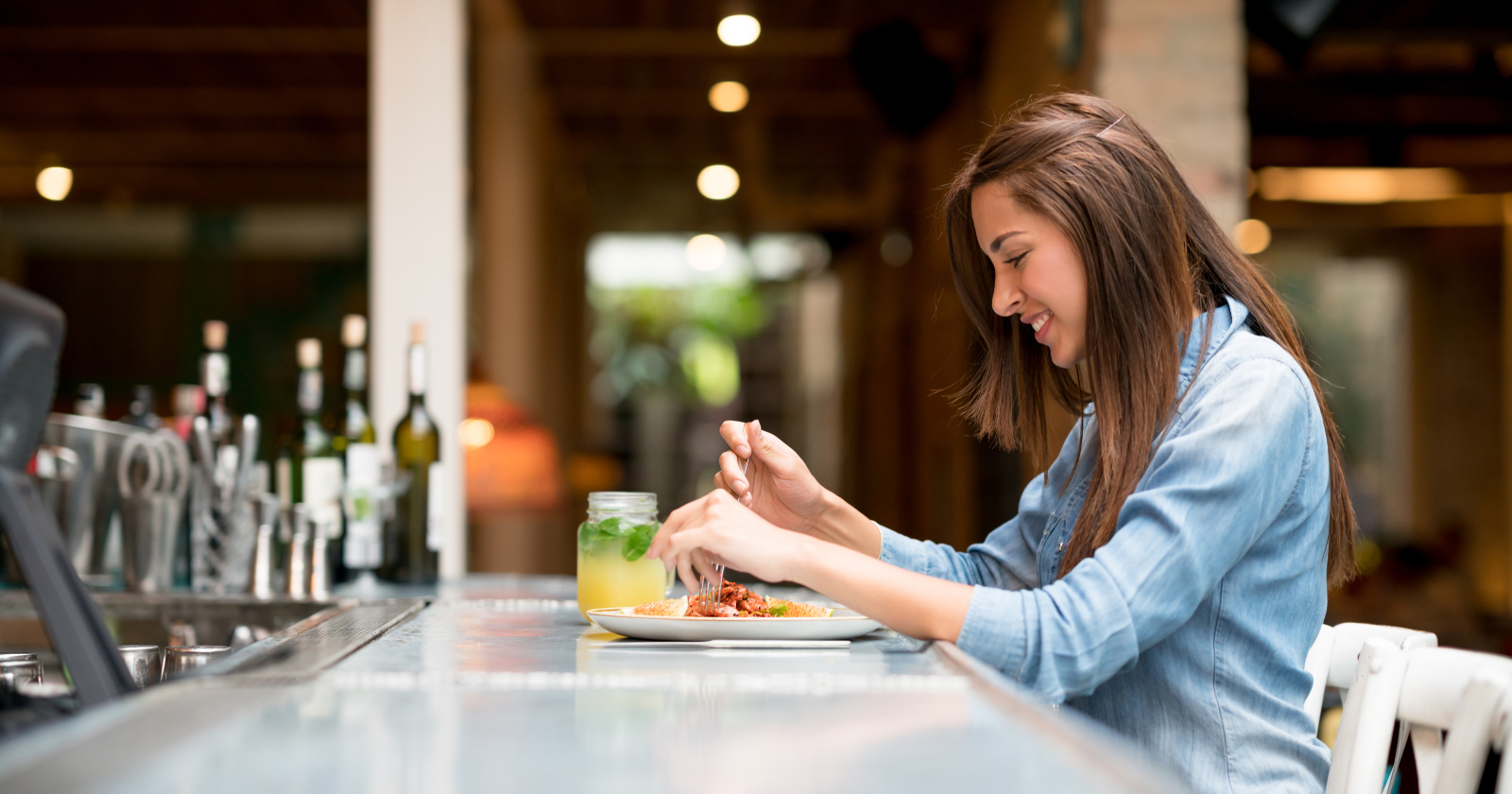
Somewhere in your city tonight, a person is going to walk into a restaurant they have wanted to try for six months, hear the words “just one?”, and quietly decide they would rather eat standing over the kitchen sink at home.
I understand the impulse. That question does something to people. The host does not mean a thing by it. They are counting menus and looking at a floor plan.
But it lands like a diagnosis.
Here is my position, and I will spend the rest of this arguing it: being able to sit at a table built for two, on your own, without feeling the empty chair as an accusation, is a genuinely useful bit of psychological equipment. Not because eating alone makes you interesting. Because the fear that stops you is almost entirely invented, and once you catch yourself believing one invented thing, you start spotting the others.
Why the empty chair feels like an accusation
You are not anxious about the food. You are anxious about being read.
A solo diner assumes a story is being written about them at the surrounding tables: stood up, no friends, working through a bad divorce. Whatever your particular flavour of dread happens to be, it is a story about your social standing, and you are convinced the room is composing it in real time.
Two marketing researchers put numbers on this. In a paper called Inhibited from Bowling Alone, Rebecca Ratner and Rebecca Hamilton found that people avoid enjoyable public activities on their own precisely because they anticipate onlookers will draw conclusions regarding how connected they are. Their more interesting finding got less attention: we badly overestimate how much our enjoyment of these things actually depends on having a companion there.
We are not protecting our fun. We are protecting our reputation from an audience that does not exist.
They also found something oddly specific. Give the activity a whiff of usefulness, make it look like work or errand or obligation, and willingness to do it alone shoots up. Which explains every laptop you have ever seen open at a lunch table.
Nobody is looking at you, and there is evidence
In 2000, three psychologists ran an experiment that has become the standard reference for this sort of self-consciousness. They asked students to walk into a room full of strangers wearing a deliberately embarrassing T-shirt with Barry Manilow’s face on it, then asked them to guess how many people had clocked it.
The wearers wildly overshot. Far fewer observers could recall the shirt than the wearers had assumed. Thomas Gilovich and his colleagues named it the spotlight effect, and their explanation is almost sweet: we anchor on our own vivid inner experience and then fail to adjust down far enough for the fact that everyone else is starring in their own film.
I can add a note from the other side of the room here. I spent years running restaurants, mostly front of house, which means I have watched several thousand people worry about this while nobody worried about them.
Staff do not pity solo diners. Staff quite like solo diners. You order the interesting dish instead of negotiating a compromise, you do not spend nineteen minutes on the wine list, and you free up the table before the second seating. Meanwhile the couple three tables over is conducting a low-volume argument about a car loan and thinking about you exactly never.
What the restaurant industry already worked out
While everyone was busy being embarrassed, the market moved.
Reservations for one on OpenTable rose 23 percent over the past year, and solo diners now average around 94 dollars a head, which is more than groups spend per person. Restaurants noticed this before customers did. That is why counter seating and proper bar dining rooms have multiplied, and why the good places have stopped seating single guests next to the service station like a punishment.
The stigma hasn’t caught up with the spreadsheet yet, which is usually how these things go: the money moves first, and the feeling follows a few years behind.
Chosen alone and stranded alone are different animals
This is the distinction that makes the whole thing work, and most articles on the subject skate straight past it.
A 2018 set of studies by Thuy-vy Nguyen, Richard Ryan and Edward Deci found that solitude has what they call a deactivation effect. Being alone turns down the volume on high-arousal feelings in both directions. Less excitement, yes, but also less anger, less anxiety, less of the buzzing. In their fourth study, the calm and the stress relief showed up specifically when people had actively chosen to be alone.
A newer paper in the Journal of the Association for Consumer Research sharpened the point. Researchers found that we tend to perceive solitude as something that happened to us and togetherness as something we picked, and that perception alone drags down how much we enjoy solo experiences. When solitude reads as chosen, the happiness penalty shrinks considerably.
So the skill on display at a table for one isn’t endurance. It’s authorship. A confident solo diner didn’t get stranded by circumstance, they wrote the evening on purpose.
A caveat, because I am not selling you a lifestyle
I would be doing you a disservice if I turned this into a hymn to independence.
Research on older adults in Japan, where solitary eating is common enough to have its own word, has repeatedly linked regular eating alone with a higher risk of depressive symptoms, along with narrower, less varied diets. That is a real finding and it deserves respect.
It also describes a completely different situation. Those studies are measuring isolation that nobody selected, in people whose dining companions have gradually disappeared. Confidence has nothing to do with it.
The version I am recommending belongs to the person who could have texted three friends and simply did not feel like it. If you cannot remember the last time you ate with another human, the problem is not your table for one. Go and find your people. Then come back to this.
How to actually get good at it
Book it in advance. A reservation for one is a small piece of evidence, filed with a stranger, that this was deliberate.
Start at the bar or the counter. Ambient noise, movement, a bartender who talks if you want and leaves you alone if you do not. Best of all, no vacant chair sitting opposite you doing all that symbolic heavy lifting.
Then work up to a proper table, and when you get there, leave the laptop in your bag. Remember the Ratner and Hamilton finding: making an activity look utilitarian is what makes it feel permissible. Your open laptop is a note to the room explaining why you are allowed to be here. It works beautifully, which is precisely the problem.
Order like a person who wants dinner. Solo diners routinely underspend out of apology, skipping the starter, avoiding the wine, treating the whole exercise as refuelling. Have the thing you want. You are the entire party and you have unanimous approval.
Give it twenty minutes before you reach for your phone. That first stretch is where the discomfort lives, and it burns off faster than you expect once the bread arrives and you realise the ceiling has not fallen in.
Choose somewhere you actually want to eat, not somewhere anonymous enough to hide in. Picking a bad restaurant because it is empty is just the fear making your dinner reservations for you.
The last word on empty chairs
My favourite meals in Bangkok have mostly been eaten on plastic stools with nobody to talk to and no reason to perform an opinion about the noodles.
An empty chair is furniture. It only becomes a verdict if you agree to read it as one, and the research suggests the jury you are so worried about went home hours ago.
Book the table.