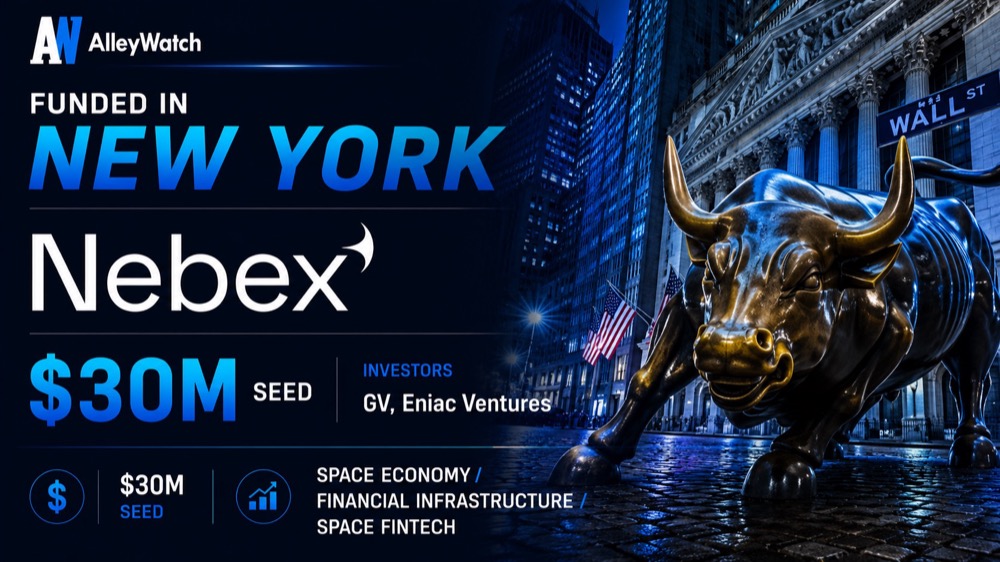
For decades, the global space industry operated as a closed loop: a handful of legacy defense contractors built hardware for a handful of government contracts, with capital, procurement, and settlement handled through bespoke, friction-heavy processes that no other major industry would tolerate. As access to orbit has expanded dramatically and dozens of commercial space companies have emerged, that closed loop has cracked open into something that now resembles an actual market – one with buyers, sellers, and capital that need to find each other at speed. The problem is that the financial and commercial infrastructure to support those transactions simply does not exist; unlike energy, aviation, or global trade, the space economy has never had a standardized exchange layer connecting sovereign demand, commercial supply, and the capital markets. Nebex is building that layer, operating as a financial exchange that connects space agencies and government buyers with commercial space companies and institutional capital through a single platform. The company’s cofounders bring unusually direct experience to the problem: CEO Tejpaul Bhatia previously served as CEO of Axiom Space, where he orchestrated more than $1B in commercial space contracts involving sovereign nations, SpaceX, and NASA, while cofounder Anand Subramanian built venture-backed exchange platforms ContextWeb and NimbleTV.
AlleyWatch sat down with Bhatia to learn more about the business, its future plans, recent funding round, and much, much more…
Who were your investors and how much did you raise?
Nebex raised a $30M seed round backed by GV, Eniac Ventures, 2048 Ventures, Better Tomorrow Ventures, Oceans Ventures, AIN Ventures, Also Capital, Anagram, Armory Square Ventures, Multiball Capital, Trajectory Capital, Plum Alley, and VSC Ventures.
Tell us about the product or service that Nebex offers.
Nebex is the commercial backbone of the global space economy. We connect sovereign buyers, commercial space suppliers, and capital through a single exchange. Unlike other industries that have had the financial rails to fund and settle complex transactions, space has not. Nebex is those rails, giving the space economy the same connective foundation every other major industry already relies on.At a practical level, that means helping governments and space agencies find qualified commercial partners, helping suppliers access demand beyond the small set of incumbents they usually sell to, and helping transactions flow with less friction.Since its inception, the space industry has run on a closed loop with a handful of legacy contractors building hardware for a handful of government contracts. That model has now been fundamentally upended by increased access to orbit and the space economy’s first real moment as a market.
For founders, Nebex means more time developing and scaling their vision, and less time managing around uneven revenue and cash-flow gaps involved in government contracting. For nations, Nebex means more international and commercial collaboration globally, and less cross-border financial friction. Most important, Nebex ensures that international spend is immediately reinvested in a nation’s own economy.
What inspired the start of Nebex?
I joined the commercial space industry 5 years ago and drove over $1B in net new revenue through international sovereign deals. Through this experience, I saw that there is far more demand for commercial space infrastructure than there is supply. However, this demand is often unmet due to the friction on all sides of the transaction. I saw the opportunity to bring this insight and superpower to bring significantly more revenue to space startups all over the world.
How is Nebex different?
Most companies in space are building hardware to sell within the market. We’re building infrastructure for the market itself. We sit at the intersection of three things that remain fragmented: sovereign demand, commercial supply, and the capital markets. We’re focused on the layer that structures and orchestrates these complex transactions.
What market does Nebex target and how big is it?
We target the commercial layer of the global space economy, specifically the point where sovereign buyers, private space companies, and institutional capital need to transact together.Various reports predict growth of the space economy into the trillions. We believe these reports are far underestimating the size of the current market and the potential market in the coming years. However, growth depends on there being a standardized commercial infrastructure that has let industries like energy, aviation, and global trade scale. Nebex is building that commercial infrastructure for space.
What’s your business model?
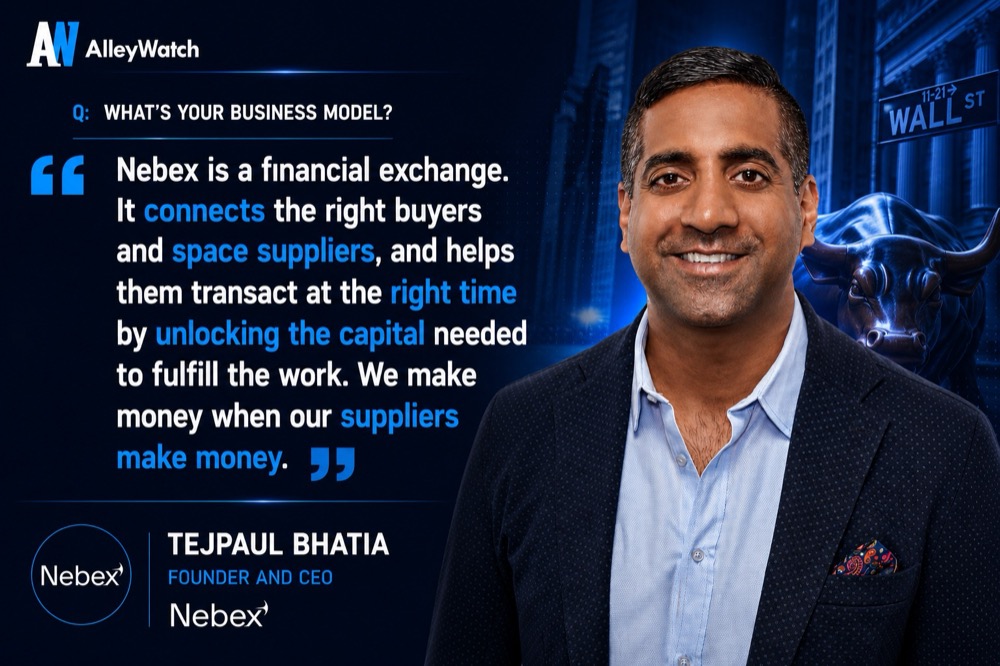
Nebex is a financial exchange. It connects the right buyers and space suppliers, and helps them transact at the right time by unlocking the capital needed to fulfill the work. We make money when our suppliers make money.
How are you preparing for a potential economic slowdown?
We are building around a problem that becomes even more important in a tougher macro environment.When markets tighten, buyers care more about efficient supply, suppliers care more about cash flow, and everyone cares more about execution risk. That is especially true in space, where long sales cycles, cross-border complexity, and payment friction can already slow down otherwise viable programs. Nebex encourages economic collaboration, which becomes even more essential in a tight market.At the same time, we continue to see strong long-term demand signals across the sector. SpaceX helped build the physical rails of the space economy; Nebex is building the commercial rails. It’s a well-capitalized market with plenty of room for growth. As more sovereign buyers enter the market and investors look for what comes next, the need for infrastructure that connects supply, demand, and capital only becomes clearer.
What was the funding process like?
The best conversations were with investors who understood that the next great leap in space won’t be made through engineering; it will be made through business model innovation, which is exactly the mechanism we’re building at Nebex.
We ultimately announced a $30 million seed round led by GV and Eniac Ventures with meaningful participation from great venture funds. This was meaningful for the vision and the market.
What are the biggest challenges that you faced while raising capital?
Our raise was unique in that it was fast and sizable for a seed round. For space founders, the challenge is often pitching a business that aligns with the venture asset class. For fintech founders, the challenge is often finding signals in the noise. As a space fintech, we found a sweet spot that our investors agreed with.
What factors about your business led your investors to write the check?
I think investors wrote the check because they saw a large structural dislocation and opportunity in the space market and a team with firsthand experience solving the underlying problem. They know that the next phase of the space economy needs more than rockets and satellites. It needs market infrastructure. Before Nebex, I helped orchestrate more than $1 billion in commercial space contracts involving sovereign nations, NASA, and SpaceX, so this thesis came directly from operating experience. And our broader team brings together expertise across space, exchanges, company-building, and international government relationships.

What are the milestones you plan to achieve in the next six months?
Our near-term focus is to prove that better market infrastructure can make space transactions easier to execute. That means continuing to build out the platform and expanding the network of sovereign and commercial participants. We’re planning to release a preliminary version of the site later this summer, and a more formal launch by the end of the year.
What advice can you offer companies in New York that do not have a fresh injection of capital in the bank?
My advice to startup founders is always the same for everything: talk to customers all the time. While that may not translate directly to fundraising, it is extremely important to convince investors that you understand your market.
Where do you see the company going now over the near term?
Near term, we are focused on becoming the trusted infrastructure layer for collaboration across the commercial space economy. That means deepening participation across sovereign buyers, suppliers, and capital providers, improving execution and settlement workflows, and reducing the friction that makes cross-border space transactions slower and harder than they should be today.We believe the future of space will depend not just on better technology, but on better mechanisms for countries and companies to work together.In other words: The future of this space economy will not just be about rockets, orbital data centers, or space manufacturing; it will be about the business models that bring success.
What’s your favorite summer destination in and around the city?
My favorite thing to do is walk around the city. I enjoy admiring all the different people and their various hustles.

You are seconds away from signing up for the hottest list in NYC Tech!
Sign up today