No Result
View All Result
SUBMIT YOUR ARTICLES
  • Login
Saturday, June 13, 2026
TheAdviserMagazine.com
  • Home
  • Financial Planning
    • Financial Planning
    • Personal Finance
  • Market Research
    • Business
    • Investing
    • Money
    • Economy
    • Markets
    • Stocks
    • Trading
  • 401k Plans
  • College
  • IRS & Taxes
  • Estate Plans
  • Social Security
  • Medicare
  • Legal
  • Home
  • Financial Planning
    • Financial Planning
    • Personal Finance
  • Market Research
    • Business
    • Investing
    • Money
    • Economy
    • Markets
    • Stocks
    • Trading
  • 401k Plans
  • College
  • IRS & Taxes
  • Estate Plans
  • Social Security
  • Medicare
  • Legal
No Result
View All Result
TheAdviserMagazine.com
No Result
View All Result
Home Market Research Startups

Inside the Financial Times investigation that took five years and nearly destroyed the reporter who exposed Wirecard

by TheAdviserMagazine
1 day ago
in Startups
Reading Time: 6 mins read
A A
Inside the Financial Times investigation that took five years and nearly destroyed the reporter who exposed Wirecard
Share on FacebookShare on TwitterShare on LInkedIn


Inside the Financial Times investigation that took five years and nearly destroyed the reporter who exposed Wirecard

Five years. €1.9bn in cash that turned out not to exist. One DAX 30 listing wiped out in a week. Behind those numbers sits a single Financial Times reporter, Dan McCrum, who spent half a decade being followed, hacked, smeared as a market manipulator, and threatened with criminal prosecution by the German state, for being right.

By the time Wirecard collapsed in June 2020, McCrum had been investigated by BaFin, surveilled by private intelligence operatives, and warned that travelling to Munich could expose him to arrest. The Munich prosecutor’s office had a file open on him. His own phone was sending emails he had not written.

He kept filing.

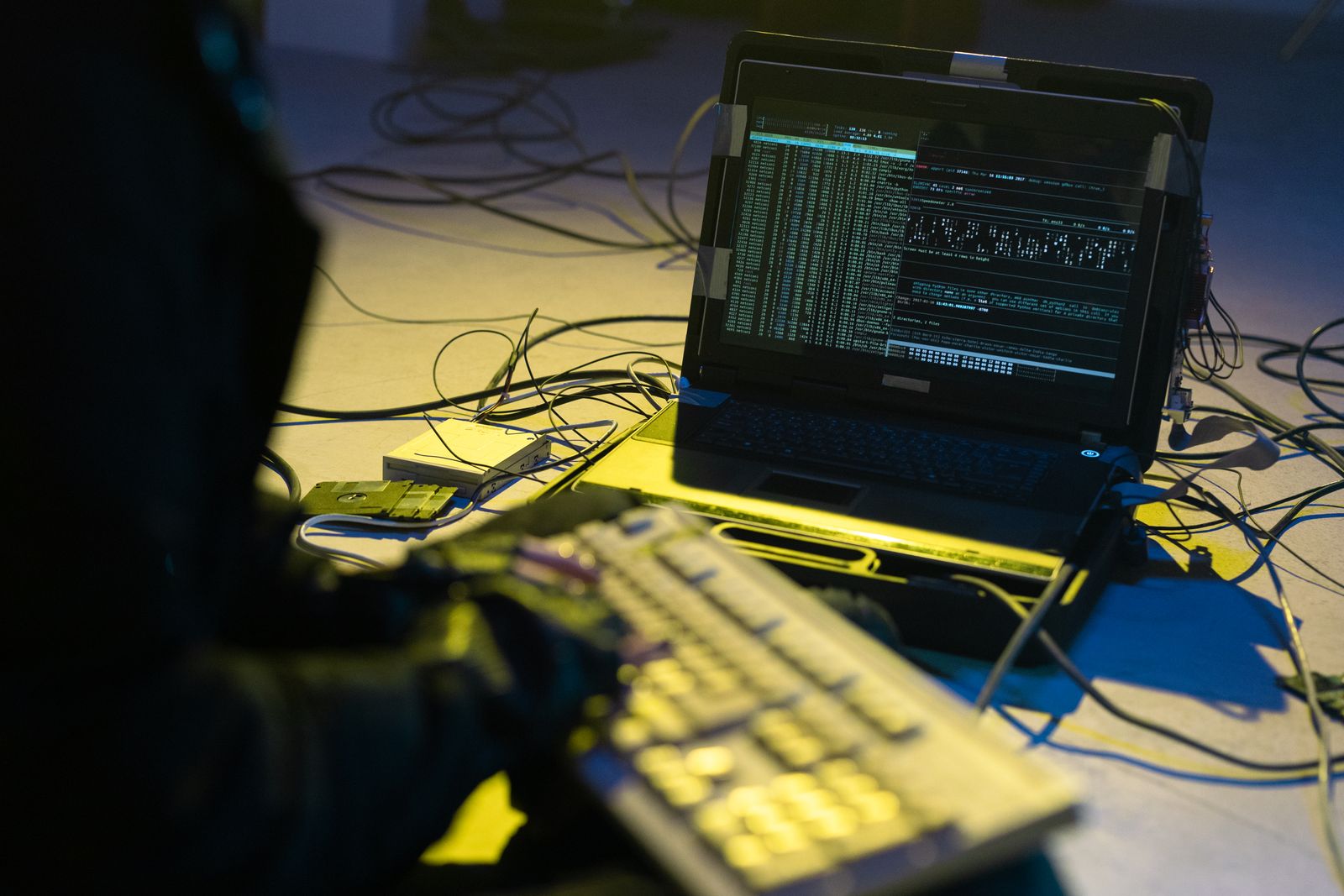
Photo by Max Vakhtbovych on Pexels

The tip that wouldn’t go away

The story arrived as a tip, routed to McCrum through a hedge fund contact who told him to look at a German payments company most people in London had never heard of. McCrum was an Alphaville blogger at the time, working inside the FT‘s markets desk, which had a habit of calling out accounting oddities long before the wider press noticed. He started writing about Wirecard in a series titled The House of Wirecard.

The first posts were technical. Cash flows that did not match reported profits. Acquisitions in places like Mauritius and the Philippines where due diligence was difficult. A pattern of revenue parked in offshore partners that auditors struggled to pin down.

Wirecard’s response was immediate and ferocious. Short sellers were briefed against. Anonymous bloggers attacked McCrum by name. German retail investors, many of whom had piled into the stock as it surged past €100, then €150, then €190, flooded the FT‘s comment sections accusing him of running a coordinated short attack.

The story should have died there. Most do.

The fortress closes ranks

What McCrum had stumbled into was not a normal corporate fraud. It was a fraud the German establishment had decided, for a long time, to treat as an attack on a national champion rather than as a warning about one.

BaFin, the country’s financial regulator, did not begin by exposing Wirecard. It investigated the people raising questions. After McCrum and colleague Stefania Palma published a series of stories citing internal documents from Wirecard’s Singapore office, BaFin imposed a two-month ban on short-selling Wirecard shares, a step the University of Texas’ Ethics Unwrapped project later described as part of the regulator’s move against the Financial Times rather than the company.

BaFin then filed a criminal complaint against McCrum and Palma for suspected market manipulation. The Munich prosecutor’s office opened a file. German lawyers told FT management that if their reporters travelled to Germany, arrest was a realistic possibility.

Around the same time, McCrum noticed his phone behaving strangely. Emails he had not sent sat in his sent folder. He later learned, through reporting by his own paper and others, that he had been the target of a surveillance operation involving private intelligence firms and operatives with intelligence backgrounds, hired to discredit the journalists pursuing the story.

Silicon Canals’ full visual investigation looks at how Jan Marsalek’s life after Wirecard turned a corporate fraud story into something darker.

Wirecard Munich headquarters

Photo by SevenStorm JUHASZIMRUS on Pexels

What sustained pressure does to a person

McCrum has described the period from 2019 into mid-2020 as the worst stretch of his professional life. He was filing stories that readers, regulators and large parts of the German financial press were treating as fabrications. He was raising small children. He was under instructions from FT security not to discuss the story on unsecured channels. He believed, at points, that he was losing.

That is the part of investigative work that rarely fits into the clean version of the story. From the outside, persistence looks like a character trait. From the inside, it can mean years of legal threats, reputation attacks, source protection, encrypted conversations, family strain and the slow pressure of being told that the thing you can see is not really there.

McCrum has spoken publicly, including in his book Money Men, about the toll. The sleeplessness. The paranoia, which turned out not to be paranoia. The cost to his family. The cost to colleagues who shared the reporting load and the legal exposure. In a normal workplace dispute, the stress is usually contained by the boundaries of the job. In the Wirecard story, the work followed the reporter home. The company was not simply denying the allegations. It was trying to make the people asking questions appear corrupt, unstable or compromised.

The retaliation tax

One of the more under-reported dynamics in long-form investigative work is what happens when the subject of an investigation fights back not on the facts but on the reporter personally. Legal threats are one thing. Reputational attacks are another. Surveillance is something else again.

By 2019, McCrum was dealing with all three. The institution meant to adjudicate truth in this case was BaFin. BaFin had picked a side, and it was not his.

That is why the Wirecard story was never only a story about accounting. It was about what happens when an institution with public legitimacy gives a private company the benefit of the doubt, then turns its scrutiny on the people trying to test the company’s claims. The reporter is not just fighting the subject. He is fighting the structure around the subject.

McCrum did have something many reporters do not: a supportive editor in Paul Murphy and an institution in the Financial Times willing to underwrite the legal bills. The FT‘s own profile now describes him as an investigative reporter whose book Money Men was adapted into the Netflix documentary Skandal! Bringing down Wirecard. That is the tidy version. The untidy version is that the reporting survived because an institution chose not to abandon its reporter when the pressure became expensive.

The KPMG report and the seven weeks that broke it

The turn came in two stages. In April 2020, Wirecard published the results of a special audit it had commissioned from KPMG in an attempt to clear its name. The audit did not produce the clean bill of health the company needed. KPMG could not fully verify the third-party acquiring business that had made up a substantial portion of Wirecard’s reported profits. The auditors could not get all the data they needed. The company’s story held, but only barely.

The stock fell. It did not collapse. The myth held for another seven weeks.

Then, on 18 June 2020, EY refused to sign off on Wirecard’s annual accounts because €1.9bn in cash supposedly held in trust accounts at two Philippine banks could not be located. BPI and BDO, the two banks named, denied that the money was there. The central bank of the Philippines said none of the money appeared to have entered the country’s financial system, a point reported at the time by the Guardian.

On 22 June, Wirecard’s management board issued an ad-hoc disclosure conceding that the missing €1.9bn likely did not exist. Three days later the company filed for insolvency. CEO Markus Braun was arrested. COO Jan Marsalek vanished.

McCrum’s reporting, every disputed line of it, was vindicated inside a week.

What the cost actually looks like

The temptation in journalism is to package the Wirecard story as a triumph: five years of dogged reporting, fraud exposed, regulators humiliated, BaFin president Felix Hufeld eventually pushed out, the German parliament running its own inquiry. All true. McCrum won major prizes. He wrote a book. He kept his job.

The cost is harder to package. McCrum has talked openly about how long it took to recover, about the strain on his marriage and his children, about the people inside the story who took their own lives, and about the colleagues whose careers were dragged into the fight. None of this fits neatly inside an awards citation.

The underlying machinery has not gone away either. Marsalek remains a fugitive. Reporting by The Insider, Der Spiegel, ZDF and PBS Frontline has placed him in Moscow, under Russian protection. Documents on the Novichok nerve agent were reportedly in Marsalek’s possession before he fled. In March 2025, a Russian spy ring operating out of the UK and linked by prosecutors to Marsalek from Moscow was convicted at the Old Bailey. Braun denies wrongdoing and maintains he was deceived; his Munich trial verdict is expected later in 2026.

Why this matters for anyone doing hard work in hostile systems

The Wirecard story has obvious lessons for regulators, auditors and anyone who still believes a DAX listing is a certificate of legitimacy. The less obvious lesson is about endurance.

People who do work like this, including founders pursuing claims that markets refuse to believe, whistleblowers inside companies that retaliate, prosecutors building cases against well-resourced defendants and journalists working against powerful institutions, often assume the system will eventually catch up to the truth. Sometimes it does. Sometimes it takes five years. And in those five years, the person carrying the file pays a price the institution does not see and does not reimburse.

McCrum has described the small things that stayed with him. The sent folder he did not recognise. The instruction not to take certain trains. The children who knew their father was working on something he could not talk about at the dinner table. The walk to the office on the morning of 18 June 2020, before EY’s refusal became public, not yet knowing the file in his hands was about to be the only file that mattered.

The man accused of helping run the money is somewhere in Moscow. The reporter who exposed the fraud is still sleeping in the same house, still answering the same questions, still carrying it.




Source link

Tags: DestroyedExposedfinancialinvestigationreporterTimesWirecardYears
ShareTweetShare
Previous Post

Goldman Sachs – GS: Big Player mit Pullback-Setup!

Next Post

Trump turned environmentalist to slap new tariffs on Brazil, so why are deforestation rates down?

Related Posts

edit post
Most people don’t realise the loneliest stretch of adulthood often arrives in the early 50s, when the children have left, the parents are still here but smaller, and nobody in the house is being raised anymore

Most people don’t realise the loneliest stretch of adulthood often arrives in the early 50s, when the children have left, the parents are still here but smaller, and nobody in the house is being raised anymore

by TheAdviserMagazine
June 12, 2026
0

For decades, the dominant warning about midlife went something like this: the empty nest will hit when the last child...

edit post
On October 29, 1969, a UCLA student named Charley Kline tried to send the word ‘LOGIN’ over ARPANET to Stanford, and the system crashed after the letter O — making the first message ever transmitted across the internet the accidental, almost biblical ‘LO’

On October 29, 1969, a UCLA student named Charley Kline tried to send the word ‘LOGIN’ over ARPANET to Stanford, and the system crashed after the letter O — making the first message ever transmitted across the internet the accidental, almost biblical ‘LO’

by TheAdviserMagazine
June 12, 2026
0

At roughly 10:30 p.m. on October 29, 1969, a UCLA graduate student named Charley Kline put on a telephone headset,...

edit post
The Wollemi pine was known only from ancient fossils until a park ranger rappelled into a canyon outside Sydney in 1994 and found a grove still alive, and the exact location is now a state secret guarded by Australian rangers

The Wollemi pine was known only from ancient fossils until a park ranger rappelled into a canyon outside Sydney in 1994 and found a grove still alive, and the exact location is now a state secret guarded by Australian rangers

by TheAdviserMagazine
June 12, 2026
0

Fewer than 100 mature Wollemi pines grow in the wild. Their exact location is a state secret, withheld from maps...

edit post
ShinyHunters breached more than 100 organisations through a PeopleSoft flaw before Oracle issued an advisory, and the reason two-thirds were universities says everything about how enterprise software actually fails

ShinyHunters breached more than 100 organisations through a PeopleSoft flaw before Oracle issued an advisory, and the reason two-thirds were universities says everything about how enterprise software actually fails

by TheAdviserMagazine
June 12, 2026
0

The story of the latest ShinyHunters campaign is not really about a bug in Oracle PeopleSoft. It is about what...

edit post
Claude Fable 5 is Anthropic’s most capable public AI model, and will hand your conversation to a weaker model the moment it detects a biology or chemistry question — Anthropic admits the net is overly broad and plans to narrow it

Claude Fable 5 is Anthropic’s most capable public AI model, and will hand your conversation to a weaker model the moment it detects a biology or chemistry question — Anthropic admits the net is overly broad and plans to narrow it

by TheAdviserMagazine
June 11, 2026
0

On Tuesday, Anthropic released Claude Fable 5, the first publicly available model in its Mythos class — a family the...

edit post
EDGE Markets Raises .2M to Solve the Capital Constraint Blocking Institutional Traders in the Prediction Markets – AlleyWatch

EDGE Markets Raises $29.2M to Solve the Capital Constraint Blocking Institutional Traders in the Prediction Markets – AlleyWatch

by TheAdviserMagazine
June 11, 2026
0

Prediction markets have moved from a niche curiosity to a legitimate asset class almost overnight, with annualized revenue already above...

Next Post
edit post
Trump turned environmentalist to slap new tariffs on Brazil, so why are deforestation rates down?

Trump turned environmentalist to slap new tariffs on Brazil, so why are deforestation rates down?

edit post
ShinyHunters breached more than 100 organisations through a PeopleSoft flaw before Oracle issued an advisory, and the reason two-thirds were universities says everything about how enterprise software actually fails

ShinyHunters breached more than 100 organisations through a PeopleSoft flaw before Oracle issued an advisory, and the reason two-thirds were universities says everything about how enterprise software actually fails

  • Trending
  • Comments
  • Latest
edit post
Supreme Court Delivers More Bad Redistricting News for Democrats

Supreme Court Delivers More Bad Redistricting News for Democrats

May 19, 2026
edit post
From Maine to Michigan, Democrats Are Making Communism Great Again

From Maine to Michigan, Democrats Are Making Communism Great Again

May 16, 2026
edit post
Florida Roads Become a Battleground for Illegal Immigration

Florida Roads Become a Battleground for Illegal Immigration

June 9, 2026
edit post
The 8 States That Still Tax Social Security in 2026

The 8 States That Still Tax Social Security in 2026

June 6, 2026
edit post
It’s Time To Talk About Massie

It’s Time To Talk About Massie

May 23, 2026
edit post
A Tax on Social Media – Blue-State Governments’ Newest Ploy

A Tax on Social Media – Blue-State Governments’ Newest Ploy

June 5, 2026
edit post
6 Daily Foot Checks That Prevent Serious Complications

6 Daily Foot Checks That Prevent Serious Complications

0
edit post
Inside the Financial Times investigation that took five years and nearly destroyed the reporter who exposed Wirecard

Inside the Financial Times investigation that took five years and nearly destroyed the reporter who exposed Wirecard

0
edit post
Israel’s fiscal deficit continues to narrow

Israel’s fiscal deficit continues to narrow

0
edit post
Mortgage and refinance interest rates today, Saturday, June 13, 2026: All rates moving lower

Mortgage and refinance interest rates today, Saturday, June 13, 2026: All rates moving lower

0
edit post
The real cost of disconnected corporate tax systems

The real cost of disconnected corporate tax systems

0
edit post
It’s Not Just Social Security: Medicare’s Squeeze Starts in 2033

It’s Not Just Social Security: Medicare’s Squeeze Starts in 2033

0
edit post
Mortgage and refinance interest rates today, Saturday, June 13, 2026: All rates moving lower

Mortgage and refinance interest rates today, Saturday, June 13, 2026: All rates moving lower

June 13, 2026
edit post
Frax Governance Weighs Raising sfrxUSD Aave v4 Allocation Cap

Frax Governance Weighs Raising sfrxUSD Aave v4 Allocation Cap

June 13, 2026
edit post
Who is Bret Johnsen, the SpaceX CFO behind the company’s historic IPO?

Who is Bret Johnsen, the SpaceX CFO behind the company’s historic IPO?

June 13, 2026
edit post
Uday Kotak questions SpaceX valuation, says only time will tell if we’re in ‘mega bubble’

Uday Kotak questions SpaceX valuation, says only time will tell if we’re in ‘mega bubble’

June 13, 2026
edit post
The Friendships Worth Letting Go of After 60

The Friendships Worth Letting Go of After 60

June 12, 2026
edit post
AI shopping agents are coming. No one is ready for them

AI shopping agents are coming. No one is ready for them

June 12, 2026
The Adviser Magazine

The first and only national digital and print magazine that connects individuals, families, and businesses to Fee-Only financial advisers, accountants, attorneys and college guidance counselors.

CATEGORIES

  • 401k Plans
  • Business
  • College
  • Cryptocurrency
  • Economy
  • Estate Plans
  • Financial Planning
  • Investing
  • IRS & Taxes
  • Legal
  • Market Analysis
  • Markets
  • Medicare
  • Money
  • Personal Finance
  • Social Security
  • Startups
  • Stock Market
  • Trading

LATEST UPDATES

  • Mortgage and refinance interest rates today, Saturday, June 13, 2026: All rates moving lower
  • Frax Governance Weighs Raising sfrxUSD Aave v4 Allocation Cap
  • Who is Bret Johnsen, the SpaceX CFO behind the company’s historic IPO?
  • Our Great Privacy Policy
  • Terms of Use, Legal Notices & Disclosures
  • Contact us
  • About Us

© Copyright 2024 All Rights Reserved
See articles for original source and related links to external sites.

Welcome Back!

Login to your account below

Forgotten Password?

Retrieve your password

Please enter your username or email address to reset your password.

Log In
No Result
View All Result
  • Home
  • Financial Planning
    • Financial Planning
    • Personal Finance
  • Market Research
    • Business
    • Investing
    • Money
    • Economy
    • Markets
    • Stocks
    • Trading
  • 401k Plans
  • College
  • IRS & Taxes
  • Estate Plans
  • Social Security
  • Medicare
  • Legal

© Copyright 2024 All Rights Reserved
See articles for original source and related links to external sites.