No Result
View All Result
SUBMIT YOUR ARTICLES
  • Login
Monday, June 15, 2026
TheAdviserMagazine.com
  • Home
  • Financial Planning
    • Financial Planning
    • Personal Finance
  • Market Research
    • Business
    • Investing
    • Money
    • Economy
    • Markets
    • Stocks
    • Trading
  • 401k Plans
  • College
  • IRS & Taxes
  • Estate Plans
  • Social Security
  • Medicare
  • Legal
  • Home
  • Financial Planning
    • Financial Planning
    • Personal Finance
  • Market Research
    • Business
    • Investing
    • Money
    • Economy
    • Markets
    • Stocks
    • Trading
  • 401k Plans
  • College
  • IRS & Taxes
  • Estate Plans
  • Social Security
  • Medicare
  • Legal
No Result
View All Result
TheAdviserMagazine.com
No Result
View All Result
Home Market Research Market Analysis

B2B Hyperpersonalization Is Not A Feature — It Is An Expectation!

by TheAdviserMagazine
4 months ago
in Market Analysis
Reading Time: 3 mins read
A A
B2B Hyperpersonalization Is Not A Feature — It Is An Expectation!
Share on FacebookShare on TwitterShare on LInkedIn


A procurement manager logs into your portal at 10:47 p.m. They don’t want to browse. They want to finish: Reorder the right SKU, at the right price, under the right contract terms, with the right delivery promise, and get back to tomorrow’s production run.

Most B2B digital commerce experiences still treat that buyer like a generic visitor. Same homepage. Same search results. Same “recommended products.” Same blunt instruments dressed up as relevance that frustrate your customers.

Hyperpersonalization is the antidote, and it’s quickly becoming one of the most consequential AI use cases in B2B digital commerce. Unlike B2C, where personalization is about inspiration and impulse, B2B hyperpersonalization operates inside hard constraints: pricing agreements, permissions, and governance. When done right, it makes those constraints invisible to buyers instead of turning them into obstacles. That distinction matters. B2B buyers aren’t shopping for fun; they’re buying to keep operations running. The fastest way to lose them isn’t complexity — it’s unnecessary complexity.

Hyperpersonalization removes friction the buyer never asked for. It eliminates dead ends, irrelevant results, and forced detours to sales or support for answers that should have been obvious. And it does so without breaking the rules that make B2B commerce viable at scale.

Consider search. In B2B, search is rarely exploration; it’s intent. Buyers type part numbers, legacy names, symptoms, or “the same thing as last time.” AI-driven hyperpersonalization interprets that intent, ranks results based on account context, and surfaces what matters now, not what sells best globally. The difference isn’t cosmetic — it’s the difference between self-service and escalation.

Or take assortments. Traditional personalization shows what “people like you also bought.” Hyperpersonalization in B2B shows what you are allowed to buy, what fits your installed base, what complies with contract terms, and what substitutes are acceptable when supply is tight. Fewer clicks. Fewer errors. Faster outcomes.

The most advanced examples go further, anticipating needs instead of reacting to them. AI can recognize reorder patterns, usage cycles, and behavioral signals to proactively surface replenishment options, documentation, or compatible accessories, often before the buyer asks. Done well, it feels less like selling and more like a highly competent account manager who never sleeps.

This is why hyperpersonalization keeps surfacing in executive interviews, even when it doesn’t always show up as a standalone “use case” in AI roadmaps. Leaders don’t talk about it as a feature; they talk about it as an expectation. Buyers increasingly assume that digital commerce experiences should recognize who they are, what they do, and what they’re trying to accomplish, without forcing them to explain it every time.

Yet adoption lags ambition. Many organizations are still stuck in rule-based personalization or pilot projects that never scale. The blocker isn’t AI capability; it’s foundation. Hyperpersonalization only works when identity, account data, product data, and governance are connected. AI amplifies what’s already there, good or bad.

The smartest starting point isn’t “personalize everything.” It’s choosing one high-friction journey — reorder, parts replacement, quote to order — and redesigning it around buyer intent. Instrument it. Learn from it. Then scale.

Hyperpersonalization is the fast lane because it compounds. Every interaction generates signals. Every signal sharpens relevance. And relevance is what turns digital commerce from a channel into a competitive advantage.

Want to go deeper on where AI is actually delivering value in B2B digital commerce? See six additional top AI use cases in the report here and schedule a meeting with Christina to discuss how to apply them in your business.



Source link

Tags: B2BexpectationFeatureHyperpersonalization
ShareTweetShare
Previous Post

FCA Picks Four Firms for Stablecoin Trials in Sandbox Ahead of Next Year’s Crypto Rules

Next Post

Israeli startup Gambit Security raises $61m

Related Posts

edit post
How to Gain Visibility into Distributor Inventory in 2026

How to Gain Visibility into Distributor Inventory in 2026

by TheAdviserMagazine
June 13, 2026
0

Only 6% of organizations report having full end-to-end supply chain visibility, yet 80% of companies faced at least one major...

edit post
Automating Channel Partner Payments: The 2026 Strategy Guide

Automating Channel Partner Payments: The 2026 Strategy Guide

by TheAdviserMagazine
June 12, 2026
0

Did you know that nearly one in three companies still lose over 30 hours every month to manual invoicing and...

edit post
SpaceX Guide: Everything You Need to Know About the Biggest IPO in History

SpaceX Guide: Everything You Need to Know About the Biggest IPO in History

by TheAdviserMagazine
June 12, 2026
0

SpaceX begins trading on Nasdaq today under the ticker , targeting a valuation of approximately $1.75 trillion and seeking to...

edit post
Conway’s Law: Your Operating Model Matters More Than The AI Model

Conway’s Law: Your Operating Model Matters More Than The AI Model

by TheAdviserMagazine
June 12, 2026
0

I love an axiom, something easy to remember, fast to say, and punchy enough to stick. With my older boys,...

edit post
Turn Application Portfolio Rationalization Into A Continuous Optimization Capability

Turn Application Portfolio Rationalization Into A Continuous Optimization Capability

by TheAdviserMagazine
June 12, 2026
0

Many enterprises have invested heavily in application portfolio rationalization (APR) to regain control of sprawling application estates. These efforts typically...

edit post
Gold Correction Shows Why Safe-Haven Trades Can Become Overcrowded

Gold Correction Shows Why Safe-Haven Trades Can Become Overcrowded

by TheAdviserMagazine
June 11, 2026
0

’s latest pullback looks less like weakness and more like normalization. Its extreme lead over stocks had become difficult to...

Next Post
edit post
Israeli startup Gambit Security raises m

Israeli startup Gambit Security raises $61m

edit post
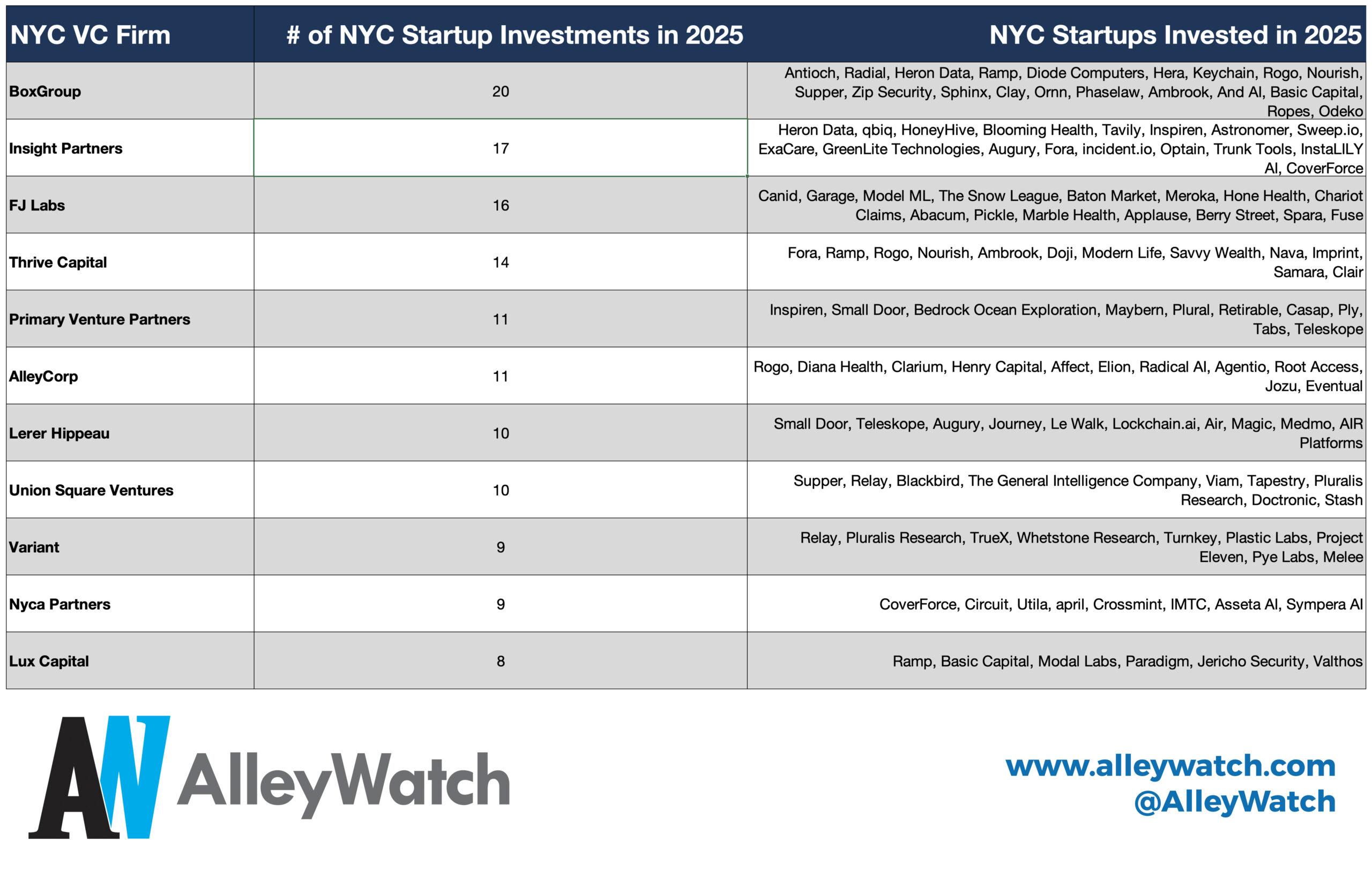
The 8 Most Active NYC Venture Capital Firms in 2025 – AlleyWatch

The 8 Most Active NYC Venture Capital Firms in 2025 – AlleyWatch

  • Trending
  • Comments
  • Latest
edit post
Supreme Court Delivers More Bad Redistricting News for Democrats

Supreme Court Delivers More Bad Redistricting News for Democrats

May 19, 2026
edit post
Florida Roads Become a Battleground for Illegal Immigration

Florida Roads Become a Battleground for Illegal Immigration

June 9, 2026
edit post
From Maine to Michigan, Democrats Are Making Communism Great Again

From Maine to Michigan, Democrats Are Making Communism Great Again

May 16, 2026
edit post
The 8 States That Still Tax Social Security in 2026

The 8 States That Still Tax Social Security in 2026

June 6, 2026
edit post
It’s Time To Talk About Massie

It’s Time To Talk About Massie

May 23, 2026
edit post
A Tax on Social Media – Blue-State Governments’ Newest Ploy

A Tax on Social Media – Blue-State Governments’ Newest Ploy

June 5, 2026
edit post
Markets likely to move beyond geopolitics, focus to shift to earnings: Devina Mehra

Markets likely to move beyond geopolitics, focus to shift to earnings: Devina Mehra

0
edit post
Ron Baron bought  billion of SpaceX shares in IPO, lifting stake to  billion

Ron Baron bought $1 billion of SpaceX shares in IPO, lifting stake to $25 billion

0
edit post
The Crucial Goal That Environmental Activists Reject

The Crucial Goal That Environmental Activists Reject

0
edit post
Did Tether just freeze M in USDT with no link to a hack in Monero money laundering sting?

Did Tether just freeze $72M in USDT with no link to a hack in Monero money laundering sting?

0
edit post
First Rental in 2016, Financially Free in 2026 (Every Strategy I Used)

First Rental in 2016, Financially Free in 2026 (Every Strategy I Used)

0
edit post
Is an Annual or Monthly Subscription Better? Plus More June Money Questions

Is an Annual or Monthly Subscription Better? Plus More June Money Questions

0
edit post
Ron Baron bought  billion of SpaceX shares in IPO, lifting stake to  billion

Ron Baron bought $1 billion of SpaceX shares in IPO, lifting stake to $25 billion

June 15, 2026
edit post
The Crucial Goal That Environmental Activists Reject

The Crucial Goal That Environmental Activists Reject

June 15, 2026
edit post
Is an Annual or Monthly Subscription Better? Plus More June Money Questions

Is an Annual or Monthly Subscription Better? Plus More June Money Questions

June 15, 2026
edit post
Did Tether just freeze M in USDT with no link to a hack in Monero money laundering sting?

Did Tether just freeze $72M in USDT with no link to a hack in Monero money laundering sting?

June 15, 2026
edit post
First Rental in 2016, Financially Free in 2026 (Every Strategy I Used)

First Rental in 2016, Financially Free in 2026 (Every Strategy I Used)

June 15, 2026
edit post
The UK’s Online Safety Act gives Ofcom the power to fine platforms 10% of their global revenue, which for Meta alone would be over  billion, and the enforcement unit responsible for issuing those fines has fewer than 50 staff

The UK’s Online Safety Act gives Ofcom the power to fine platforms 10% of their global revenue, which for Meta alone would be over $16 billion, and the enforcement unit responsible for issuing those fines has fewer than 50 staff

June 15, 2026
The Adviser Magazine

The first and only national digital and print magazine that connects individuals, families, and businesses to Fee-Only financial advisers, accountants, attorneys and college guidance counselors.

CATEGORIES

  • 401k Plans
  • Business
  • College
  • Cryptocurrency
  • Economy
  • Estate Plans
  • Financial Planning
  • Investing
  • IRS & Taxes
  • Legal
  • Market Analysis
  • Markets
  • Medicare
  • Money
  • Personal Finance
  • Social Security
  • Startups
  • Stock Market
  • Trading

LATEST UPDATES

  • Ron Baron bought $1 billion of SpaceX shares in IPO, lifting stake to $25 billion
  • The Crucial Goal That Environmental Activists Reject
  • Is an Annual or Monthly Subscription Better? Plus More June Money Questions
  • Our Great Privacy Policy
  • Terms of Use, Legal Notices & Disclosures
  • Contact us
  • About Us

© Copyright 2024 All Rights Reserved
See articles for original source and related links to external sites.

Welcome Back!

Login to your account below

Forgotten Password?

Retrieve your password

Please enter your username or email address to reset your password.

Log In
No Result
View All Result
  • Home
  • Financial Planning
    • Financial Planning
    • Personal Finance
  • Market Research
    • Business
    • Investing
    • Money
    • Economy
    • Markets
    • Stocks
    • Trading
  • 401k Plans
  • College
  • IRS & Taxes
  • Estate Plans
  • Social Security
  • Medicare
  • Legal

© Copyright 2024 All Rights Reserved
See articles for original source and related links to external sites.