No Result
View All Result
SUBMIT YOUR ARTICLES
  • Login
Monday, June 22, 2026
TheAdviserMagazine.com
  • Home
  • Financial Planning
    • Financial Planning
    • Personal Finance
  • Market Research
    • Business
    • Investing
    • Money
    • Economy
    • Markets
    • Stocks
    • Trading
  • 401k Plans
  • College
  • IRS & Taxes
  • Estate Plans
  • Social Security
  • Medicare
  • Legal
  • Home
  • Financial Planning
    • Financial Planning
    • Personal Finance
  • Market Research
    • Business
    • Investing
    • Money
    • Economy
    • Markets
    • Stocks
    • Trading
  • 401k Plans
  • College
  • IRS & Taxes
  • Estate Plans
  • Social Security
  • Medicare
  • Legal
No Result
View All Result
TheAdviserMagazine.com
No Result
View All Result
Home Market Research Economy

Why Mises’s The Theory of Money and Credit Is Still Important Today

by TheAdviserMagazine
4 months ago
in Economy
Reading Time: 4 mins read
A A
Why Mises’s The Theory of Money and Credit Is Still Important Today
Share on FacebookShare on TwitterShare on LInkedIn


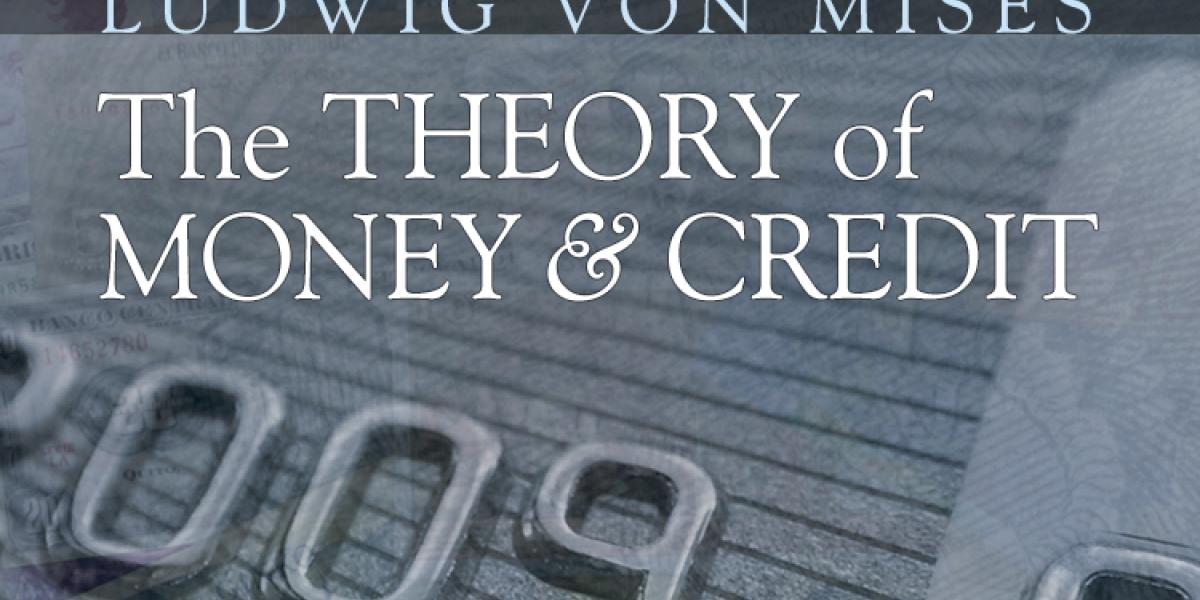
This is a review of Ludwig von Mises’s book The Theory of Money and Credit. All investment strategies, principles, and recommendations discussed are those presented in the book and reflect the author’s views, not my personal advice.

If you’ve ever wondered why money seems simple in everyday life—but maddeningly complicated whenever crises erupt—you’re in good company. More than a century ago, Ludwig von Mises took on the same puzzle. The surprising part is that his answers still address today’s headlines.

What This Book Is Really About

Mises’s The Theory of Money and Credit isn’t an abstract treatise for academics. At its heart, it’s a book about how money actually works—how it gains value, how credit expands, why booms feel great, and why busts seem inevitable.

Mises’s key message is deceptively simple: money and credit aren’t magic. They can’t conjure new wealth. They can only help coordinate real economic activity—or distort it when misused.

Money: A Social Tool, Not a Government Creation

Mises begins by stripping money down to its essential attributes. Money, he argues, emerged, not because kings or governments decreed it should, but because people needed a better way to trade. Over time, certain goods—such as gold and silver—became universally-accepted as a media of exchange.

Mises solved the circularity problem of money by arguing that money gets its value from previously exchanging as a barter good. Such goods, with certain characteristics, became useful, not just as consumable goods, but because they could be exchanged for other goods.

Money’s power comes from trust, not compulsion. That trust is fragile. If a government manipulates money excessively, it risks undermining the very mechanism on which the economy relies.

Credit: A Useful Tool With Built-In Risks

Credit, at first glance, looks like a simple promise: someone lends, someone borrows.

But Mises draws a crucial distinction between commodity credit—lending based on real savings (someone produced more than they consumed)—and circulation credit, which is lending created “out of thin air” by banks expanding their balance sheets.

Circulation credit is what modern banking systems produce when they make loans without increasing real savings in the economy. This type of credit is the source of both booms and busts. When banks expand credit, they lower interest rates. This encourages long-term investment projects that seem profitable only because money is artificially cheap. Eventually, reality reasserts itself: resources are limited, and the investment boom runs out of materials, labor, or consumers.

The correction—a recession or depression—is the economy realigning itself with real resources.

Inflation and the “Short Run Temptation”

Mises’s critique of inflation remains strikingly relevant. Inflation—whether through money printing or credit expansion—may appear to be an easy fix for sluggish growth. Governments and central banks often justify it as a way to “create jobs” or maintain high wages.

Mises strongly disagreed. He wrote that inflation hides the reality of scarcity—you can’t print your way to real prosperity: “Inflation and credit expansion are the means to obfuscate the fact that there prevails a nature-given scarcity of the material things on which the satisfaction of human wants depends.”

This wasn’t an ideological statement so much as a practical one: printing money doesn’t create more goods; it only redistributes purchasing power and distorts investment decisions.

Business Cycles: Why Booms Always Turn to Busts

The heart of the book is Mises’s explanation of the boom-bust cycle or the Austrian theory of business cycles. In simple terms: Artificially-low interest rates (from credit expansion) encourage long-term investments that appear profitable. These projects can’t all be completed because real resources are limited. There is a temporary, expansionary boom, but the boom hits bottlenecks. The bust forces the economy back to reality. Mises summarizes this mechanism succinctly:

Credit expansion initially can produce a boom. But such a boom is bound to end in a slump, in a depression. What bring about the recurrence of periods of economic crises are precisely the reiterated attempts of governments and banks supervised by them to expand credit in order to make business good by cheap interest rates.

This isn’t pessimism. Mises believes normal recessions are a necessary clearing-out of misallocated resources, especially capital goods, like pruning a tree so it can grow back healthier.

Why the Gold Standard Matters to Mises

Mises wasn’t nostalgic for gold; he believed any stable monetary system must be protected from political manipulation. He argued the gold standard’s primary virtue was that it restrained credit expansion:

What all the enemies of the gold standard spurn as its main vice is precisely the same thing that in the eyes of the advocates of the gold standard is its main virtue, namely, its incompatibility with a policy of credit expansion. The nucleus of all the effusions of the antigold authors and politicians is the expansionist fallacy.

In his view, fiat systems tempt governments into believing they can create wealth by decree—a belief he considered one of the most dangerous illusions in economics.

Why This Book Matters Today

Even if you skim the news, you’ll recognize many themes Mises warned about over a century ago: debt-driven growth, interventions to “stimulate demand,” promoting “low interest rates,” asset bubbles fueled by cheap credit, political pressure on central banks for more easy money, and widening inequality produced by inflation.

You don’t need to accept all of his conclusions to benefit from understanding his logic. Mises’s outstanding achievement was to build a coherent explanation of how money and credit shape the entire economic system.

Summary

The Theory of Money and Credit offers one clear lesson: money works best when it’s boring. When money becomes a political tool—managed for short-term advantage rather than long-term stability—the economic system becomes prone to cycles, crises, and inequality.

For everyday readers, the book is a reminder that wealth comes from production, exchange, and saving, not from printing; that easy credit creates challenging problems later; and that monetary stability is a precondition for sustainable growth.

You don’t need to be an economist to appreciate Mises’s message. You only need to look around.


Source link

Tags: CreditImportantMisessMoneyTheorytoday
ShareTweetShare
Previous Post

Learning the Bitter Lesson in 2026

Next Post

Fed rate cuts: Inflation, jobs reports make cuts under Powell unlikely

Related Posts

edit post
The Fed’s Inflation Problem | Mises Institute

The Fed’s Inflation Problem | Mises Institute

by TheAdviserMagazine
June 22, 2026
0

What is the Mises Institute? The Mises Institute is a non-profit organization that exists to promote teaching and research in...

edit post
Can a Phone Be a Cow? (with Philip Auerswald)

Can a Phone Be a Cow? (with Philip Auerswald)

by TheAdviserMagazine
June 22, 2026
0

0:37Intro. Russ Roberts: Today is May 26th, 2026, and before introducing today's guest, I want to let listeners know that...

edit post
Links 6/22/2026 | naked capitalism

Links 6/22/2026 | naked capitalism

by TheAdviserMagazine
June 22, 2026
0

What Amish Country Can Teach us About The Future of Rail The Transit Guy Wars trigger $12bn venture capital rush...

edit post
Your Car Was Never The Target

Your Car Was Never The Target

by TheAdviserMagazine
June 22, 2026
0

For years, governments assured the public that license plate readers were simply tools to catch stolen vehicles, fugitives, and dangerous...

edit post
PRIVATE BLOG – Germany Claims It’s Ready To Fight Russia Tonight

PRIVATE BLOG – Germany Claims It’s Ready To Fight Russia Tonight

by TheAdviserMagazine
June 21, 2026
0

Blog Germany PRIVATE BLOG – Germany Claims It’s Ready to Fight Russia Tonight Posted Jun 21, 2026 by Martin Armstrong...

edit post
The Sunday Morning Movie Presents: Harry Tracy, Desperado (1982) Run Time: 1H 39M Plus NDEs!

The Sunday Morning Movie Presents: Harry Tracy, Desperado (1982) Run Time: 1H 39M Plus NDEs!

by TheAdviserMagazine
June 21, 2026
0

Greetings gentle readers and welcome to another installment of the Sunday Morning Movie. Today it’s a lesser known Western, Harry...

Next Post
edit post
Fed rate cuts: Inflation, jobs reports make cuts under Powell unlikely

Fed rate cuts: Inflation, jobs reports make cuts under Powell unlikely

edit post
248. “Her spending scares me. Should we get married?”

248. “Her spending scares me. Should we get married?”

  • Trending
  • Comments
  • Latest
edit post
New York Seniors: 6 STAR Tax Relief Rules That Could Put a Bigger Check in Your Mailbox

New York Seniors: 6 STAR Tax Relief Rules That Could Put a Bigger Check in Your Mailbox

June 20, 2026
edit post
5 Pennsylvania Rebate Rules Seniors Should Check Before the Property Tax/Rent Deadline

5 Pennsylvania Rebate Rules Seniors Should Check Before the Property Tax/Rent Deadline

June 18, 2026
edit post
Florida Roads Become a Battleground for Illegal Immigration

Florida Roads Become a Battleground for Illegal Immigration

June 9, 2026
edit post
Louisiana’s Age-Tiered Homestead Exemption: 8 Details About the Proposed 2028 Amendment

Louisiana’s Age-Tiered Homestead Exemption: 8 Details About the Proposed 2028 Amendment

June 15, 2026
edit post
The 8 States That Still Tax Social Security in 2026

The 8 States That Still Tax Social Security in 2026

June 6, 2026
edit post
A Tax on Social Media – Blue-State Governments’ Newest Ploy

A Tax on Social Media – Blue-State Governments’ Newest Ploy

June 5, 2026
edit post
Anduril eyes former air force chief to head Israel operations

Anduril eyes former air force chief to head Israel operations

0
edit post
Where to Park Cash Between Deals (Without Letting It Rot in a Savings Account)

Where to Park Cash Between Deals (Without Letting It Rot in a Savings Account)

0
edit post
Your Debt-to-Income Ratio Determines Whether You Qualify for a Mortgage

Your Debt-to-Income Ratio Determines Whether You Qualify for a Mortgage

0
edit post
Psychology suggests that people who fear AI are often not only afraid of the technology itself — they’re afraid of what it threatens to erase: the status, competence, identity, and sense of usefulness they spent years building.

Psychology suggests that people who fear AI are often not only afraid of the technology itself — they’re afraid of what it threatens to erase: the status, competence, identity, and sense of usefulness they spent years building.

0
edit post
Michael Burry sees a  trillion problem with SpaceX

Michael Burry sees a $3 trillion problem with SpaceX

0
edit post
Ask Stacy: Do I Need Long-Term Care Insurance?

Ask Stacy: Do I Need Long-Term Care Insurance?

0
edit post
Ask Stacy: Do I Need Long-Term Care Insurance?

Ask Stacy: Do I Need Long-Term Care Insurance?

June 22, 2026
edit post
Where to Park Cash Between Deals (Without Letting It Rot in a Savings Account)

Where to Park Cash Between Deals (Without Letting It Rot in a Savings Account)

June 22, 2026
edit post
Bank of America Eyes Three Fed Rate Hikes In 2026, Crypto Market To See More Pain?

Bank of America Eyes Three Fed Rate Hikes In 2026, Crypto Market To See More Pain?

June 22, 2026
edit post
Anduril eyes former air force chief to head Israel operations

Anduril eyes former air force chief to head Israel operations

June 22, 2026
edit post
Australia scores its largest defense export ever with a .75 billion long-range radar deal with Canada

Australia scores its largest defense export ever with a $1.75 billion long-range radar deal with Canada

June 22, 2026
edit post
Alan Greenspan, former chairman of the Fed, dies at age 100

Alan Greenspan, former chairman of the Fed, dies at age 100

June 22, 2026
The Adviser Magazine

The first and only national digital and print magazine that connects individuals, families, and businesses to Fee-Only financial advisers, accountants, attorneys and college guidance counselors.

CATEGORIES

  • 401k Plans
  • Business
  • College
  • Cryptocurrency
  • Economy
  • Estate Plans
  • Financial Planning
  • Investing
  • IRS & Taxes
  • Legal
  • Market Analysis
  • Markets
  • Medicare
  • Money
  • Personal Finance
  • Social Security
  • Startups
  • Stock Market
  • Trading

LATEST UPDATES

  • Ask Stacy: Do I Need Long-Term Care Insurance?
  • Where to Park Cash Between Deals (Without Letting It Rot in a Savings Account)
  • Bank of America Eyes Three Fed Rate Hikes In 2026, Crypto Market To See More Pain?
  • Our Great Privacy Policy
  • Terms of Use, Legal Notices & Disclosures
  • Contact us
  • About Us

© Copyright 2024 All Rights Reserved
See articles for original source and related links to external sites.

Welcome Back!

Login to your account below

Forgotten Password?

Retrieve your password

Please enter your username or email address to reset your password.

Log In
No Result
View All Result
  • Home
  • Financial Planning
    • Financial Planning
    • Personal Finance
  • Market Research
    • Business
    • Investing
    • Money
    • Economy
    • Markets
    • Stocks
    • Trading
  • 401k Plans
  • College
  • IRS & Taxes
  • Estate Plans
  • Social Security
  • Medicare
  • Legal

© Copyright 2024 All Rights Reserved
See articles for original source and related links to external sites.