No Result
View All Result
SUBMIT YOUR ARTICLES
  • Login
Wednesday, June 24, 2026
TheAdviserMagazine.com
  • Home
  • Financial Planning
    • Financial Planning
    • Personal Finance
  • Market Research
    • Business
    • Investing
    • Money
    • Economy
    • Markets
    • Stocks
    • Trading
  • 401k Plans
  • College
  • IRS & Taxes
  • Estate Plans
  • Social Security
  • Medicare
  • Legal
  • Home
  • Financial Planning
    • Financial Planning
    • Personal Finance
  • Market Research
    • Business
    • Investing
    • Money
    • Economy
    • Markets
    • Stocks
    • Trading
  • 401k Plans
  • College
  • IRS & Taxes
  • Estate Plans
  • Social Security
  • Medicare
  • Legal
No Result
View All Result
TheAdviserMagazine.com
No Result
View All Result
Home Market Research Economy

Warsh’s Concerning Interest in Redefining “Inflation”

by TheAdviserMagazine
3 weeks ago
in Economy
Reading Time: 5 mins read
A A
Warsh’s Concerning Interest in Redefining “Inflation”
Share on FacebookShare on TwitterShare on LInkedIn


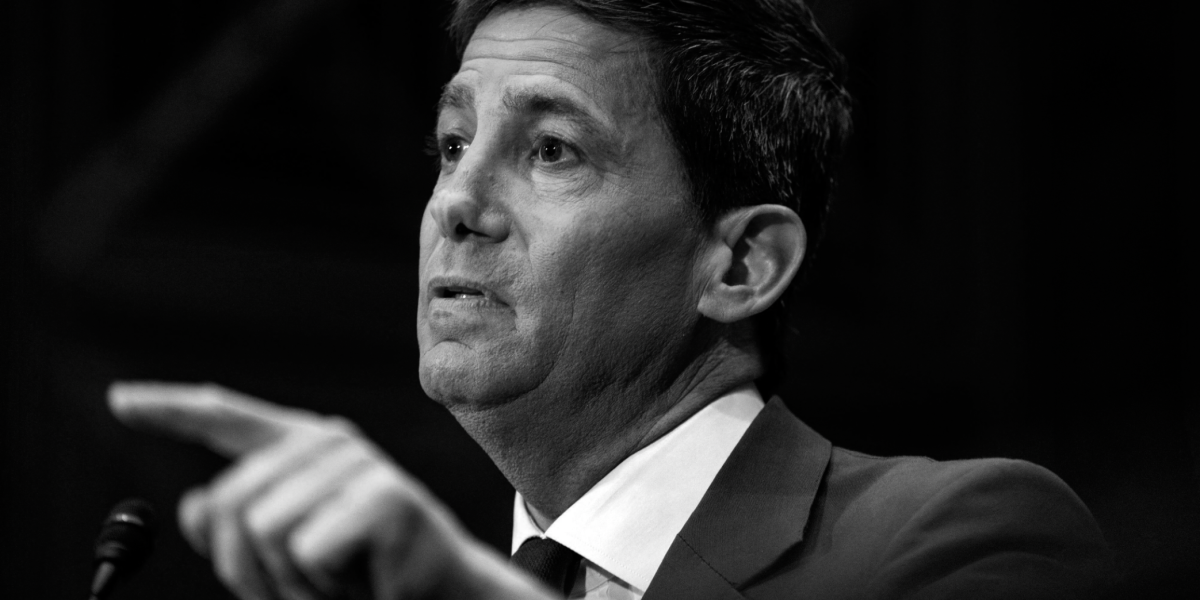
As Kevin Warsh takes over as chair of the Federal Reserve, investors and financial media outlets are looking closely for any hints at how his appointment will impact monetary policy.

One series of comments Warsh made while testifying to Congress back in April as a nominee has been getting more attention in recent weeks, following some high inflation reports. Essentially, Warsh signaled that he believed in focusing primarily on inflation data from core or even trimmed price indexes.

To understand what that means or why it matters, it’s important to note that, originally, “inflation” was a term that simply meant the act of increasing, or inflating, the money supply. Once paper money—or, more accurately, paper claims to physical commodity money like gold—became widely adopted, it didn’t take long for governments, bankers, and counterfeiters to realize that they could easily enrich themselves by creating and spending brand new paper claims to money. It also didn’t take long for it to become obvious that printing a lot of new currency artificially raised the supply, making each unit of currency worth less than it had before—a phenomenon that most people experienced as a general rise in prices.

That artificial decline in the value, or purchasing power, of the currency was obviously not appreciated by the general public. It was a literal wealth transfer that benefited the small sliver of society who got the new money early at the expense of everyone else. So, over time, monetary authorities and their intellectual allies worked to obfuscate the concept.

To “respectable” economists and citizens, inflation was no longer the act of printing money, which caused a general rise in prices. Inflation was a general rise in prices, the cause of which was now, frequently, to be considered a total mystery or, at least, an extremely complex convergence of factors that could never be blamed on a single group.

Today, some economists use the term “monetary inflation” to refer to the old definition. But when inflation is brought up in public discourse, it’s virtually always in reference to price inflation—the general rise in prices.

It’s also worth noting that a general rise in prices is actually impossible without a change in the money supply. Even if a historic supply shock like the covid lockdowns or the closure of the Strait of Hormuz occurs, as long as the money supply remains unchanged, the sharp increase in some prices would cause a fall in prices elsewhere. People would be forced to cut back on less essential things, and demand would fall for so-called complementary goods. That drop in demand would drive some prices down. The only way to raise prices across the entire economy is to manipulate the monetary unit.

So even if we want to focus on and properly monitor price inflation, our attention should be fixed on the one true culprit: the money printing being carried out and/or enabled by the Federal Reserve—the one culprit that is almost entirely absent from any establishment discourse about inflation.

But, again, the point of establishment inflation discourse is to confuse and mislead the public into thinking the unending, state-run theft at the heart of the modern economy is normal.

The other component of that effort, the one Warsh has made news by highlighting, is the way inflation is measured.

The fact is, when we switch from inflation being a specific increase in the money supply to an economy-wide rise in prices, getting an objective measure of inflation goes from being straightforward to completely impossible.

Both Mises and Rothbard wrote extensively about the absurdity of measuring a general price level that does not and cannot exist. Prices are exchange ratios between money and particular goods at particular times. They are not measures of value. Value is subjective. And further, exchanges only happen, and prices only become an economic reality when the two parties to an exchange value the good and money differently. Creating an overall “average” price level requires selecting and adding together goods that are not only not homogeneous but valued uniquely by everyone in the economy. It’s an exercise that ignores the most basic components of how value and prices work.

The closest one can get is the price indexes we see today, such as the CPI and the PCE, which attempt to track changes in an average price level by comparing the prices of a recurring list of goods over time.

But even that isn’t as straightforward as it sounds. The results of these indexes are entirely reliant on arbitrary but ultimately unavoidable decisions like what goods to include, how to weigh them against each other, when to add new technologies or drop obsolete ones, and how to account for changes in quality (for instance, if a line of televisions improves drastically over time but remains the same price, how that gets factored in). Change any of these factors around, and the inflation rate will change too.

There’s also volatility. Plenty of goods see sharp price jumps and crashes that don’t appear in long-term trends, but can severely impact the monthly inflation rate as reported by these indexes.

A common way to try to get around this has been to remove the most volatile commodities—primarily food and energy. You’ll hear this referred to as core inflation. But you can go even further. Instead of excluding fixed categories because they are often volatile, you can sort all the price changes in the index and exclude the most extreme movements on both ends. This is called a trimmed mean or trimmed median inflation rate, and it’s what Kevin Warsh said he prefers the Fed use to guide its response to inflation.

To be fair, Warsh and his allies are correct when they point out that many of the price increases we’ve seen in recent years—and recent months especially—do not technically count as inflation. Fed-friendly economists and commentators like to pretend that’s because they are one-time price increases that don’t account for the long, slow, mysterious trend they call inflation.

But again, it’s not mysterious. Inflation is caused by the government printing money. It is one of the most significant ways the political class has made life more expensive for everyday Americans in recent years—especially since the pandemic. But it is not the only way.

The war Trump chose to launch on Iran led to the easily predictable closure of the Strait of Hormuz, which has only just begun to drive many prices higher. The lockdowns during the pandemic back in 2020 and 2021 had similar, albeit more dispersed, price effects. And decades of government interventions in housing, education, energy, healthcare, and other sectors have made all aspects of life artificially expensive for the American people, with no reprieve in sight.

None of those price increases are inflation in the strict sense. But the pain they have and are causing is just as real.

And that is why Americans ought to be concerned about Trump’s new Fed Chair showing interest in trimming down the price indexes the Fed uses for guidance. Because it represents the political class declaring that much of the economic pain they’re causing is irrelevant, specifically so they can justify creating additional, actual inflation. And that is the last thing we need.



Source link

Tags: inflationinterestRedefiningWarshs
ShareTweetShare
Previous Post

Bitcoin trails stocks by most since 2019 as traders get their kicks elsewhere

Next Post

Tax Prom 2026 | Tax Foundation

Related Posts

edit post
Iran War: US Doubles Down on Claim Iran Agreed to IAEA Inspections, Ballistic Missile Limits After Iran Denial; Dispute Over Food for Frozen Assets; Lebanon Ceasefire Holds as US Presents Withdrawal Plan; More on Looming Oil Cliff, Diesel and Lubricants Shortages

Iran War: US Doubles Down on Claim Iran Agreed to IAEA Inspections, Ballistic Missile Limits After Iran Denial; Dispute Over Food for Frozen Assets; Lebanon Ceasefire Holds as US Presents Withdrawal Plan; More on Looming Oil Cliff, Diesel and Lubricants Shortages

by TheAdviserMagazine
June 24, 2026
0

Iran War: US Doubles Down on Claim Iran Agreed to IAEA Inspections, Ballistic Missile Limits After Iran Denial; Dispute Over...

edit post
The Death Of Homeownership For The Next Generation

The Death Of Homeownership For The Next Generation

by TheAdviserMagazine
June 24, 2026
0

A new report from Realtor.com found that nearly one-third of employed young adults in the United States are now living...

edit post
Market Talk – June 23, 2026

Market Talk – June 23, 2026

by TheAdviserMagazine
June 23, 2026
0

ASIA: The major Asian stock markets had a negative day today: • NIKKEI 225 decreased 2,565.58 points or -3.55% to...

edit post
Coffee Break: Armed Madhouse – Trust Destruction and Nuclear Roulette

Coffee Break: Armed Madhouse – Trust Destruction and Nuclear Roulette

by TheAdviserMagazine
June 23, 2026
0

The discussion of war has changed remarkably little since antiquity. Historians, military strategists, and political leaders still evaluate conflict using...

edit post
Factory job cuts in June neared financial crisis and Covid levels, S&P says

Factory job cuts in June neared financial crisis and Covid levels, S&P says

by TheAdviserMagazine
June 23, 2026
0

A pedestrian walks by a now hiring sign posted at a gas station on June 5, 2026 in Los Angeles,...

edit post
The Public Choice Problem of AI Rights

The Public Choice Problem of AI Rights

by TheAdviserMagazine
June 23, 2026
0

People are falling in love with their chatbots, mourning deleted AI companions, and treating artificial systems as romantic partners or...

Next Post
edit post
Tax Prom 2026 | Tax Foundation

Tax Prom 2026 | Tax Foundation

edit post
‘Stop building silos of excellence’: Peloton’s COO has a Navy playbook for supply chain chaos

'Stop building silos of excellence': Peloton's COO has a Navy playbook for supply chain chaos

  • Trending
  • Comments
  • Latest
edit post
Mass Fraud in Massachusetts Committed by Illegal Immigrants Discovered

Mass Fraud in Massachusetts Committed by Illegal Immigrants Discovered

June 22, 2026
edit post
New York Seniors: 6 STAR Tax Relief Rules That Could Put a Bigger Check in Your Mailbox

New York Seniors: 6 STAR Tax Relief Rules That Could Put a Bigger Check in Your Mailbox

June 20, 2026
edit post
5 Pennsylvania Rebate Rules Seniors Should Check Before the Property Tax/Rent Deadline

5 Pennsylvania Rebate Rules Seniors Should Check Before the Property Tax/Rent Deadline

June 18, 2026
edit post
Florida Roads Become a Battleground for Illegal Immigration

Florida Roads Become a Battleground for Illegal Immigration

June 9, 2026
edit post
Louisiana’s Age-Tiered Homestead Exemption: 8 Details About the Proposed 2028 Amendment

Louisiana’s Age-Tiered Homestead Exemption: 8 Details About the Proposed 2028 Amendment

June 15, 2026
edit post
The 8 States That Still Tax Social Security in 2026

The 8 States That Still Tax Social Security in 2026

June 6, 2026
edit post
Making ,000/Month from One “Boring” Property (1,000 Miles Away)

Making $29,000/Month from One “Boring” Property (1,000 Miles Away)

0
edit post
Ethos Life Insurance Review – No-Exam Term Life Built for Modern Families

Ethos Life Insurance Review – No-Exam Term Life Built for Modern Families

0
edit post
The habit of keeping the radio on in an empty house often has less to do with company than with the memory of a kitchen where a voice in the background meant someone was home and nothing bad was happening yet

The habit of keeping the radio on in an empty house often has less to do with company than with the memory of a kitchen where a voice in the background meant someone was home and nothing bad was happening yet

0
edit post
SpaceX seeing interest from short sellers, but most afraid to go against Musk

SpaceX seeing interest from short sellers, but most afraid to go against Musk

0
edit post
Banking, defence could lead next market rally as Nifty eyes 25,000: Rohit Srivastava

Banking, defence could lead next market rally as Nifty eyes 25,000: Rohit Srivastava

0
edit post
From Seat Time to Value Time: Designing Classes Students Show Up For – Faculty Focus

From Seat Time to Value Time: Designing Classes Students Show Up For – Faculty Focus

0
edit post
AGF Management Non-GAAP EPS of Calt=

AGF Management Non-GAAP EPS of C$0.72, revenue of C$126.7M (Pink Current Info:AGFMF)

June 24, 2026
edit post
The habit of keeping the radio on in an empty house often has less to do with company than with the memory of a kitchen where a voice in the background meant someone was home and nothing bad was happening yet

The habit of keeping the radio on in an empty house often has less to do with company than with the memory of a kitchen where a voice in the background meant someone was home and nothing bad was happening yet

June 24, 2026
edit post
Making ,000/Month from One “Boring” Property (1,000 Miles Away)

Making $29,000/Month from One “Boring” Property (1,000 Miles Away)

June 24, 2026
edit post
5 Ways to Offload Clutter Without Strangers in Your Yard

5 Ways to Offload Clutter Without Strangers in Your Yard

June 24, 2026
edit post
Iran War: US Doubles Down on Claim Iran Agreed to IAEA Inspections, Ballistic Missile Limits After Iran Denial; Dispute Over Food for Frozen Assets; Lebanon Ceasefire Holds as US Presents Withdrawal Plan; More on Looming Oil Cliff, Diesel and Lubricants Shortages

Iran War: US Doubles Down on Claim Iran Agreed to IAEA Inspections, Ballistic Missile Limits After Iran Denial; Dispute Over Food for Frozen Assets; Lebanon Ceasefire Holds as US Presents Withdrawal Plan; More on Looming Oil Cliff, Diesel and Lubricants Shortages

June 24, 2026
edit post
Bitget Upgrades CFD Copy Trading With Personalized Risk Controls

Bitget Upgrades CFD Copy Trading With Personalized Risk Controls

June 24, 2026
The Adviser Magazine

The first and only national digital and print magazine that connects individuals, families, and businesses to Fee-Only financial advisers, accountants, attorneys and college guidance counselors.

CATEGORIES

  • 401k Plans
  • Business
  • College
  • Cryptocurrency
  • Economy
  • Estate Plans
  • Financial Planning
  • Investing
  • IRS & Taxes
  • Legal
  • Market Analysis
  • Markets
  • Medicare
  • Money
  • Personal Finance
  • Social Security
  • Startups
  • Stock Market
  • Trading

LATEST UPDATES

  • AGF Management Non-GAAP EPS of C$0.72, revenue of C$126.7M (Pink Current Info:AGFMF)
  • The habit of keeping the radio on in an empty house often has less to do with company than with the memory of a kitchen where a voice in the background meant someone was home and nothing bad was happening yet
  • Making $29,000/Month from One “Boring” Property (1,000 Miles Away)
  • Our Great Privacy Policy
  • Terms of Use, Legal Notices & Disclosures
  • Contact us
  • About Us

© Copyright 2024 All Rights Reserved
See articles for original source and related links to external sites.

Welcome Back!

Login to your account below

Forgotten Password?

Retrieve your password

Please enter your username or email address to reset your password.

Log In
No Result
View All Result
  • Home
  • Financial Planning
    • Financial Planning
    • Personal Finance
  • Market Research
    • Business
    • Investing
    • Money
    • Economy
    • Markets
    • Stocks
    • Trading
  • 401k Plans
  • College
  • IRS & Taxes
  • Estate Plans
  • Social Security
  • Medicare
  • Legal

© Copyright 2024 All Rights Reserved
See articles for original source and related links to external sites.