No Result
View All Result
SUBMIT YOUR ARTICLES
  • Login
Wednesday, April 29, 2026
TheAdviserMagazine.com
  • Home
  • Financial Planning
    • Financial Planning
    • Personal Finance
  • Market Research
    • Business
    • Investing
    • Money
    • Economy
    • Markets
    • Stocks
    • Trading
  • 401k Plans
  • College
  • IRS & Taxes
  • Estate Plans
  • Social Security
  • Medicare
  • Legal
  • Home
  • Financial Planning
    • Financial Planning
    • Personal Finance
  • Market Research
    • Business
    • Investing
    • Money
    • Economy
    • Markets
    • Stocks
    • Trading
  • 401k Plans
  • College
  • IRS & Taxes
  • Estate Plans
  • Social Security
  • Medicare
  • Legal
No Result
View All Result
TheAdviserMagazine.com
No Result
View All Result
Home Market Research Economy

The Prevalence of Preference Falsification

by TheAdviserMagazine
8 months ago
in Economy
Reading Time: 4 mins read
A A
The Prevalence of Preference Falsification
Share on FacebookShare on TwitterShare on LInkedIn


The title of this post is a nod to Timur Kuran’s book Private Truths, Public Lies: The Social Consequences of Preference Falsification. This book examines the disconnect between what people say they believe publicly and what they believe privately. As Kuran puts it,

The preference that our individual ends up conveying to others is what I will call his public preference. It is distinct from his private preference, which is what he would express in the absence of social pressures. By definition, preference falsification is the selection of a public preference that differs from one’s private preference.

This turns out to be an issue of some significance. Political scientists or policymakers may collect data on expressed public opinion to try to inform their own decisions, but expressed public opinion can be very different from the actual opinions of the members of the public. Something can hold broad support according to “public opinion,” yet actually be opposed by the vast majority of individual members of the public, when circumstances that create pressure for preference falsification are in place. When this happens, unpopular ideas and policies can be perpetuated by an illusory popular demand.

Recently, researchers at Northwestern University tried to get a sense of how common this phenomenon is among college students. They conducted confidential interviews with 1,452 students at Northwestern and the University of Michigan. They found that preference falsification is shockingly common:

We asked: Have you ever pretended to hold more progressive views than you truly endorse to succeed socially or academically? An astounding 88 percent said yes.

They also touch on how many students engage in preference falsification on specific issues:

Seventy-eight percent of students told us they self-censor on their beliefs surrounding gender identity; 72 percent on politics; 68 percent on family values. More than 80 percent said they had submitted classwork that misrepresented their views in order to align with professors…

Perhaps most telling: 77 percent said they disagreed with the idea that gender identity should override biological sex in such domains as sports, healthcare, or public data — but would never voice that disagreement aloud.

It’s easy to underestimate just how powerful a force the fear of social ostracism can be. In his book The Happiness Hypothesis: Finding Modern Truth in Ancient Wisdom, Jonathan Haidt describes an experience he had horseback riding:

There was, however, one difficult moment. We were riding along a path to a steep hillside, two by two, and my horse was on the outside, walking about three feet from the edge. Then the path turned sharply to the left, and my horse was heading straight for the edge. I froze. I knew I had to steer left, but there was another horse to my left and I didn’t want to crash into it. I might have called out for help, or screamed “Look out!”; but some part of me preferred the risk of going over the edge to the certainty of looking stupid. So I just froze.

Haidt was faced with a situation where, on the one hand, he faced the risk of almost certain death if he did nothing, and on the other hand, if he did something, people might laugh at him, and in a moment ruled by his deepest and most primal instincts, he decided the second of those two was the bigger concern. While this seems absurd in a detached perspective, it makes a certain degree of sense when examined in light of the world in which we live. We are social primates, and historically our survival has depended critically on getting along with our tribe and being held in good standing.

For the vast majority of our time as a species, social exclusion was a death sentence — and we evolved powerful social instincts that make us fear rejection and exclusion. Even when a point of view is privately held by the majority of people, this fact can remain hidden if people even worry that expressing that view will lead to them being ostracized by the community.

This is one reason why free speech is important as more than just a legal framework (though that is critical). In order to gain the benefits of free speech, open inquiry, and truth-seeking debate, the legal structures of free speech are a necessary but not sufficient condition. A culture of free speech, where it’s recognized that someone can be tragically wrong on issues of great importance while still being a good person (and that you might be such a person yourself!), and that mistaken views should be debated without shunning those who hold them, is also needed. In his book The Road to Serfdom, F. A. Hayek was clear about how disastrous he believed central economic planning would be. But he also made clear he believed the ideas he criticized were advocated by “authors whose sincerity and disinterestedness are above suspicion.”

This isn’t to say that a culture of free speech is entirely without downside — but then again, nothing is. However, both a legal framework and a culture of free speech are the only tools that can enable a social order to break free from a socially damaging equilibrium brought on by preference falsification.


As an Amazon Associate, Econlib earns from qualifying purchases.


Source link

Tags: FalsificationPreferencePrevalence
ShareTweetShare
Previous Post

Weekend Reading For Financial Planners (September 6–7)

Next Post

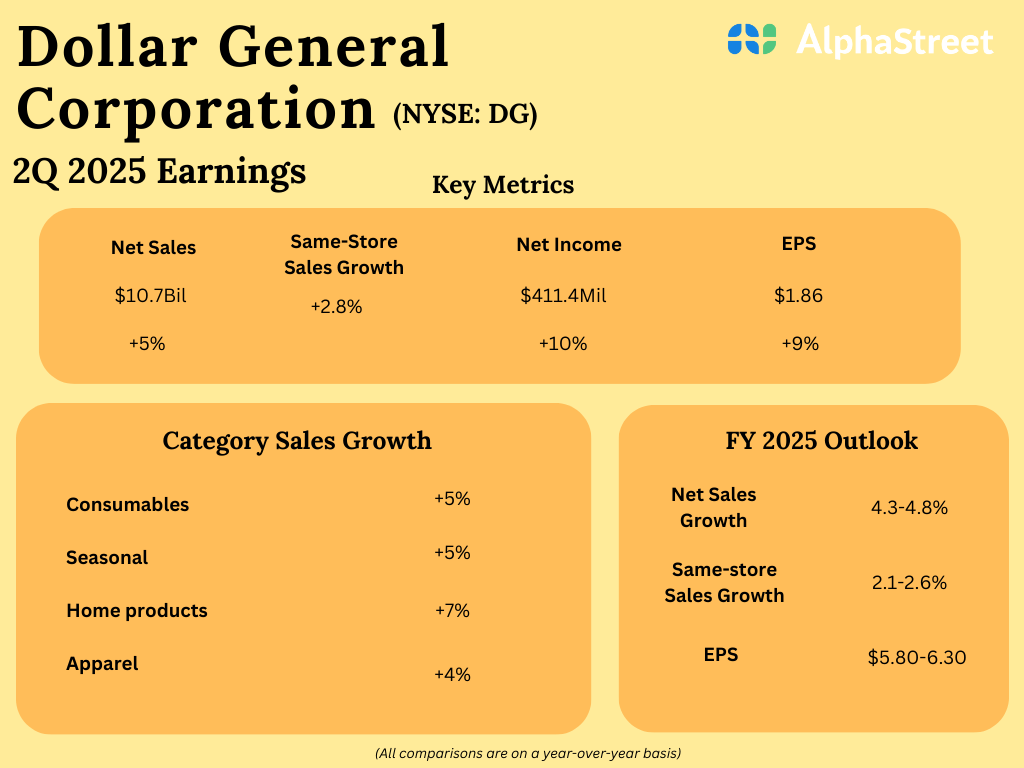
Discount stores Dollar Tree (DLTR) and Dollar General (DG) stand strong in a dynamic landscape

Related Posts

edit post
Europe’s central banks in ‘wait-and-see’ mode on interest rates

Europe’s central banks in ‘wait-and-see’ mode on interest rates

by TheAdviserMagazine
April 29, 2026
0

Mounted police officers sit in outside the Royal Exchange and the Bank of England in London on June 17, 2020.TOLGA...

edit post
Market Talk – April 28, 2026

Market Talk – April 28, 2026

by TheAdviserMagazine
April 28, 2026
0

ASIA: The major Asian stock markets had a negative day today: • NIKKEI 225 decreased 619.90 points or -1.02% to...

edit post
Coffee Break: Armed Madhouse – The U.S. Navy Adrift

Coffee Break: Armed Madhouse – The U.S. Navy Adrift

by TheAdviserMagazine
April 28, 2026
0

The U.S. Navy’s current challenges are often described as discrete problems, such as shipbuilding delays, maintenance backlogs, operational strain, and...

edit post
US Military Strategy Document Misleads. Deliberately?

US Military Strategy Document Misleads. Deliberately?

by TheAdviserMagazine
April 28, 2026
0

Yves here. Given how utterly incompetent the Trump Administration has shown itself to be, the credible charge that the US...

edit post
The Problem with Eternal Vigilance

The Problem with Eternal Vigilance

by TheAdviserMagazine
April 28, 2026
0

What is the Mises Institute? The Mises Institute is a non-profit organization that exists to promote teaching and research in...

edit post
Free Speech is About Individual Liberty, Not Viewpoint Discrimination

Free Speech is About Individual Liberty, Not Viewpoint Discrimination

by TheAdviserMagazine
April 28, 2026
0

Supreme Court rulings are significant not only for their decision on who wins, but also for their reasoning. A victory...

Next Post
edit post
Discount stores Dollar Tree (DLTR) and Dollar General (DG) stand strong in a dynamic landscape

Discount stores Dollar Tree (DLTR) and Dollar General (DG) stand strong in a dynamic landscape

edit post
Coffee Break: Make Polio Great Again, CDC, Institutions and Civilization, and How Animals Emerged

Coffee Break: Make Polio Great Again, CDC, Institutions and Civilization, and How Animals Emerged

  • Trending
  • Comments
  • Latest
edit post
Florida Warning: With Senior SNAP Benefits Averaging 8/Month, Thousands Risk Losing Assistance in 2026

Florida Warning: With Senior SNAP Benefits Averaging $188/Month, Thousands Risk Losing Assistance in 2026

April 27, 2026
edit post
A 58-year-old left NYC for Miami to save on taxes — then retired early thanks to hidden savings. Here’s the math

A 58-year-old left NYC for Miami to save on taxes — then retired early thanks to hidden savings. Here’s the math

March 30, 2026
edit post
Virginia Permits ADULT MIGRANT MEN To Attend High School

Virginia Permits ADULT MIGRANT MEN To Attend High School

March 30, 2026
edit post
Tax Flight Accelerates In Massachusetts

Tax Flight Accelerates In Massachusetts

April 6, 2026
edit post
Property Tax Relief & Income Tax Relief

Property Tax Relief & Income Tax Relief

April 1, 2026
edit post
The Stevia Loophole Why Some Sweetened Drinks are Still SNAP-Legal While Others are Banned in Texas

The Stevia Loophole Why Some Sweetened Drinks are Still SNAP-Legal While Others are Banned in Texas

April 4, 2026
edit post
Blackbaud Releases Q1 2026 Financial Results

Blackbaud Releases Q1 2026 Financial Results

0
edit post
The ,160 Threshold: What Happens When You Hit Full Retirement Age in 2026

The $65,160 Threshold: What Happens When You Hit Full Retirement Age in 2026

0
edit post
Deputy budget commissioner warns on “trauma economy”

Deputy budget commissioner warns on “trauma economy”

0
edit post
Europe’s central banks in ‘wait-and-see’ mode on interest rates

Europe’s central banks in ‘wait-and-see’ mode on interest rates

0
edit post
Elon Musk to return to witness stand in trial over OpenAI’s future

Elon Musk to return to witness stand in trial over OpenAI’s future

0
edit post
5 Things to Know About the Credit One Omni Card

5 Things to Know About the Credit One Omni Card

0
edit post
Blackbaud Releases Q1 2026 Financial Results

Blackbaud Releases Q1 2026 Financial Results

April 29, 2026
edit post
Deputy budget commissioner warns on “trauma economy”

Deputy budget commissioner warns on “trauma economy”

April 29, 2026
edit post
Elon Musk to return to witness stand in trial over OpenAI’s future

Elon Musk to return to witness stand in trial over OpenAI’s future

April 29, 2026
edit post
Supply chain stress to reflect in earnings over next few quarters: Raunak Onkar

Supply chain stress to reflect in earnings over next few quarters: Raunak Onkar

April 29, 2026
edit post
MP Materials – MP: Neue Rallye bei der Seltene-Erden-Aktie?

MP Materials – MP: Neue Rallye bei der Seltene-Erden-Aktie?

April 29, 2026
edit post
Europe’s central banks in ‘wait-and-see’ mode on interest rates

Europe’s central banks in ‘wait-and-see’ mode on interest rates

April 29, 2026
The Adviser Magazine

The first and only national digital and print magazine that connects individuals, families, and businesses to Fee-Only financial advisers, accountants, attorneys and college guidance counselors.

CATEGORIES

  • 401k Plans
  • Business
  • College
  • Cryptocurrency
  • Economy
  • Estate Plans
  • Financial Planning
  • Investing
  • IRS & Taxes
  • Legal
  • Market Analysis
  • Markets
  • Medicare
  • Money
  • Personal Finance
  • Social Security
  • Startups
  • Stock Market
  • Trading

LATEST UPDATES

  • Blackbaud Releases Q1 2026 Financial Results
  • Deputy budget commissioner warns on “trauma economy”
  • Elon Musk to return to witness stand in trial over OpenAI’s future
  • Our Great Privacy Policy
  • Terms of Use, Legal Notices & Disclosures
  • Contact us
  • About Us

© Copyright 2024 All Rights Reserved
See articles for original source and related links to external sites.

Welcome Back!

Login to your account below

Forgotten Password?

Retrieve your password

Please enter your username or email address to reset your password.

Log In
No Result
View All Result
  • Home
  • Financial Planning
    • Financial Planning
    • Personal Finance
  • Market Research
    • Business
    • Investing
    • Money
    • Economy
    • Markets
    • Stocks
    • Trading
  • 401k Plans
  • College
  • IRS & Taxes
  • Estate Plans
  • Social Security
  • Medicare
  • Legal

© Copyright 2024 All Rights Reserved
See articles for original source and related links to external sites.