No Result
View All Result
SUBMIT YOUR ARTICLES
  • Login
Sunday, April 19, 2026
TheAdviserMagazine.com
  • Home
  • Financial Planning
    • Financial Planning
    • Personal Finance
  • Market Research
    • Business
    • Investing
    • Money
    • Economy
    • Markets
    • Stocks
    • Trading
  • 401k Plans
  • College
  • IRS & Taxes
  • Estate Plans
  • Social Security
  • Medicare
  • Legal
  • Home
  • Financial Planning
    • Financial Planning
    • Personal Finance
  • Market Research
    • Business
    • Investing
    • Money
    • Economy
    • Markets
    • Stocks
    • Trading
  • 401k Plans
  • College
  • IRS & Taxes
  • Estate Plans
  • Social Security
  • Medicare
  • Legal
No Result
View All Result
TheAdviserMagazine.com
No Result
View All Result
Home Market Research Economy

The Iran War Brings More Inflation and New Strength to the Yuan

by TheAdviserMagazine
4 weeks ago
in Economy
Reading Time: 5 mins read
A A
The Iran War Brings More Inflation and New Strength to the Yuan
Share on FacebookShare on TwitterShare on LInkedIn


Two monetary and currency paradoxes emerge as the war rages.

First, there is likely an immediate episode of some monetary disinflation, never mind the widespread concern about a looming jump in consumer prices. 

Second, the currencies of the US and China, have both gained, but in different ways. The currency of China, a provider of an economic and military lifeline to Iran, is winning international business in consequence of its use in dealings — despite US sanctions — with and between the two states. The US dollar’s observed strength in the war so far stems from US economic resilience to Gulf energy supply shock and a perceived tightening in US monetary conditions.

The good news: the US monetary situation on the eve of the war was inflationary — indeed the longest unbroken monetary inflation in modern history — and so some disinflation now, whether intentional or not, should help reduce the extent of monetary malaise. 

The bad news: the disinflation does not herald a long period of less inflationary monetary conditions. When the energy supply shock goes into reverse the Fed will almost certainly take advantage of price declines to rev up monetary inflation.

A danger — but not the central scenario: the disinflationary intermission now emerging could be a catalyst to severe financial stress and recession.

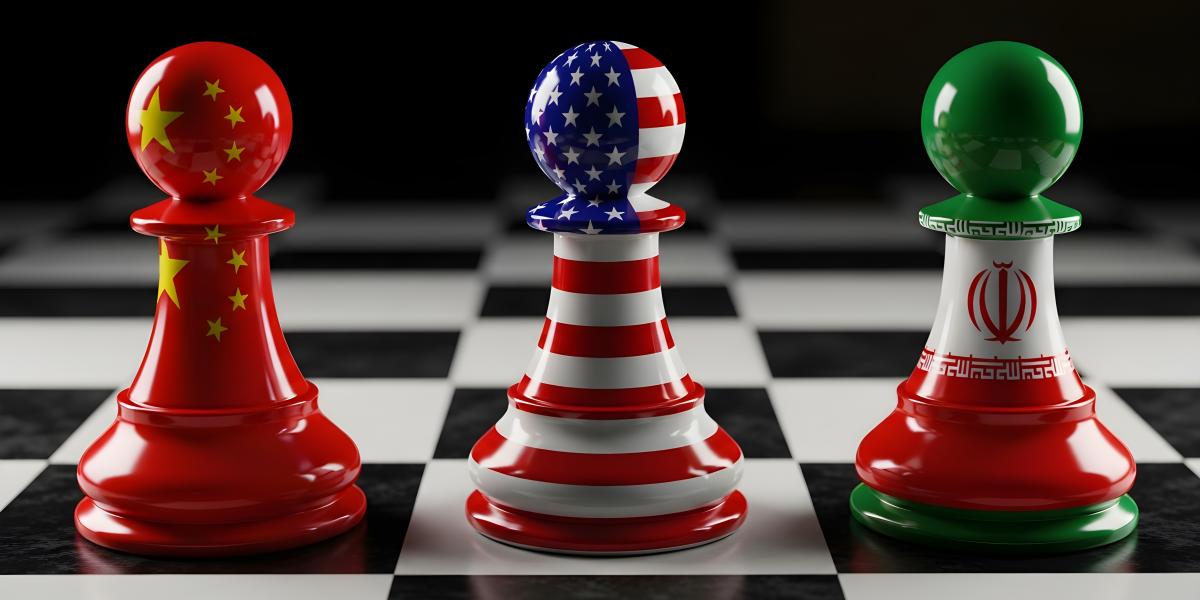
Transcending the direct monetary implications of the war is the China shock, itself with consequences for the currency scene. The war has revealed the extent to which Beijing has empowered Tehran — whether by oil purchases, inward investment, or direct input into its ballistic missile program — using the yuan to circumvent sanctions.

Back to the monetary paradox — how energy supply shock becomes a catalyst to monetary disinflation. Under our present fiat money regime — the 2 per cent inflation standard — the Fed plots a course for its policy rate which is contingent on the actual profile of consumer prices. The plotted path for the policy rate rises to a higher level in response to a new overshoot of the Fed’s target for reported consumer price inflation. In the first three weeks of the Iran war the 2-year T-bond yield which is a proxy for the path of policy rates has risen by around 70bp. 

By contrast, under a sound money regime there is no presumption that monetary conditions tighten in response to energy shock. In particular, under a gold money regime it is plausible that energy shock would bring about some immediate decline in the demand for money in real terms (in line with a fall-back in real incomes); gold would correspondingly lose some purchasing power and this might correspond to an upward drift in prices on average consisting of spikes in all goods and services with high energy content offset in part by some declines elsewhere (explained by weaker demand there). 

Of course, a 40bp rise in 2-year yields is not necessarily identical to monetary tightening. Interest rate levels are an unreliable guide to monetary conditions. But that is the only guide we have in the present dysfunctional monetary system. Indeed, under the present regime the concept of monetary tightening in the sense of instruments with the quality of extreme moneyness becoming scarce, is to a large degree inapplicable. This leaves us with just policy rates to consider in overall monetary assessments. 

So, suppose the 40bp or so rise in 2-year yields does equate to a significant tightening of US monetary conditions. That would be no bad thing given the likely extent of monetary inflation on the eve of the war. But given the epic length of asset inflation by that point (since say 2010/11) and resulting malinvestment plus financial fragilities, we should not ignore the potential for monetary disinflation to be a catalyst to recession and financial crisis. 

Why are these possible bad outcomes not the central scenario? Well, the monetary tightening, though significant, is not obviously substantial. And almost certainly when the energy supply shock recedes and reverses, the Fed – joined by other leading central banks — will respond to better news on consumer price inflation by cutting policy-rates. The Fed will not foster monetary conditions such that overall consumer prices fall back on average to their eve-of-war level or even to a trend path where prices increase by 2 per cent annually. Instead, it will claim success in getting consumer price inflation back down with no roll-back of earlier excesses.

A possible post Iran war shift to energy glut will likely go along with supply side abundance related to the adoption of AI. There could also be a positive supply impulse from a roll-back of tariffs.

Essentially massive combinations of energy and Asian chips are substituting for human capital in important areas of the US labor force. Accordingly, wage rates and prices come under downward pressure where there is most acute competition with the new technology. Mal-signaling in capital markets, a consequence of monetary inflation, drives the digital and AI transformation faster and much further than would happen under sound money. Firms applying AI, some already possessing monopoly power, others enjoying cheap capital on the promise of future monopoly, can by predatory pricing kill potential competition from pre-AI technologies.

The downward pressure on some prices as described would allow the central bank to pursue monetary inflation whilst counting on its being camouflaged meanwhile in goods and services markets.

Incidentally, the Federal Reserve may take advantage of the camouflage, to justify rate cuts. In support of these it could point to a parallel implementation of balance sheet shrinkage. The plan to reduce the size of the Fed’s balance sheet will most likely involve that institution exchanging much of its holdings of long-maturity T-bonds at the Treasury for T-bills and then selling these off in the open market, a version of quantitative tightening (QT). The new situation, however, of less reserve deposits at the Fed and more T-bills outstanding means virtually nothing as regards the disease of monetary inflation. In the present monetary system Fed deposits and T-bills are almost perfect substitutes for each other across a large range.

Anyhow, these ostensible camouflages to monetary inflation in goods markets in the wake of the Iran war could eventually wither. Spending in all its forms, whether by consumers or businesses, could tend to run ahead of supply across a very wide spectrum of goods and services. Individuals might in aggregate find themselves with a chronic tendency to have excess monetary-type assets (traditional bank deposits plus Treasury bills and short-maturity government bonds) and wish to dispose of part. They could do this by spending more on various goods/services or on assets such as liquid equity paper, credit paper, and precious metals. 

The take-off of asset inflation under those circumstances is not certain. Much depends on the scope and power of speculative narratives, as fostered by monetary inflation. But according to some mainstream scenarios the Iran War and its consequences may at least for some time cramp the spread of those narratives.



Source link

Tags: BringsinflationIranstrengthWaryuan
ShareTweetShare
Previous Post

Polymarket Curbs Insider Bets: No Stolen Info, No Illegal Tips, No Outcome Influencers

Next Post

Healthcare Costs Are Now Americans’ No. 1 Money Fear — Here’s How to Protect Your Retirement

Related Posts

edit post
Socrates & The War | Armstrong Economics

Socrates & The War | Armstrong Economics

by TheAdviserMagazine
April 19, 2026
0

QUESTION: Marty, I know you taught Socrates how to analyze rather than what. I remember you saying it checks every...

edit post
What 1971 Set in Motion

What 1971 Set in Motion

by TheAdviserMagazine
April 18, 2026
0

In a free market, the interest rate does one essential job: it tells the truth about time. When households save...

edit post
When AI Agents Trade with AI Agents, Price Discovery Dies

When AI Agents Trade with AI Agents, Price Discovery Dies

by TheAdviserMagazine
April 18, 2026
0

Autonomous AI agents are becoming active economic participants on both sides of market transactions. Enterprise platforms now embed what vendors...

edit post
Central bankers, politicians warn of global risks as Iran war drags on

Central bankers, politicians warn of global risks as Iran war drags on

by TheAdviserMagazine
April 18, 2026
0

A man walks among buildings destroyed in a joint attack by Israel and the United States on April 6, 2026,...

edit post
Fed Governor Waller says Iran war and labor market risks are keeping central bank on hold

Fed Governor Waller says Iran war and labor market risks are keeping central bank on hold

by TheAdviserMagazine
April 17, 2026
0

Christopher Waller, governor of the US Federal Reserve, speaks during the C. Peter McColough Series on International Economics at the...

edit post
Jesus and the Christian Socialist’s Problem of Evil

Jesus and the Christian Socialist’s Problem of Evil

by TheAdviserMagazine
April 17, 2026
0

In philosophy and theology, there is an issue called “theodicy” or the problem of evil. The problem of evil has...

Next Post
edit post
Healthcare Costs Are Now Americans’ No. 1 Money Fear — Here’s How to Protect Your Retirement

Healthcare Costs Are Now Americans' No. 1 Money Fear — Here's How to Protect Your Retirement

edit post
Formula Systems Q3 2025 Financial Review

Formula Systems Q3 2025 Financial Review

  • Trending
  • Comments
  • Latest
edit post
Massachusetts loses billions in income after millionaire tax

Massachusetts loses billions in income after millionaire tax

March 24, 2026
edit post
Illinois’ Paid Leave for All Workers Act Takes Effect — Every Employee Now Gets Guaranteed Time Off

Illinois’ Paid Leave for All Workers Act Takes Effect — Every Employee Now Gets Guaranteed Time Off

March 27, 2026
edit post
Virginia Permits ADULT MIGRANT MEN To Attend High School

Virginia Permits ADULT MIGRANT MEN To Attend High School

March 30, 2026
edit post
A 58-year-old left NYC for Miami to save on taxes — then retired early thanks to hidden savings. Here’s the math

A 58-year-old left NYC for Miami to save on taxes — then retired early thanks to hidden savings. Here’s the math

March 30, 2026
edit post
Tax Flight Accelerates In Massachusetts

Tax Flight Accelerates In Massachusetts

April 6, 2026
edit post
Property Tax Relief & Income Tax Relief

Property Tax Relief & Income Tax Relief

April 1, 2026
edit post
Putin finally admits Russia’s economy is in trouble and grasps for answers

Putin finally admits Russia’s economy is in trouble and grasps for answers

0
edit post
Socrates & The War | Armstrong Economics

Socrates & The War | Armstrong Economics

0
edit post
Four MEA Countries Race to Build Crypto Rulebooks as Global Licensing Push Accelerates

Four MEA Countries Race to Build Crypto Rulebooks as Global Licensing Push Accelerates

0
edit post
WaFd Jumps 7.5% Amid Sector-Wide Selling

WaFd Jumps 7.5% Amid Sector-Wide Selling

0
edit post
Leumi Partners-led consortium eyes 20% stake in Edeltech

Leumi Partners-led consortium eyes 20% stake in Edeltech

0
edit post
Tax firm AI platform vs. point solution: 2026 buyer’s guide

Tax firm AI platform vs. point solution: 2026 buyer’s guide

0
edit post
Socrates & The War | Armstrong Economics

Socrates & The War | Armstrong Economics

April 19, 2026
edit post
People who laugh before they finish telling a painful story aren’t handling it well. They’re releasing the listener from having to respond to it seriously, which is a skill they learned from people who couldn’t.

People who laugh before they finish telling a painful story aren’t handling it well. They’re releasing the listener from having to respond to it seriously, which is a skill they learned from people who couldn’t.

April 18, 2026
edit post
Asteroid Shiba’s 68,000% Rally Leaves Traders Stunned After Elon Musk Reply

Asteroid Shiba’s 68,000% Rally Leaves Traders Stunned After Elon Musk Reply

April 18, 2026
edit post
Trump speeds review of psychedelics after Joe Rogan texted him about ibogaine. ‘Let’s do it’

Trump speeds review of psychedelics after Joe Rogan texted him about ibogaine. ‘Let’s do it’

April 18, 2026
edit post
The ‘Inherited House’ Audit: Why the IRS Is Scrutinizing 2026 Home Sales Following a Parent’s Passing

The ‘Inherited House’ Audit: Why the IRS Is Scrutinizing 2026 Home Sales Following a Parent’s Passing

April 18, 2026
edit post
Hex Trust Brings 1:1 Backed Wrapped XRP to Solana’s Ecosystem – Bitcoin News

Hex Trust Brings 1:1 Backed Wrapped XRP to Solana’s Ecosystem – Bitcoin News

April 18, 2026
The Adviser Magazine

The first and only national digital and print magazine that connects individuals, families, and businesses to Fee-Only financial advisers, accountants, attorneys and college guidance counselors.

CATEGORIES

  • 401k Plans
  • Business
  • College
  • Cryptocurrency
  • Economy
  • Estate Plans
  • Financial Planning
  • Investing
  • IRS & Taxes
  • Legal
  • Market Analysis
  • Markets
  • Medicare
  • Money
  • Personal Finance
  • Social Security
  • Startups
  • Stock Market
  • Trading

LATEST UPDATES

  • Socrates & The War | Armstrong Economics
  • People who laugh before they finish telling a painful story aren’t handling it well. They’re releasing the listener from having to respond to it seriously, which is a skill they learned from people who couldn’t.
  • Asteroid Shiba’s 68,000% Rally Leaves Traders Stunned After Elon Musk Reply
  • Our Great Privacy Policy
  • Terms of Use, Legal Notices & Disclosures
  • Contact us
  • About Us

© Copyright 2024 All Rights Reserved
See articles for original source and related links to external sites.

Welcome Back!

Login to your account below

Forgotten Password?

Retrieve your password

Please enter your username or email address to reset your password.

Log In
No Result
View All Result
  • Home
  • Financial Planning
    • Financial Planning
    • Personal Finance
  • Market Research
    • Business
    • Investing
    • Money
    • Economy
    • Markets
    • Stocks
    • Trading
  • 401k Plans
  • College
  • IRS & Taxes
  • Estate Plans
  • Social Security
  • Medicare
  • Legal

© Copyright 2024 All Rights Reserved
See articles for original source and related links to external sites.