No Result
View All Result
SUBMIT YOUR ARTICLES
  • Login
Wednesday, May 13, 2026
TheAdviserMagazine.com
  • Home
  • Financial Planning
    • Financial Planning
    • Personal Finance
  • Market Research
    • Business
    • Investing
    • Money
    • Economy
    • Markets
    • Stocks
    • Trading
  • 401k Plans
  • College
  • IRS & Taxes
  • Estate Plans
  • Social Security
  • Medicare
  • Legal
  • Home
  • Financial Planning
    • Financial Planning
    • Personal Finance
  • Market Research
    • Business
    • Investing
    • Money
    • Economy
    • Markets
    • Stocks
    • Trading
  • 401k Plans
  • College
  • IRS & Taxes
  • Estate Plans
  • Social Security
  • Medicare
  • Legal
No Result
View All Result
TheAdviserMagazine.com
No Result
View All Result
Home Market Research Economy

Free Trade and Dynamic Efficiency

by TheAdviserMagazine
7 months ago
in Economy
Reading Time: 5 mins read
A A
Free Trade and Dynamic Efficiency
Share on FacebookShare on TwitterShare on LInkedIn


…for the economy to function well, you don’t just need good property rights, you also need what we could call, somewhat vaguely, “economic freedoms.” You need labor mobility; you need to get rid of guilds; you need to get rid of monopolies, both local and global; you need to get rid of all kinds of regulations; and above all, you need free trade.  And if you don’t have that, you’re going to end up in a society that will not be able to grow. —Joel Mokyr

The usual case for free trade is not the best case for free trade.  The usual case is based on static efficiency, meaning making better use of a fixed set of resources.  Economists use the term comparative advantage to describe how, if humans choose to specialize and trade with one another, each can end up better off than if they produce everything for themselves.

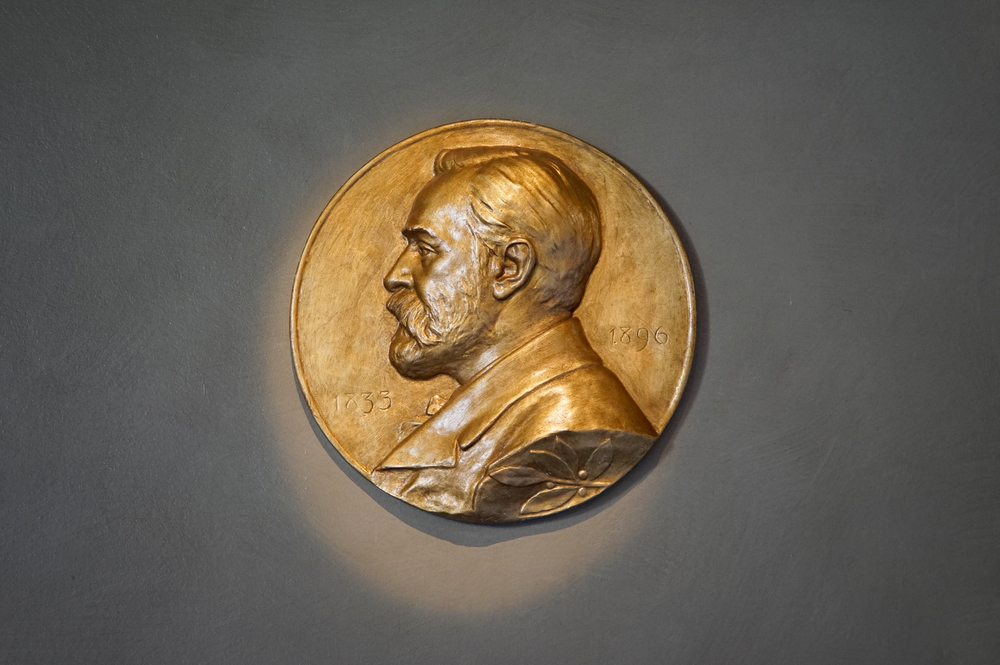
But trade has an even more important role to play in what economists have come to call dynamic efficiency, which is the ability of an economy to exploit innovation and increase living standards over time.  This dynamic efficiency is a central concern of the economists who shared the 2025 Nobel Prize:  Philippe Aghion, Peter Howitt, and Joel Mokyr.

Aghion and Howitt explored the process that Joseph Schumpeter famously labeled creative destruction.  One hundred years after Schumpeter, we see that process all the time in the realm of computers, communications technology, and software.  Mainframe computers were displaced by personal computers and the Internet, landline phones were displaced by smartphones and cellular communication, and artificial intelligence now threatens to upend many industries.

Mokyr was recognized for his study of economic history, particularly the Industrial Revolution.  He pointed out that technology improves through a virtuous cycle in which practical inventions inspire curiosity, leading to scientific discovery, enabling improvements to practical inventions.  

Mokyr also emphasized how the process of innovation and growth can be stifled by protectionism. It is dynamic efficiency that is stymied when barriers to trade are erected.  That is an important lesson that today’s policy makers seem reluctant to learn.

For our  2011 book, Invisible Wealth, Nick Schulz and I were fortunate to be able to include an interview by Nick with Mokyr, as well as interviews with other proponents of dynamic efficiency, including Douglass North, Robert Fogel, and Paul Romer.  Given his recent recognition with the Nobel Prize, the themes from that interview are worth revisiting.

Mokyr argues that the Enlightenment included a rebellion against economic protectionism.  

I argue in my book that one of the things that happens in eighteenth-century Europe is a reaction against what we today would call, in economic jargon, “rent-seeking,” and that this, to a great extent, is what the Enlightenment was all about…It was about freedom of religion, tolerance, human rights—it was about all of those things. But it was also a reaction against mercantilism…

Adam Smith isn’t, you know, as original as people sometimes give him credit for…All these people were saying essentially the same thing: we need to get rid of guilds, monopolies, all kinds of restricted regulatory legislation.  And above all, you need free trade, both internal—which Britain had but the Continent did not—and international….

…when you look at the few places in Europe where the Enlightenment either didn’t penetrate or was fought back by existing interests, those are exactly the countries that failed economically.  You think of Spain and Russia, above all.  (p. 119–120)

Mokyr argued that ideas spread through the circulation of people.

Much of the communication about technology is in fact through personal transmission…You can only learn so much from books, even now.  (p. 122)

Tacit knowledge is acquired in person.

Mokyr warned that protectionist interests always lurk within a prosperous society.

Looking back at the record, it is quite clear that nobody has held technological leadership for a very long time. The reason for that is primarily that technology creates vested interests, and these vested interests have a stake in trying to stop new technologies from kicking them out in the same way that they kicked out the previous generation…And they have all kinds of mechanisms.  One is regulation, in the name of safety or in the name of the environment or in the name of protection of jobs.  They will try to fend off the new to protect the human and physical capital embedded in the old technology.  (p. 123)

Without the pressure of international trade, an industry can stagnate.

Let’s look at the American automobile industry in the 1950s.  Absolutely zero technological change…in the late 1960s they were still making things like the Vega and the Pinto, which were the worst cars ever made…

But then something happened: the Japanese showed up…the Japanese made better cars from better materials.  They made them cheaper.  The cars lasted longer. And guess what? Today’s American cars are far, far better than they were in the late 1950s to early 1970s—not because Americans couldn’t have done it earlier, but because openness forced them to do it. (p. 126)

Today in America, many politicians are listening to the siren song of the restrictionists.  Industrial policy, which means protectionism, is popular.  Globalization and neoliberalism are bad words.  

But if the past is any guide, anti-globalization is going to degenerate into crude special-interest politics.  Instead of dynamic efficiency, we will end up with economic stagnation.  The 2025 Nobel Laureates can remind us of that.


[1] Quoted from an interview in Arnold Kling and Nick Schulz, Invisible Wealth, p. 119.[2] Invisible Wealth was originally published in 2009 as From Poverty to Prosperity

As an Amazon Associate, Econlib earns from qualifying purchases. 


Source link

Tags: DynamicEfficiencyFreetrade
ShareTweetShare
Previous Post

How Much Do You Need to Invest to Replace Your Income with Rentals?

Next Post

How Papin CPA’s Team-Driven Leadership Led Them to Choose Canopy

Related Posts

edit post
Market Talk – May 12, 2026

Market Talk – May 12, 2026

by TheAdviserMagazine
May 12, 2026
0

ASIA: The major Asian stock markets had a mixed day today: • NIKKEI 225 increased 324.69 points or 0.52% to...

edit post
Coffee Break: Armed Madhouse – Ageing Patriots

Coffee Break: Armed Madhouse – Ageing Patriots

by TheAdviserMagazine
May 12, 2026
0

For more than four decades, the Patriot defensive missile system has occupied a central place in the architecture of American...

edit post
Markets raise chances for a Fed rate hike following hot inflation report

Markets raise chances for a Fed rate hike following hot inflation report

by TheAdviserMagazine
May 12, 2026
0

A customer shops for produce in an H-E-B grocery store on May 11, 2026 in Austin, Texas. Brandon Bell |...

edit post
Someone Always Knows First | Mises Institute

Someone Always Knows First | Mises Institute

by TheAdviserMagazine
May 12, 2026
0

April 9, 2025: The White House has spent four days insisting the tariffs are here to stay. The president himself...

edit post
The Inconsistencies of John Stuart Mill

The Inconsistencies of John Stuart Mill

by TheAdviserMagazine
May 12, 2026
0

Many people today consider the prospect of a socialist utopia to be very appealing. Even if they do not believe...

edit post
A Fairness Trilemma in Hiring

A Fairness Trilemma in Hiring

by TheAdviserMagazine
May 12, 2026
0

Economists like to draw triangles. In trade, you can’t have high tariffs, no retaliation, and unchanged prices. In monetary policy,...

Next Post
edit post
Socialism Always Leads to Totalitarian Tyranny

Socialism Always Leads to Totalitarian Tyranny

edit post
Key Innovations Shaping the Multiple-Element Gas Container Market Landscape

Key Innovations Shaping the Multiple-Element Gas Container Market Landscape

  • Trending
  • Comments
  • Latest
edit post
Gavin Newsom issues ‘final warning’ amid California’s dire housing crisis — what’s at stake for millions of residents

Gavin Newsom issues ‘final warning’ amid California’s dire housing crisis — what’s at stake for millions of residents

May 3, 2026
edit post
Florida Warning: With Senior SNAP Benefits Averaging 8/Month, Thousands Risk Losing Assistance in 2026

Florida Warning: With Senior SNAP Benefits Averaging $188/Month, Thousands Risk Losing Assistance in 2026

April 27, 2026
edit post
Minnesota Wealth Tax | Intangible Personal Property Tax

Minnesota Wealth Tax | Intangible Personal Property Tax

May 6, 2026
edit post
10 Cheapest High Dividend Stocks With P/E Ratios Under 10

10 Cheapest High Dividend Stocks With P/E Ratios Under 10

April 13, 2026
edit post
Exclusive: America’s largest Black-owned bank launches podcast with mission to unlock hidden shame holding back generational wealth

Exclusive: America’s largest Black-owned bank launches podcast with mission to unlock hidden shame holding back generational wealth

April 29, 2026
edit post
NYC Mayor Mamdani knocked Ken Griffin in pied-a-terre tax promo. His firm calls the move ‘shameful’

NYC Mayor Mamdani knocked Ken Griffin in pied-a-terre tax promo. His firm calls the move ‘shameful’

April 23, 2026
edit post
Wednesday’s Economic Calendar | Seeking Alpha

Wednesday’s Economic Calendar | Seeking Alpha

0
edit post
General Motors Lays Off Hundreds of IT Workers Globally

General Motors Lays Off Hundreds of IT Workers Globally

0
edit post
What Is the CLARITY Act? The US Crypto Bill That Could Reshape Digital Asset Regulation This  Week

What Is the CLARITY Act? The US Crypto Bill That Could Reshape Digital Asset Regulation This  Week

0
edit post
Someone Always Knows First | Mises Institute

Someone Always Knows First | Mises Institute

0
edit post
Japanese snack giant resorts to black-and-white bags of potato chips as Iran War literally sucks color out of the world

Japanese snack giant resorts to black-and-white bags of potato chips as Iran War literally sucks color out of the world

0
edit post
Jensen Huang is joining Trump’s China trip after the U.S. president called the Nvidia CEO

Jensen Huang is joining Trump’s China trip after the U.S. president called the Nvidia CEO

0
edit post
Wednesday’s Economic Calendar | Seeking Alpha

Wednesday’s Economic Calendar | Seeking Alpha

May 13, 2026
edit post
Jensen Huang is joining Trump’s China trip after the U.S. president called the Nvidia CEO

Jensen Huang is joining Trump’s China trip after the U.S. president called the Nvidia CEO

May 12, 2026
edit post
First Hyperliquid ETF Launch: Day One Volume Hits .8M–Key Details

First Hyperliquid ETF Launch: Day One Volume Hits $1.8M–Key Details

May 12, 2026
edit post
The Banking Rules That Quietly Delay Early Retirement for Millions of Older Americans

The Banking Rules That Quietly Delay Early Retirement for Millions of Older Americans

May 12, 2026
edit post
Electromed outlines plan to add 4-5 sales reps next year as Smart Order adoption reaches 40% of orders (NYSE:ELMD)

Electromed outlines plan to add 4-5 sales reps next year as Smart Order adoption reaches 40% of orders (NYSE:ELMD)

May 12, 2026
edit post
Financial Planning summit asks: Do more clients need access to alts?

Financial Planning summit asks: Do more clients need access to alts?

May 12, 2026
The Adviser Magazine

The first and only national digital and print magazine that connects individuals, families, and businesses to Fee-Only financial advisers, accountants, attorneys and college guidance counselors.

CATEGORIES

  • 401k Plans
  • Business
  • College
  • Cryptocurrency
  • Economy
  • Estate Plans
  • Financial Planning
  • Investing
  • IRS & Taxes
  • Legal
  • Market Analysis
  • Markets
  • Medicare
  • Money
  • Personal Finance
  • Social Security
  • Startups
  • Stock Market
  • Trading

LATEST UPDATES

  • Wednesday’s Economic Calendar | Seeking Alpha
  • Jensen Huang is joining Trump’s China trip after the U.S. president called the Nvidia CEO
  • First Hyperliquid ETF Launch: Day One Volume Hits $1.8M–Key Details
  • Our Great Privacy Policy
  • Terms of Use, Legal Notices & Disclosures
  • Contact us
  • About Us

© Copyright 2024 All Rights Reserved
See articles for original source and related links to external sites.

Welcome Back!

Login to your account below

Forgotten Password?

Retrieve your password

Please enter your username or email address to reset your password.

Log In
No Result
View All Result
  • Home
  • Financial Planning
    • Financial Planning
    • Personal Finance
  • Market Research
    • Business
    • Investing
    • Money
    • Economy
    • Markets
    • Stocks
    • Trading
  • 401k Plans
  • College
  • IRS & Taxes
  • Estate Plans
  • Social Security
  • Medicare
  • Legal

© Copyright 2024 All Rights Reserved
See articles for original source and related links to external sites.