No Result
View All Result
SUBMIT YOUR ARTICLES
  • Login
Sunday, May 17, 2026
TheAdviserMagazine.com
  • Home
  • Financial Planning
    • Financial Planning
    • Personal Finance
  • Market Research
    • Business
    • Investing
    • Money
    • Economy
    • Markets
    • Stocks
    • Trading
  • 401k Plans
  • College
  • IRS & Taxes
  • Estate Plans
  • Social Security
  • Medicare
  • Legal
  • Home
  • Financial Planning
    • Financial Planning
    • Personal Finance
  • Market Research
    • Business
    • Investing
    • Money
    • Economy
    • Markets
    • Stocks
    • Trading
  • 401k Plans
  • College
  • IRS & Taxes
  • Estate Plans
  • Social Security
  • Medicare
  • Legal
No Result
View All Result
TheAdviserMagazine.com
No Result
View All Result
Home Market Research Economy

Can Surveys Provide Insight Into the State of the Economy?

by TheAdviserMagazine
10 months ago
in Economy
Reading Time: 5 mins read
A A
Can Surveys Provide Insight Into the State of the Economy?
Share on FacebookShare on TwitterShare on LInkedIn


In order to gain insight into the state of the economy, some analysts utilize consumer and business surveys. Randomly-selected consumers and businesspersons are asked to provide their views about the state of the economy. If a survey shows that the majority of those surveyed express optimism, it is regarded as good news for the economy. Conversely, if the majority of those surveyed are pessimistic, it is taken as a bad omen.

Since the information regarding economic conditions is dispersed, the chances of any particular individual having an accurate picture of the state of the economy are low. Hence, it would appear that selecting a large number of individuals randomly has a higher likelihood of securing an accurate picture of economic conditions than one individual. It is quite possible that a group of individuals will have more information than any given individual. However, more information does not necessarily mean a better understanding of economic conditions.

In order to ascertain reality, any information must be processed through a theoretical framework. Whether the assessment of economic conditions “makes sense” is determined, not only by the amount of information available, but also whether a theory is aligned with reality. As long as the individuals surveyed have not disclosed the theories behind their views, there is no compelling reason to regard various confidence or sentiment surveys as the basis for the assessment of the state of the economy.

Also, consumer and business surveys are considered useful because these surveys could establish likely changes in the demand for goods and services. Thus, an increase in consumer and business confidence indexes can be associated with an increase in the demand for goods and services. Conversely, a decrease in the indexes raises the likelihood that the demand for goods and services will decrease. Given the popular view that demand causes supply, it seems that by establishing the likely direction of the confidence indexes one can ascertain the likely future course of the economy. However, following the Say’s law, we know that increases in supply allow for increases in demand (i.e., supply causes demand and not the other way around). What is required for economic growth is production, saving, and development of the capital structure. Furthermore, according to Mises the knowledge of the future can only be qualitative,

Economics can predict the effects to be expected from resorting to definite measures of economic policies. It can answer the question whether a definite policy is able to attain the ends aimed at and, if the answer is in the negative, what its real effects will be. But, of course, this prediction can be only “qualitative.” It cannot be “quantitative” as there are no constant relations between the factors and effects concerned.

Can Positive Thinking Prevent a Fall in Economic Activity?

Assuming that expectations are the key driving force of the economy, some commentators hold that “positive” thinking and large doses of “good” news can prevent the development of pessimistic expectations and, in turn, bad economic conditions. According to this way of thinking, individuals are depicted as driven by a psychology susceptible to wild swings. It is then crucial not to upset this psychology in order to keep the economy prosperous. Hence, whenever various commentators discuss the state of the economy, they try to portray the bright aspect of it. Even when the economy falls into a recession, various influential commentators are very guarded in their speech. On this, Rothbard wrote,

After the disaster of 1929, economists and politicians resolved that this must never happen again. The easiest way of succeeding at this resolve was, simply to define “depression” out of existence. From that point on, America was to suffer no further depressions. For when the next sharp depression came along, in 1937-38, the economists simply refused to use the dread name, and came up with a new, much softer-sounding word: “recession.”

From that point on, we have been through quite a few recessions, but not a single depression. But pretty soon the word “recession” also became too harsh for the delicate sensibilities of the American public. It now seems that we had our last recession in 1957-58. For since then, we have only had “downturns,” or, even better, “slowdowns,” or “sideways movements.” So be of good cheer, from now on, depressions and even recessions have been outlawed by the semantic fiat of economists; from now on, the worst that can possibly happen to us are “slowdowns.” Such are the wonders of the “New Economics.”

The main reason for this gentle talk is a view that soft language will not upset individuals’ confidence. If individual confidence is kept stable, then stable economic activity will allegedly follow. Therefore, because of these assumptions, many economists hold that government and central bank policies must be transparent. If policies are made known in advance, surprises will be avoided and volatility will be reduced.

Instead, what matters is not whether expectations are stable, but whether expectations correspond to reality. Stable expectations cannot undo the damage caused by loose monetary and fiscal policies. Moreover, irrespective of whether individuals are successful in identifying the facts of reality or not, these facts will assert themselves.

Expectations in Free versus Hampered Markets

Expectations emerge in response to an individual’s evaluation of the facts he knows and his presupposed theory (whether consciously acknowledged or not). In a free market economy, whenever individuals form expectations that run contrary to reality, this brings about consequences that incentivizes a renewed evaluation and different actions.

For instance, as a result of an incorrect evaluation, too much capital was invested in the production of product A and too little invested in the production of product B. The effect of the over-investment in the production of A is to depress profits, because the excessive quantity of A can only be sold at prices that are low in relation to costs. The effect of under-investment in the production of B will raise its price in relation to cost, and will raise its profit. It is likely that we would then see a withdrawal of capital from A and a channeling towards B, implying that if investment goes too far in one direction, and not far enough in another counteracting forces of correction will be set in motion. In a free market, reality reasserts dominance quickly in a free market because ignoring it is costly.

On the other hand, this is not the case in a distorted market economy. By enforcing their policies, governments and central banks can set a platform for a prolonged deviation of expectations from reality. This results in severe distorted expectations and costly consequences.

Conclusion

We can conclude that, in a free market economy, individuals’ expectations will have a tendency to move in tandem with reality. This is in contrast to a hampered economy where government and central bank policies give rise to expectations that are uncoordinated with reality. Therefore, the fact that a large group of people express an opinion regarding the state of economic conditions does not make it more accurate than the view expressed by any particular individual.




Source link

Tags: economyinsightprovidestateSurveys
ShareTweetShare
Previous Post

Retiring 15 Years Early by Buying Rentals on Repeat (HELOCs!)

Next Post

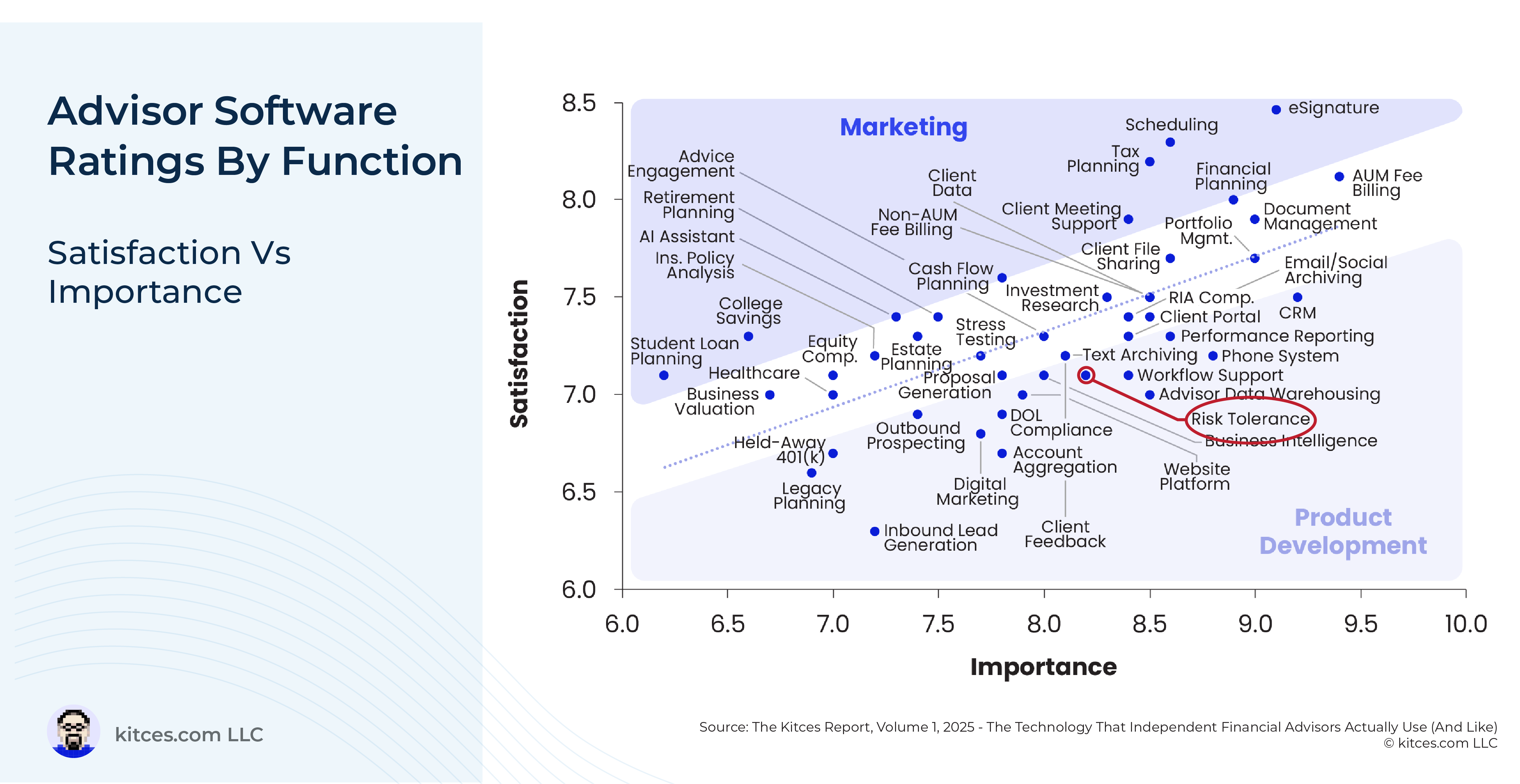
Why Risk Tolerance Questionnaires Can Be Powerful For Prospects (Not Just Clients)

Related Posts

edit post
Breaking: Ukraine Fires Hundreds of Drones at Moscow

Breaking: Ukraine Fires Hundreds of Drones at Moscow

by TheAdviserMagazine
May 17, 2026
0

Dear patient readers, This news broke just as Links went live. Yours truly has limits on how much I can...

edit post
Singaporeans Are Feeling The Economy Grow In Real-Time

Singaporeans Are Feeling The Economy Grow In Real-Time

by TheAdviserMagazine
May 17, 2026
0

Singapore has become one of the clearest examples of what happens when global instability pushes capital toward safe and efficient...

edit post
Rerum Novarum: A Catholic Defense of Private Property

Rerum Novarum: A Catholic Defense of Private Property

by TheAdviserMagazine
May 16, 2026
0

One of the most well-known documents produced by the Church in the contemporary era is Pope Leo XIII’s Rerum Novarum,...

edit post
When a Society Chooses Freedom in an Unfree World

When a Society Chooses Freedom in an Unfree World

by TheAdviserMagazine
May 16, 2026
0

When, and if, freedom progresses in the world, as states hopefully loosen their grip on societies, this process is unlikely...

edit post
Predicting Recession | Mises Institute

Predicting Recession | Mises Institute

by TheAdviserMagazine
May 16, 2026
0

What is the Mises Institute? The Mises Institute is a non-profit organization that exists to promote teaching and research in...

edit post
Links 5/16/2026 | naked capitalism

Links 5/16/2026 | naked capitalism

by TheAdviserMagazine
May 16, 2026
0

Retired Californian finds fulfilment as Lumphini cat caretaker Bangkok Post Earth Rotation Residuals as an Early-Warning System for AMOC Decline...

Next Post
edit post
Why Risk Tolerance Questionnaires Can Be Powerful For Prospects (Not Just Clients)

Why Risk Tolerance Questionnaires Can Be Powerful For Prospects (Not Just Clients)

edit post
Breakout Stocks: How to trade Laurus Labs, Torrent Pharma and Fortis Healthcare that hit a fresh 52-week high? – ​Market summary

Breakout Stocks: How to trade Laurus Labs, Torrent Pharma and Fortis Healthcare that hit a fresh 52-week high? - ​Market summary

  • Trending
  • Comments
  • Latest
edit post
Gavin Newsom issues ‘final warning’ amid California’s dire housing crisis — what’s at stake for millions of residents

Gavin Newsom issues ‘final warning’ amid California’s dire housing crisis — what’s at stake for millions of residents

May 3, 2026
edit post
Florida Warning: With Senior SNAP Benefits Averaging 8/Month, Thousands Risk Losing Assistance in 2026

Florida Warning: With Senior SNAP Benefits Averaging $188/Month, Thousands Risk Losing Assistance in 2026

April 27, 2026
edit post
From Maine to Michigan, Democrats Are Making Communism Great Again

From Maine to Michigan, Democrats Are Making Communism Great Again

May 16, 2026
edit post
Minnesota Wealth Tax | Intangible Personal Property Tax

Minnesota Wealth Tax | Intangible Personal Property Tax

May 6, 2026
edit post
10 Cheapest High Dividend Stocks With P/E Ratios Under 10

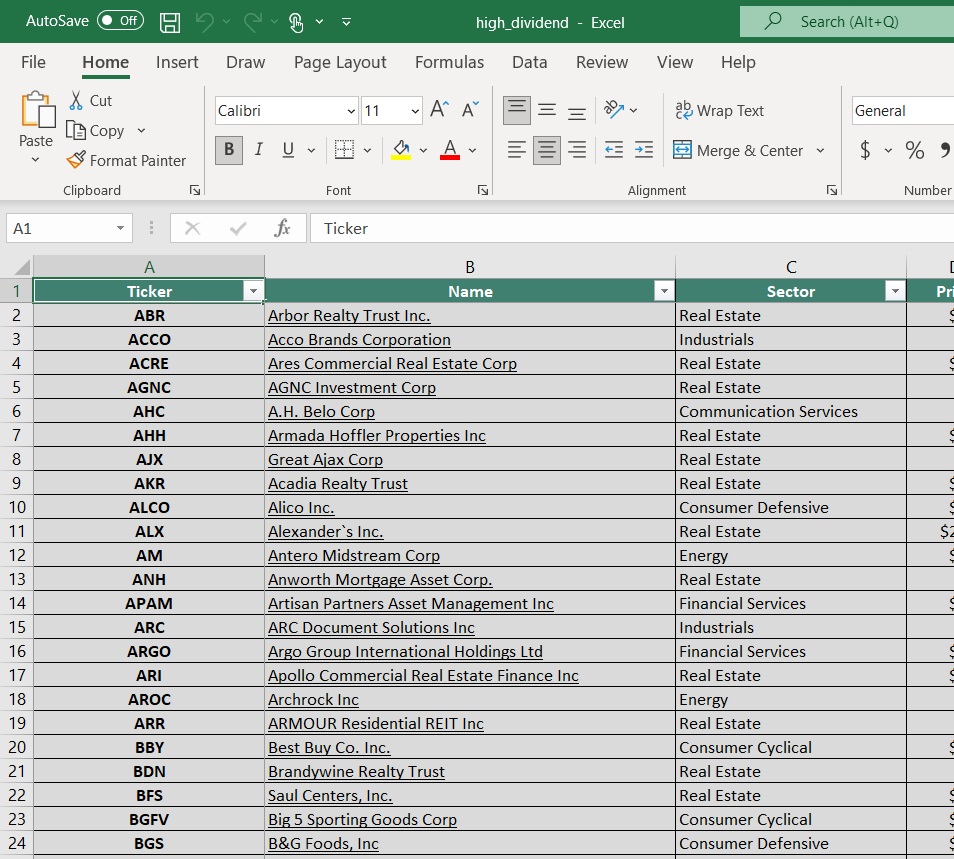
10 Cheapest High Dividend Stocks With P/E Ratios Under 10

April 13, 2026
edit post
Exclusive: America’s largest Black-owned bank launches podcast with mission to unlock hidden shame holding back generational wealth

Exclusive: America’s largest Black-owned bank launches podcast with mission to unlock hidden shame holding back generational wealth

April 29, 2026
edit post
SolarEdge revival gains momentum – Globes

SolarEdge revival gains momentum – Globes

0
edit post
TRX Gold Corporation (TRX): 10 Best Gold Mining Stocks to Buy as Central Banks Buy Bullion

TRX Gold Corporation (TRX): 10 Best Gold Mining Stocks to Buy as Central Banks Buy Bullion

0
edit post
One of the market’s hottest trades is everything AI can’t replace

One of the market’s hottest trades is everything AI can’t replace

0
edit post
Lunakai Magnesium Glycinate, 90 count only .96 shipped, plus more!

Lunakai Magnesium Glycinate, 90 count only $9.96 shipped, plus more!

0
edit post
The Weekly Notable Startup Funding Report: 5/18/26 – AlleyWatch

The Weekly Notable Startup Funding Report: 5/18/26 – AlleyWatch

0
edit post
What Is a Flat Tax? Definition, Examples & How It Works

What Is a Flat Tax? Definition, Examples & How It Works

0
edit post
TRX Gold Corporation (TRX): 10 Best Gold Mining Stocks to Buy as Central Banks Buy Bullion

TRX Gold Corporation (TRX): 10 Best Gold Mining Stocks to Buy as Central Banks Buy Bullion

May 17, 2026
edit post
National Credit Union Administration proposes stablecoin issuer standards

National Credit Union Administration proposes stablecoin issuer standards

May 17, 2026
edit post
Seniors, Watch Out! Official-Looking “Tax Review” Mailers Are Charging You for Free Property Tax Relief — Here’s How to Avoid the Scam

Seniors, Watch Out! Official-Looking “Tax Review” Mailers Are Charging You for Free Property Tax Relief — Here’s How to Avoid the Scam

May 17, 2026
edit post
The Weekly Notable Startup Funding Report: 5/18/26 – AlleyWatch

The Weekly Notable Startup Funding Report: 5/18/26 – AlleyWatch

May 17, 2026
edit post
The top foreign holders of US debt may soon dump Treasury bonds and bring their money back home

The top foreign holders of US debt may soon dump Treasury bonds and bring their money back home

May 17, 2026
edit post
CMS’s New AI-Powered Prior Authorization System: Will It Speed Up Approvals or Deny Seniors Critical Care?

CMS’s New AI-Powered Prior Authorization System: Will It Speed Up Approvals or Deny Seniors Critical Care?

May 17, 2026
The Adviser Magazine

The first and only national digital and print magazine that connects individuals, families, and businesses to Fee-Only financial advisers, accountants, attorneys and college guidance counselors.

CATEGORIES

  • 401k Plans
  • Business
  • College
  • Cryptocurrency
  • Economy
  • Estate Plans
  • Financial Planning
  • Investing
  • IRS & Taxes
  • Legal
  • Market Analysis
  • Markets
  • Medicare
  • Money
  • Personal Finance
  • Social Security
  • Startups
  • Stock Market
  • Trading

LATEST UPDATES

  • TRX Gold Corporation (TRX): 10 Best Gold Mining Stocks to Buy as Central Banks Buy Bullion
  • National Credit Union Administration proposes stablecoin issuer standards
  • Seniors, Watch Out! Official-Looking “Tax Review” Mailers Are Charging You for Free Property Tax Relief — Here’s How to Avoid the Scam
  • Our Great Privacy Policy
  • Terms of Use, Legal Notices & Disclosures
  • Contact us
  • About Us

© Copyright 2024 All Rights Reserved
See articles for original source and related links to external sites.

Welcome Back!

Login to your account below

Forgotten Password?

Retrieve your password

Please enter your username or email address to reset your password.

Log In
No Result
View All Result
  • Home
  • Financial Planning
    • Financial Planning
    • Personal Finance
  • Market Research
    • Business
    • Investing
    • Money
    • Economy
    • Markets
    • Stocks
    • Trading
  • 401k Plans
  • College
  • IRS & Taxes
  • Estate Plans
  • Social Security
  • Medicare
  • Legal

© Copyright 2024 All Rights Reserved
See articles for original source and related links to external sites.