No Result
View All Result
SUBMIT YOUR ARTICLES
  • Login
Saturday, June 20, 2026
TheAdviserMagazine.com
  • Home
  • Financial Planning
    • Financial Planning
    • Personal Finance
  • Market Research
    • Business
    • Investing
    • Money
    • Economy
    • Markets
    • Stocks
    • Trading
  • 401k Plans
  • College
  • IRS & Taxes
  • Estate Plans
  • Social Security
  • Medicare
  • Legal
  • Home
  • Financial Planning
    • Financial Planning
    • Personal Finance
  • Market Research
    • Business
    • Investing
    • Money
    • Economy
    • Markets
    • Stocks
    • Trading
  • 401k Plans
  • College
  • IRS & Taxes
  • Estate Plans
  • Social Security
  • Medicare
  • Legal
No Result
View All Result
TheAdviserMagazine.com
No Result
View All Result
Home Market Research Economy

Bernanke’s Broken Promise: Is It Time To Shrink the Fed Yet?

by TheAdviserMagazine
3 months ago
in Economy
Reading Time: 3 mins read
A A
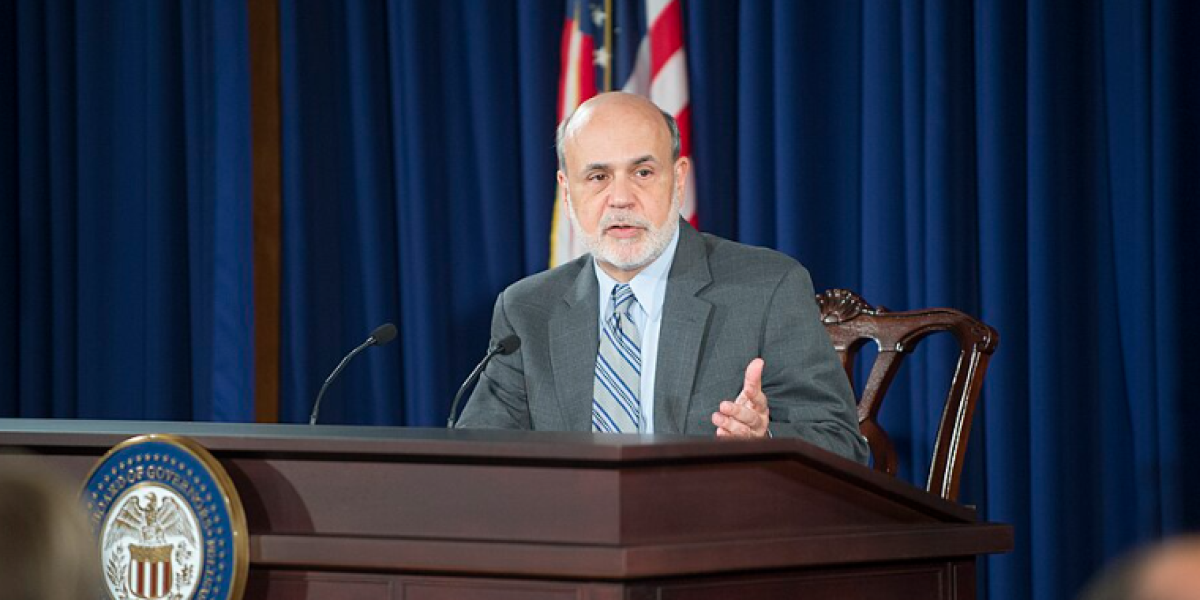
Bernanke’s Broken Promise: Is It Time To Shrink the Fed Yet?
Share on FacebookShare on TwitterShare on LInkedIn


[Originally published by the New York Sun.] 

“It’s a temporary action,” the Federal Reserve chairman, Ben Bernanke, testified before Congress on February 9, 2011, 15 years ago. He was referring to the radical expansion of the Fed’s balance sheet begun under his leadership in 2008 by so-called “Quantitative Easing,” which monetized long-term Treasury debt and 30-year mortgage securities. By 2011, QE had inflated the Fed’s total assets to $2.5 trillion. That was 2. 7 times their $915 billion at the end of 2007, the Fed’s last historically-normal annual balance sheet.

Mr. Bernanke further testified, in what certainly sounded like a promise, “what we are doing here is a temporary measure which will be reversed.” Note that was not “may” be or “can” be, but “will” be. Fifteen years later, it hasn’t happened.  

“At the end of this process,” Mr. Bernanke continued, “the amount of the Fed’s balance sheet will be normalized, and there will be no permanent increase, either in money outstanding [or] in the Fed’s balance sheet.”  That promise, or at least prediction, stands in striking contrast with reality.

Today the Fed’s total assets are $6.6 trillion.  That is 2.6 times as big as when Mr. Bernanke was testifying, and 7.2 times as big as in 2007. 

Among the Fed’s assets all these years later we find $1.6 trillion in Treasury bonds which still have more than ten years left to maturity.  More egregiously, we find $2 trillion in long-term mortgage securities.  

The Fed’s monetization of mortgages, which has massively distorted the housing market, should in my opinion be zero, as it always was from the creation of the Fed in 1913 until 2008. Today the mortgage portfolio alone is more than twice as big as the whole Fed was in 2007.

All this doesn’t sound too “temporary.” Even if one would be tempted to paraphrase President Clinton — “It depends on what the meaning of the word ‘temporary’ is”— one would have to admit that 15 years after Mr. Bernanke’s testimony and going on 18 years after the beginning of the QE program, it does not qualify as temporary.

The question of what is “temporary” was raised by Congressman Scott Garrett in the 2011 hearing.  “What you have is a difference between one’s interpretation of what is permanent and what is temporary,” Mr. Garrett said, insightfully adding, “I imagine no Fed Chairman would ever come to this witness table and say, ‘I am engaging in permanent monetization of the debt,’ [but] describe it as, ‘I’m only taking a temporary action’…. Isn’t that correct?”

Mr. Bernanke replied, “That’s what we are doing.  It’s a temporary action.”  That was doubtless what he intended at the time, but it isn’t what happened. What this “temporary action” was going to do to the Fed’s own risk and financial performance was raised by the chairman of the hearing, Congressman Paul Ryan. “Have you done a stress test on your balance sheet?” he responsibly asked.  “And what level of losses do you think is acceptable as you withdraw?”

The Fed’s most recent published mark to market of its investments, as of September 2025, provides the future answer to Mr. Ryan’s question: There would be a loss of $856 billion required to liquidate the Fed’s long-term investments. To this sum must be added the Fed’s accumulated operating losses of $224 billion since 2022, all caused by the financial risk of QE. If one uses only the losses of the QE program itself, removing the profits made by other parts of the Fed, the QE-alone operating losses since 2022 exceed $500 billion. These are equally losses to the U.S. Treasury.

Would Mr. Ryan have thought that “acceptable”?  Would Mr. Bernanke have?

Here is what Mr. Bernanke answered: “We have done multiple stress tests. Under most likely scenarios, the fiscal implications of the balance sheet are positive… Under most plausible scenarios, this policy will continue to be profitable.” Reality turned out not to be one of the “plausible scenarios.”

It’s too bad that Mr. Ryan did not follow up by asking for a copy of the Fed’s risk analysis for Congressional oversight of the unprecedented risk of QE. For now it appears that the Fed has lost another $2 billion in the first two months of 2026 despite the enormous subsidy it is receiving from the Treasury in the form of over $800 billion in interest-free deposits. These deposits generate income of about $30 billion a year for the Fed at current interest rates. They increase the Treasury’s deficit by the same amount.

Is it finally time to shrink the Fed to its normal size?  Unfortunately, because of the giant market value losses embedded in the Fed’s QE investments, selling them would be far too expensive. So Mr. Bernanke’s “temporary action” will continue into its 19th year.

[Originally published by the New York Sun. Reprinted with permission of the author.] 

Image credit: Federal Reserve, public domain, via Wikimedia.


Source link

Tags: BernankesbrokenFedPromiseshrinkTIME
ShareTweetShare
Previous Post

The Next Metric Investors Need to Keep Track of is…Grocery Prices?

Next Post

Global forecasting group sees U.S. inflation at 4.2% this year, much higher than Fed estimate

Related Posts

edit post
Iran War: Iran Insists on All “Deal” Sequencing, Above All Israel Exit of Lebanon, as No Date for Talks Set; Israel Immediately Violates New Lebanon Ceasefire; Strait of Hormuz Open or Not?

Iran War: Iran Insists on All “Deal” Sequencing, Above All Israel Exit of Lebanon, as No Date for Talks Set; Israel Immediately Violates New Lebanon Ceasefire; Strait of Hormuz Open or Not?

by TheAdviserMagazine
June 20, 2026
0

As readers likely know, Israel is doing its best to sabotage the US-Iran “deal” and has scored an initial success,...

edit post
From Scholasticism to Enlightenment Liberalism

From Scholasticism to Enlightenment Liberalism

by TheAdviserMagazine
June 20, 2026
0

In a previous article defending Enlightenment liberalism and its individualistic conception of a universal natural law, I explained that there...

edit post
Coffee Break: More on American Science, An NIH Grant Long Overdue, An Experimental Model, and Further Thoughts on AI

Coffee Break: More on American Science, An NIH Grant Long Overdue, An Experimental Model, and Further Thoughts on AI

by TheAdviserMagazine
June 19, 2026
0

Part the First: Back to the Past in Science and Medicine.  The future of basic science in the United States...

edit post
Calhoun on Constitutional Government | Mises Institute

Calhoun on Constitutional Government | Mises Institute

by TheAdviserMagazine
June 19, 2026
0

John C. Calhoun is best known as a leading American political figure in the first half of the nineteenth century...

edit post
Nevada workforce is expanding thanks to AI boom, diversifying economy

Nevada workforce is expanding thanks to AI boom, diversifying economy

by TheAdviserMagazine
June 19, 2026
0

The Strip, The Sphere and full replica of the Eiffel Tower in daytimeStrekoza2 | Istock Editorial | Getty ImagesA sparsely-populated...

edit post
The American Revolution and the Danger of Standing Armies

The American Revolution and the Danger of Standing Armies

by TheAdviserMagazine
June 19, 2026
0

Among the key men involved in the American Revolution and the following periods, we find an oft-repeated concern that may...

Next Post
edit post
Global forecasting group sees U.S. inflation at 4.2% this year, much higher than Fed estimate

Global forecasting group sees U.S. inflation at 4.2% this year, much higher than Fed estimate

edit post
The Theory of the Bottom 99 Percent: The Cantillon Effect

The Theory of the Bottom 99 Percent: The Cantillon Effect

  • Trending
  • Comments
  • Latest
edit post
5 Pennsylvania Rebate Rules Seniors Should Check Before the Property Tax/Rent Deadline

5 Pennsylvania Rebate Rules Seniors Should Check Before the Property Tax/Rent Deadline

June 18, 2026
edit post
Florida Roads Become a Battleground for Illegal Immigration

Florida Roads Become a Battleground for Illegal Immigration

June 9, 2026
edit post
Louisiana’s Age-Tiered Homestead Exemption: 8 Details About the Proposed 2028 Amendment

Louisiana’s Age-Tiered Homestead Exemption: 8 Details About the Proposed 2028 Amendment

June 15, 2026
edit post
The 8 States That Still Tax Social Security in 2026

The 8 States That Still Tax Social Security in 2026

June 6, 2026
edit post
It’s Time To Talk About Massie

It’s Time To Talk About Massie

May 23, 2026
edit post
New York Seniors: 6 STAR Tax Relief Rules That Could Put a Bigger Check in Your Mailbox

New York Seniors: 6 STAR Tax Relief Rules That Could Put a Bigger Check in Your Mailbox

June 20, 2026
edit post
Rate cuts? Even the Fed’s new chair admits companies are easily raising capital on financial markets

Rate cuts? Even the Fed’s new chair admits companies are easily raising capital on financial markets

0
edit post
POS Data Management Solutions: A Strategic Guide for 2026

POS Data Management Solutions: A Strategic Guide for 2026

0
edit post
Market Talk – June 18, 2026

Market Talk – June 18, 2026

0
edit post
Why a resilient jobs market keeps turning into a Bitcoin sell signal

Why a resilient jobs market keeps turning into a Bitcoin sell signal

0
edit post
What Yale Researchers Found About Positive Aging Beliefs—and Why It Matters After 60

What Yale Researchers Found About Positive Aging Beliefs—and Why It Matters After 60

0
edit post
Copart (CPRT) Has a Salvage-Auction Network and Insurer Workflow Moat Bigger Than a Used-Car Cycle Trade

Copart (CPRT) Has a Salvage-Auction Network and Insurer Workflow Moat Bigger Than a Used-Car Cycle Trade

0
edit post
Rate cuts? Even the Fed’s new chair admits companies are easily raising capital on financial markets

Rate cuts? Even the Fed’s new chair admits companies are easily raising capital on financial markets

June 20, 2026
edit post
What Yale Researchers Found About Positive Aging Beliefs—and Why It Matters After 60

What Yale Researchers Found About Positive Aging Beliefs—and Why It Matters After 60

June 20, 2026
edit post
Why a resilient jobs market keeps turning into a Bitcoin sell signal

Why a resilient jobs market keeps turning into a Bitcoin sell signal

June 20, 2026
edit post
The Median American Paycheck: ,235 a Week Becomes 0 After Taxes and Deductions

The Median American Paycheck: $1,235 a Week Becomes $850 After Taxes and Deductions

June 20, 2026
edit post
I let my phone die for one entire weekend without telling anyone — and the strange thing wasn’t who didn’t notice, it was realizing how many of my closest relationships had been running on something closer to maintenance than to actual presence

I let my phone die for one entire weekend without telling anyone — and the strange thing wasn’t who didn’t notice, it was realizing how many of my closest relationships had been running on something closer to maintenance than to actual presence

June 20, 2026
edit post
Iran floats ‘insurance fees’ and asserts control over Hormuz

Iran floats ‘insurance fees’ and asserts control over Hormuz

June 20, 2026
The Adviser Magazine

The first and only national digital and print magazine that connects individuals, families, and businesses to Fee-Only financial advisers, accountants, attorneys and college guidance counselors.

CATEGORIES

  • 401k Plans
  • Business
  • College
  • Cryptocurrency
  • Economy
  • Estate Plans
  • Financial Planning
  • Investing
  • IRS & Taxes
  • Legal
  • Market Analysis
  • Markets
  • Medicare
  • Money
  • Personal Finance
  • Social Security
  • Startups
  • Stock Market
  • Trading

LATEST UPDATES

  • Rate cuts? Even the Fed’s new chair admits companies are easily raising capital on financial markets
  • What Yale Researchers Found About Positive Aging Beliefs—and Why It Matters After 60
  • Why a resilient jobs market keeps turning into a Bitcoin sell signal
  • Our Great Privacy Policy
  • Terms of Use, Legal Notices & Disclosures
  • Contact us
  • About Us

© Copyright 2024 All Rights Reserved
See articles for original source and related links to external sites.

Welcome Back!

Login to your account below

Forgotten Password?

Retrieve your password

Please enter your username or email address to reset your password.

Log In
No Result
View All Result
  • Home
  • Financial Planning
    • Financial Planning
    • Personal Finance
  • Market Research
    • Business
    • Investing
    • Money
    • Economy
    • Markets
    • Stocks
    • Trading
  • 401k Plans
  • College
  • IRS & Taxes
  • Estate Plans
  • Social Security
  • Medicare
  • Legal

© Copyright 2024 All Rights Reserved
See articles for original source and related links to external sites.