
-1024x659.jpg "Trump Cuts Back US Contributions to NATO – And Why Not?")
Our allies in NATO got some bad news from the Pentagon recently: The US will be scaling back its contributions to the alliance in the near future. Reactions to the news were mixed, as one might expect. Some see it as neglect and betrayal; others say it’s an opportunity for Europe to rise to the occasion. The Trump administration is presenting it as part of a broader push to transition the defense of Europe into the hands of Europeans and shift America’s focus toward Asia. Whatever the reasons – and whatever anyone else thinks about it – isn’t it about time the US reconsidered its funding of and involvement in both NATO and the UN?
Trump to Tighten the Belt on NATO
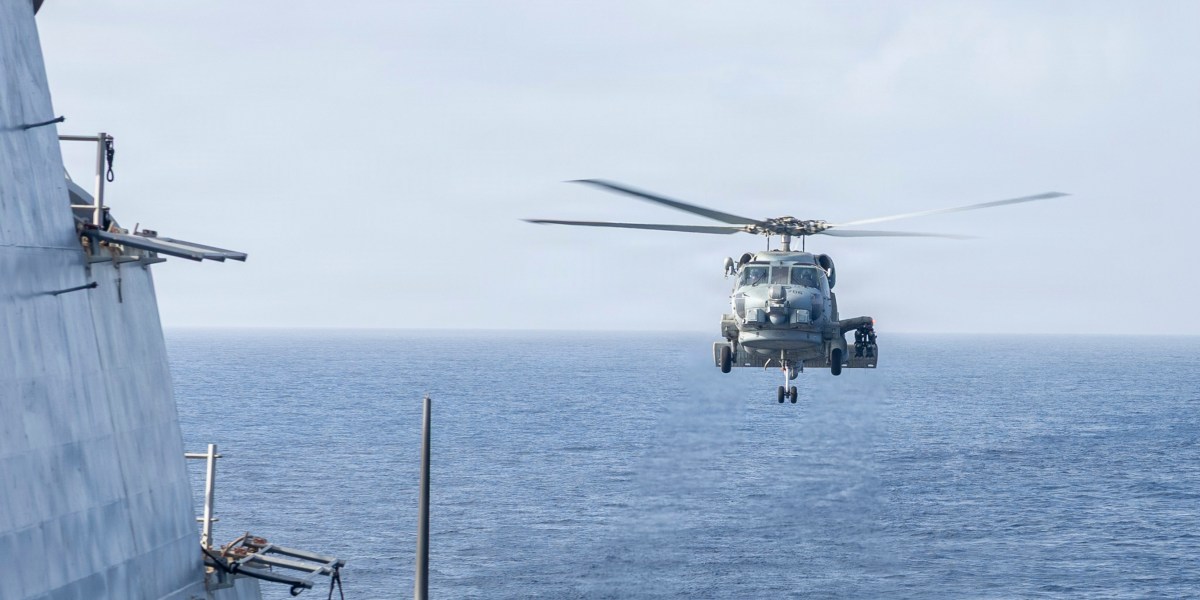
Pentagon official Alexander delivered the news to NATO last week in Brussels. Fox News Digital cited officials as saying the plan is to cut certain availabilities by a third or even as much as one half. This includes strategic bombers, fighter jets, and naval assets.
“The Department of War announced changes to U.S. contributions to the NATO Force Model at the Defense Policy Directors’ meeting in Brussels,” spokesperson Sean Parnell said in a statement. “These changes represent an opportunity for allies to demonstrate that they have heard President Trump’s call for them to step up and take primary responsibility for Europe’s conventional defense.”
Swedish Foreign Minister Maria Malmer Stenergard described the situation as “confusing indeed,” while various others expressed concern over the pace of the change. NATO Secretary-General Mark Rutte assured allies these adjustments would be slow and occur over time, insisting “the U.S. will stay involved in Europe.”
Not everyone is in panic mode, however. Lithuanian Foreign Minister Kestutis Budrys said NATO would be better in the long run. “At the end of the day, when we look back to this period, I’m convinced that the conclusion will be that President Trump made this alliance stronger, not weaker,” he told Foreign Policy.
At present, it’s probably fair to say the US keeps NATO afloat – both figuratively and literally. NATO is made up of 32 nations across North America and Europe, yet the US alone accounts for roughly 50%-60% of the alliance’s, total sea capability, provides about 60% of all combat-capable aircraft, and an average of 40% of all active-duty military personnel. As for NATO’s budget, well, there’s some controversy there.
It’s widely reported that the US pays about 60% of the alliance’s funding. That’s not quite right, but it isn’t quite wrong, either. Back in 2024, Reuters published a “fact check” on that claim, reporting that America only covered about 16% of the NATO annual budget, not two-thirds. Well, that’s true. The US contributes between 15% and 16% annually to the direct budget, known as “common funding.” This covers shared administrative costs and is capped to match the alliance’s next largest contributor, Germany. In 2024,and that came out to about $753 million to Germany’s somewhere south of $600 million.
But when it comes to total defense spending, no other nation in the world quite compares to America’s $935 billion (which represented about two-thirds of the total defense spending for the NATO alliance that year). Now consider how much of that ends up funneled to NATO. Remember: 50%-60% of the alliance’s sea capability, 60% of the combat aircraft, and 40% of the troops are all American. Even just looking at the direct general fund spending, however, the US provides 16% of the money while being only 3% of the countries in the group.
The Return on Investment – Or Lack Thereof
Never mind mathematical fairness for a moment: Let’s talk return on investment. What does the US get in return for all those dollars, troops, and equipment? Many of those very allies routinely vote contrary to the US in the UN General Assembly and on the UN Security Council – including when it comes to resolutions directed against the US. For example: in October 2025, the UN General Assembly voted 165-7, with 12 abstentions, to end the US embargo on Cuba – for the 33rd consecutive year. Who voted against it in 2025? The US, of course, but also Israel, Argentina, Hungary, Paraguay, North Macedonia, and Ukraine. Notably, only two of those – Hungary and North Macedonia – are members of NATO.
Germany, France, the UK, Spain, Canada, and Italy – along with many other NATO member nations – voted in favor of the resolution seeking to force the US to take unwanted action. Of course, the UN has no teeth of its own, so such resolutions are worth less than the paper they end up written down on.
Every year since 1983, the US Department of State has sent a report to Congress on the voting action of the UN General Assembly. What votes were held, who voted how, and how often did each nation vote in agreement with the US? The answer to all these questions and more awaits the reader brave enough to delve into the 100-plus pages of each year’s report.
Back in September of 2013, though – the 30th anniversary of the annual report – The Heritage Foundation published a report revealing an interesting fact. The title says it best: “Thirty Years of Voting in the U.N. General Assembly: The U.S. Is Nearly Always in the Minority.”
After combing through 30 years of annual reports, the authors discovered that, since 1983, the voting coincidence with the US – that is, the percentage of the General Assembly that voted in agreement with the US – surpassed 50% only twice.
That was almost 13 years ago, but in the age of Trump it certainly doesn’t seem the trend has changed much. The US frequently resists international frameworks the UN loves so much – like the UN Framework Convention on Climate Change or the International Criminal Court – especially when they are seen as infringing on American sovereignty. The majority of the globalist body also regularly disagrees on Israel, the Middle East, human rights, abortion access, the war in Ukraine, and various other funding and policy issues.
Yet the US contributes about 22% of the UN’s core administrative and operational costs despite being just one of 193 members and so frequently in the minority on the issues. All told, though, the US provides about 30% of all UN revenue.
Why should the US continue to provide more funding, personnel, and equipment to these so-called alliances than any other member, all the while being fought tooth and nail at seemingly every avenue by the very countries living large off American tax dollars?




















-1024x659.jpg&description=Trump%20Cuts%20Back%20US%20Contributions%20to%20NATO%20%E2%80%93%20And%20Why%20Not%3F)