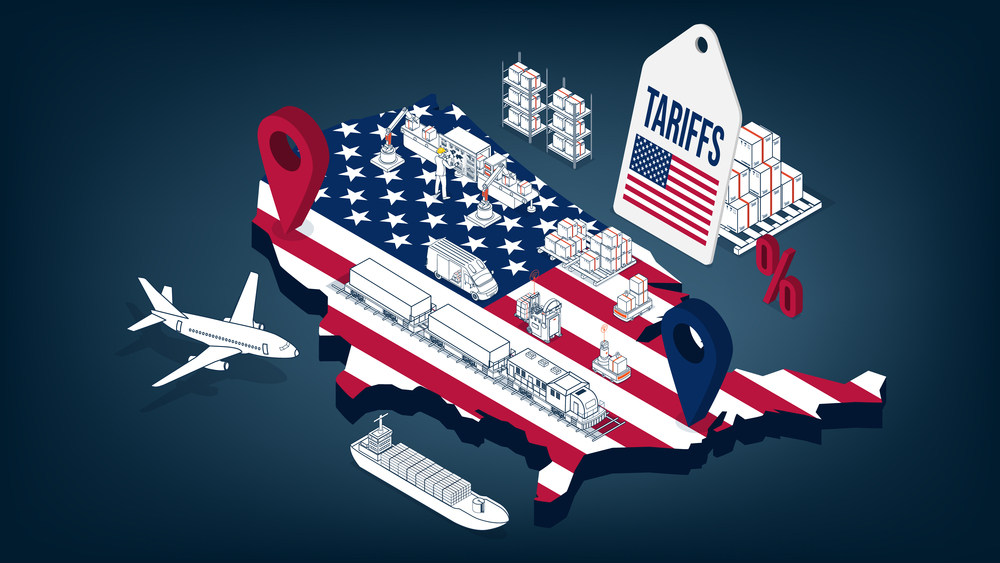
Soon after the Wall Street Journal published Phil Gramm’s and my warning of the destructiveness of President Trump’s steel and aluminum tariffs, a thoughtful CEO of a steel-producing firm in Pennsylvania emailed me to cordially express his concern that, if Sen. Gramm’s and my warning is heeded, failure to protect American producers of steel and aluminum will jeopardize U.S. national security. Much can be written to address this concern, but not wishing to excessively tax this gentleman’s patience and time, I limited my response to what I share here.
…..
Mr. B_:
Thanks for your thoughtful and challenging email in response to Phil Gramm’s and my argument that President Trump’s tariffs on steel and aluminum are destructive. It deserves a substantive reply.
Let me begin with a point of complete agreement between us: Regulation done in the name of protecting the environment has gone too far in the U.S., and this regulation has deleterious effects on the American economy. It should be rolled back. I also agree that ensuring adequate military readiness is of great importance, and that narrowly targeted trade restrictions can sometimes be an appropriate means of helping to ensure this readiness.
But resorting to such restrictions must be done with unusual care because claims of the need for trade restrictions to protect national security are especially prone to be abused. Not only are politicians frightened of being publicly accused of negligence regarding national security, these claims are not as straightforward as they at first appear.
No Industry Can Expand Without Causing Other Industries to Be Smaller
One cost of any trade restriction is that, by diverting resources into the protected industries, resources are diverted away from other industries. Such a diversion occurs regardless of the underlying justification for the restriction. If we could be sure that the industries that shrink as a result of using protectionism to strengthen national security are industries that are of little to no consequence for national security – say, the cosmetics and tobacco industries – the case for such protection on national-security grounds gains strength. But in the real world we can seldom have any such assurance.
What if – as strikes me as probable – the tariff-induced expansion of U.S. steel and aluminum manufacturing causes these firms to draw workers and resources away from producing, not the likes of eyeliner and cigarettes, but from producing militarily significant goods such as carbon fiber, chemicals, and rubber? How can we be sure that the benefit to national security generated by more domestic steel and aluminum production isn’t overwhelmed by the harm to national security that comes from producing fewer chemicals and less rubber?
If only because it’s practically impossible to know just what other industries will shrink, and by how much, if tariffs are raised on steel and aluminum, I see no realistic way to make any such firm assessment.
A seemingly easy maneuver to avoid this problem is to grant protection, on national-security grounds, also to these other industries. But who decides what other industries should receive such protection? Do producers of, say, lumber and glass qualify for protection? These outputs, after all, also have military uses.
Even if we successfully meet the challenge of accurately identifying which other industries with national-security significance will shrink as a result of protecting steel and aluminum, problems remain. One such problem is that the protection given to these other industries runs against the purpose of the initial reason for protection – namely, to increase domestic production of steel and aluminum. It does so by obliging steel and aluminum producers to pay higher wages for workers, and higher prices for inputs, that, because of the protection of the other industries, are now in higher demand by these other protected industries.
Further, the protected ‘other’ industries, having lost some workers and inputs to steel and aluminum producers, must now themselves – if they are to remain viable – draw resources away from yet a third set of industries, such as, perhaps, energy, construction, and microelectronics. How many industries among this third set produce outputs that are plausibly important for national defense?
In my experience, proponents of tariffs are blind to the complexity of the reality that they propose to meddle in. This blindness leads to the presumption that a sufficient condition for justifying protection on national-security grounds is to identify some seemingly obvious inputs, such as steel and aluminum, as critical for national security. But if these inputs aren’t the only ones that plausibly serve important national-security goals, this presumption is mistaken. And acting on it can be counterproductive.
‘Critical for National Defense’ Is a Fuzzy Concept
At this juncture it might be thought that the entire problem is solvable simply by granting immediate protection to all industries classified as critical for national defense, with the criteria for such a classification being wide. Again, however, we confront the problem of determining which industries do, and which industries don’t, fit this bill. (You can bet, of course, that insofar as protection on national-security grounds is available, every industry will lobby to make the case that its output is a national-security necessity.) As a practical matter, some industries will be in the gray area, with some dispassionate analysts concluding that those industries are important for national security, while other dispassionate analysts conclude otherwise.
Suppose that glass producers are in that gray area but are eventually denied protection for the sound reason that current domestic production of glass is quite high. Glass producers will thus lose workers and resources to the industries that expand as a result of the protection of other industries. Domestic production of glass will fall and glass imports will rise. Because glass does have military uses, the decline in glass production will increase the military significance (or at least the asserted military significance) of what remains of the U.S. glass industry. Pressure to extend protection to the glass industry will grow as the same considerations that earlier counseled the extension of protection to rubber and chemicals now come into play for glass. Protective tariffs would likely eventually be imposed on imports of glass, thus causing yet other industries to contract as the glass industry expands.
Because nearly everything in the modern global economy is connected in one way or another to everything else – and because no domestic industry can expand without causing other domestic industries to be smaller than they would otherwise be, and thus causing the prices of many inputs unexpectedly to rise throughout the economy – there is no categorically distinct set of industries that can objectively be identified as “Critical for National Defense” with other industries identified as not-critical. As soon as the national-security exception to the case for free trade is made available, determining which industries are to be protected and which aren’t will inevitably be done with a heavy helping of guess-work and speculation, and topped off with heaping amounts of pork and politics.
This unfortunate reality – along with many other, more familiar challenges reviewed elsewhere – about the difficulties of using protectionism to strengthen national security doesn’t mean that there are no real-world instances for which the use of such trade restrictions is appropriate. Reality is messy, imperfect, and uncertain. The point of the above economic assessment is simply to warn that identifying some goods, such as steel and aluminum, that clearly are currently major inputs used by the military is not itself sufficient to justify protecting domestic producers of these goods from foreign competition. National security itself stands a good chance of being compromised by too quickly concluding that producers of such goods must be protected in order to ensure national security.
Donald J. Boudreaux is Professor of Economics, George Mason University. He blogs at Café Hayek (www.cafehayek.com).