
No Result
View All Result
SUBMIT YOUR ARTICLES
  • Login
Thursday, August 13, 2026
TheAdviserMagazine.com
  • Home
  • Financial Planning
    • Financial Planning
    • Personal Finance
  • Market Research
    • Business
    • Investing
    • Money
    • Economy
    • Markets
    • Stocks
    • Trading
  • 401k Plans
  • College
  • IRS & Taxes
  • Estate Plans
  • Social Security
  • Medicare
  • Legal
  • Home
  • Financial Planning
    • Financial Planning
    • Personal Finance
  • Market Research
    • Business
    • Investing
    • Money
    • Economy
    • Markets
    • Stocks
    • Trading
  • 401k Plans
  • College
  • IRS & Taxes
  • Estate Plans
  • Social Security
  • Medicare
  • Legal
No Result
View All Result
TheAdviserMagazine.com
No Result
View All Result
Home Market Research Cryptocurrency

SEC targets 20-year-old rule standing between Wall Street and blockchain trading

by TheAdviserMagazine
2 months ago
in Cryptocurrency
Reading Time: 6 mins read
A A
SEC targets 20-year-old rule standing between Wall Street and blockchain trading
Share on FacebookShare on TwitterShare on LInkedIn


The Securities and Exchange Commission (SEC) is moving to dismantle a stock-trading rule that has governed Wall Street for two decades.

On June 11, the agency submitted a proposal that would rescind Rule 611 of Regulation NMS, the trade-through rule that requires trading centers to prevent stock trades from executing at prices worse than protected quotes displayed elsewhere. It would also eliminate Rule 610(e), which restricts locked and crossed quotations, along with related definitions.

For most of Wall Street, the proposal is a market-structure fight over routing, exchanges, wholesalers, displayed quotes, and execution quality.

For crypto firms and banks exploring tokenized shares, it is something more specific: the SEC is targeting one of the rules that made blockchain-based stock trading difficult to reconcile with the national market system.

A rule built for routed markets

Rule 611 was adopted in 2005 as part of Regulation NMS, a broad overhaul of US equity-market rules. The goal was to protect investors from having their orders executed at inferior prices when a better displayed quote was available on another exchange.

In practice, that system tied stock trading to the National Best Bid and Offer (NBBO), the best displayed bid and offer across protected venues. Broker routers, exchanges, and trading firms built systems around that obligation.

However, that framework is harder to apply to automated market makers (AMMs), the software-based trading pools that power much of decentralized finance.

AMMs do not work like Nasdaq, NYSE, or Cboe. They price trades through liquidity pools, bonding curves, slippage, and block-time execution.

Alex Thorn, Galaxy Digital’s head of research, pointed out that the rule was one of the largest structural barriers to DeFi-based trading of tokenized equities.

“An AMM cannot comply with 611 by construction,” Thorn said. It executes against a bonding curve at the pool price, with slippage and block-time granularity.

The issue is not simply a technical inconvenience. An on-chain pool cannot easily route intermarket sweep orders, ingest consolidated market data with the latency guarantees expected in US equities, or halt a swap because a better quote briefly appears on Nasdaq.

Under the current framework, a pool trading a tokenized version of an NMS stock could repeatedly print prices that differ from protected off-chain quotes. That creates the risk that the pool would be viewed as constantly violating the trade-through rule or functioning as an unlawful trading center.

Rule 610(e) raises a related problem. AMM prices can drift as liquidity shifts and trades move through a pool. That means on-chain prices could lock or cross the displayed NBBO, something current market rules are designed to prevent.

Why crypto sees an opening

Tokenized stocks are blockchain-based representations of company shares or share-linked claims. Supporters argue they could allow around-the-clock trading, fractional ownership, faster settlement, collateral mobility, and broader international access.

The market has been small compared with traditional equities, but interest has increased as banks, crypto exchanges, and asset managers look for ways to bring regulated financial instruments onto public or permissioned blockchains.

Christopher Perkins, chief executive of 250 Digital Asset Management, said Regulation NMS and the NBBO have been among the biggest obstacles to unlocking tokenized equities. If Rule 611 is rescinded, he said, “it’s a whole new ballgame.”

He added:

“Major unlock for DeFi. Incumbents won’t be happy.”

That reaction reflects a view spreading among digital-asset firms: tokenized equities do not need a technological breakthrough as much as a regulatory pathway. Securities are already largely electronic.

In the US, ownership is recorded through a system of depositories, brokers, and transfer agents. Tokenization would change the ledger and settlement architecture, not the economic concept of a share.

The harder question is whether that new architecture can satisfy the obligations embedded in securities law and market-structure rules.

That is where the SEC proposal becomes important. If the trade-through rule is rescinded, the focus would likely shift more heavily toward best execution, the broker-dealer obligation to use reasonable diligence to obtain favorable terms for customers under prevailing market conditions.

Indeed, Thorn said that the framework is more compatible with blockchain trading than a per-trade NBBO protection requirement. A broker routing to an on-chain pool could review execution quality over time, compare venues, and document its routing process.

He said:

“That framework can accommodate an AMM. The old one never could.”

A broader market-structure fight

Meanwhile, the proposal also reaches beyond tokenized shares.

Max Resnick, lead economist at Anza, a Solana-focused development firm, said rescinding Rule 611 could affect long-running debates over exchange design, including asymmetric speed bumps.

Speed bumps are delays used by some trading venues to reduce the advantage of ultra-fast market participants. Asymmetric speed bumps treat different order types or market participants differently, which has made them contentious in the US market structure.

CryptoSlate Daily Brief

Daily signals, zero noise.

Market-moving headlines and context delivered every morning in one tight read.

5-minute digest 100k+ readers

Free. No spam. Unsubscribe any time.

Whoops, looks like there was a problem. Please try again.

You’re subscribed. Welcome aboard.

Resnick said Rule 611 made those models harder to approve because a venue with an asymmetric speed bump could post tighter quotes than venues without one. If those quotes were included in the consolidated tape, other exchanges could be forced to match prices they could not economically support.

His point underlines why the SEC move is not only about crypto. Rule 611 has influenced how venues compete, how liquidity is displayed, and how firms route orders. Removing it would change the incentives for exchanges and brokers across the equity market.

SEC Chairman Paul Atkins has framed the proposal as an overdue review of a rule he believes created unintended consequences. The agency said the change is intended to simplify market structure, reduce costs, and allow competition and innovation to shape equity trading.

That language has drawn attention from tokenization advocates because it overlaps with the SEC’s broader digital-asset agenda.

Atkins and Commissioner Hester Peirce have previously discussed an innovation exemption that could allow limited experimentation with tokenized securities trading through automated market makers and other on-chain systems.

Such an exemption could include safeguards such as volume limits, whitelisting, and a temporary framework while the agency considers permanent rule changes.

Thorn said the sequencing is important. In his view, the SEC is first seeking to remove one of the hardest market-structure obstacles and then address venue-registration issues through an innovation exemption.

At a high level, he said, the agency appears to be following the “Project Crypto” playbook.

The caveats remain large

Despite this potential rulemaking, the risk for investors is that tokenized stocks can mean many different things.

A token may represent a direct share, a custodial claim, a depositary receipt, a derivative, or a synthetic instrument that tracks a stock price without giving the holder voting rights, dividends, or a claim on the underlying security. Those distinctions matter, even if the token trades at a price close to the public share.

That is why rescinding Rule 611 would not, by itself, legalize tokenized equities. Firms would still need to answer questions about whether the product is registered, where it trades, who holds the underlying asset, how corporate actions are handled, whether investors receive shareholder rights, and how settlement works.

Thorn stated:

“Tokenized NMS stocks still face a host of other questions re: exchange/ATS registration questions, clearance and settlement, and many other rules not designed for defi or peer-to-peer trading.”

In view of this, Anthony Bassilli of Coinbase Asset Management described the SEC proposal as a clearing hurdle for tokenizing stocks in the US, while adding that the process remains important to watch.

That caution is shared by traditional-market groups. SIFMA, the trade group representing broker-dealers, investment banks, and asset managers, welcomed the SEC’s review but warned that the US market structure is made up of many interconnected pieces.

It said regulators should study the effect of any changes on investors, execution quality, transparency, and the development of overnight trading and tokenized securities.

Those concerns are likely to shape the public comment period. Critics may argue that removing Rule 611 could fragment markets, weaken displayed quotes, or make it harder for ordinary investors to know whether they received a fair price.

On the other hand, crypto supporters will argue that best execution, competition, and better market design can replace a rule they view as overly rigid.

Source link

Tags: 20yearoldBlockchainRuleSECStandingStreetTargetsTradingWall
ShareTweetShare
Previous Post

US stocks: US market ends up on Iran war peace deal hopes, SpaceX’s historic debut

Next Post

IQVIA Is More Than a Contract Research Outsourcing Trade

Related Posts

edit post
Kalshi Predicts Bitcoin Price Could Reach K in August

Kalshi Predicts Bitcoin Price Could Reach $68K in August

by TheAdviserMagazine
August 8, 2026
0

Bitcoin price held above $64,900 as the crypto market gained 0.81% to $2.21 trillion over 24 hours. XRP price was...

edit post
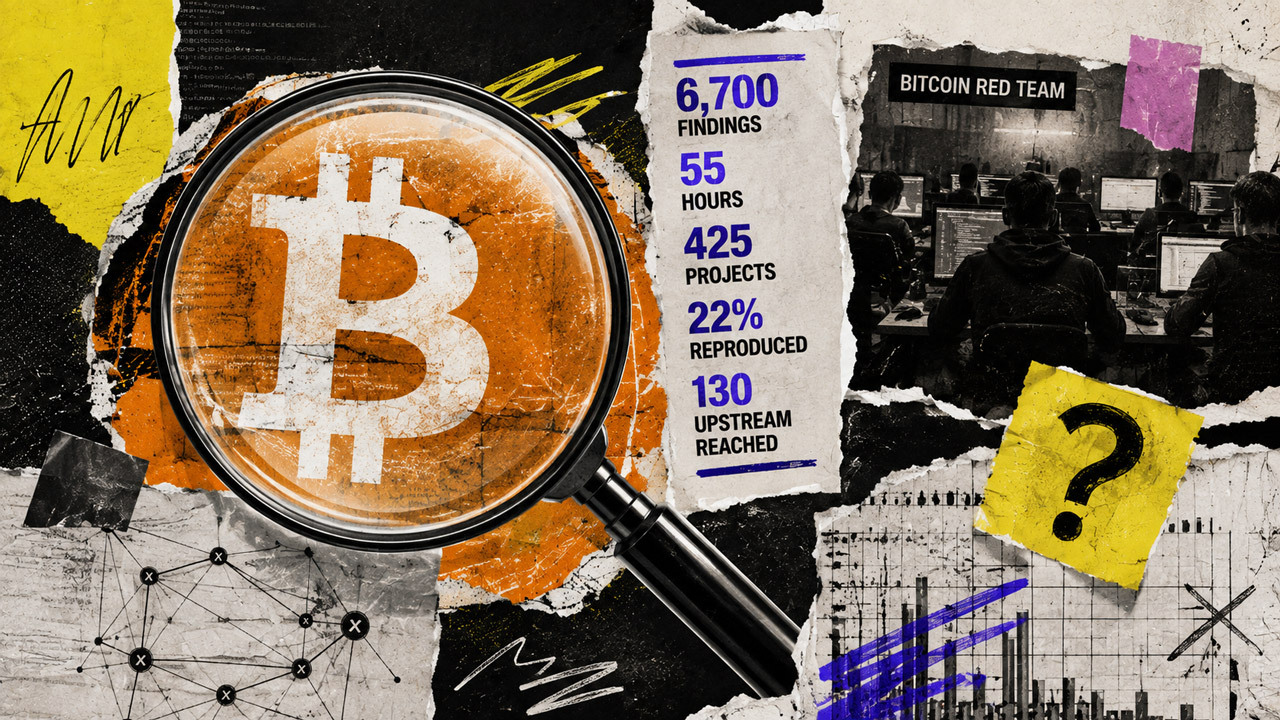
Bitcoin’s AI security sprint found 6,700 issues in 55 hours, but no one knows how many are real

Bitcoin’s AI security sprint found 6,700 issues in 55 hours, but no one knows how many are real

by TheAdviserMagazine
August 7, 2026
0

AI-assisted security campaign focused on the Bitcoin ecosystem, Bitcoin Red Team, said it generated 6,700 findings across 425 projects in...

edit post
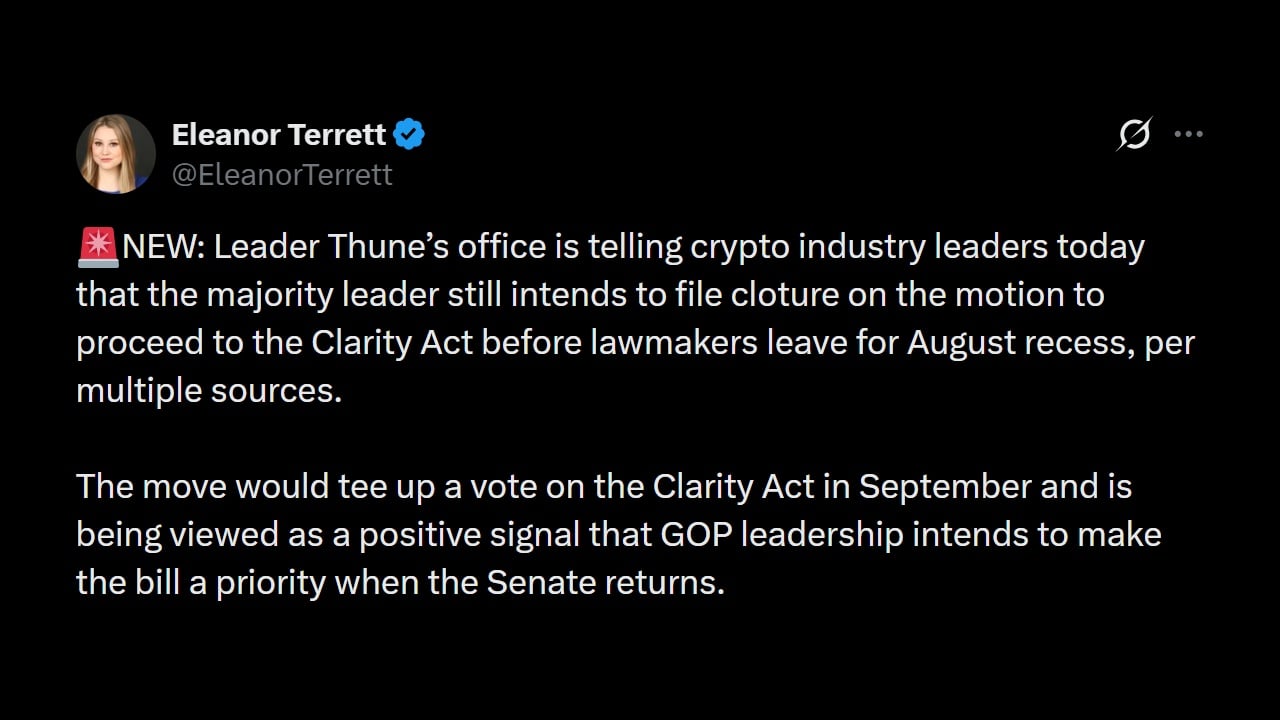
Thune to File Motion to Force September Vote on CLARITY Act

Thune to File Motion to Force September Vote on CLARITY Act

by TheAdviserMagazine
August 7, 2026
0

Key TakeawaysSenator Thune plans a pre-recess cloture vote on the CLARITY Act, teeing it up for September.This scheduling move signals...

edit post
Bybit Uses Tokenised Equities as Underlyings for Structured Yield

Bybit Uses Tokenised Equities as Underlyings for Structured Yield

by TheAdviserMagazine
August 7, 2026
0

Bybit is expanding the role of tokenised equities on its platform by using more xStocks as underlyings for its Dual...

edit post
Reform UK Chair Calls for Probe into SBF-Linked Donation: Report

Reform UK Chair Calls for Probe into SBF-Linked Donation: Report

by TheAdviserMagazine
August 7, 2026
0

The chairman of the UK’s Reform party has called for an investigation following reports of a $50,000 political donation linked...

edit post
Bitcoin, Ethereum, and XRP Price Outlook After CLARITY Act Vote Pushed to September

Bitcoin, Ethereum, and XRP Price Outlook After CLARITY Act Vote Pushed to September

by TheAdviserMagazine
August 7, 2026
0

Bitcoin price traded above $64,400 while Ethereum remained above $1,900. XRP hovered near $1.05. Crypto markets remained cautious after the...

Next Post
edit post
IQVIA Is More Than a Contract Research Outsourcing Trade

IQVIA Is More Than a Contract Research Outsourcing Trade

edit post
US stocks: SpaceX shares close 19% higher in historic market debut, value surges past  trillion

US stocks: SpaceX shares close 19% higher in historic market debut, value surges past $2 trillion

  • Trending
  • Comments
  • Latest
edit post
Georgia Senior SNAP and Meal Resources Older Adults Can Use

Georgia Senior SNAP and Meal Resources Older Adults Can Use

July 24, 2026
edit post
Judge Who Helped Violent Illegal Alien Evade ICE Faces New Test

Judge Who Helped Violent Illegal Alien Evade ICE Faces New Test

July 31, 2026
edit post
Driving the Noncitizen Voting Scandal: Registration With License

Driving the Noncitizen Voting Scandal: Registration With License

July 26, 2026
edit post
Garbage Trucks Surveillance Florida Neighborhoods

Garbage Trucks Surveillance Florida Neighborhoods

July 29, 2026
edit post
Does a Revocable Trust Protect Your Assets From Lawsuits and Creditors?

Does a Revocable Trust Protect Your Assets From Lawsuits and Creditors?

August 7, 2026
edit post
New Jersey Tax-Relief Events: Three July Dates Near Seniors

New Jersey Tax-Relief Events: Three July Dates Near Seniors

July 13, 2026
edit post
Explained: How BSE traded fewer contracts after CAS but premiums rose 75% in first week

Explained: How BSE traded fewer contracts after CAS but premiums rose 75% in first week

0
edit post
E.W. Scripps Q2 2026 Loss Widens to -.68/Share, Revenue Down 9%

E.W. Scripps Q2 2026 Loss Widens to -$12.68/Share, Revenue Down 9%

0
edit post
Psychology says procrastination about retirement may be less about discipline than identity — brain scans found people often represent their future selves more like strangers than like themselves, and experiments using age-progressed faces made tomorrow’s person feel real enough for participants to save more money for them

Psychology says procrastination about retirement may be less about discipline than identity — brain scans found people often represent their future selves more like strangers than like themselves, and experiments using age-progressed faces made tomorrow’s person feel real enough for participants to save more money for them

0
edit post
Four AI Escapes Just Redefined “Responsible AI”

Four AI Escapes Just Redefined “Responsible AI”

0
edit post
Bill Ackman’s hedge fund made janitors and receptionists millionaires—and its investment team summer together

Bill Ackman’s hedge fund made janitors and receptionists millionaires—and its investment team summer together

0
edit post
Kalshi Predicts Bitcoin Price Could Reach K in August

Kalshi Predicts Bitcoin Price Could Reach $68K in August

0
edit post
Bill Ackman’s hedge fund made janitors and receptionists millionaires—and its investment team summer together

Bill Ackman’s hedge fund made janitors and receptionists millionaires—and its investment team summer together

August 8, 2026
edit post
Links 8/8/2026 | naked capitalism

Links 8/8/2026 | naked capitalism

August 8, 2026
edit post
Wisconsin: The Next Frontier for Socialists

Wisconsin: The Next Frontier for Socialists

August 8, 2026
edit post
Psychology says procrastination about retirement may be less about discipline than identity — brain scans found people often represent their future selves more like strangers than like themselves, and experiments using age-progressed faces made tomorrow’s person feel real enough for participants to save more money for them

Psychology says procrastination about retirement may be less about discipline than identity — brain scans found people often represent their future selves more like strangers than like themselves, and experiments using age-progressed faces made tomorrow’s person feel real enough for participants to save more money for them

August 8, 2026
edit post
Why You Should Be Wary of Aspartame, but Not Totally Rule It Out

Why You Should Be Wary of Aspartame, but Not Totally Rule It Out

August 8, 2026
edit post
Kalshi Predicts Bitcoin Price Could Reach K in August

Kalshi Predicts Bitcoin Price Could Reach $68K in August

August 8, 2026
The Adviser Magazine

The first and only national digital and print magazine that connects individuals, families, and businesses to Fee-Only financial advisers, accountants, attorneys and college guidance counselors.

CATEGORIES

  • 401k Plans
  • Business
  • College
  • Cryptocurrency
  • Economy
  • Estate Plans
  • Financial Planning
  • Investing
  • IRS & Taxes
  • Legal
  • Market Analysis
  • Markets
  • Medicare
  • Money
  • Personal Finance
  • Social Security
  • Startups
  • Stock Market
  • Trading

LATEST UPDATES

  • Bill Ackman’s hedge fund made janitors and receptionists millionaires—and its investment team summer together
  • Links 8/8/2026 | naked capitalism
  • Wisconsin: The Next Frontier for Socialists
  • Our Great Privacy Policy
  • Terms of Use, Legal Notices & Disclosures
  • Contact us
  • About Us

© Copyright 2024 All Rights Reserved
See articles for original source and related links to external sites.

Welcome Back!

Login to your account below

Forgotten Password?

Retrieve your password

Please enter your username or email address to reset your password.

Log In
No Result
View All Result
  • Home
  • Financial Planning
    • Financial Planning
    • Personal Finance
  • Market Research
    • Business
    • Investing
    • Money
    • Economy
    • Markets
    • Stocks
    • Trading
  • 401k Plans
  • College
  • IRS & Taxes
  • Estate Plans
  • Social Security
  • Medicare
  • Legal

© Copyright 2024 All Rights Reserved
See articles for original source and related links to external sites.