No Result
View All Result
SUBMIT YOUR ARTICLES
  • Login
Thursday, July 2, 2026
TheAdviserMagazine.com
  • Home
  • Financial Planning
    • Financial Planning
    • Personal Finance
  • Market Research
    • Business
    • Investing
    • Money
    • Economy
    • Markets
    • Stocks
    • Trading
  • 401k Plans
  • College
  • IRS & Taxes
  • Estate Plans
  • Social Security
  • Medicare
  • Legal
  • Home
  • Financial Planning
    • Financial Planning
    • Personal Finance
  • Market Research
    • Business
    • Investing
    • Money
    • Economy
    • Markets
    • Stocks
    • Trading
  • 401k Plans
  • College
  • IRS & Taxes
  • Estate Plans
  • Social Security
  • Medicare
  • Legal
No Result
View All Result
TheAdviserMagazine.com
No Result
View All Result
Home Market Research Business

World Cup Fever Not Expected to Be Growth Driver

by TheAdviserMagazine
3 weeks ago
in Business
Reading Time: 4 mins read
A A
World Cup Fever Not Expected to Be Growth Driver
Share on FacebookShare on TwitterShare on LInkedIn


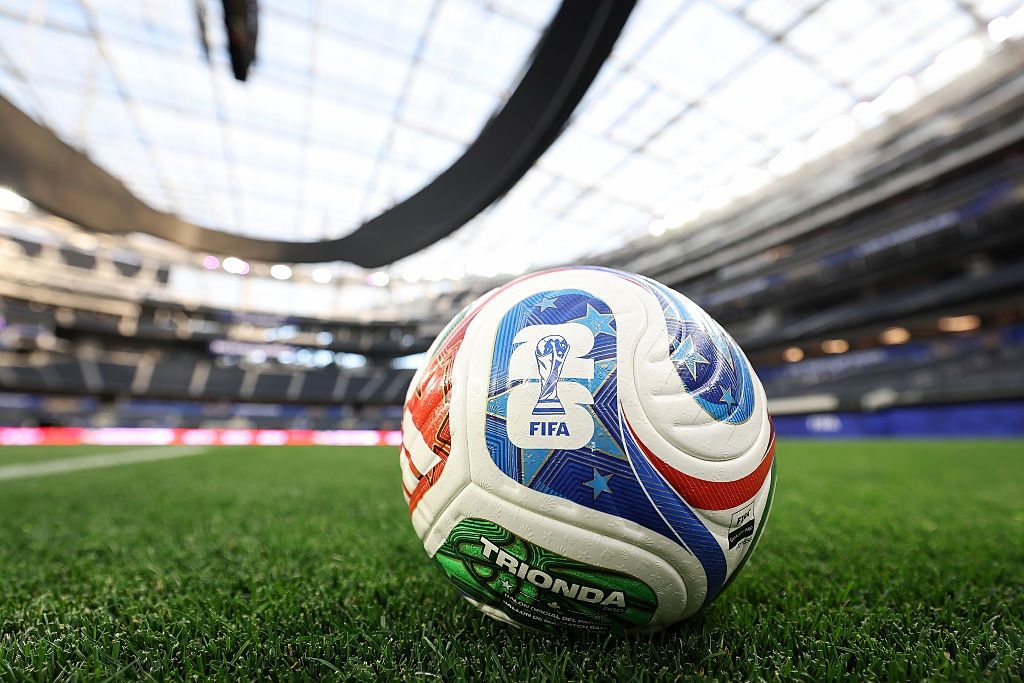
It’s that time again. Millions of Americans and Canadians — and a fair number of Mexicans — will briefly pretend to care about a sport they ignore for the other 47 months of the cycle. For almost six weeks, North America will host the World Cup, a global soccer (or football) tournament that may create more headaches than benefits. As Saxo Bank put it bluntly: “The 2026 World Cup is not a meaningful growth driver for the United States.” Ouch!

World Cup Fever

The 2026 World Cup will run from June 11 to July 19 and will be the first tournament hosted by three countries, with matches spread across 16 cities in the United States (11), Mexico (three), and Canada (two). The field expands to a record 48 teams, up from 32 in 2022, producing 104 matches. Teams will play a three‑match Group Stage to determine the 32 qualifiers for the Knockout rounds, where four straight wins are required to reach the final.

While this is pertinent information for diehard fans, non-soccer folks are probably wondering whether this will generate economic prosperity for any of the three nations. Economists have long been skeptical that the World Cup or any major sporting event leads to long-term growth for hosts.

Economic literature is quite clear on this: These spectacles provide short-term gains. For example, in the May jobs report, the leisure and hospitality sector added 70,000 new jobs, with experts attributing the jump to the soccer tournament. It is safe to say that it would give a minor boost to the second- and third-quarter gross domestic product (GDP) figures, with BMO estimates as much as 0.3 percentage points.

Estimates vary, but economists project that the US economy could see up to $75 billion in benefits from hosting the games. Skepticism is warranted because mega events generally underperform the gains predicted by organizers. Additionally, it will be a case of wealth redistribution as consumers shift their consumption habits. Sports bars and hotels in the Tri-State Area and California might benefit, while other industries may see less business.

The data show that the last several dozen international sporting events, from the Olympics to the World Cup, did not reverse the economic trajectory of host nations. In other words, if the economy was slowing prior to the games, it continued to decline after the athletes, glitz, and glamour departed. France was the outlier in 1998: Before hosting the World Cup, GDP per capita increased by 3%, but then fell by 1.2% after the event.

Saxo Bank wrote in a May 26 research note:

“Beyond the narrative, the real impact is generally time-limited, highly localized, and partially offset by substitution and crowding-out effects. Overall macroeconomic benefits therefore remain limited, particularly for economies the size of the United States.

“In this context, the 2026 World Cup should be understood less as a driver of structural economic transformation and more as a temporary reallocation of activity, whose real economic scope is often more modest than the narrative suggests.”

The good news for North America is that, unlike Qatar (2022) or Brazil (2014), the three countries generally have the required infrastructure in place to host these games. So, while taxpayers might not be on the hook as much as others have been in places across the globe, the World Cup remains a vanity project.

Yay, Local Sports Team!

The Chicago Bears, a legendary NFL franchise, will wave goodbye to Soldier Field and set up camp in a new taxpayer-funded stadium in Indiana. State lawmakers approved legislation to allocate at least $1 billion to build a football field in Hammond, IN. Proponents say this project will fund itself through job creation, tourism, and the general spillover effects. Chicagoans, meanwhile, are worried that no Bears will mean no more economic activity.

However, like hosting the Olympics, the overwhelming consensus is that these government bailouts of billionaire owners do not produce substantial economic growth. It might seem counterintuitive, but sports teams generally have little impact on local economies. There are a few reasons.

First, by using finite resources from taxpayers on extravagant private-sector projects, localities risk hurting a city’s growth by redirecting money away from vital projects, according to a paper by the St. Louis Federal Reserve.

Second, it is simply a substitution effect. Sports are entertainment, and households will allocate a fixed amount from their budgets to attend a game, purchase merchandise, or visit a nearby restaurant after a win or a loss. Instead of using 3% of their monthly budget to remodel the bathroom or finance a new autumn wardrobe, consumers are spending it on sports.

Finally, research by the Mercatus Center concluded that major-league sports teams contribute just 0.2%, or $50, of local workers’ annual wages.

Sports Are Great

Yes, sports are great. What is better than a summer’s night at the ballpark watching pitchers throw a 94 mph slider or a first baseman hit a home run to tie the game in the bottom of the seventh? Or how about a Game 6 in playoff hockey? Or watching a generational talent flop his way to an NBA championship? These are all terrific, but are they creating significant long-term economic growth? The data say no.




Source link

Tags: CupdriverExpectedfevergrowthworld
ShareTweetShare
Previous Post

The immortal jellyfish, Turritopsis dohrnii, can reverse its own life cycle when injured or starving, melting its adult body back into an immature polyp and starting over, a biological rewind that in theory lets a single individual escape death indefinitely

Next Post

Elbit teams with Anduril on US Army howitzer tender

Related Posts

edit post
NYPD confirms ‘an event that we are tracking at Madison Square Garden on Friday night,’ declines to comment on Taylor Swift wedding

NYPD confirms ‘an event that we are tracking at Madison Square Garden on Friday night,’ declines to comment on Taylor Swift wedding

by TheAdviserMagazine
July 2, 2026
0

Taylor Swift and Travis Kelce will have their wedding at Madison Square Garden on Friday night, according to a law...

edit post
Should the 17th Amendment Be Repealed?

Should the 17th Amendment Be Repealed?

by TheAdviserMagazine
July 2, 2026
0

“The current system has given us six-year politicians more focused on national ambitions and the institution of the U.S. Senate...

edit post
Netflix (NFLX) Surged on Refocusing on Fundamentals

Netflix (NFLX) Surged on Refocusing on Fundamentals

by TheAdviserMagazine
July 2, 2026
0

Brown Advisory, an investment management company, released its "Brown Large-Cap Growth Strategy" for the first-quarter 2026 investor letter. A copy of...

edit post
No longer magnificent? How Apple, Microsoft and other Mag 7 stocks are crumbling under AI pressure

No longer magnificent? How Apple, Microsoft and other Mag 7 stocks are crumbling under AI pressure

by TheAdviserMagazine
July 2, 2026
0

The dominance of the Magnificent Seven technology stocks (Apple, Microsoft, Alphabet, Amazon, Meta Platforms, Nvidia and Tesla) is facing its...

edit post
Why CFOs should pay attention to Open USD—the new stablecoin backed by more than 140 companies

Why CFOs should pay attention to Open USD—the new stablecoin backed by more than 140 companies

by TheAdviserMagazine
July 2, 2026
0

Good morning. For CFOs across banks, payments companies, and nonbank lenders, Open Standard’s launch of Open USD, a new stablecoin...

edit post
Silicom: Israel’s best performing Wall Street stock

Silicom: Israel’s best performing Wall Street stock

by TheAdviserMagazine
July 2, 2026
0

The strongest Israeli stock traded on Wall Street in the first half of 2026 was Silicom (Nasdaq: SILC), which...

Next Post
edit post
Elbit teams with Anduril on US Army howitzer tender

Elbit teams with Anduril on US Army howitzer tender

edit post
Trump Won His Second Reconciliation Battle – Now He Wants a Third

Trump Won His Second Reconciliation Battle – Now He Wants a Third

  • Trending
  • Comments
  • Latest
edit post
Mass Fraud in Massachusetts Committed by Illegal Immigrants Discovered

Mass Fraud in Massachusetts Committed by Illegal Immigrants Discovered

June 22, 2026
edit post
New York Seniors: 6 STAR Tax Relief Rules That Could Put a Bigger Check in Your Mailbox

New York Seniors: 6 STAR Tax Relief Rules That Could Put a Bigger Check in Your Mailbox

June 20, 2026
edit post
5 Pennsylvania Rebate Rules Seniors Should Check Before the Property Tax/Rent Deadline

5 Pennsylvania Rebate Rules Seniors Should Check Before the Property Tax/Rent Deadline

June 18, 2026
edit post
Florida Roads Become a Battleground for Illegal Immigration

Florida Roads Become a Battleground for Illegal Immigration

June 9, 2026
edit post
Same Portfolio. Same Retirement. A 10-Mile Move Costs One Couple ,000 A Year

Same Portfolio. Same Retirement. A 10-Mile Move Costs One Couple $10,000 A Year

June 27, 2026
edit post
Louisiana’s Age-Tiered Homestead Exemption: 8 Details About the Proposed 2028 Amendment

Louisiana’s Age-Tiered Homestead Exemption: 8 Details About the Proposed 2028 Amendment

June 15, 2026
edit post
1976 Called. It Can’t Believe What a House Costs Now

1976 Called. It Can’t Believe What a House Costs Now

0
edit post
Nebex Raises M to Connect Sovereign Buyers, Space Companies, and Capital in One Platform – AlleyWatch

Nebex Raises $30M to Connect Sovereign Buyers, Space Companies, and Capital in One Platform – AlleyWatch

0
edit post
Retail giant exits U.S. fashion after multi-million-dollar scandal

Retail giant exits U.S. fashion after multi-million-dollar scandal

0
edit post
Specialty Shampoo Recalled in US, Canada. See Affected Products

Specialty Shampoo Recalled in US, Canada. See Affected Products

0
edit post
No longer magnificent? How Apple, Microsoft and other Mag 7 stocks are crumbling under AI pressure

No longer magnificent? How Apple, Microsoft and other Mag 7 stocks are crumbling under AI pressure

0
edit post
Crypto ETF Inflow Split: Ether and Solana Products Gain While Bitcoin Outflows Exceed 0M

Crypto ETF Inflow Split: Ether and Solana Products Gain While Bitcoin Outflows Exceed $290M

0
edit post
1976 Called. It Can’t Believe What a House Costs Now

1976 Called. It Can’t Believe What a House Costs Now

July 2, 2026
edit post
Crypto ETF Inflow Split: Ether and Solana Products Gain While Bitcoin Outflows Exceed 0M

Crypto ETF Inflow Split: Ether and Solana Products Gain While Bitcoin Outflows Exceed $290M

July 2, 2026
edit post
Specialty Shampoo Recalled in US, Canada. See Affected Products

Specialty Shampoo Recalled in US, Canada. See Affected Products

July 2, 2026
edit post
Job seekers giving up: Labor force participation rate falls to lowest in 50 years, outside of Covid era

Job seekers giving up: Labor force participation rate falls to lowest in 50 years, outside of Covid era

July 2, 2026
edit post
NYPD confirms ‘an event that we are tracking at Madison Square Garden on Friday night,’ declines to comment on Taylor Swift wedding

NYPD confirms ‘an event that we are tracking at Madison Square Garden on Friday night,’ declines to comment on Taylor Swift wedding

July 2, 2026
edit post
New Fed Chair, Same Inflation Fight: What “Higher for Longer” Really Means for Small Landlords

New Fed Chair, Same Inflation Fight: What “Higher for Longer” Really Means for Small Landlords

July 2, 2026
The Adviser Magazine

The first and only national digital and print magazine that connects individuals, families, and businesses to Fee-Only financial advisers, accountants, attorneys and college guidance counselors.

CATEGORIES

  • 401k Plans
  • Business
  • College
  • Cryptocurrency
  • Economy
  • Estate Plans
  • Financial Planning
  • Investing
  • IRS & Taxes
  • Legal
  • Market Analysis
  • Markets
  • Medicare
  • Money
  • Personal Finance
  • Social Security
  • Startups
  • Stock Market
  • Trading

LATEST UPDATES

  • 1976 Called. It Can’t Believe What a House Costs Now
  • Crypto ETF Inflow Split: Ether and Solana Products Gain While Bitcoin Outflows Exceed $290M
  • Specialty Shampoo Recalled in US, Canada. See Affected Products
  • Our Great Privacy Policy
  • Terms of Use, Legal Notices & Disclosures
  • Contact us
  • About Us

© Copyright 2024 All Rights Reserved
See articles for original source and related links to external sites.

Welcome Back!

Login to your account below

Forgotten Password?

Retrieve your password

Please enter your username or email address to reset your password.

Log In
No Result
View All Result
  • Home
  • Financial Planning
    • Financial Planning
    • Personal Finance
  • Market Research
    • Business
    • Investing
    • Money
    • Economy
    • Markets
    • Stocks
    • Trading
  • 401k Plans
  • College
  • IRS & Taxes
  • Estate Plans
  • Social Security
  • Medicare
  • Legal

© Copyright 2024 All Rights Reserved
See articles for original source and related links to external sites.