
-1024x721.jpg "Trump ‘Not Happy’ as Israel, Iran Trade Strikes")
Israel launched multiple attacks on Iran on Monday, reportedly striking a petrochemical complex in Mahshahr and targeting truck-based surface-to-air missile launchers. The wave of strikes comes after President Donald Trump said he planned to urge Israeli Prime Minister Benjamin Netanyahu not to retaliate against Iran after the war-torn nation launched a barrage of missiles at Israel on Sunday in the first attack of its kind since a ceasefire was put in place nearly two months ago.
The Israel Defense Forces (IDF) said it detected incoming Iranian missiles around 10 p.m. local time after Israel struck what were believed to be Hezbollah locations in Beirut. An Israeli official reportedly said Israel “will respond forcefully” – and it has. The move will almost certainly inflame an already deteriorating situation, raising tensions even further and making a peaceful resolution far more difficult to reach – a concern President Trump acknowledged following Sunday’s escalation.
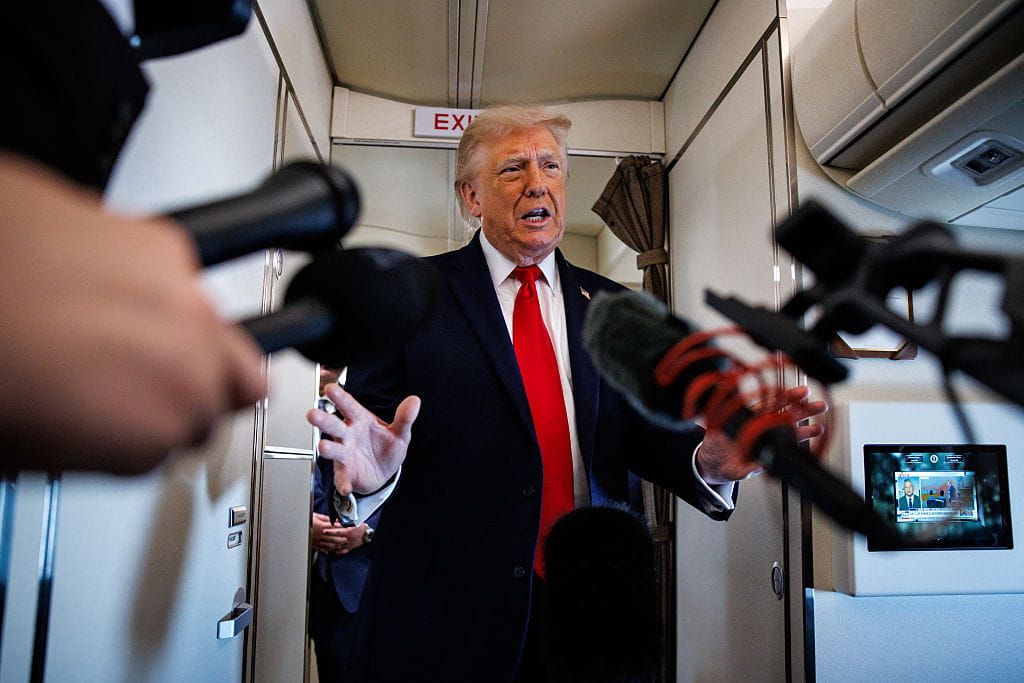
“The Iranian strikes didn’t hurt anybody,” Trump told Axios prior to Israel’s attack on Iran. “Hopefully, Israel is not going to retaliate. If Bibi strikes them back, it’s just gonna keep going like the last 47 years — or the last 3,000 years.”
Israel v. Iran: Trump ‘Not Happy’
Trump said he was “not happy about” Israel striking Beirut, adding that Iran’s subsequent attack on Israel is “certainly not going to help negotiations,” according to Fox News’ Chief Foreign Correspondent Trey Yingst.
“What I would suggest to Iran: You’ve shot your missiles, that’s enough, get back to the table and make a deal,” Trump said. But chief Iranian negotiator Mohammad Bagher Ghalibaf accused the US of giving Israel the “green light” to attack Hezbollah, and threatened American and Israeli assets and military installations in the region, calling them “legitimate targets.”
“If [Israel’s military] expands its attacks on that region or responds to Iran’s actions, it will face more crushing and regrettable blows, and destructive attacks will begin against the regime and its supporters,” Iran’s armed forces command center said in a statement, according to Fars News agency, a semi-official agency with close ties to the Islamic Revolutionary Guard Corps (IRGC).
The strikes from Israel and Iran come after President Trump told NBC’s “Meet the Press” that he believed the US was “very close” to an agreement with Iran, noting that a peace deal would exclude lifting sanctions or releasing assets up front.
“If they behave, if they do a good job, we start talking,” Trump suggested in a Friday interview that aired on Sunday.
Trump’s Surprising Tone
The president said negotiations have been slow because Iran is “strong” and “proud” – a tone that took many by surprise – but warned the US will “take them out militarily, very harshly” if they don’t make a deal.
The president said Iran has already “conceded the fact that they will not have nuclear weapons,” but according to Trump, the proposed peace agreement’s language didn’t sufficiently restrict Tehran’s nuclear program.
“We had a clause in there that [Iran] will not develop nuclear weapons,” Trump said. “And everybody was very happy with it except me. And I said, ‘Well, what happens if they, not develop, but they go out and purchase, they acquire?’
“I want to put the word, if they buy or purchase or acquire,” Trump continued. “You’ve got to have that in there too because that’s not developing. So, they don’t have the right to develop or purchase, acquire or buy.”
Days before Trump’s NBC interview, Secretary of State Marco Rubio told members of the US House that Operation Epic Fury “has concluded,” adding that recent US strikes were strictly “defensive in nature” after Iran launched attacks on ships close to the Strait of Hormuz.
“In order to protect our own forces, we don’t just strike the drones, we strike the people who launch those drones,” Rubio said. “These are completely defensive in nature, but they are happening in response to an Iranian action. If they don’t shoot at those ships, we don’t shoot, but we have to respond.”
Trump and his administration seem eager to bring the Iranian conflict to an end, but as the president acknowledged, it’s proving to be an uphill battle as 3,000-year-old hostilities continue to complicate negotiations.



















-1024x721.jpg&description=Trump%20%E2%80%98Not%20Happy%E2%80%99%20as%20Israel%2C%20Iran%20Trade%20Strikes)