No Result
View All Result
SUBMIT YOUR ARTICLES
  • Login
Wednesday, April 22, 2026
TheAdviserMagazine.com
  • Home
  • Financial Planning
    • Financial Planning
    • Personal Finance
  • Market Research
    • Business
    • Investing
    • Money
    • Economy
    • Markets
    • Stocks
    • Trading
  • 401k Plans
  • College
  • IRS & Taxes
  • Estate Plans
  • Social Security
  • Medicare
  • Legal
  • Home
  • Financial Planning
    • Financial Planning
    • Personal Finance
  • Market Research
    • Business
    • Investing
    • Money
    • Economy
    • Markets
    • Stocks
    • Trading
  • 401k Plans
  • College
  • IRS & Taxes
  • Estate Plans
  • Social Security
  • Medicare
  • Legal
No Result
View All Result
TheAdviserMagazine.com
No Result
View All Result
Home Market Research Business

How to fix a food system that makes us vulnerable and hurts the environment

by TheAdviserMagazine
9 months ago
in Business
Reading Time: 4 mins read
A A
How to fix a food system that makes us vulnerable and hurts the environment
Share on FacebookShare on TwitterShare on LInkedIn


Everything about the way we make and consume food—from the food packaging, to the placement of products in the grocery store aisles, to the background music that plays as you browse—is the result of a carefully designed system. 

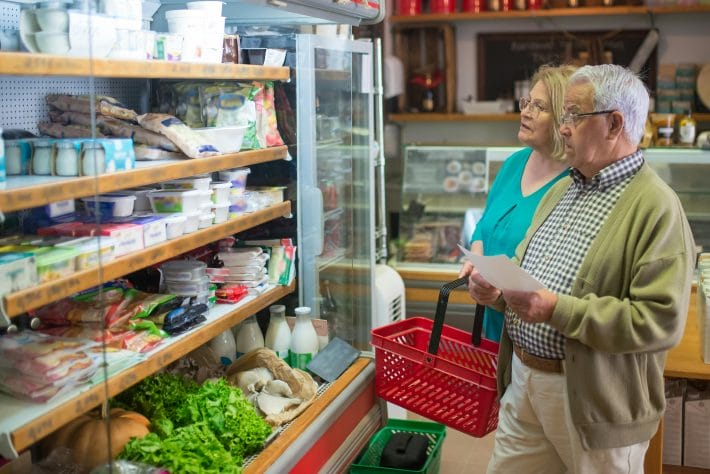
Once we see the food system through this design lens, it appears ripe for innovation. Sixty percent of calories consumed globally derive from just four crops—wheat, rice, corn and potatoes—a shocking level of uniformity that makes our food system susceptible to crises like pandemics and extreme weather. We’ve already seen how swiftly store shelves can empty, how prices of staples can skyrocket, because of the tenuous, fragile links in the food supply chain. 

But what if grocery stores carried truly sustainable food products designed to regenerate nature and build a more resilient food system? Products like pastas made with diverse ancient grains, plant-based alternatives to packaged snack foods, beer made from surplus bread, and juices from plants like foraged cactus—foods that are less resource-intensive, more resistant to shocks, and still delicious. What if consumers could make choices like they do now, based on taste, preference, and price, but trust that their choices had positive and sustainable impacts?

Over the past two years, through the global Big Food Redesign Challenge, we’ve worked with more than 100 food makers across three continents, from small startups to major industry leaders, to create or revamp products so that they are sustainable from seed to shelf. These innovative products demonstrate that—with partnerships that reach across sectors and industries, and with philanthropy willing to make early, leading-edge investments—food can be produced sustainably, in a way that benefits people, the planet, and the bottom line. 

The concept of sustainability is familiar and indeed appreciated by consumers and businesses. Of the $2.6 trillion that American consumers spend on food each year, about 20% goes to sustainable products. But rather than focusing on making one element more sustainable, like plastic-free packaging, we need to account for the environmental impact of the full food system—from which ingredients are used, to how they are grown and sourced, to how they are shipped and made, to what materials are used for their packaging. Without a system-wide approach, the food sector will continue to be a significant contributor to global carbon emissions—today it accounts for a staggering one-third of the global total. 

The Schmidt Family Foundation and the Ellen MacArthur Foundation have previously collaborated with businesses to bring circularity to consumer goods, from drinkware to fashion. Each of these efforts required thinking about the full system and how to improve it. To bring sustainability to every part of the food journey, the businesses participating in the challenge prioritized ingredients that were diverse, low-impact, and upcycled. 

Diversifying ingredients, from a broad range of plant and animal species, benefits soil health, builds food supply resilience, and makes food businesses less reliant on single inputs. A company that created a shelf-stable smoothie powder, for example, sought out organic farms and worked with them to use the little-known Indian apple banana, which is more disease resistant than comparable ingredients. Grains offer many opportunities to diversify: One company’s prepared pilaf uses fonio, a drought-tolerant, gluten-free West African staple that boasts a carbon footprint nearly 80% smaller than rice and a 99% lower water footprint.

Low-impact ingredients, like fonio, have fewer negative effects on nature, or even positively “regenerate” nature. These ingredients can reduce greenhouse gas emissions, biodiversity loss, and deforestation and protect the long-term resilience of the natural systems we rely on for food in the first place. Meat options in the challenge were sometimes enhanced with underutilized seaweed or alternate plant products, reducing the carbon footprint of meat. For other products, manufacturers worked closely with farmers to guarantee that products were regenerative. 

Finally, upcycled ingredients are derived from food that would otherwise be wasted or lost, which reduces pressure on land and maximizes return on the inputs used to grow food. Products created through the challenge included those that rescued and reused everything from oat harvest leftovers to banana peels. Bread destined for the trash ended up contributing to a tasty beer, and wrinkled peas, which otherwise wouldn’t make it to market, were dried and ground with whole meal flour to create pasta. 

While circular products are important, we need circularity built into the system itself. When you eliminate waste, you increase productivity and options. Healthy food choices, sources, and markets expand. Farmers have a new way to make money: Perhaps most importantly, when you put nature first, you increase long-term health of the soil, improving fertility and yield (which also drives higher profits). Plants, animals, and humans all benefit from a new kind of regenerative efficiency that plans for the future and protects planetary resources in a way conventional industrial food systems do not. 

Systemic transformation requires all of us. We need bold leadership from business, policymakers, and the finance sector. Policy levers, including legislation and regulation, can provide the economic incentives food businesses need to invest in transforming the system. Small amounts of targeted capital can accelerate innovation and product development. Strategic philanthropy can bring great ideas from pilot to scale. And ultimately, manufacturers, retailers and consumers need to embrace and demand better options.

We have the resources for an abundant and resilient food system. Let’s use them.

The opinions expressed in Fortune.com commentary pieces are solely the views of their authors and do not necessarily reflect the opinions and beliefs of Fortune.

Read more:



Source link

Tags: environmentfixfoodHurtssystemvulnerable
ShareTweetShare
Previous Post

Revenue Management

Next Post

Despite war, mortgage taking high in June

Related Posts

edit post
HCL Tech’s margins and constant currency growth to remain under pressure: Aditya Shah

HCL Tech’s margins and constant currency growth to remain under pressure: Aditya Shah

by TheAdviserMagazine
April 22, 2026
0

The latest quarterly numbers of HCL Tech have sparked a measured response from market watchers, with a tone that leans...

edit post
Why smallcap funds are still a buy: A long-term strategy from Aditya Khemani

Why smallcap funds are still a buy: A long-term strategy from Aditya Khemani

by TheAdviserMagazine
April 21, 2026
0

Are smallcap valuations too high? While they might appear optically expensive, Aditya Khemani of Invesco Mutual Fund believes the numbers...

edit post
Feud between AI power startup Fermi and fired CEO and top shareholder heats up over proposed sale

Feud between AI power startup Fermi and fired CEO and top shareholder heats up over proposed sale

by TheAdviserMagazine
April 21, 2026
0

The new leadership of the AI power startup Fermi is feuding with its fired CEO and top shareholder over a...

edit post
It’s not just war that brought rupee down, it needs better support

It’s not just war that brought rupee down, it needs better support

by TheAdviserMagazine
April 21, 2026
0

The INR accelerated depreciation due to the West Asia conflict calls for a rethink on the way to manage our...

edit post
Trump extends Iran ceasefire after insisting he wouldn’t hours earlier

Trump extends Iran ceasefire after insisting he wouldn’t hours earlier

by TheAdviserMagazine
April 21, 2026
0

The U.S.-Iran ceasefire will not expire on Wednesday afternoon after all.  In a Truth Social post Tuesday afternoon that came...

edit post
How the Iran energy crisis is supercharging Southeast Asia’s EV transition

How the Iran energy crisis is supercharging Southeast Asia’s EV transition

by TheAdviserMagazine
April 21, 2026
0

Southeast Asia’s motorists are increasingly feeling the pinch as the Iran energy crisis extends into its eighth week. Fuel prices...

Next Post
edit post
Despite war, mortgage taking high in June

Despite war, mortgage taking high in June

edit post
S&P 500 Faces Rising Uncertainty Ahead of Earnings Season

S&P 500 Faces Rising Uncertainty Ahead of Earnings Season

  • Trending
  • Comments
  • Latest
edit post
Massachusetts loses billions in income after millionaire tax

Massachusetts loses billions in income after millionaire tax

March 24, 2026
edit post
Illinois’ Paid Leave for All Workers Act Takes Effect — Every Employee Now Gets Guaranteed Time Off

Illinois’ Paid Leave for All Workers Act Takes Effect — Every Employee Now Gets Guaranteed Time Off

March 27, 2026
edit post
Virginia Permits ADULT MIGRANT MEN To Attend High School

Virginia Permits ADULT MIGRANT MEN To Attend High School

March 30, 2026
edit post
A 58-year-old left NYC for Miami to save on taxes — then retired early thanks to hidden savings. Here’s the math

A 58-year-old left NYC for Miami to save on taxes — then retired early thanks to hidden savings. Here’s the math

March 30, 2026
edit post
Tax Flight Accelerates In Massachusetts

Tax Flight Accelerates In Massachusetts

April 6, 2026
edit post
Property Tax Relief & Income Tax Relief

Property Tax Relief & Income Tax Relief

April 1, 2026
edit post
God Bless Captain Vere: When Constitutional Duty Yields to Institutional Power

God Bless Captain Vere: When Constitutional Duty Yields to Institutional Power

0
edit post
My 25 Favorite Things to Buy at ALDI

My 25 Favorite Things to Buy at ALDI

0
edit post
The 16 Largest Global Startup Funding Rounds of March 2026 – AlleyWatch

The 16 Largest Global Startup Funding Rounds of March 2026 – AlleyWatch

0
edit post
Deckers Outdoor: Still Mispriced? | Investing.com

Deckers Outdoor: Still Mispriced? | Investing.com

0
edit post
With no ownership prospects, bank advisors leave to form RIA

With no ownership prospects, bank advisors leave to form RIA

0
edit post
Tron Founder Justin Sun Files Federal Lawsuit Against World Liberty Financial Over Frozen Tokens

Tron Founder Justin Sun Files Federal Lawsuit Against World Liberty Financial Over Frozen Tokens

0
edit post
Tron Founder Justin Sun Files Federal Lawsuit Against World Liberty Financial Over Frozen Tokens

Tron Founder Justin Sun Files Federal Lawsuit Against World Liberty Financial Over Frozen Tokens

April 22, 2026
edit post
HCL Tech’s margins and constant currency growth to remain under pressure: Aditya Shah

HCL Tech’s margins and constant currency growth to remain under pressure: Aditya Shah

April 22, 2026
edit post
Algorand, Aptos Quantum-Ready, Proof-Of-Stake Exposed: Coinbase

Algorand, Aptos Quantum-Ready, Proof-Of-Stake Exposed: Coinbase

April 22, 2026
edit post
Pokémon Go — The Largest Mapped Data Collection Ploy In History

Pokémon Go — The Largest Mapped Data Collection Ploy In History

April 22, 2026
edit post
Humanizing Generative AI: Three Ways to Keep Students at the Center of Your Classroom – Faculty Focus

Humanizing Generative AI: Three Ways to Keep Students at the Center of Your Classroom – Faculty Focus

April 22, 2026
edit post
Why smallcap funds are still a buy: A long-term strategy from Aditya Khemani

Why smallcap funds are still a buy: A long-term strategy from Aditya Khemani

April 21, 2026
The Adviser Magazine

The first and only national digital and print magazine that connects individuals, families, and businesses to Fee-Only financial advisers, accountants, attorneys and college guidance counselors.

CATEGORIES

  • 401k Plans
  • Business
  • College
  • Cryptocurrency
  • Economy
  • Estate Plans
  • Financial Planning
  • Investing
  • IRS & Taxes
  • Legal
  • Market Analysis
  • Markets
  • Medicare
  • Money
  • Personal Finance
  • Social Security
  • Startups
  • Stock Market
  • Trading

LATEST UPDATES

  • Tron Founder Justin Sun Files Federal Lawsuit Against World Liberty Financial Over Frozen Tokens
  • HCL Tech’s margins and constant currency growth to remain under pressure: Aditya Shah
  • Algorand, Aptos Quantum-Ready, Proof-Of-Stake Exposed: Coinbase
  • Our Great Privacy Policy
  • Terms of Use, Legal Notices & Disclosures
  • Contact us
  • About Us

© Copyright 2024 All Rights Reserved
See articles for original source and related links to external sites.

Welcome Back!

Login to your account below

Forgotten Password?

Retrieve your password

Please enter your username or email address to reset your password.

Log In
No Result
View All Result
  • Home
  • Financial Planning
    • Financial Planning
    • Personal Finance
  • Market Research
    • Business
    • Investing
    • Money
    • Economy
    • Markets
    • Stocks
    • Trading
  • 401k Plans
  • College
  • IRS & Taxes
  • Estate Plans
  • Social Security
  • Medicare
  • Legal

© Copyright 2024 All Rights Reserved
See articles for original source and related links to external sites.