No Result
View All Result
SUBMIT YOUR ARTICLES
  • Login
Saturday, April 18, 2026
TheAdviserMagazine.com
  • Home
  • Financial Planning
    • Financial Planning
    • Personal Finance
  • Market Research
    • Business
    • Investing
    • Money
    • Economy
    • Markets
    • Stocks
    • Trading
  • 401k Plans
  • College
  • IRS & Taxes
  • Estate Plans
  • Social Security
  • Medicare
  • Legal
  • Home
  • Financial Planning
    • Financial Planning
    • Personal Finance
  • Market Research
    • Business
    • Investing
    • Money
    • Economy
    • Markets
    • Stocks
    • Trading
  • 401k Plans
  • College
  • IRS & Taxes
  • Estate Plans
  • Social Security
  • Medicare
  • Legal
No Result
View All Result
TheAdviserMagazine.com
No Result
View All Result
Home Market Research Business

How Bond duration impacts return in a falling rate regime, Gautam Kaul explains

by TheAdviserMagazine
9 months ago
in Business
Reading Time: 6 mins read
A A
How Bond duration impacts return in a falling rate regime, Gautam Kaul explains
Share on FacebookShare on TwitterShare on LInkedIn


As interest rates begin to soften, fixed income investors are increasingly revisiting the role of bond duration in shaping portfolio returns.

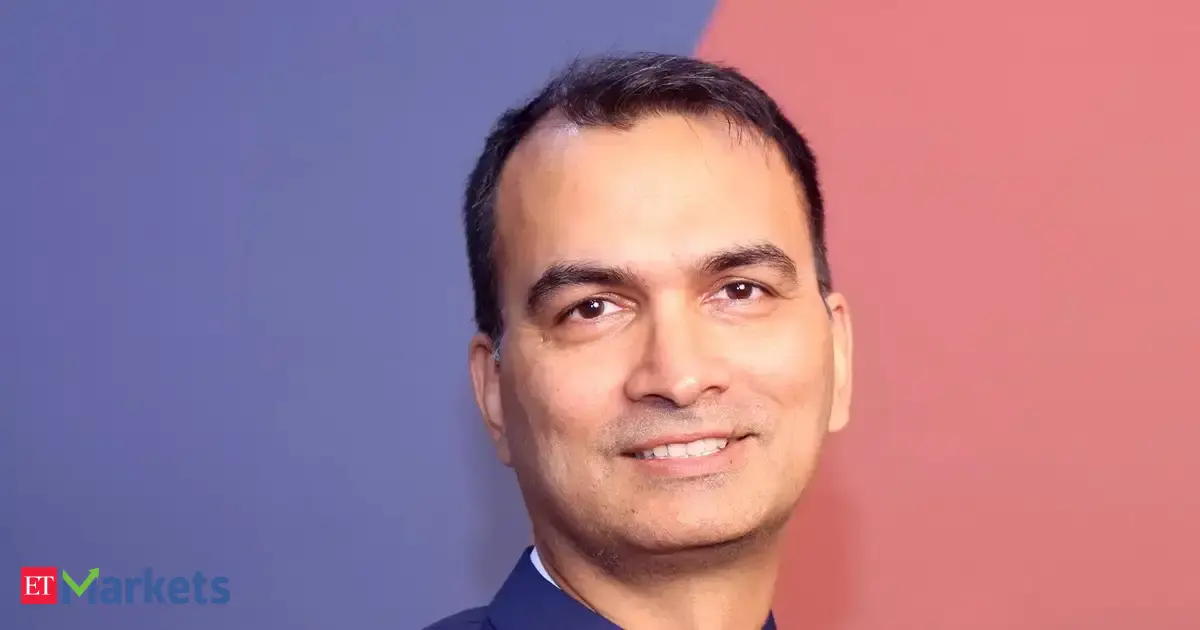
In an insightful conversation, Gautam Kaul, Senior Fund Manager – Fixed Income at Bandhan AMC, breaks down how duration plays a critical role in enhancing returns during a falling rate environment.

From the mechanics of price sensitivity to strategy shifts for various investor profiles, Kaul offers a clear roadmap for navigating bond markets in a changing rate cycle. Edited Excerpts –

Kshitij Anand: For investors, especially retail ones, could you give them a small masterclass on how rate cuts affect investor demand for different tenures of corporate bonds? I’m sure a lot of new investors—or the Gen Z ones, you could say—might not relate much to how bonds work. There’s often more fear than accurate knowledge. So, if you could simplify this equation for them, that would be really great.

Gautam Kaul: When you’re investing in any fixed income instrument, there are two broad risks that you are exposed to—duration and rating. Rating refers to the credit risk associated with the bond. Duration refers to the weighted average maturity of all the bond’s cash flows.

To simplify, the sensitivity of a bond’s price to interest rate movement is measured by its duration. For example, if a bond has a duration of one, then for a 1% change in yields, the price of the bond will rise or fall by 1%.

Live Events

Similarly, if the bond has a duration of 10, a 1% change in interest rates would cause a 10% change in the bond price—plus or minus. There’s a bit of nuance to this, but that’s the basic principle.Why is this important? Because when interest rates rise or fall, the mark-to-market (MTM) impact on your portfolio is governed by the bond’s duration. Bond returns come from two components: the coupon (or carry) and the MTM impact. Unless you are holding a bond till maturity, your holding period return consists of the coupon you earn—typically the bulk of the return and accrued daily—and any MTM gain or loss.So, taking our earlier example: if your bond has a duration of one and interest rates drop by 1%, you will gain 1% from the MTM, in addition to your regular coupon. If you sell at that point, that MTM gain is realized.

When we talk to investors about fixed income, we encourage them to look at two risks: duration risk, which drives the volatility of a bond fund, and credit risk. These are the key parameters you should evaluate before choosing which funds to invest in.

SEBI has helped here through its categorization framework. For example, liquid funds cannot invest in instruments with maturities beyond 90 days; low-duration funds are capped at one year; short-term funds have defined duration bands. So, investors get a clear idea of the maximum and minimum duration risk a fund may carry.

For example, short-term funds must maintain a Macaulay duration between one and three. So, in that case, for a 1% change in interest rates, your MTM impact could range from 1% to 3%.

Earlier, it was relatively easy to assess the duration risk of a portfolio but much harder to assess credit risk. You had to dig into fact sheets and manually check the ratings of every holding. But a few years ago, SEBI introduced the Potential Risk Class (PRC) matrix—a simple yet powerful tool.

It requires every fixed income fund to define the maximum level of duration risk and credit risk it can take.

For example, if a fund declares itself as PRC “A” on credit risk, that means the fund’s average portfolio rating will be at least AAA at all times. If it’s PRC “B,” then the average rating must be at least AA.

This gives the investor a clear sense of the maximum credit and duration risks associated with the fund—two of the most critical parameters when investing in fixed income.

So, if you do nothing else, just look at the PRC classification. It gives you a reliable, forward-looking measure of the fund’s risk profile.

Kshitij Anand: Apart from that, looking at the industry more broadly—do you see the Indian bond market emerging as a relatively safe haven amid the global debt uncertainty?

Gautam Kaul: Oh yes, absolutely. In fact, I’d say India is, if not unique, certainly one of the few economies that offers both macroeconomic stability and high yields.

To give some context—long-term fixed income investors are primarily trying to preserve the purchasing power of their money. That means earning returns that beat inflation, which is the holy grail. Achieving that consistently requires macro stability: low fiscal deficit, low and stable inflation, and ideally a manageable current account deficit.

India ticks all those boxes. Our current account deficit is low and stable. We’re less exposed to tariffs compared to economies like Southeast Asia or China, which rely heavily on manufacturing exports. Our exports are predominantly services-based, which are more insulated from global tariff issues.

Inflation is also well under control—lower than the RBI’s forecast and well below its upper tolerance level. The government has been fiscally responsible, reducing the fiscal deficit year after year (except during the COVID period, where even then, spending was targeted and controlled). They’ve also committed to bringing down the debt-to-GDP ratio over time.

These are exactly the metrics that any global fixed income allocator looks at. As a result, global investors have already started viewing India as a fixed income haven, even before our inclusion in the JP Morgan bond index.

Just consider this example: If you compare two countries—one where the fiscal deficit is rising from 5.5% to 6.5-7%, and another where it’s falling from 5.5% to 4.5%—you’d assume the latter is a developed market and the former an emerging one. But in India’s case, it’s the opposite. That speaks volumes about our policy strength.

And all of this hasn’t happened by accident—it’s the result of deliberate, disciplined policy decisions. For a global fixed income allocator, this signals a stable environment with attractive returns.

Another key point: foreign ownership of Indian government bonds is still quite low—even post JP Morgan inclusion, it’s under 3%. For comparison, many other emerging markets have foreign ownership ranging between 5-15%.

So yes, India offers an attractive macro landscape, a deep and growing market, and plenty of headroom for increased foreign participation. I believe we’re well-positioned to become a preferred destination for global fixed income allocations.

Kshitij Anand: Also, let me get your perspective on ESG — one of the key themes that has emerged in both equity and bond markets. Are investors assigning a valuation premium to companies issuing ESG-compliant bonds, and what is driving the growing popularity of these instruments?

Gautam Kaul: ESG as a movement — and the market attached to it — has gained significant traction and momentum in the West. In India, we are still at a very early stage of the entire ESG investing platform. Even within our landscape, equity is where we are seeing more traction compared to fixed income.

That said, we have seen some private corporates issuing ESG bonds. In fact, the Government of India also issues green bonds. So, there is a concerted effort, and of course, some demand for these instruments from specific segments.

From a fixed income perspective, the market is still nascent and developing. Most of the demand for ESG bonds currently comes from foreign investors rather than domestic ones.

I believe that as awareness grows, we could see ESG-dedicated funds in India as well — either from Indian or foreign investors — which could further drive investment in ESG bonds. There is great potential here, but we’re still in the early days.

Is the market paying a significant premium for ESG bonds? Selectively, yes. But it still needs to evolve into a more widespread and common practice.

For instance, the government’s borrowing cost for green bonds versus regular bonds isn’t very different — perhaps just a 5-basis point premium.

When green bonds were first introduced, our sense was that this premium — or “greenium,” as it’s called — could be much higher. That might still be the case in the future, given the early stage of the INR bond market.

(Disclaimer: Recommendations, suggestions, views, and opinions given by experts are their own. These do not represent the views of the Economic Times)


Source link

Tags: bondDurationExplainsfallingGautamimpactsKaulrateRegimereturn
ShareTweetShare
Previous Post

Ethereum CME Futures OI Hits Record $7.85B

Next Post

‘Shark Tank’ icon Kevin O’Leary reveals the 3 things he looks for when investing his millions into a founder

Related Posts

edit post
US Stock Market: Wall Street indexes hit record highs as oil falls with Strait of Hormuz declared open

US Stock Market: Wall Street indexes hit record highs as oil falls with Strait of Hormuz declared open

by TheAdviserMagazine
April 17, 2026
0

The benchmark S&P 500 and the tech-heavy Nasdaq each rallied to their third record close in a row on Friday,...

edit post
Gold rises to one-month high as Strait of Hormuz called ‘completely open’ (GLD:NYSEARCA)

Gold rises to one-month high as Strait of Hormuz called ‘completely open’ (GLD:NYSEARCA)

by TheAdviserMagazine
April 17, 2026
0

Apr 17, 2026, 5:32 PM ETSPDR Gold Shares ETF (GLD), GDX, IAU, NUGT, SLVSIL, SGOL, SIVR, GDXJ, PHYS, PSLV, DUST,...

edit post
White House chief of staff to meet with Anthropic CEO about dangerous new Mythos model, official says

White House chief of staff to meet with Anthropic CEO about dangerous new Mythos model, official says

by TheAdviserMagazine
April 17, 2026
0

White House chief of staff Susie Wiles plans to sound out Anthropic CEO Dario Amodei about the artificial intelligence company’s...

edit post
Oil is back to early war days, S&P 500 jumps to all-time high

Oil is back to early war days, S&P 500 jumps to all-time high

by TheAdviserMagazine
April 17, 2026
0

Oil prices dropped back to where they were in the early days of the Iran war, and U.S. stocks raced to another...

edit post
Exporters seek removal of cap on interest subvention

Exporters seek removal of cap on interest subvention

by TheAdviserMagazine
April 17, 2026
0

Mumbai: Exporters on Friday urged the government to remove the cap on interest subvention, saying the current level of support...

edit post
Autoliv reiterates 2026 adjusted operating margin of 10.5% to 11% and .2B operating cash flow, while flagging M raw material headwind (NYSE:ALV)

Autoliv reiterates 2026 adjusted operating margin of 10.5% to 11% and $1.2B operating cash flow, while flagging $90M raw material headwind (NYSE:ALV)

by TheAdviserMagazine
April 17, 2026
0

Earnings Call Insights: Autoliv, Inc. (ALV) Q1 2026 Management view "The first quarter exceeded our expectations, driven by strong sales...

Next Post
edit post
‘Shark Tank’ icon Kevin O’Leary reveals the 3 things he looks for when investing his millions into a founder

‘Shark Tank’ icon Kevin O’Leary reveals the 3 things he looks for when investing his millions into a founder

edit post
Who’s feeling the pain of Trump’s tariffs?

Who’s feeling the pain of Trump’s tariffs?

  • Trending
  • Comments
  • Latest
edit post
Massachusetts loses billions in income after millionaire tax

Massachusetts loses billions in income after millionaire tax

March 24, 2026
edit post
Illinois’ Paid Leave for All Workers Act Takes Effect — Every Employee Now Gets Guaranteed Time Off

Illinois’ Paid Leave for All Workers Act Takes Effect — Every Employee Now Gets Guaranteed Time Off

March 27, 2026
edit post
Virginia Permits ADULT MIGRANT MEN To Attend High School

Virginia Permits ADULT MIGRANT MEN To Attend High School

March 30, 2026
edit post
A 58-year-old left NYC for Miami to save on taxes — then retired early thanks to hidden savings. Here’s the math

A 58-year-old left NYC for Miami to save on taxes — then retired early thanks to hidden savings. Here’s the math

March 30, 2026
edit post
Tax Flight Accelerates In Massachusetts

Tax Flight Accelerates In Massachusetts

April 6, 2026
edit post
Property Tax Relief & Income Tax Relief

Property Tax Relief & Income Tax Relief

April 1, 2026
edit post
Hamburger family sells Harel shares for NIS 1.2b

Hamburger family sells Harel shares for NIS 1.2b

0
edit post
Uncovering Gold’s Secret History | Mises Institute

Uncovering Gold’s Secret History | Mises Institute

0
edit post
All eyes on Bitcoin this weekend as Iran is already disputing the US narrative on the Hormuz deal

All eyes on Bitcoin this weekend as Iran is already disputing the US narrative on the Hormuz deal

0
edit post
JPMorgan Chase (JPM) earnings 1Q 2026

JPMorgan Chase (JPM) earnings 1Q 2026

0
edit post
The CREATE method: AI prompting for tax & accounting pros

The CREATE method: AI prompting for tax & accounting pros

0
edit post
Gold and silver prices today, Friday, April 17: Prices holding steady after ceasefire announcement

Gold and silver prices today, Friday, April 17: Prices holding steady after ceasefire announcement

0
edit post
US Stock Market: Wall Street indexes hit record highs as oil falls with Strait of Hormuz declared open

US Stock Market: Wall Street indexes hit record highs as oil falls with Strait of Hormuz declared open

April 17, 2026
edit post
The people who say they don’t care what others think are almost never telling the whole truth. What they actually did was move the audience inward, and now they perform for a private version of the same judges they claim to have escaped.

The people who say they don’t care what others think are almost never telling the whole truth. What they actually did was move the audience inward, and now they perform for a private version of the same judges they claim to have escaped.

April 17, 2026
edit post
Seniors 60+ Are the Top Targets for Fake ‘Dropped Cash’ Scams at Grocery Stores

Seniors 60+ Are the Top Targets for Fake ‘Dropped Cash’ Scams at Grocery Stores

April 17, 2026
edit post
Dogecoin Could Shock Traders With A Run To , Analyst Says

Dogecoin Could Shock Traders With A Run To $5, Analyst Says

April 17, 2026
edit post
All eyes on Bitcoin this weekend as Iran is already disputing the US narrative on the Hormuz deal

All eyes on Bitcoin this weekend as Iran is already disputing the US narrative on the Hormuz deal

April 17, 2026
edit post
Gold rises to one-month high as Strait of Hormuz called ‘completely open’ (GLD:NYSEARCA)

Gold rises to one-month high as Strait of Hormuz called ‘completely open’ (GLD:NYSEARCA)

April 17, 2026
The Adviser Magazine

The first and only national digital and print magazine that connects individuals, families, and businesses to Fee-Only financial advisers, accountants, attorneys and college guidance counselors.

CATEGORIES

  • 401k Plans
  • Business
  • College
  • Cryptocurrency
  • Economy
  • Estate Plans
  • Financial Planning
  • Investing
  • IRS & Taxes
  • Legal
  • Market Analysis
  • Markets
  • Medicare
  • Money
  • Personal Finance
  • Social Security
  • Startups
  • Stock Market
  • Trading

LATEST UPDATES

  • US Stock Market: Wall Street indexes hit record highs as oil falls with Strait of Hormuz declared open
  • The people who say they don’t care what others think are almost never telling the whole truth. What they actually did was move the audience inward, and now they perform for a private version of the same judges they claim to have escaped.
  • Seniors 60+ Are the Top Targets for Fake ‘Dropped Cash’ Scams at Grocery Stores
  • Our Great Privacy Policy
  • Terms of Use, Legal Notices & Disclosures
  • Contact us
  • About Us

© Copyright 2024 All Rights Reserved
See articles for original source and related links to external sites.

Welcome Back!

Login to your account below

Forgotten Password?

Retrieve your password

Please enter your username or email address to reset your password.

Log In
No Result
View All Result
  • Home
  • Financial Planning
    • Financial Planning
    • Personal Finance
  • Market Research
    • Business
    • Investing
    • Money
    • Economy
    • Markets
    • Stocks
    • Trading
  • 401k Plans
  • College
  • IRS & Taxes
  • Estate Plans
  • Social Security
  • Medicare
  • Legal

© Copyright 2024 All Rights Reserved
See articles for original source and related links to external sites.