The Reconstruction Congress did not start from scratch. In the midst of the Civil War, President Lincoln’s Attorney General, Edward Bates, had issued a landmark opinion that sought to displace Dred Scott. . . Bates rejected the premise that “citizenship is ever hereditary.” 10 Op. Atty. Gen. 382, 399 (1862). “[E]very person born in the country,” he wrote, “is, at the moment of birth, prima facie a citizen . . . without any reference to race or color, or any other accidental circumstances.” . . . To Bates, it was soil—not blood—that “furnishes the rule, both of duty and of right.”
By late 1862, Lincoln’s administration openly began to push back against blood-based and hereditary caste-like citizenship rules. Sidestepping Dred Scott, Lincoln’s Attorney General Edward Bates in November 1862 issued a landmark opinion basing American citizenship on soil and not blood. Birthright citizenship, asserted Bates . . . generally depended on where a person was born. All free folk born under the American flag were birthright citizens. “Every person born in the country,” wrote Bates, “is, at the moment of birth, prima facie a citizen . . . without any reference to race or color, or any other accidental circumstance.”
— Akhil’s Brief
A year after General Lee’s surrender at Appomattox, Congress sought to turn Bates’s opinion into law. The result was the Civil Rights Act of 1866. The Act declared that “all persons born in the United States and not subject to any foreign power, excluding Indians not taxed, are hereby . . . citizens of the United States.”
At war’s end, Reconstruction Republicans in Congress squarely sided with the party’s leading lights— Lincoln, Bates, Chase, and Seward—in a watershed 1866 Civil Rights Act that opened as follows: “[A]ll persons born in the United States and not subject to any foreign power, excluding Indians not taxed, are hereby declared to be citizens of the United States.”
— Akhil’s Brief
The specter of Dred Scott, however, loomed over Congress’s efforts. Opponents of the Act contended that Congress could not grant such expansive citizenship (and set aside this Court’s precedent) by statute alone. . . . To quiet those concerns . . . Congress turned to the Fourteenth Amendment. . . . What the Civil Rights Act began, the Fourteenth Amendment would finish. Like the Act, the Fourteenth Amendment was intended to repudiate Dred Scott. This time, however, the goal was even grander—to put the “great question of citizenship” “beyond the legislative power” altogether, to settle the issue once and for all.
But would a mere executive memo and a simple congressional statute suffice? What if the Supreme Court tried to resurrect Taney’s Dred Scott opinion and declare the memo and the statute unconstitutional? What if some future president tried to rescind the memo or ignore the statute? In the late 1860s, America adopted a constitutional amendment to settle the matter conclusively.
— Akhil’s Brief
A child born on American soil and subject to American law was made an American citizen. . . . To be “subject to” the jurisdiction of the United States, then, is to “liv[e] under” its “dominion,” . . . a meaning reinforced by the
Clause’s territorial focus on those born “in” the United States. The Citizenship Clause uses jurisdiction in its ordinary sense—referring to the power of the United States to govern those within its territory.
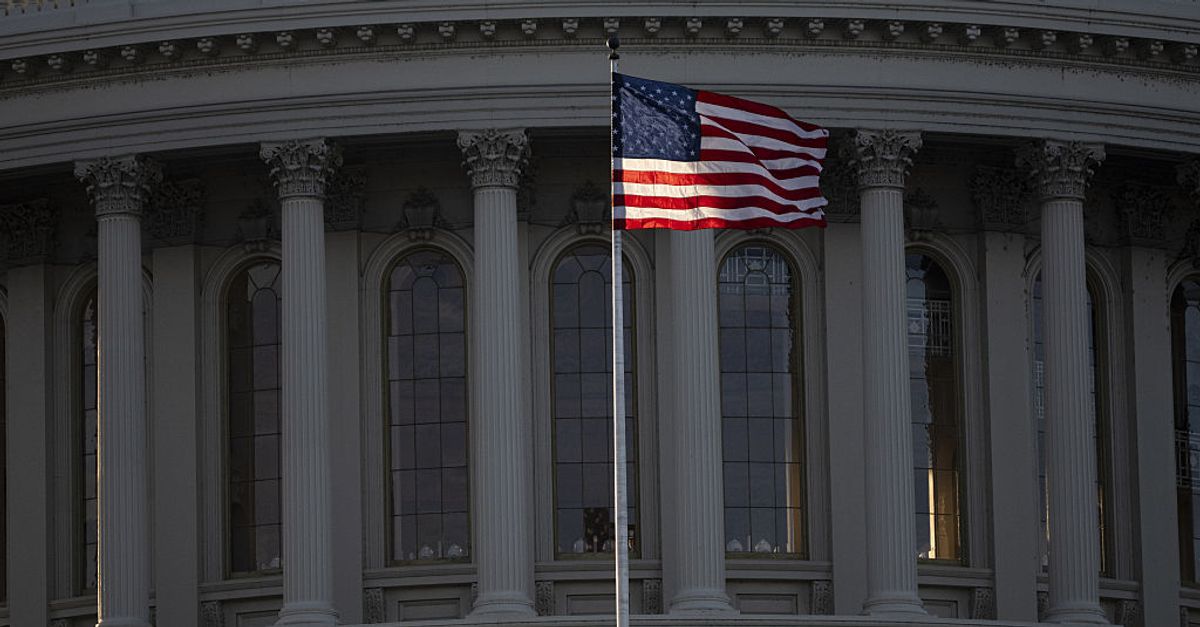
A baby born on American soil under an American flag is typically subject to ordinary American law in the ordinary way—subject, that is, to American jurisdiction. . . . The key initial preposition, in, is geographic.
— Akhil’s Brief
[A]mbassadors (and their families) . . . were considered—by a fiction of extraterritoriality—to remain on foreign soil.
[A] baby born to a diplomat was treated as if she were born inside the embassy— foreign soil under a foreign flag, akin to foreign-occupied territory or a foreign public vessel [thanks to a] “fiction of law” [and a] “fiction of extraterritoriality.”
— Akhil’s Brief
A foreign mother could enter the British Isles, give birth, and leave with her child the very next day, and that child would remain a British subject. Why? Because the child owed an implied allegiance to the sovereign who protected him at his birth—no matter how “momentary and uncertain” his presence in the King’s realms. Calvin’s Case.
Under rulings going back centuries, including most famously Calvin’s Case in 1608, English jurists had made clear that a baby born on English soil was almost invariably born an English subject, even if her parents were, say, French folk sojourning in England.
— Akhil’s Brief
[T]he antebellum era’s foremost case on the topic, Lynch v. Clarke, 1 Sand. Ch. 583 (N. Y. Ch. 1844). Lynch reiterated that “the common law rule was the law of the land” for the children of “citizens” and “foreigners” alike—including those foreigners here merely on a “temporary sojourn.”
A high-profile antebellum New York opinion, Lynch v. Clarke, 1 Sand. Ch. 583 (N.Y. Ch. 1844), relied on English jurisprudence to hold that a baby born in New York to noncitizen parents was indeed a birthright New York citizen.
— Akhil’s Brief
[N]early everyone within the territorial boundaries of the United States was “amenable to” the Nation’s jurisdiction. . . . The ordinary legal meaning of the text of the Clause thus neatly captures the common law rule, with its broad reach and narrow exceptions. The same groups included (and excluded) by jus soli were included (and excluded) by the conventional understanding of jurisdiction.
These touchstones—the soil and the flag—cleanly explain both the scope and the limits of the Constitution’s grand birthright-citizenship guarantee.
— Akhil’s Brief
With the right constitutional rule in view, the exceptions turn out to have a deep logic and coherence. . . .Two originalist touchstones – the soil and the flag – cleanly explain both the scope and the limits of the Constitution’s grand birthright-citizenship guarantee. As the 14th Amendment’s framers and ratifiers repeated ad infinitum, all born (1) on American soil and (2) “under the flag” are birthright citizens.
— Sam Desai’s March 16 posting in our SCOTUSblog column space
Our precedent—the seminal case of United States v. Wong Kim Ark, 169 U. S. 649 (1898)—confirms this rule.
Beginning with Wong Kim Ark, a long line of Supreme Court precedents tightly aligns with the arguments and evidence that amicus presents today.
— Akhil’s Brief
Not surprisingly, then, in the 128 years since, we have repeatedly understood the rule of Wong Kim Ark to guarantee citizenship to all children born in the United States and subject to its power. See, e.g., United States ex rel. Hintopoulos v. Shaughnessy, 353 U. S. 72, 73 (1957).
What does today’s solicitor general say about Hintopoulos? He doesn’t. Hintopoulos goes entirely unmentioned in two merits briefs that together span more than 70 pages, despite the fact that a brilliant amicus brief by three of America’s most accomplished immigration scholars highlighted Hintopoulos above all other modern cases.
— Our March 27 SCOTUSblog column entirely devoted to Hintopoulos
For a Congress intent on putting the question of citizenship “once and forever [to] rest,” a domicile-based qualification would have introduced significant uncertainty. Unlike the easy-to-apply common law, it would be “difficult, if not impossible, to lay down any general rule” of domicile-based citizenship, as domicile “often depend[s] upon the circumstances of each case, the combinations of which are infinite.” . . . If Congress intended to hinge citizenship on each individual’s domicile—a question that “is sometimes a matter of great difficulty to decide,” it is reasonable to expect there would have been at least some discussion of the topic. Yet the word “domicile” appears just twice in the discussion of the relevant provision of the Civil Rights Act. . . . Words appearing frequently in the Executive Order—“mother,” “father,” “lawful,” temporary”—are absent from the Clause. For a simple reason: they did not matter.
In lieu of the 14th Amendment’s clear, clean, geographic rule, Trump’s executive order substitutes muddy, messy, genealogical rules pulled out of thin air. . . . “Parent,” “parents,” “domicile”—these words appear nowhere in the Amendment. If the Amendment pivoted on any of these omitted words, as some have claimed, enormous questions would have arisen in the Amendment’s drafting and ratification process. How and when would parentage and domicile be determined? How could a parentage test ensure the rock-solid, bullet-proof citizenship of all American-born children of American slaves? (In the 1860s, many enslaved parents were African-born and never-naturalized aliens, some of whom were, technically, illegal aliens, having been smuggled into America after 1807 by pirate slave-traders.) No discussion of such topics in fact occurred. That silence powerfully confirms that the Amendment means just what it says: All persons born inside the juridical U.S.A. and lacking diplomatic immunity—all persons born under the flag—are born equal citizens. It did not matter in 1868, and it does not matter today, whether an American newborn’s mother or father or both or neither is a U.S. citizen or even a domiciliary; or whether either parent is Black or White or Yellow or a so-called “Gypsy,” or was ever a slave.
— Akhil’s Brief
The words “parent,” “parents,” “mother,” and “father” appear nowhere in the text of the 14th Amendment’s citizenship clause. . .. Yet Trump’s made-up executive order uses the words “mother” and “father” a combined ten times.
Trump and his legal and academic defenders have simply fabricated a welter of detailed parental rules – about parental citizenship, parental legal status, parental domicile, and parental allegiance. Too many critics of Trump and his allies have taken the bait, themselves focusing rather too much attention on parents. To borrow a phrase, they have fallen into the “Parent Trap.”
— Our March 23 SCOTUSblog column with Sam Desai on the “Parent Trap”
While the Clause does ensure state citizenship attaches for U. S. citizens in “the State wherein they reside,” Amdt. 14, §1, the explicit invocation of residence for state citizenship only highlights its absence from the criteria for U. S. citizenship. . . .“[A] person can “be a citizen of the United States without being a citizen of a State.”
U.S. citizenship in [the Fourteenth Amendment’s birthright citizenship clause] is not remotely the same thing as state citizenship. . . . Indeed, a person can be a U.S. citizen without ever having been a state citizen.
— Our March 16 SCOTUSblog column responding to Pete Patterson
In our estimation, the [1866] Act raises more questions than answers—and was replaced by the Fourteenth Amendment, which “better” expresses the views of the Reconstruction Congress anyway.
The language of the [1866] act – “not subject to any foreign power” – differs from the counterpart language of the amendment: “subject to the jurisdiction [of the United States].” A baby born with dual citizenship – and of course both the act and the amendment address the baby, not the parent or parents – might indeed in some sense be subject to a foreign power (and thus fall outside the protective blanket of the act) but might also be undeniably subject to American jurisdiction (and thus fall within the amendment’s protective blanket).
— Our March 16 SCOTUSblog column responding to Pete Patterson
Where the dissents see feudalism, the Framers of the Fourteenth Amendment saw emancipation.
Finally, we come to the biggest problem of all: Patterson’s weird appeal to anti-feudalism. True, America’s equal-birthright-citizenship regime does have deep roots in English common law dating back to the early 1600s – a feudal era in which Stuart kings claimed authority to rule birthright subjects based on the monarch’s divine birthright. . . .. But in July 1776, the colonies unanimously declared a new, more republican, regime based in no small part on the bold idea that all men are created equal. . . . 19th-century Americans led by Lincoln eventually went even further than they had in 1776, and embraced a compelling vision of equal birthright citizenship. According to this mid-1860s Lincolnian vision, all babies born on American soil under the American flag were born equal – whether born Black or white, male or female, Jewish or Gentile. Also, and relatedly, all American babies born on American soil under the American flag were born equal, whether born to citizen parents or alien parents, whether born to long-time residents or wandering sojourners.
This is the precise Lincolnian idea that Patterson defies when he insists that a baby born in America to alien sojourners is lesser than a baby born in America to citizen parents. . . . Patterson wants modern America to focus instead on blood and parentage – on a American-born baby’s birth-lineage above and beyond her birth-location. But Patterson’s focus on lineage and blood is itself a strong vestige of Old World ideology. Patterson’s repudiation of Lincoln – under a banner of anti-feudalism, no less! – is thus somewhere between obtuse and absurd.
— Our March 16 SCOTUSblog column responding to Pete Patterson
Citizenship, then and now, was the right to have rights—to freely participate in our political community. The Framers of the Fourteenth Amendment extended that promise to “every free-born person in this land.” . . . We keep that promise today.
The basic issues at stake go to the very foundation of the Constitution. At root, citizenship is the right to have rights, and the right to belong. . . . Amicus thus hopes the Court will not just rule the right way in this case, but will do so for the best and deepest reasons—ringingly.
— Akhil’s Brief