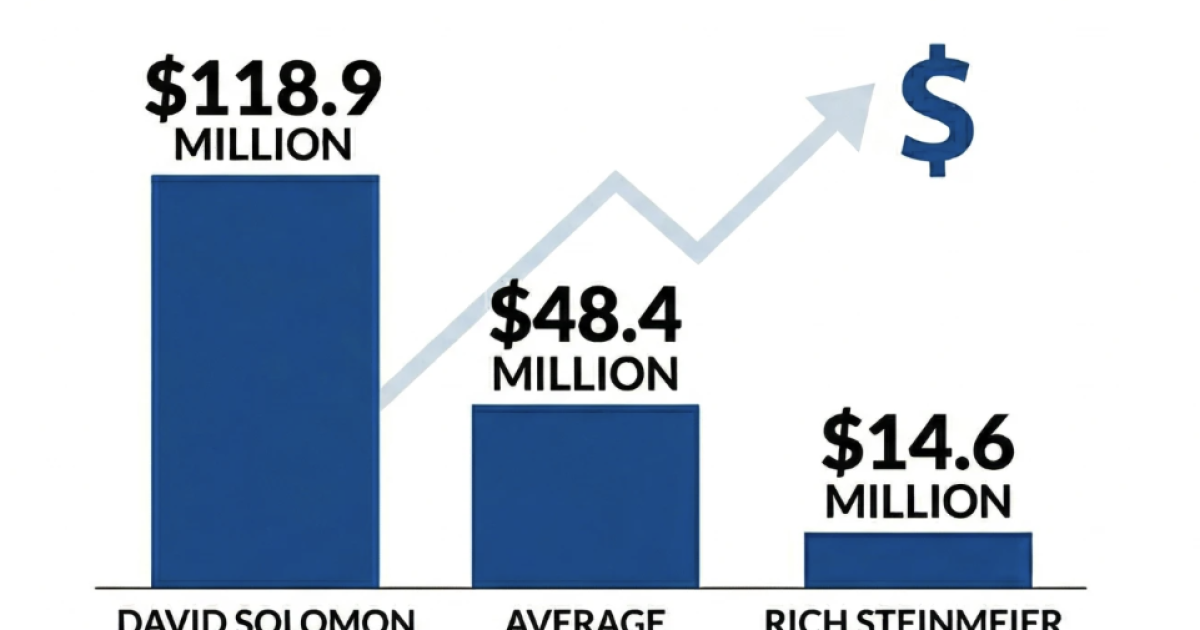
A strong year for the wealth management industry in 2025 lifted CEO compensation at the biggest publicly traded firms — especially at BNY, Wells Fargo, Citi and Goldman Sachs.
As shown below, those four megabanks rewarded their chiefs for the firms’ solid earnings with giant one-time grants of stock and other forms of pay designed to retain them and further tie their financial interest to the companies’ success.
The list ranks the total 2025 pay for the CEOs of LPL Financial, UBS, Raymond James, Charles Schwab, Edward Jones, Ameriprise, Merrill parent firm Bank of America, Morgan Stanley, JPMorgan Chase and the other four firms based on the “summary compensation tables” in their annual proxy statements. So the numbers tying in the value of restricted units and stock options under Securities and Exchange Commission rules may differ from figures cited elsewhere.
Similarly, experts say that financial advisors care to varying degrees about how much the CEO of any firm receives in compensation, beyond any human’s understandable curiosity about the size and recipient of the largest paychecks in their industry. To Jason Diamond, the president of advisor recruiting firm Diamond Consultants, the numbers appear as “almost like a Rorschach test” to teams that may be happy to see the chief get paid well for the overall growth of the firm or, alternatively, agog with the big dollars and units accruing to the distant leader of a company they’re going to be happy to leave, he said. Some advisors may not think about it at all, either.
“Advisors are generally a pretty opinionated bunch,” Diamond said. “It’s not like an outlier to see a $12 million or a $15 million or a $20 million compensation package. And that’s not unique to wealth management.”
The compensation of CEOs leading the many privately held giants focused on wealth management may be more interesting to advisors than that of publicly traded firms that usually derive much of their business from banking or other financial services, according to Jess Polito, founder of M&A advisory company Turkey Hill Management. Outside of a company like LPL that is devoted entirely to wealth management, the pay for a firm’s CEO isn’t a “particularly relevant” figure to advisors, Polito said.
“I don’t think that [JPMorgan CEO] Jamie Dimon’s compensation package has anything to do with how the wealth management space is doing,” she said.
READ MORE: What’s wrong with the big RIA model, straight from advisors’ mouths
Past performance — and future results?
Regardless, the rising asset values of last year fueled a very healthy year for the industry. Across Schwab, Raymond James, Ameriprise, Stifel Financial and LPL, pretax profit margins rolled in at an average of 24% in 2025 as their client assets soared by 19% year over year to record levels due to “constructive equity markets, continued advisor recruiting and sustained net new asset growth,” according to a periodic issuer review released last week by Fitch Ratings.
Those five firms have “strong, reflecting diversified funding sources, well-staggered debt maturities and adequate liquidity buffers to support growth and meet near-term obligations,” according to the note by Fitch directors Henry Ye and Brian Jarmakowicz. Stock volatility, low consumer sentiment and technology pose possible challenges to their bottom lines, though.
“AI-enabled advisory tools represent a medium-term competitive consideration for wealth managers, though Fitch does not view AI adoption as a near-term credit driver for the rated firms,” they wrote. “While technology advancement may compress demand for certain back-office wealth management functions over time, the peer group’s credit profiles are underpinned by scale advantages, diversified revenue streams, established client relationships and the enduring importance of advisor-led relationships in complex wealth planning. Fitch expects firms to continue investing in AI and technology infrastructure while maintaining the human advisory relationships that differentiate their value propositions.”
To see which publicly traded wealth management firm paid the highest compensation to the CEO in 2025, scroll down the page. For last year’s list, click here. And follow these links to see previous CEO pay packages in 2023, 2022 and 2021.
Note: To use a standard method of measuring each CEO’s salary, bonus, stock awards, nonequity incentives and other forms of compensation, Financial Planning is, in most cases, using the “summary compensation table” for named executive officers that appeared in each firm’s annual proxy statement. For UBS and Edward Jones, the numbers come from the firms’ annual reports.