No Result
View All Result
SUBMIT YOUR ARTICLES
  • Login
Friday, August 7, 2026
TheAdviserMagazine.com
  • Home
  • Financial Planning
    • Financial Planning
    • Personal Finance
  • Market Research
    • Business
    • Investing
    • Money
    • Economy
    • Markets
    • Stocks
    • Trading
  • 401k Plans
  • College
  • IRS & Taxes
  • Estate Plans
  • Social Security
  • Medicare
  • Legal
  • Home
  • Financial Planning
    • Financial Planning
    • Personal Finance
  • Market Research
    • Business
    • Investing
    • Money
    • Economy
    • Markets
    • Stocks
    • Trading
  • 401k Plans
  • College
  • IRS & Taxes
  • Estate Plans
  • Social Security
  • Medicare
  • Legal
No Result
View All Result
TheAdviserMagazine.com
No Result
View All Result
Home Market Research Startups

People who keep the thermostat colder than everyone else prefers often aren’t just running hot — many grew up in houses where the heating bill was a monthly argument and warmth felt expensive

by TheAdviserMagazine
2 months ago
in Startups
Reading Time: 6 mins read
A A
People who keep the thermostat colder than everyone else prefers often aren’t just running hot — many grew up in houses where the heating bill was a monthly argument and warmth felt expensive
Share on FacebookShare on TwitterShare on LInkedIn


It is 11.47pm and someone in a quiet kitchen is doing the small nightly thing they always do. A glance at the thermostat. A pause. A finger that hovers, considers, and then drops the temperature one degree before bed. The house is already cool. Nobody asked them to. They couldn’t tell you exactly why they did it, except that not doing it would feel wrong in a way they don’t have language for.

This is a person, not a household. Their partner is asleep upstairs under two duvets. The bill is paid. The job is secure. None of the conditions that would justify the gesture are present, and the gesture happens anyway, the way gestures do when they’ve been rehearsed for thirty years.

Most people assume thermostat preferences are biological. Some people run hot, some run cold, and that’s the end of the story. The lived experience tells a more complicated version. Plenty of adults who keep their homes at 17 or 18 degrees are not particularly warm-blooded. They are, instead, replaying a household rule about what comfort costs.

The argument that lived in the hallway

If you grew up in a house where the heating bill arrived and the mood shifted, you already know the texture of this. Someone would open the envelope. Someone else would sigh. A sweater would be produced. A child would be told to put socks on instead of touching the dial.

The thermostat became a moral object.

Adjusting it wasn’t a comfort decision, it was a financial declaration, and children learned quickly that warmth had a price tag attached to it in a way that other forms of comfort didn’t. What’s interesting is how cleanly that lesson survives into adulthood. The same person who can comfortably spend forty euros on a dinner will refuse to push the thermostat past 18 because something in their nervous system still hears a parent doing the math.

Why this isn’t really about temperature

Embodied cognition is the idea that the body and the mind aren’t running separate operations. The body carries the history. Sensations like cold, hunger and tension aren’t just inputs the brain processes neutrally; they’re tangled with the meanings those sensations acquired the first time they showed up.

So when an adult feels a flicker of guilt at the thought of nudging the dial up two degrees, that guilt isn’t irrational. It’s an old association doing exactly what associations do.

The concept of embodied perception suggests sensory experience is never a passive reception of stimuli. The brain is constantly integrating what the body feels with what the body has learned to feel about feeling that way. Cold, for someone who grew up financially anxious, isn’t only cold. It’s also: this is what responsible feels like.

The household economics that shaped a generation

This isn’t a niche pattern. A University of Delaware study published in Frontiers in Psychology in 2026 examined data from nearly 6,000 children and found that poorer parental mental health was significantly linked to more disadvantaged childhood socioeconomic conditions at home and in school.

The lead researchers, doctoral student Jingwen Zhou and assistant professor Stephanie Del Tufo, argue that childhood socioeconomic status doesn’t just shape opportunities. It shapes the texture of daily life. Which rooms you sit in. What you’re allowed to ask for. How much heat the house holds in February. Del Tufo notes that children from socioeconomically disadvantaged backgrounds tend to have access to fewer resources, full stop. That scarcity isn’t abstract. It shows up in the thermostat, the grocery list, the brand of detergent and the temperature at which the bath is run. And the lesson it leaves isn’t really about money. It’s about which sensations a person is permitted to want, and which ones they learn to override before anyone notices they wanted them. By the time the child grows up and starts paying their own bills, the override is automatic. They don’t feel deprived. They feel like themselves.

Photo by Brett Sayles on Pexels

The bill as a recurring family event

In some households the heating bill was simply an expense. In others it was an event. The difference matters.

When a bill becomes an event, the child watching it learns that certain comforts are surveilled. They learn which adult gets quiet and which adult gets loud. They learn that warmth, specifically, is the kind of luxury that adults disagree about in front of children.

This is the same pattern Silicon Canals has covered before, in the observation that the person who keeps the thermostat at the same temperature their parents did may still be living inside a household rule that ended thirty years ago. The rule outlived the house. It usually does.

How the body keeps the receipt

Stress and perception are not independent. Stressful contexts literally change perceptual and cognitive processes. The body recalibrates what counts as safe, what counts as wasteful, what counts as too much.

A child who learns that warmth is too much grows into an adult whose threshold for too much has been set at a different temperature than everyone else’s. They don’t experience their cold house as cold. They experience it as correct.

Partners often discover this the hard way. One person is freezing. The other person genuinely cannot understand why a sweater isn’t the obvious answer. Neither is wrong about their body. They’re disagreeing about what the dial means.

The long shadow of childhood scarcity

Childhood economic conditions don’t just affect psychology. They affect physiology. A multicenter study coordinated by the Research Centre of Applied and Preventive Cardiovascular Medicine at the University of Turku found that low socioeconomic status in childhood is associated with measurable differences in cardiac structure and function in adult life.

The body, in other words, remembers the conditions it grew up in. Not metaphorically. Structurally.

If that’s true of the heart, it’s not absurd to think it’s also true of the small daily reflex of reaching for a thermostat and pulling the hand back.

The frugality that isn’t frugality

Friends and family will sometimes describe the cold-house person as cheap. The cold-house person will sometimes describe themselves as environmentally conscious, or as just naturally warm-blooded, or as someone who sleeps better in the cold.

Some of those things may be true alongside the inherited pattern, but the environmental framing in particular tends to be the most generous account a person can give of a behaviour whose origin they’ve forgotten. The tell is the emotional charge. Genuinely temperature-tolerant people don’t feel anything in particular when someone else turns the heat up. People who absorbed the household argument about the bill feel a small flare of something. Anxiety. Mild resentment. The urge to mention how much energy costs right now. That flare is the giveaway. Preferences don’t usually need defending.
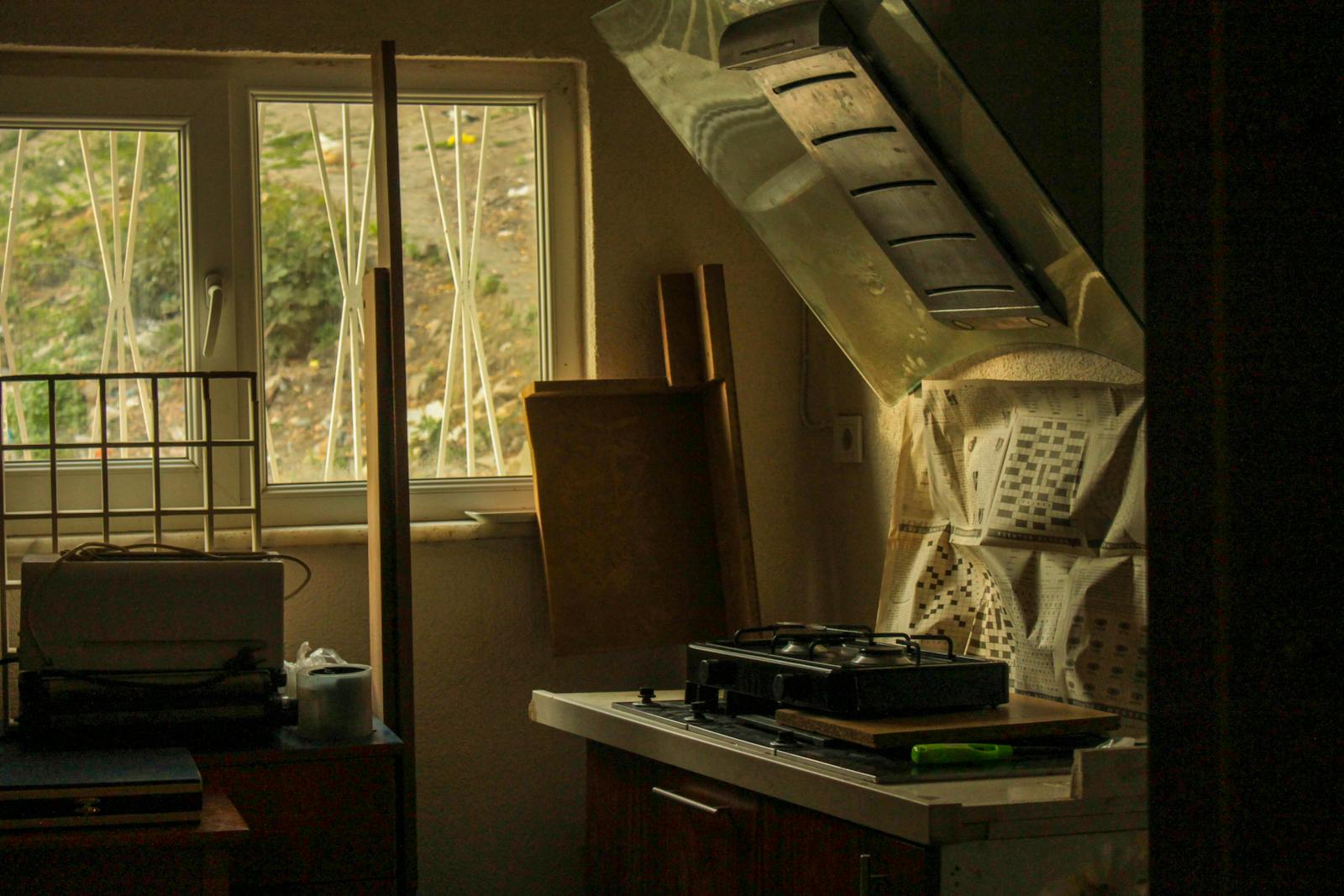
cold kitchen morning
Photo by Gülru Sude on Pexels

What the preference is actually protecting

Keeping the thermostat low is, for some people, a way of staying inside a version of themselves that knows how to be responsible. It’s a daily small act of vigilance. As long as the dial stays at 18, the budget is fine, the parents would approve, the worst-case scenario is held off for another month.

This is the same logic that drives a lot of adult behaviours that look like preferences but are actually disguised reassurances. The observation that adults who insist they don’t have a preference often grew up in homes where having one drew attention they couldn’t afford is the same shape of pattern. The behaviour looks like personality. It’s actually accommodation.

The conversation worth having

None of this means a person needs to start running their house at 22 degrees to prove they’ve healed. The point isn’t the temperature. The point is whether the temperature is being chosen freely or whether it’s being defended against an argument from 1994.

One useful question: would you keep the house this cold if money were not a consideration at all? If the answer is yes, the preference is genuine. If the answer involves a small flinch and a sentence about how it’s not really about the money, the preference is carrying more than it appears to be carrying.

Another useful question: how do you feel when a guest visibly shivers in your living room? Embarrassed? Defensive? Mildly proud? Each of those answers points somewhere different.

The thermostat as a small mirror

People rarely talk about heating habits as emotional inheritance, which is part of why they persist so quietly. They look practical. They sound like good sense. They cost nothing to maintain and they reward the people who keep them with a feeling of doing it right.

The cost shows up elsewhere. In a partner who feels mildly unwelcome in the house. In a child who learns the same lesson their parent learned, one generation later, about how warmth is the kind of thing you have to justify. In the small, ambient sense that comfort is suspicious.

What changes when you notice

Naming the pattern does something, but probably less than the self-help version of this sentence would like to promise. The hand still reaches for the dial. The flinch still arrives on schedule. What changes is only that you can see it happening, which is not the same thing as being free of it.

Some people, after years of noticing, do eventually let the house get warmer. Many don’t. The argument from 1994 turns out to be a stubborn houseguest, and recognising its voice in the room is not the same as asking it to leave.

The dial is just a dial. Whose hand is really on it is a question that tends to outlast the answer.




Source link

Tags: arentargumentbillcolderExpensivefeltGrewHeatingHOTHousesMonthlypeopleprefersRunningThermostatWarmth
ShareTweetShare
Previous Post

The California Count Goes On

Next Post

The Ultimate Guide to Buying Off-Market Properties (As a Complete Beginner)

Related Posts

edit post
The barrier to starting a conversation is usually a bad forecast, not a lack of charm: people underestimate how much others like them, and commuters made to talk to a stranger enjoyed the trip more than those left alone, the opposite of what they predicted

The barrier to starting a conversation is usually a bad forecast, not a lack of charm: people underestimate how much others like them, and commuters made to talk to a stranger enjoyed the trip more than those left alone, the opposite of what they predicted

by TheAdviserMagazine
August 7, 2026
0

Some people seem to strike up conversations anywhere, with the person next to them in a queue, a stranger at...

edit post
The Myers-Briggs test is described everywhere as being based on Carl Jung, but its two authors had no training in psychology, one of its four dimensions was their own extension of his theory, and about half of people who retake it do not receive the same four-letter type

The Myers-Briggs test is described everywhere as being based on Carl Jung, but its two authors had no training in psychology, one of its four dimensions was their own extension of his theory, and about half of people who retake it do not receive the same four-letter type

by TheAdviserMagazine
August 6, 2026
0

Ask almost anyone where the Myers-Briggs Type Indicator comes from and you’ll get the same answer: it takes Carl Jung’s...

edit post
The internet doesn’t need more content. It needs more people who lived something first and wrote about it second.

The internet doesn’t need more content. It needs more people who lived something first and wrote about it second.

by TheAdviserMagazine
August 6, 2026
0

I spent a week at my friend’s family’s home in Spain sitting at a table full of people who clearly...

edit post
How to Scale Finance and Operations Without Adding Overhead in 2026

How to Scale Finance and Operations Without Adding Overhead in 2026

by TheAdviserMagazine
August 5, 2026
0

Adding revenue is the fun part of scaling. The operational finance work to support  it is not. Every new customer...

edit post
Why Transparency Wins Long-Term in Business: The Competitive Advantage Most Companies Ignore

Why Transparency Wins Long-Term in Business: The Competitive Advantage Most Companies Ignore

by TheAdviserMagazine
August 5, 2026
0

When people talk about business growth, the conversation usually centers around the visible levers that naturally attract attention, such as...

edit post
How to Start a Drone Cleaning Business: A Practical Guide for First-Time Founders

How to Start a Drone Cleaning Business: A Practical Guide for First-Time Founders

by TheAdviserMagazine
August 5, 2026
0

Every few years, a new technology doesn’t just improve an industry—it completely changes the economics behind it. Exterior cleaning is...

Next Post
edit post
The Ultimate Guide to Buying Off-Market Properties (As a Complete Beginner)

The Ultimate Guide to Buying Off-Market Properties (As a Complete Beginner)

edit post
The Little-Known Loan That Helped Me Turn K Down into 0K in Equity

The Little-Known Loan That Helped Me Turn $9K Down into $150K in Equity

  • Trending
  • Comments
  • Latest
edit post
Georgia Senior SNAP and Meal Resources Older Adults Can Use

Georgia Senior SNAP and Meal Resources Older Adults Can Use

July 24, 2026
edit post
New Jersey Tax-Relief Events: Three July Dates Near Seniors

New Jersey Tax-Relief Events: Three July Dates Near Seniors

July 13, 2026
edit post
Judge Who Helped Violent Illegal Alien Evade ICE Faces New Test

Judge Who Helped Violent Illegal Alien Evade ICE Faces New Test

July 31, 2026
edit post
2 judges suspended in separate cases after being indicted on criminal charges

2 judges suspended in separate cases after being indicted on criminal charges

July 9, 2026
edit post
Driving the Noncitizen Voting Scandal: Registration With License

Driving the Noncitizen Voting Scandal: Registration With License

July 26, 2026
edit post
Bristlecone pines growing in the White Mountains of California germinated before the Great Pyramid was built, and the oldest one alive today, nicknamed Methuselah, has been quietly adding rings for 4,855 years in soil so poor almost nothing else survives beside it

Bristlecone pines growing in the White Mountains of California germinated before the Great Pyramid was built, and the oldest one alive today, nicknamed Methuselah, has been quietly adding rings for 4,855 years in soil so poor almost nothing else survives beside it

July 8, 2026
edit post
Food Inflation, Jimmy Carter’s Sweater, and  Burritos

Food Inflation, Jimmy Carter’s Sweater, and $20 Burritos

0
edit post
Copper jumps to its highest level ever. What the metal is telling us

Copper jumps to its highest level ever. What the metal is telling us

0
edit post
Do Widows Pay Taxes on Life Insurance Payouts? 

Do Widows Pay Taxes on Life Insurance Payouts? 

0
edit post
IAI equips Singapore warship with Blue Spear missiles

IAI equips Singapore warship with Blue Spear missiles

0
edit post
Why “Albert Einstein’s ‘Why Socialism?’”?

Why “Albert Einstein’s ‘Why Socialism?’”?

0
edit post
CoinRoutes Adds Dedicated Wincent FIX Sessions for Institutional Clients

CoinRoutes Adds Dedicated Wincent FIX Sessions for Institutional Clients

0
edit post
Food Inflation, Jimmy Carter’s Sweater, and  Burritos

Food Inflation, Jimmy Carter’s Sweater, and $20 Burritos

August 7, 2026
edit post
Why “Albert Einstein’s ‘Why Socialism?’”?

Why “Albert Einstein’s ‘Why Socialism?’”?

August 7, 2026
edit post
The barrier to starting a conversation is usually a bad forecast, not a lack of charm: people underestimate how much others like them, and commuters made to talk to a stranger enjoyed the trip more than those left alone, the opposite of what they predicted

The barrier to starting a conversation is usually a bad forecast, not a lack of charm: people underestimate how much others like them, and commuters made to talk to a stranger enjoyed the trip more than those left alone, the opposite of what they predicted

August 7, 2026
edit post
LIC gains 3% after Q1 earnings. Here’s what Morgan Stanley and Motilal Oswal recommend

LIC gains 3% after Q1 earnings. Here’s what Morgan Stanley and Motilal Oswal recommend

August 7, 2026
edit post
The Countries That Will Pay For The UN Tax Experiment

The Countries That Will Pay For The UN Tax Experiment

August 7, 2026
edit post
How to get the most from Erasmus+

How to get the most from Erasmus+

August 6, 2026
The Adviser Magazine

The first and only national digital and print magazine that connects individuals, families, and businesses to Fee-Only financial advisers, accountants, attorneys and college guidance counselors.

CATEGORIES

  • 401k Plans
  • Business
  • College
  • Cryptocurrency
  • Economy
  • Estate Plans
  • Financial Planning
  • Investing
  • IRS & Taxes
  • Legal
  • Market Analysis
  • Markets
  • Medicare
  • Money
  • Personal Finance
  • Social Security
  • Startups
  • Stock Market
  • Trading

LATEST UPDATES

  • Food Inflation, Jimmy Carter’s Sweater, and $20 Burritos
  • Why “Albert Einstein’s ‘Why Socialism?’”?
  • The barrier to starting a conversation is usually a bad forecast, not a lack of charm: people underestimate how much others like them, and commuters made to talk to a stranger enjoyed the trip more than those left alone, the opposite of what they predicted
  • Our Great Privacy Policy
  • Terms of Use, Legal Notices & Disclosures
  • Contact us
  • About Us

© Copyright 2024 All Rights Reserved
See articles for original source and related links to external sites.

Welcome Back!

Login to your account below

Forgotten Password?

Retrieve your password

Please enter your username or email address to reset your password.

Log In
No Result
View All Result
  • Home
  • Financial Planning
    • Financial Planning
    • Personal Finance
  • Market Research
    • Business
    • Investing
    • Money
    • Economy
    • Markets
    • Stocks
    • Trading
  • 401k Plans
  • College
  • IRS & Taxes
  • Estate Plans
  • Social Security
  • Medicare
  • Legal

© Copyright 2024 All Rights Reserved
See articles for original source and related links to external sites.