With all the hoopla and horse-race elements of the midterm campaign — from polls to scandals to controversial or cringey remarks from the past — front and center as always, it is easy to lose sight of the policies proposed by candidates, Democrats or Republicans, across the country. Presidential races are easier to bring into focus because they ultimately revolve around two or three candidates and a defined set of issues. But identifying a precise ideology common to congressional campaigns writ large in a midterm election is far more difficult because hundreds of House and Senate candidates of various stripes are seeking office.
History suggests that midterm voters for the party that lost the last presidential race are generally motivated less by specific issues than by lingering anger and frustration over their powerlessness. Nevertheless, candidates across the land share a number of policy proposals. We are not talking about lofty, cleverly worded ideas such as “restoring democracy” or the rich paying their “fair share” or even the new mantra of affordability, but concrete proposals they hope will hold particular appeal to disaffected voters still smarting from the Democrats’ disaster of 2024.
We do not focus on Republicans here because the GOP platform can essentially be defined in three words: the Trump agenda. It is Democrats, desperate to get back in the game and secure at least a slice of power, who are demanding change. So let’s examine the key elements of the party’s issue matrix.
Affordability: Following Mamdani’s Lead
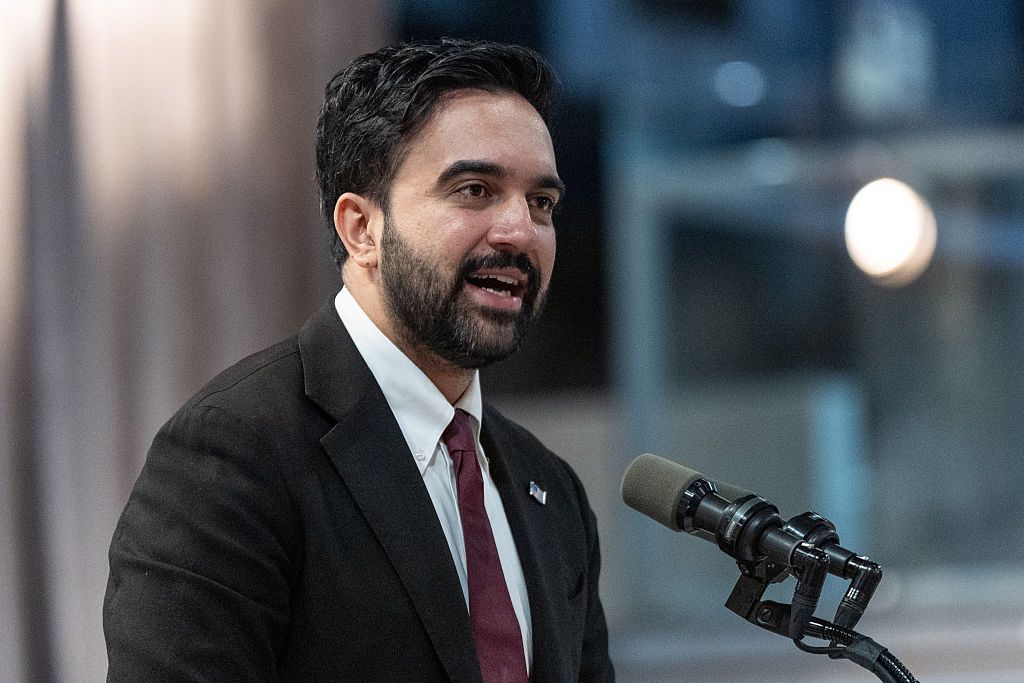
Say what you will about New York City’s socialist mayor Zohran Mamdani, his campaign in 2025 has transformed the prevailing political narrative. While so many Democrats had gone down in defeat clinging to fringe progressive issues, Mamdani made affordability the theme of his campaign and won going away. And both parties, but particularly that of the Democrats, have since employed that hot-button word in promising to sharpen their focus on improving the economy.
In that vein, Democrats are proposing down-payment assistance programs for first-time homebuyers and promises to crack down on corporate landlords. Their evident belief is that targeting property owners and providing taxpayer-funded assistance to rookie homebuyers who might not otherwise be able to afford such a purchase might help some fulfill a dream. But it also risks a return to the bad old days of 2008, when the economy crashed after people who could not qualify for homeownership were enticed into subprime mortgages that nearly destroyed the national economy.
Democrats are also calling for direct federal funding for locally administered childcare. This is essentially an expansion of the welfare state, as taxpayer funds would go from the federal government to local agencies to childcare providers, layering federal authority on top of local control.
Other proposals making the rounds are forcing companies to pay double for overtime hours and passing a new set of “price-gouging” laws to lower grocery and utility bills. Of course, wage and price controls have been tried repeatedly in the past and repeatedly failed, much like the socialism that has become très chic in elite progressive circles. As with its perpetual push to raise the minimum wage, the left is blind to the burdens of businesses with budgets, so many of which are now turning from humans to AI to offset ever more expensive laws and regulations championed by the collectivist left.
And speaking of AI, one idea out of California is particularly revealing of the left’s endless thirst for bigger and bigger government. States are often called the laboratories of democracy because many a good and bad policy has been tried at the state level and been either discarded or adopted in some form at the federal level, such as Obamacare, modeled on Romneycare in Massachusetts. In this instance, California Gov. Gavin Newsom, whose presidential ambitions are a secret to no one, is calling for an “AI New Deal.” Newsom has said Democrats should talk about AI “as FDR talked in 1944, about a new social compact.” This initiative would create a taxpayer-funded safety net for workers displaced by AI, adding a massive new component to the welfare state.
Progressive candidates are advocating for a government-run, single-payer health insurance system, some openly, others secretly. But absent that, Democrats universally favor sustaining the Affordable Care Act, even at the cost of constant government bailouts. More than a few are calling for abolishing ICE, while others want to place much stricter limits on its ability to detain illegal aliens. And, of course, in a bow to Vermont Sen. Bernie Sanders’ Oligarchy Tour, the demand for higher, perhaps even confiscatory, tax rates on the wealthy remains a staple as much for the left as tax cuts are for the right.
Democrats on the Record
Another way to assess the Democrats’ direction is to analyze the most recent data, in this case the party’s record in Virginia, which held gubernatorial and legislative elections just six months ago, awarding them the statewide trifecta. The legislature has proposed three new amendments to the state’s constitution, all of which reveal the Democrats’ mindset. One would codify protections for women seeking abortions, another would reverse the state constitution’s prohibition on same-sex marriage, and a third would automatically restore the right to vote for felons once they have completed their sentences.
Voters are, of course, free to focus on President Donald Trump’s latest inflammatory post on social media, or Graham Platner’s sexting as he runs for Maine senator, or James Talarico in Texas and his “non-binary” God. But when it comes right down to it, the trick is to see through the hoopla and horse race, the clever rhetoric, global assertions, and virtue-signaling and focus on the reality of what a candidate is likely to do once elected. The best predictor of future performance is past behavior, and the Democrats’ policy prescriptions for 2026 reflect a worldview very similar to those of 2024. Since the party is not sending any signals about a discernible change in direction, perhaps the Dems’ best reason for optimism is that, at least this time around, Trump won’t be on the ballot.