No Result
View All Result
SUBMIT YOUR ARTICLES
  • Login
Sunday, May 3, 2026
TheAdviserMagazine.com
  • Home
  • Financial Planning
    • Financial Planning
    • Personal Finance
  • Market Research
    • Business
    • Investing
    • Money
    • Economy
    • Markets
    • Stocks
    • Trading
  • 401k Plans
  • College
  • IRS & Taxes
  • Estate Plans
  • Social Security
  • Medicare
  • Legal
  • Home
  • Financial Planning
    • Financial Planning
    • Personal Finance
  • Market Research
    • Business
    • Investing
    • Money
    • Economy
    • Markets
    • Stocks
    • Trading
  • 401k Plans
  • College
  • IRS & Taxes
  • Estate Plans
  • Social Security
  • Medicare
  • Legal
No Result
View All Result
TheAdviserMagazine.com
No Result
View All Result
Home Medicare

When It Comes to Health Insurance, Federal Dollars Support More Than ACA Plans

by TheAdviserMagazine
2 months ago
in Medicare
Reading Time: 5 mins read
A A
When It Comes to Health Insurance, Federal Dollars Support More Than ACA Plans
Share on FacebookShare on TwitterShare on LInkedIn


Subsidies. Love ’em or hate them, they dominated the news during the Affordable Care Act’s sign-up season, and their reduction is now hitting many enrollees in the pocketbook.

While lawmakers continue to disagree on a way forward, and the politics of affordability keeps the issue front and center, it would be understandable to think these are the only taxpayer-funded health insurance subsidies in the U.S. system.

But that would be wrong.

“The vast majority of people with health insurance get some kind of federal subsidy for it, from Medicaid to Medicare to the ACA to employer-sponsored insurance,” said Larry Levitt, executive vice president for health policy at KFF, a health information nonprofit that includes KFF Health News.

These broad taxpayer supports are rarely discussed, though, as they apply to work-based coverage. So, let’s take a look.

Adding Up the Tax Breaks

Nearly half of the more than $1.1 trillion in annual spending on Medicare, the second-largest program in the federal budget behind Social Security, comes from general federal funds. The rest comes from payroll taxes and the monthly premiums paid by enrollees, who number more than 66 million.

Medicaid — the nation’s largest health insurer, covering more than 70 million low-income people — costs more than $918 billion annually. It’s jointly financed by the federal government (65%) and states (35%).

For both programs, expenses are partially funded with taxpayer dollars. A less obvious form of federal support comes through employer-sponsored health coverage. Here, the impact on the federal bottom line is less visible, as hundreds of billions of dollars never reach the U.S. Treasury because it takes the form of tax breaks for employers and workers.

“It’s a world apart from Medicare, Medicaid, and Obamacare — from the government writing checks to people,” said Michael Cannon, director of health policy studies at the libertarian Cato Institute.

Email Sign-Up

Subscribe to KFF Health News’ free Morning Briefing.

Job-based insurance provides coverage for at least 154 million people under age 65. (By comparison, about 23 million people enrolled in Affordable Care Act plans for this year, generally because they don’t have job-based insurance. Extending the enhanced ACA subsidies that expired at the end of 2025 would cost about $350 billion over a decade, or roughly $35 billion annually.)

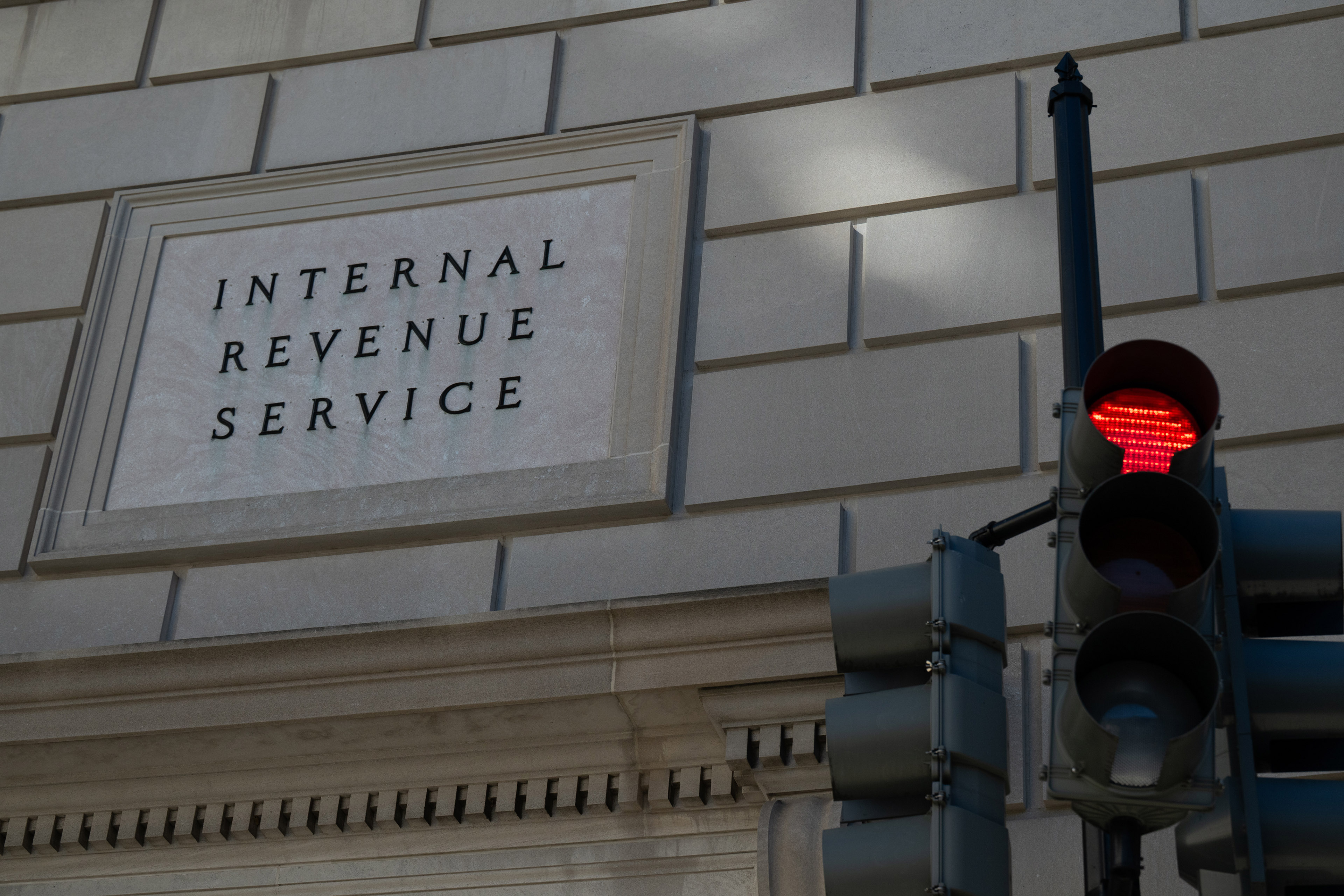
In fact, contributions to employer-sponsored health plans are the single-largest “exclusion” — a tax policy that allows certain income to be exempt from taxes — in the federal budget. For this fiscal year, the estimated amount is $451 billion, according to the Joint Committee on Taxation and the Congressional Budget Office.

The money employers spend to offer health coverage to their employees can be written off as a business expense. And workers who receive this benefit don’t have to pay income or payroll taxes on its value.

Those tax savings can be worth hundreds or even thousands of dollars a year for workers. The amount varies, with the biggest breaks going to those with the most expensive health plans and those whose wages put them in the upper tax brackets. Contributions to health savings accounts are among other tax breaks related to health insurance.

But the exclusion can be a difficult concept for insured workers to wrap their heads around, as most employees still contribute a portion of their pay to health coverage.

Even though they’re not taxed on that, “it doesn’t necessarily feel like a subsidy to people,” Levitt said. “They do feel like they’re paying.”

Baked Into the Tax System

The tax treatment evolved along with work-based health insurance policies in the U.S., fueled during World War II, when wage and price controls spurred interest in offering health coverage to lure workers. It was enacted into tax law in 1954.

Backers, which often include labor unions and employers, say it encourages companies to offer health insurance, as most large companies do. Because of the cost, smaller companies are less likely to do so, even with the tax incentive. Also, for workers, getting $1 of health care coverage is worth more than an extra dollar in wages, which would be taxed and, thus, worth less.

Opponents of the tax break, however, note the lost revenue to the Treasury and that the tax exclusion, according to some economists, leads employers and workers to choose the most generous — and expensive — health insurance offered, which they say drives up health care spending. The tax break benefits wealthier workers more than those in lower-income tax brackets, and economists also say the amounts employers pay for health insurance might otherwise be spent on boosting workers’ wages.

While there is currently no pending legislation to modify the tax break, the growing federal deficit has some employer groups worried the policy will change. Benefit experts say the outcome would vary.

“It’s not clear that it would wind up in increased wages for everyone,” said KFF’s Levitt. “Some workers have more negotiating leverage than others.”

Decades of efforts to cap or eliminate the exclusion have all failed.

“It’s had a bipartisan target on its back for 40 years,” said Paul Fronstin, a director at the Employee Benefit Research Institute, a private, nonprofit, nonpartisan organization.

Any change, however, “would raise some revenue, but it’s also a tax increase for workers,” Fronstin noted. “What would that mean, if their taxes go up? Do wages go up because they’re not getting the same tax breaks? There will be winners and losers in that equation.”

Still, because job-based coverage is the way so many Americans get health insurance, some policy experts warn that eliminating or even lowering the exclusion could remove an incentive for employers to offer coverage. While some employers would likely keep offering coverage even without the tax break — because it is a benefit that helps attract and retain workers — it is a huge expense, so others might drop it. Average family premiums cost an employer nearly $27,000 last year, according to KFF.

“These are businesses, which weigh the costs of offering insurance, which have gone up dramatically,” said Elizabeth Mitchell, CEO of the Purchaser Business Group on Health, an organization of large public and private employers that offer health insurance to their workers. “If there’s not some sort of tax incentive, I would expect them to revisit whether they would bear those costs.”

Cannon, of the Cato Institute, considers the tax policy bad because it takes choice away from workers, who might rather have increased wages, even if they are taxed. Those additional wages, he argues, could then be invested in tax-advantaged health savings accounts, used to pay medical costs.

Under the current tax break approach, “you are effectively saying let the employer control a huge chunk of your earnings and enroll in the plan the employer chooses,” he argues.

Employers counter by saying they are better able to negotiate higher-quality, lower-cost health insurance packages than individuals could on their own.

Mitchell, at the employer group, said, “It is challenging for an enormous employer to negotiate fair prices with the large consolidated systems. So it’s hard to imagine how an individual would be able to navigate our current system.”

She also disputes arguments that the tax break leads to higher health care prices, driven by overly generous employer plans that lead insured workers to use more health services.

“That’s a tired economic theory that doesn’t apply in health care,” she said. “People don’t shop for health care because they want more of it. They use health care because they need it. It’s fundamentally different.”

Are you struggling to afford your health insurance? Have you decided to forgo coverage? Click here to contact KFF Health News and share your story.

Julie Appleby:
[email protected],
@Julie_appleby

Related Topics

Contact Us

Submit a Story Tip


Source link

Tags: ACADollarsfederalHealthInsuranceplansSupport
ShareTweetShare
Previous Post

Gaurav Jogani sees jewellery, footwear driving consumer discretionary growth

Next Post

Trump administration drops appeal over its $1.2B demand from UC system

Related Posts

edit post
Gavin Newsom, Early Champion of Single-Payer, Moderates in the Face of Fiscal Limits

Gavin Newsom, Early Champion of Single-Payer, Moderates in the Face of Fiscal Limits

by TheAdviserMagazine
May 1, 2026
0

SACRAMENTO, Calif. — In his earliest days in the governor’s office, Democrat Gavin Newsom huddled with his advisers to consider...

edit post
States Rush To Figure Out How To Enforce Trump’s Medicaid Work Requirements

States Rush To Figure Out How To Enforce Trump’s Medicaid Work Requirements

by TheAdviserMagazine
April 30, 2026
0

Use Our Content   It can be republished for free.  State officials remain uncertain on how to enforce a requirement that...

edit post
Volunteer With the Medicare Rights Center!

Volunteer With the Medicare Rights Center!

by TheAdviserMagazine
April 29, 2026
0

This National Volunteers Month, the Medicare Rights Center invites our New York City community members to join us as volunteers...

edit post
Trump’s Medicaid Work Mandate Debuting in Nebraska to Much Dismay

Trump’s Medicaid Work Mandate Debuting in Nebraska to Much Dismay

by TheAdviserMagazine
April 29, 2026
0

Schmeeka Simpson of Omaha works as a patient navigator for the American Civil Liberties Union and an administrative assistant at...

edit post
How managers can start mental health conversations

How managers can start mental health conversations

by TheAdviserMagazine
April 24, 2026
0

Managers play a key role in supporting their employees. But leaders may feel unsure about how to bring up topics...

edit post
Rethinking retiree health benefits: Why education matters

Rethinking retiree health benefits: Why education matters

by TheAdviserMagazine
April 21, 2026
0

Employers and consultants are navigating one of the most complex benefit environments we’ve seen in decades. Retiree health coverage, in...

Next Post
edit post
The Bitcoin CME gap is dead – and past gaps could close forever in May this year

The Bitcoin CME gap is dead – and past gaps could close forever in May this year

edit post
McGill in .8m trilateral partnership with UAE and Indonesia

McGill in $12.8m trilateral partnership with UAE and Indonesia

  • Trending
  • Comments
  • Latest
edit post
Florida Warning: With Senior SNAP Benefits Averaging 8/Month, Thousands Risk Losing Assistance in 2026

Florida Warning: With Senior SNAP Benefits Averaging $188/Month, Thousands Risk Losing Assistance in 2026

April 27, 2026
edit post
Tax Flight Accelerates In Massachusetts

Tax Flight Accelerates In Massachusetts

April 6, 2026
edit post
The Stevia Loophole Why Some Sweetened Drinks are Still SNAP-Legal While Others are Banned in Texas

The Stevia Loophole Why Some Sweetened Drinks are Still SNAP-Legal While Others are Banned in Texas

April 4, 2026
edit post
10 Cheapest High Dividend Stocks With P/E Ratios Under 10

10 Cheapest High Dividend Stocks With P/E Ratios Under 10

April 13, 2026
edit post
Exclusive: America’s largest Black-owned bank launches podcast with mission to unlock hidden shame holding back generational wealth

Exclusive: America’s largest Black-owned bank launches podcast with mission to unlock hidden shame holding back generational wealth

April 29, 2026
edit post
I Replaced My K Salary with 2 Real Estate Deals Per Year

I Replaced My $80K Salary with 2 Real Estate Deals Per Year

April 6, 2026
edit post
10 Largecap stocks with strong upside potential of up to 50%! Do you own any? – Largecap stocks surge

10 Largecap stocks with strong upside potential of up to 50%! Do you own any? – Largecap stocks surge

0
edit post
Spirit Airlines Shuts Down, Leaving Passengers Scrambling

Spirit Airlines Shuts Down, Leaving Passengers Scrambling

0
edit post
67% of high school graduates opting against college cite cost-of-living concerns, poll finds

67% of high school graduates opting against college cite cost-of-living concerns, poll finds

0
edit post
Zoom is handing 0K to solopreneurs as AI pushes 33 million workers to become their own boss

Zoom is handing $150K to solopreneurs as AI pushes 33 million workers to become their own boss

0
edit post
Best money market account rates today, May 2, 2026 (best account provides 4.01% APY)

Best money market account rates today, May 2, 2026 (best account provides 4.01% APY)

0
edit post
6 months out, control of the Senate is 50-50, traders on Kalshi say

6 months out, control of the Senate is 50-50, traders on Kalshi say

0
edit post
Zoom is handing 0K to solopreneurs as AI pushes 33 million workers to become their own boss

Zoom is handing $150K to solopreneurs as AI pushes 33 million workers to become their own boss

May 3, 2026
edit post
10 Largecap stocks with strong upside potential of up to 50%! Do you own any? – Largecap stocks surge

10 Largecap stocks with strong upside potential of up to 50%! Do you own any? – Largecap stocks surge

May 3, 2026
edit post
This Week In Bitcoin: Top Developments That Could Signal A New Era

This Week In Bitcoin: Top Developments That Could Signal A New Era

May 3, 2026
edit post
What 40 years of showing up to hard, physical work taught me about the mental habits no productivity app will ever replicate

What 40 years of showing up to hard, physical work taught me about the mental habits no productivity app will ever replicate

May 2, 2026
edit post
Trump vows to reduce U.S. troops in Germany ‘a lot further’ than 5,000

Trump vows to reduce U.S. troops in Germany ‘a lot further’ than 5,000

May 2, 2026
edit post
Through-Channel Marketing Automation (TCMA): The 2026 Guide to Scaling Partner Demand

Through-Channel Marketing Automation (TCMA): The 2026 Guide to Scaling Partner Demand

May 2, 2026
The Adviser Magazine

The first and only national digital and print magazine that connects individuals, families, and businesses to Fee-Only financial advisers, accountants, attorneys and college guidance counselors.

CATEGORIES

  • 401k Plans
  • Business
  • College
  • Cryptocurrency
  • Economy
  • Estate Plans
  • Financial Planning
  • Investing
  • IRS & Taxes
  • Legal
  • Market Analysis
  • Markets
  • Medicare
  • Money
  • Personal Finance
  • Social Security
  • Startups
  • Stock Market
  • Trading

LATEST UPDATES

  • Zoom is handing $150K to solopreneurs as AI pushes 33 million workers to become their own boss
  • 10 Largecap stocks with strong upside potential of up to 50%! Do you own any? – Largecap stocks surge
  • This Week In Bitcoin: Top Developments That Could Signal A New Era
  • Our Great Privacy Policy
  • Terms of Use, Legal Notices & Disclosures
  • Contact us
  • About Us

© Copyright 2024 All Rights Reserved
See articles for original source and related links to external sites.

Welcome Back!

Login to your account below

Forgotten Password?

Retrieve your password

Please enter your username or email address to reset your password.

Log In
No Result
View All Result
  • Home
  • Financial Planning
    • Financial Planning
    • Personal Finance
  • Market Research
    • Business
    • Investing
    • Money
    • Economy
    • Markets
    • Stocks
    • Trading
  • 401k Plans
  • College
  • IRS & Taxes
  • Estate Plans
  • Social Security
  • Medicare
  • Legal

© Copyright 2024 All Rights Reserved
See articles for original source and related links to external sites.