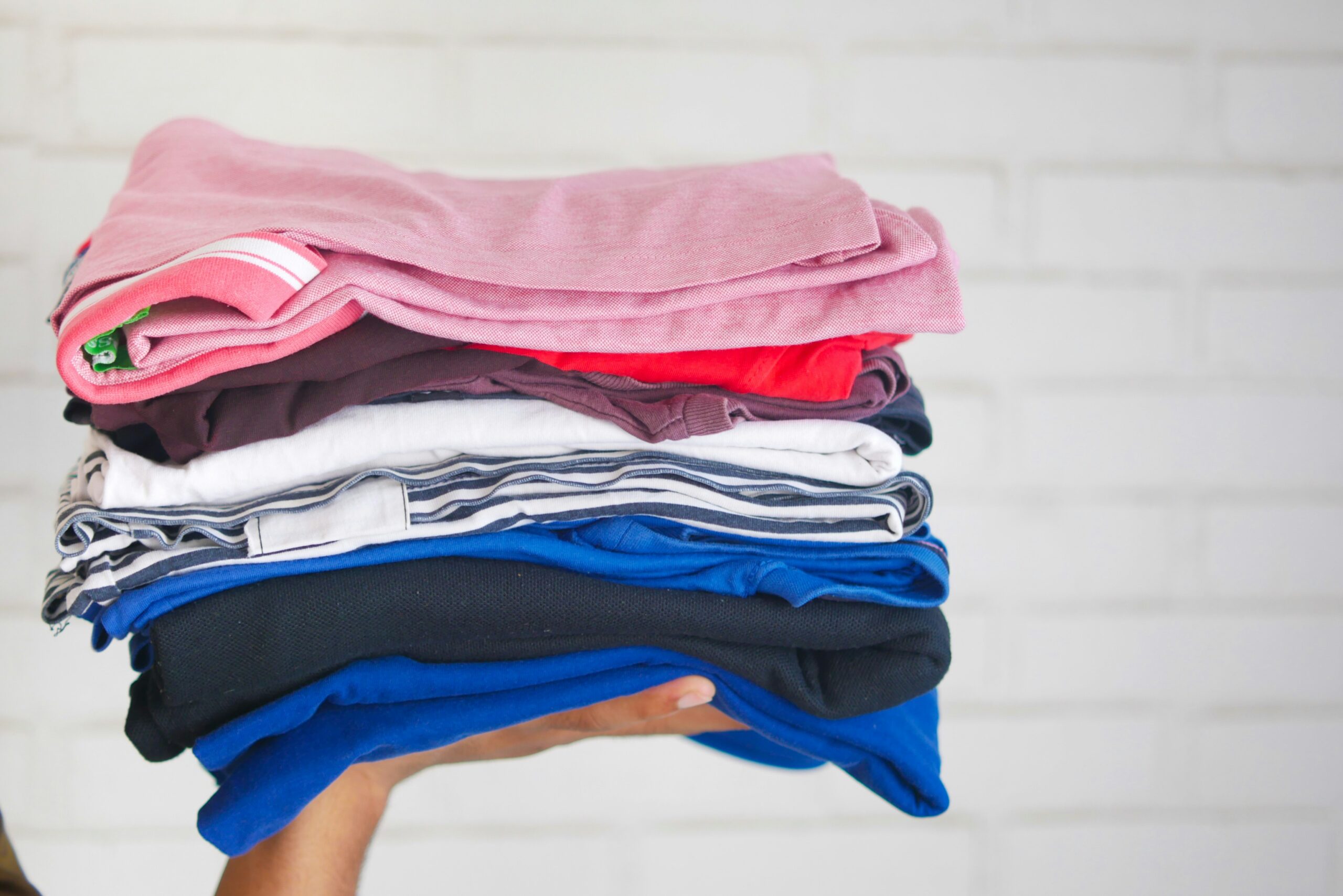
Open your closet.
How many of those things have you worn in the last 90 days? Honestly. Not the stuff you’re keeping “for later” or the pieces that felt essential at the time of purchase and haven’t moved since. The things you actually reached for.
For most people, it’s a fraction of what’s in there.
The rest is the cost of fast fashion — an industry built on the idea that clothes should be cheap, abundant, and replaced constantly. And while each individual purchase feels trivial, the financial picture that emerges when you zoom out is anything but.
This article isn’t a sustainability lecture. It’s a math lesson about what your shopping habits are actually worth, and what they could be worth instead.
First, the Numbers You Probably Haven’t Seen
The average American household spends $2,001 per year on clothing and footwear, according to the Bureau of Labor Statistics’ 2024 Consumer Expenditures report. That’s roughly $167 a month — and it’s been climbing steadily, with per-capita clothing spending rising by 43% between 2020 and 2024 alone.
For Gen X households, Empower’s 2025 spending data puts the figure even higher: an average of $634 per month, or over $7,600 per year. Millennial men alone spend an average of $3,821 annually on apparel, according to Capital One Shopping’s 2026 analysis. And Gen Z, despite being the most vocal generation about sustainability, spends an average of $767 per year specifically on fast fashion.
Now here’s where it gets uncomfortable.
Americans buy 60% more clothing than they did 15 years ago and keep it half as long. The average garment is worn only 7 to 10 times before being thrown away — a decline of more than 35% in just 15 years. Americans discard approximately 81.5 pounds of clothing per person per year, with 85% of all textiles ending up in landfills.
We’re not buying clothes anymore. We’re renting them without realizing it — paying full price for things we’ll wear a handful of times and throw away.
Step 1: The True Cost of a “Cheap” Purchase
Fast fashion is built around a simple psychological trick: make the individual price low enough that the decision feels trivial.
A $25 top from Shein. A $35 pair of jeans from H&M. A $15 dress you’ll wear to one event. None of these feels like a significant financial decision. But they add up in two ways most people never calculate.
The cost per wear problem
A $25 garment worn twice before being discarded has a real cost per wear of $12.50. A $120 quality piece worn 80 times has a cost per wear of $1.50. Fast fashion isn’t cheaper; it just spreads the cost across more transactions, making it harder to see.
One pre-loved luxury retailer found that, when analyzed by cost-per-wear, second-hand clothes are 33% cheaper in the long run than buying brand-new fast-fashion items. The cheap option, repeated endlessly, is the expensive option.
The replacement cycle cost
Fast fashion items are kept for an average of 7 weeks before being discarded. At that rate, a wardrobe slot that gets refreshed roughly every two months costs $150–$200 per year for a single clothing category — shoes, tops, accessories — even at fast-fashion prices.
Multiply that across a full wardrobe, and you have an annual average of $2,000. For heavier shoppers, significantly more.
Step 2: The Haul Culture Multiplier
Fast fashion spending doesn’t happen in a vacuum. It occurs within a cultural ecosystem specifically engineered to maximize purchase frequency.
96% of Americans still shop fast fashion, while 60% say they want sustainable options — a gap that researchers call the “intention-action gap,” and that the industry exploits with precision. New collections drop weekly on platforms like Shein and Zara. TikTok “haul” videos rack up millions of views, normalizing the purchase of 20-item orders as entertainment. 41% of young women feel pressured not to wear the same outfit twice when they go out.
The result is a purchase cycle that has almost nothing to do with the need for clothes and almost everything to do with social participation. You’re not buying a shirt. You’re buying your way into a cultural moment that will be replaced by another next week.
That cycle has a financial cost that compounds quietly for years before most people notice.
Step 3: The Opportunity Cost Nobody Calculates
Here’s the question this article is really asking: what would happen if you redirected even half of your annual clothing budget into an index fund instead?
The average household spends $2,001 a year on clothing. Half of that — $1,000 a year, or roughly $83 a month — redirected into an investment account at a 10% annual return, consistent with the stock market’s long-term historical average:
That’s half the average clothing budget. Now let’s look at heavier spenders. If you’re a millennial spending $3,821 a year on clothing and redirected half — about $160/month — the numbers shift significantly:
$361,000 from cutting your clothing budget in half. Not eliminating it and halving it. That’s the number sitting inside a habit most people have never questioned.
Step 4: The “Cost Per Wear” Investment Model
Here’s a reframe that tends to change how people shop permanently.
Instead of asking “how much does this cost?”, ask: “how much does this cost per wear — and what would the difference invested look like?”
Let’s compare two shoppers over 5 years, both spending the same total on clothing:
Shopper A: Fast Fashion Model: Spends $150/month on fast fashion. Averages 8 wears per garment before discarding. Invests nothing from the clothing budget.
Shopper B: Quality + Redirect Model: Spends $75/month on fewer, higher-quality pieces. Averages 60+ wears per garment. Invests the other $75/month.
After 5 years, both have spent the same. But Shopper B has a wardrobe that still functions — and an investment account worth roughly $58,000 that Shopper A doesn’t have.
After 20 years, Shopper B’s redirected $75/month at a 10% annual return has grown to roughly $286,000.
Same clothing budget. Completely different financial outcome. The only variable is how deliberately that budget was spent.
Step 5: The Wardrobe Audit That Changes Everything
Most people have no idea what they actually spend on clothing because their purchases are spread across dozens of small transactions over the course of a year. The $12 impulse buy here, the $40 sale item there — none of it feels significant in isolation.
Here’s the exercise that tends to make it real.
Go through your bank and credit card statements for the last 12 months. Highlight every clothing purchase: retail stores, online orders, fast-fashion apps, shoes, and accessories. Add it up.
Then go to your closet and count how many of those purchases you’ve worn more than five times.
The gap between those two numbers — what you spent vs. what was actually used — makes the opportunity cost visible. For most people, it runs into the hundreds of dollars per year. For heavy shoppers, it can exceed $1,000 of pure waste annually.
That number, invested instead, is the starting point for a real conversation about what your wardrobe is actually costing you.
Step 6: The Practical Redirect
You don’t have to stop buying clothes. The goal isn’t a capsule wardrobe minimalism project. The goal is intentional spending, buying things you’ll actually wear, at a price point that reflects their real use, and redirecting the rest of the money.
Here’s a simple framework:
The 30-wear rule. Before buying anything, ask: will I wear this at least 30 times? If the honest answer is no — it’s a trend piece, a one-occasion dress, something you’re buying because it’s in the haul — put it back.
Unsubscribe from the cycle. Unfollow haul accounts. Unsubscribe from fast fashion marketing emails. The research on impulse purchasing consistently shows that reduced exposure to purchase triggers directly reduces unplanned spending. You can’t FOMO-buy what you didn’t see.
Set a monthly clothing cap and automate the rest. Decide on a realistic monthly clothing budget — say, $60 instead of $167. Automate the $107 difference into an index fund the same day your paycheck lands. Treat it like a bill. It disappears before you have a chance to spend it on things you don’t need.
Shop second-hand first. ThredUp, Poshmark, and local consignment stores carry quality pieces at fast fashion prices — with a far better cost-per-wear profile. The $40 second-hand blazer you’ll wear 50 times is a better financial decision than the $25 fast fashion blazer you’ll wear twice.
Step 7: The Numbers That Put It All Together
Let’s pull back and model three realistic redirect scenarios, all starting at age 30 and investing at a 10% annual return until age 65:
A millennial who halves their clothing spending starting today and invests the difference retires with over $1 million from that single habit change alone.
Not from a salary increase. Not from a risky investment. From buying fewer clothes they wouldn’t have worn anyway.
The Bottom Line
Your closet isn’t just a collection of clothes. It’s a record of financial decisions — most of them made quickly, under social pressure, in pursuit of a feeling that fades within weeks.
40% of consumers admit to buying clothes they never wear. The average garment gets worn 7 times before it’s discarded. And the average American spends over $2,000 a year funding that cycle.
The math doesn’t require radical minimalism. It requires one question to be asked before every purchase: am I buying this because I’ll actually use it, or because the price makes it feel like a decision I don’t need to think about?
Fast fashion is designed to make you feel like the answer is always the second one.
The investment account you could be building says otherwise.
New to investing? Wall Street Survivor gives you $100,000 in virtual money to practice in our real-time stock market simulator — risk-free. Plus, our free courses will teach you everything you need to get started the right way. Get started here!