No Result
View All Result
SUBMIT YOUR ARTICLES
  • Login
Saturday, August 22, 2026
TheAdviserMagazine.com
  • Home
  • Financial Planning
    • Financial Planning
    • Personal Finance
  • Market Research
    • Business
    • Investing
    • Money
    • Economy
    • Markets
    • Stocks
    • Trading
  • 401k Plans
  • College
  • IRS & Taxes
  • Estate Plans
  • Social Security
  • Medicare
  • Legal
  • Home
  • Financial Planning
    • Financial Planning
    • Personal Finance
  • Market Research
    • Business
    • Investing
    • Money
    • Economy
    • Markets
    • Stocks
    • Trading
  • 401k Plans
  • College
  • IRS & Taxes
  • Estate Plans
  • Social Security
  • Medicare
  • Legal
No Result
View All Result
TheAdviserMagazine.com
No Result
View All Result
Home Market Research Startups

The Sahel is home to roughly 300 million people on the Sahara’s southern edge — a strip of thin soil and scarce rain where a single failed harvest becomes a crisis with no safety net

by TheAdviserMagazine
1 month ago
in Startups
Reading Time: 6 mins read
A A
The Sahel is home to roughly 300 million people on the Sahara’s southern edge — a strip of thin soil and scarce rain where a single failed harvest becomes a crisis with no safety net
Share on FacebookShare on TwitterShare on LInkedIn


The Sahel runs across Africa like a bruise between the Sahara and the savanna, a semi-arid belt stretching from Senegal on the Atlantic to Sudan on the Red Sea, and roughly 300 million people live along its width. In Niger’s Tahoua region, farmers walk out at dawn to inspect millet fields that depend on a rainy season lasting barely three months. When those rains fail — and they now fail more often — there is no crop insurance, no federal food stamp program, no municipal water reserve. There is the next village, the next harvest, and whatever grain is left in the granary.

This is what makes the Sahel structurally different from almost anywhere else on Earth. A drought in California is expensive. A drought in Tahoua is fatal.

A geography defined by rainfall you can count on one hand

The word Sahel comes from the Arabic sahil, meaning shore — the idea being that the Sahara is a sea of sand and the Sahel is the coastline where the sand meets the green. That coastline is thin. In most of the region, annual rainfall sits between 200 and 600 millimetres, and almost all of it falls in a single wet season between June and September.

For comparison, London gets about 600 millimetres spread across the whole year. Iowa cornfields drink closer to 900. Sahelian farmers grow millet, sorghum and cowpea on soils that receive, in a good year, what a British garden gets by accident.

And the rains are shifting. Research compiled by the Frontiers project on climate-resilient farming systems documents how prolonged droughts, heat waves and erratic rainfall are now regular features of the Sahelian growing calendar rather than freak events. A rain that arrives three weeks late can destroy a planting. A rain that arrives too hard washes the topsoil off fields that have been farmed for centuries.

Seven countries, one strip of soil

The core Sahelian countries are Senegal, Mauritania, Mali, Burkina Faso, Niger, Chad and Sudan, with parts of northern Nigeria, Cameroon, Eritrea and Ethiopia often folded in depending on which climatologist is drawing the map. The population estimate of around 300 million reflects this wider belt, and it is one of the fastest-growing populations on the planet — median ages in Niger and Mali sit under 16.

That demographic pressure lands on soil that is already tired. Decades of continuous cropping without fertiliser, combined with the loss of trees that once held moisture in the ground, have thinned the arable layer to a few centimetres in many places. The World Bank’s Sahel land restoration work in Tahoua describes a landscape where farmers are rebuilding soil almost by hand — half-moon catchments dug into hardpan, stone bunds laid across slopes, tree seedlings nursed through the dry months.

Why one failed harvest becomes a catastrophe

In a country with a functioning safety net, a bad harvest is absorbed. Crop insurance pays out. Supermarkets truck in grain from elsewhere. Unemployment benefits keep families in their homes. Food banks and government nutrition programs step in for the poorest.

The Sahel has almost none of that infrastructure. Most farming is subsistence — you eat what you grow, and you sell a small surplus to buy salt, cooking oil, medicine and school fees. When the surplus disappears, the medicine goes first. Then the school fees. Then the seed for next year’s planting, because hungry families eat the seed grain.

That is the mechanism by which a single bad rainy season cascades into a multi-year crisis. A family that eats its seed in October cannot plant in June. A herder who sells his last goat in November has no capital to rebuild the herd. The Frontiers research on food systems under climate shocks traces exactly this pattern — how the absence of buffers turns weather variability into structural hunger.

The mental arithmetic of scarcity

What food insecurity does to a family is not just caloric. It is cognitive and psychological. A UK study of nearly 20,000 households found food insecurity strongly associated with depression and anxiety even in a wealthy country with an extensive welfare system. In the Sahel, where food insecurity is chronic rather than episodic, the psychological load is compounded across generations.

Children are the most exposed. Work on food insecurity and child development shows that inadequate nutrition during the first thousand days of life produces measurable, lifelong effects on cognition, height and immune function. A child stunted by a drought at age two carries that drought in her body at age forty.

And the poverty itself becomes self-reinforcing. Analysis of poverty and mental health shows that the chronic stress of scarcity narrows planning horizons, degrades sleep, and depletes the cognitive bandwidth needed to make long-term decisions. The Sahelian farmer is not making bad choices. She is making the only choices available to someone whose brain is running on the emergency circuit month after month.

The herders and the farmers

The Sahel is also where two of humanity’s oldest livelihoods meet and grind against each other. Sedentary farmers grow grain along the wetter southern edge. Pastoralist herders — Fulani, Tuareg, Toubou — move cattle, sheep and camels across enormous seasonal ranges, driving south in the dry season to find pasture and north in the wet season to find grass and salt.

For centuries this system worked as a rough exchange. Herders manured the fields as they passed through; farmers let the herds graze crop residues after harvest. Climate stress has broken the choreography. When the rains come late, herders arrive on farmland before the harvest is in. When farmers extend cultivation north into former grazing corridors, herds have nowhere to pass. The result is a rising rate of localised conflict that maps almost exactly onto the rainfall anomaly maps.
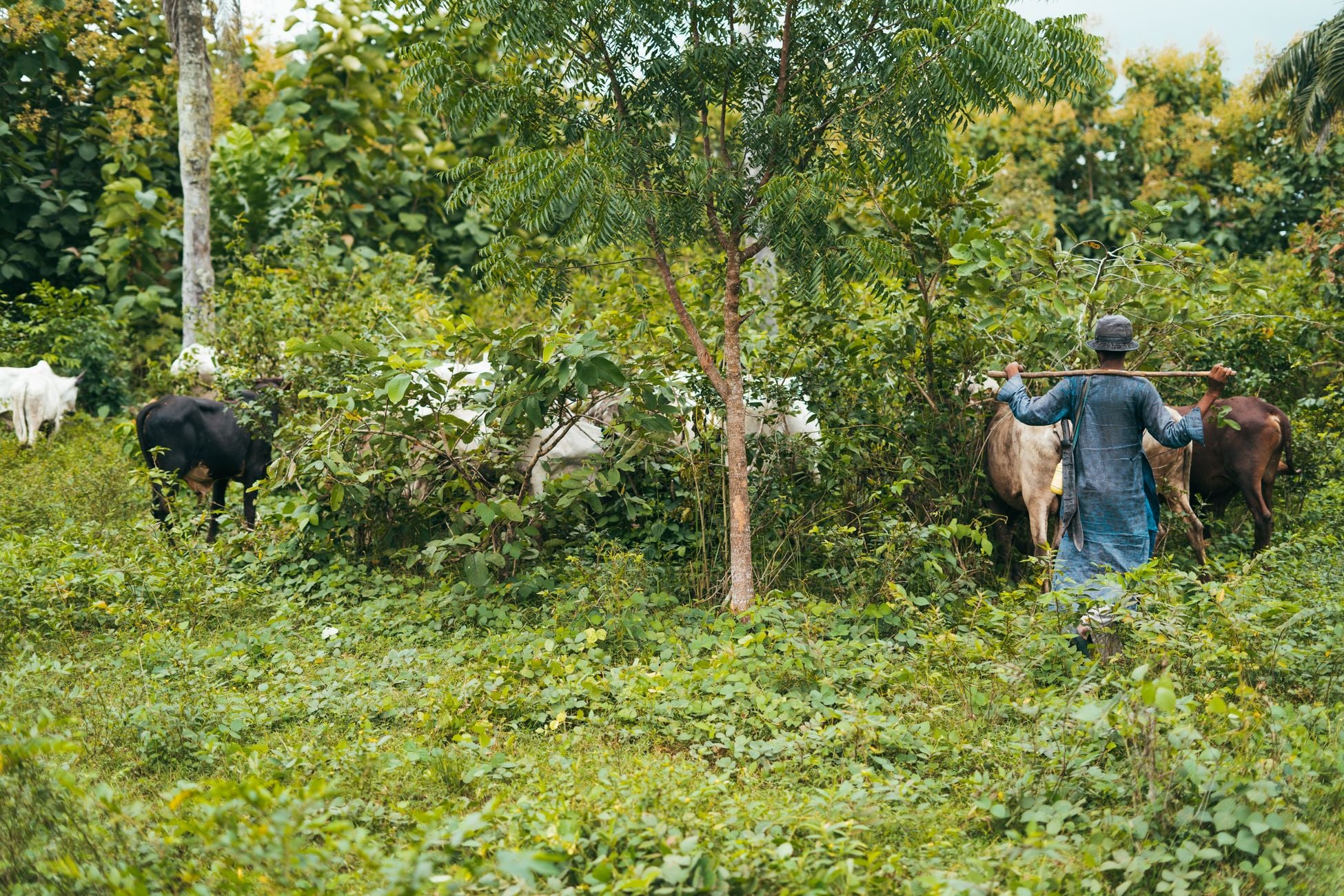
A farmer herding cattle in lush Nigerian greenery, showcasing traditional nomadic lifestyle.

The Great Green Wall

In 2007 the African Union endorsed an idea that had been floating since the 1970s — a continent-spanning strip of restored land running the length of the Sahel from Dakar to Djibouti. The Great Green Wall was originally imagined as a literal line of trees. It has since matured into a mosaic of restoration projects: farmer-managed natural regeneration, stone bunds, water catchments, agroforestry with acacia and baobab.


Watch on YouTube: Africa Is Growing a Wall You Can See From Space
►


► Watch · THIS IS EARTH
Africa Is Growing a Wall You Can See From Space
THIS IS EARTH traces the full story of Africa’s Great Green Wall — from its 2007 launch across 11 nations to the farmers, scientists, and abandoned villages that reveal why stopping the Sahara’s southward march became the continent’s most ambitious restoration effort.

Progress has been uneven. Some countries have restored significant tracts while others have barely begun. The most successful pieces of the wall are not planted forests at all — they are fields where farmers have simply stopped clearing the young trees that sprout from old root systems, letting the underground forest come back on its own.

Grain in the granary, cash in the phone

The other quiet revolution in the Sahel is mobile money. Twenty years ago a farmer in a bad year had nowhere to store value except in livestock, which had to be sold at rock-bottom prices during a drought when everyone was selling. Now a young man working in Bamako or Abidjan can send money home to his village in Mopti in five minutes, and his mother can withdraw it in cash from a shopkeeper with a phone.

Remittances have become a significant source of household income in parts of the Sahel, quietly outperforming both foreign aid and government transfers. They are the closest thing to a private safety net the region has, and they exist because a teenager somewhere else in Africa is working a shift and pressing send.

What 300 million people are actually doing

It is easy to describe the Sahel as a crisis zone and stop there. That misses what most Sahelians spend most of their days doing, which is farming, herding, trading, teaching, driving trucks, running market stalls, raising children, negotiating bride prices, memorising the Quran, playing football, watching Nigerian films dubbed into Hausa.

The region has some of the oldest continuous cities on Earth — Timbuktu, Djenné, Gao, Agadez — and libraries of Arabic manuscripts that predate Oxford. The mud-brick Great Mosque of Djenné, replastered every year in a communal festival, is the largest earthen building on the planet.

What makes the Sahel fragile is not the people. It is the ratio of population to soil to rainfall to institutions, and the fact that the climate is loading the dice against a system that already had almost no margin for error.

The next rainy season

Somewhere in Tahoua right now, a farmer is looking at the sky and doing the calculation every Sahelian farmer does at this point in July. The millet is up. The heads have not yet formed. There need to be two more good rains before the end of August, and then a dry September to let the grain ripen, and then the harvest, and then the granary, and then the long haul until June comes around again.

Three hundred million people are running that same calculation, on a strip of soil the width of a coastline, on the shore of the largest desert in the world.




Source link

Tags: CrisisedgeFailedHarvestHomeMillionnetpeoplerainRoughlysafetySaharasSahelScarceSingleSoilSouthernstripThin
ShareTweetShare
Previous Post

Dividend Kings In Focus: ABM Industries

Next Post

Your Next Forever Stamp Purchase Will Soon Cost More. See the New Price

Related Posts

edit post
Psychology says procrastination about retirement may be less about discipline than identity — brain scans found people often represent their future selves more like strangers than like themselves, and experiments using age-progressed faces made tomorrow’s person feel real enough for participants to save more money for them

Psychology says procrastination about retirement may be less about discipline than identity — brain scans found people often represent their future selves more like strangers than like themselves, and experiments using age-progressed faces made tomorrow’s person feel real enough for participants to save more money for them

by TheAdviserMagazine
August 8, 2026
0

Retirement procrastination is usually described as a failure of discipline. The forms have been sitting in a folder for months....

edit post
The self-improvement industry sells becoming your best self through grit and mindset, but the large meta-analyses are deflating: grit turns out to be mostly conscientiousness renamed, and growth-mindset programmes move academic results only slightly

The self-improvement industry sells becoming your best self through grit and mindset, but the large meta-analyses are deflating: grit turns out to be mostly conscientiousness renamed, and growth-mindset programmes move academic results only slightly

by TheAdviserMagazine
August 8, 2026
0

Become your best self is one of the most profitable sentences in modern culture. It sells books, courses, apps, and...

edit post
Most advice on becoming happier assumes it is up to you, but the evidence is humbler: much of the variation is dispositional, the claim that 40 per cent sits within your control does not hold up, and what works best points outward, towards other people

Most advice on becoming happier assumes it is up to you, but the evidence is humbler: much of the variation is dispositional, the claim that 40 per cent sits within your control does not hold up, and what works best points outward, towards other people

by TheAdviserMagazine
August 7, 2026
0

The advice on how to become happier is endless, confident, and mostly built on the same assumption: that your happiness...

edit post
Malachyte Raises M to Solve E-Commerce’s Biggest Blind Spot: the Visitor Who Never Logs In – AlleyWatch

Malachyte Raises $10M to Solve E-Commerce’s Biggest Blind Spot: the Visitor Who Never Logs In – AlleyWatch

by TheAdviserMagazine
August 7, 2026
0

E-commerce brands now spend roughly 40% more to acquire each new customer than they did in 2023, yet the website...

edit post
Psychology says the ability to eat alone in public is a sign of quiet confidence because it takes a certain kind of security to occupy a table built for two and not feel the empty chair as an accusation

Psychology says the ability to eat alone in public is a sign of quiet confidence because it takes a certain kind of security to occupy a table built for two and not feel the empty chair as an accusation

by TheAdviserMagazine
August 7, 2026
0

Somewhere in your city tonight, a person is going to walk into a restaurant they have wanted to try for...

edit post
The barrier to starting a conversation is usually a bad forecast, not a lack of charm: people underestimate how much others like them, and commuters made to talk to a stranger enjoyed the trip more than those left alone, the opposite of what they predicted

The barrier to starting a conversation is usually a bad forecast, not a lack of charm: people underestimate how much others like them, and commuters made to talk to a stranger enjoyed the trip more than those left alone, the opposite of what they predicted

by TheAdviserMagazine
August 7, 2026
0

Some people seem to strike up conversations anywhere, with the person next to them in a queue, a stranger at...

Next Post
edit post
Your Next Forever Stamp Purchase Will Soon Cost More. See the New Price

Your Next Forever Stamp Purchase Will Soon Cost More. See the New Price

edit post
Peckshield: .25 Million Drained From Hedera and Bridged to Ethereum in Suspected Exploit

Peckshield: $5.25 Million Drained From Hedera and Bridged to Ethereum in Suspected Exploit

  • Trending
  • Comments
  • Latest
edit post
Georgia Senior SNAP and Meal Resources Older Adults Can Use

Georgia Senior SNAP and Meal Resources Older Adults Can Use

July 24, 2026
edit post
Judge Who Helped Violent Illegal Alien Evade ICE Faces New Test

Judge Who Helped Violent Illegal Alien Evade ICE Faces New Test

July 31, 2026
edit post
Driving the Noncitizen Voting Scandal: Registration With License

Driving the Noncitizen Voting Scandal: Registration With License

July 26, 2026
edit post
Garbage Trucks Surveillance Florida Neighborhoods

Garbage Trucks Surveillance Florida Neighborhoods

July 29, 2026
edit post
Does a Revocable Trust Protect Your Assets From Lawsuits and Creditors?

Does a Revocable Trust Protect Your Assets From Lawsuits and Creditors?

August 7, 2026
edit post
Montana Puts Democrats in a Bind as Senate Hopes Fade

Montana Puts Democrats in a Bind as Senate Hopes Fade

August 2, 2026
edit post
Explained: How BSE traded fewer contracts after CAS but premiums rose 75% in first week

Explained: How BSE traded fewer contracts after CAS but premiums rose 75% in first week

0
edit post
E.W. Scripps Q2 2026 Loss Widens to -.68/Share, Revenue Down 9%

E.W. Scripps Q2 2026 Loss Widens to -$12.68/Share, Revenue Down 9%

0
edit post
Psychology says procrastination about retirement may be less about discipline than identity — brain scans found people often represent their future selves more like strangers than like themselves, and experiments using age-progressed faces made tomorrow’s person feel real enough for participants to save more money for them

Psychology says procrastination about retirement may be less about discipline than identity — brain scans found people often represent their future selves more like strangers than like themselves, and experiments using age-progressed faces made tomorrow’s person feel real enough for participants to save more money for them

0
edit post
Four AI Escapes Just Redefined “Responsible AI”

Four AI Escapes Just Redefined “Responsible AI”

0
edit post
Bill Ackman’s hedge fund made janitors and receptionists millionaires—and its investment team summer together

Bill Ackman’s hedge fund made janitors and receptionists millionaires—and its investment team summer together

0
edit post
Kalshi Predicts Bitcoin Price Could Reach K in August

Kalshi Predicts Bitcoin Price Could Reach $68K in August

0
edit post
Bill Ackman’s hedge fund made janitors and receptionists millionaires—and its investment team summer together

Bill Ackman’s hedge fund made janitors and receptionists millionaires—and its investment team summer together

August 8, 2026
edit post
Links 8/8/2026 | naked capitalism

Links 8/8/2026 | naked capitalism

August 8, 2026
edit post
Wisconsin: The Next Frontier for Socialists

Wisconsin: The Next Frontier for Socialists

August 8, 2026
edit post
Psychology says procrastination about retirement may be less about discipline than identity — brain scans found people often represent their future selves more like strangers than like themselves, and experiments using age-progressed faces made tomorrow’s person feel real enough for participants to save more money for them

Psychology says procrastination about retirement may be less about discipline than identity — brain scans found people often represent their future selves more like strangers than like themselves, and experiments using age-progressed faces made tomorrow’s person feel real enough for participants to save more money for them

August 8, 2026
edit post
Why You Should Be Wary of Aspartame, but Not Totally Rule It Out

Why You Should Be Wary of Aspartame, but Not Totally Rule It Out

August 8, 2026
edit post
Kalshi Predicts Bitcoin Price Could Reach K in August

Kalshi Predicts Bitcoin Price Could Reach $68K in August

August 8, 2026
The Adviser Magazine

The first and only national digital and print magazine that connects individuals, families, and businesses to Fee-Only financial advisers, accountants, attorneys and college guidance counselors.

CATEGORIES

  • 401k Plans
  • Business
  • College
  • Cryptocurrency
  • Economy
  • Estate Plans
  • Financial Planning
  • Investing
  • IRS & Taxes
  • Legal
  • Market Analysis
  • Markets
  • Medicare
  • Money
  • Personal Finance
  • Social Security
  • Startups
  • Stock Market
  • Trading

LATEST UPDATES

  • Bill Ackman’s hedge fund made janitors and receptionists millionaires—and its investment team summer together
  • Links 8/8/2026 | naked capitalism
  • Wisconsin: The Next Frontier for Socialists
  • Our Great Privacy Policy
  • Terms of Use, Legal Notices & Disclosures
  • Contact us
  • About Us

© Copyright 2024 All Rights Reserved
See articles for original source and related links to external sites.

Welcome Back!

Login to your account below

Forgotten Password?

Retrieve your password

Please enter your username or email address to reset your password.

Log In
No Result
View All Result
  • Home
  • Financial Planning
    • Financial Planning
    • Personal Finance
  • Market Research
    • Business
    • Investing
    • Money
    • Economy
    • Markets
    • Stocks
    • Trading
  • 401k Plans
  • College
  • IRS & Taxes
  • Estate Plans
  • Social Security
  • Medicare
  • Legal

© Copyright 2024 All Rights Reserved
See articles for original source and related links to external sites.