

The founder who opens Slack at 9pm on a Saturday isn’t proving how committed they are. They’re keeping something at bay.
The conventional wisdom says high-output founders are wired differently, that the inability to switch off is the price of building something meaningful. The work is the reward, and the rest of us just don’t understand the calling.
What gets missed is simpler and harder to admit. For a lot of founders, the company is not just a vehicle for ambition. It’s a structure that keeps a specific feeling at bay, the one that arrives when nothing is on fire and there is nobody to rescue and no inbox to clear.
The feeling that arrives when the noise stops
Ask a founder what they did on their last quiet weekend and watch them flinch. Many of them cannot answer because they have not had one in years, and the ones who have will often describe it as restless, irritable, faintly panicked.
That isn’t a personality quirk. It’s a tell.
The pattern is recognisable: the person feels a low background hum of unease, dread, sadness, self-doubt, whatever it happens to be. Activity drowns it out. The drowning works. So activity becomes the treatment.
Discomfort appears, a behavior reduces it temporarily, and the behavior gets reinforced. Researchers at Baylor College of Medicine describe how avoidance behaviors get folded into daily life so completely that the person stops noticing them. The behavior stops looking like a coping mechanism. It just looks like who they are.
A founder checking Slack at 11pm on a Sunday looks dedicated. It also happens to be the most socially rewarded form of avoidance available.
Why building a company is the perfect hiding place
Most avoidance behaviors carry stigma. Drinking alone, scrolling for six hours, sleeping through the afternoon. People notice and worry.
Running a startup carries the opposite. Investors fund it. Boards praise it. LinkedIn applauds it.
Clinical psychologist Stephen Diamond, writing on the psychology of addiction in Psychology Today, frames the underlying mechanism bluntly. Addiction, he argues, is fundamentally about escapism. About the inability to tolerate reality, internal or external, and the constant search for something that will alter it. He’s writing about substances, but the same architecture applies to any behavior that reliably switches off awareness.
A company gives the founder an unlimited supply of legitimate reasons to never sit still. There is always a fire. If there isn’t, one can be invented. A pitch deck can always be tightened. An OKR can always be revisited. A competitor can always be researched.
And unlike other forms of escape, this one comes with equity.
The thing that’s actually being outrun
Founders rarely describe what they’re avoiding because they rarely know.
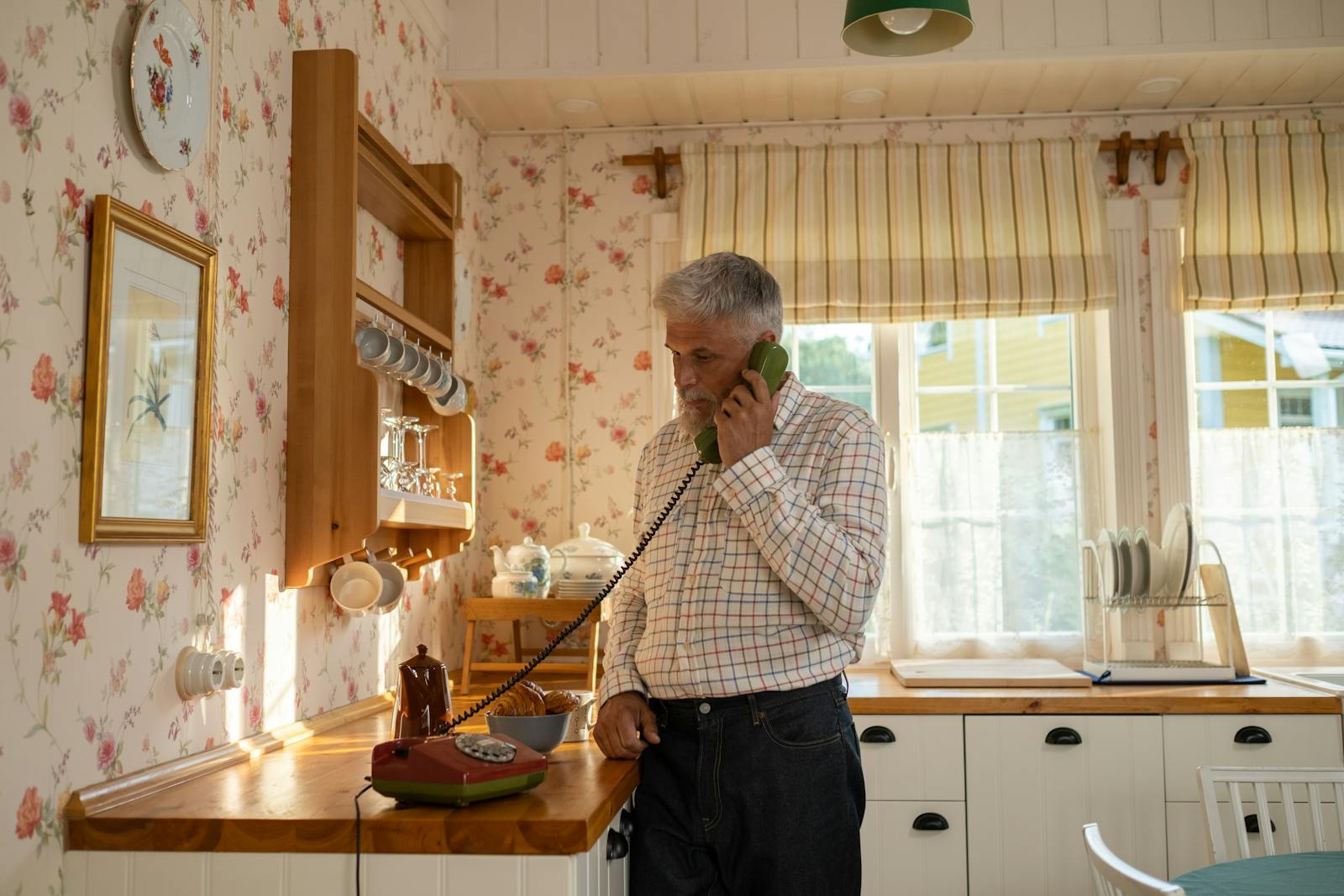
The feeling arrives without a name. It just shows up in the silence, and the silence becomes the enemy. Sometimes the thing being outrun is grief that was never processed. Sometimes it’s a marriage that has gone quiet. Sometimes it’s a sense that without the company, there would be no clear answer to the question of who the person actually is. That last one is the heaviest. When a founder’s identity becomes inseparable from the work, stillness becomes existentially threatening. If the founder is the company, and the company doesn’t need them this exact second, then who are they, exactly, at 4pm on a Sunday in the kitchen? The Slack check is a small, immediate answer. I am the person being needed. I am the person solving. I exist.
Why boredom feels intolerable
One of the more useful questions to ask a high-performing person is how they feel about being bored. Not tired. Not stressed. Bored.
For many founders, boredom is not a neutral state. It’s aversive. It feels like something is wrong, like they’re falling behind, like an alarm should be going off somewhere.
An inability to sit with low-stimulation states often points to something else going on underneath. The discomfort isn’t really about the boredom itself. It’s about what surfaces when there’s nothing left to drown it out. The potential benefits of boredom remain inaccessible when the discomfort itself feels unbearable.
The mind, given nothing to do, starts to do what it has been waiting to do. It reviews. It questions. It surfaces the thing that’s been sitting under the to-do list for eleven months.
Most founders would rather refresh a dashboard.
The body keeps the schedule
Even when the founder consciously decides to take a weekend off, the body often refuses. The hands reach for the phone. The thumb opens Slack before the conscious mind catches up. There’s a low buzz of vigilance that doesn’t switch off just because the calendar says Saturday.
This pattern echoes something we’ve explored before in the people who instinctively keep their phone face-down on every surface. The body has been trained over years to treat a screen as a summons. Years of being on-call, even informally, leaves a nervous system that doesn’t believe the workday is ever actually over.
Founders, especially in the early years, train their nervous systems aggressively. Every notification could be the customer churning, the investor asking the hard question, the engineer quitting at midnight. The body learns. It stays alert.
Then the company stabilises and the body doesn’t get the memo.
The dopamine economy of the inbox
There’s a neurochemical layer underneath all of this that’s worth naming. The Slack ping, the email refresh, the analytics dashboard — these are systems of intermittent reinforcement, the same structure that makes slot machines effective.
Sometimes the message is nothing. Sometimes it’s a deal closing. The brain doesn’t know which is coming, so it keeps checking. Modern work tools have hijacked attention systems originally designed to keep us alive, leveraging dopamine and intermittent rewards in ways that make disconnection feel like withdrawal.
For a founder, the inbox isn’t just a communication channel. It’s a slot machine that occasionally pays out in validation, urgency, and identity reinforcement.
Walking away from it on a Sunday isn’t simply a question of discipline. It’s a question of stepping out of a loop the body has come to rely on.
What’s actually underneath
The harder truth, the one most founders don’t want to look at, is that the inability to tolerate quiet often points to something specific underneath. Not laziness, not lack of discipline. Something older.
The pattern appears often: the person built a life that runs at a velocity no childhood version of them could have imagined, partly because the velocity itself is the point. It outpaces something. Sometimes that something is the memory of a household where being useful was the condition of being safe. Sometimes it’s a parent who only paid attention when there was a crisis. Sometimes it’s the experience of being praised for being capable so consistently that capability became the only acceptable form of self. A quiet weekend strips all of that scaffolding away. There is nothing to perform, nothing to deliver, nobody to rescue. Just the person, alone with whatever has been sitting under the surface for thirty or forty years.
No wonder the phone gets picked up.
The loneliness underneath the calendar
There’s also the question of relationships. Founders often describe being surrounded by people, constantly in meetings, constantly on calls, and yet structurally alone.
The team needs decisions. Investors need updates. Customers need responses. Almost everyone in a founder’s life is reaching toward them because they need something. That’s not the same as being known.
This connects to a particular kind of isolation Silicon Canals has written about: the experience of realising the people who would notice your absence are mostly the people who need something from you. Founders live inside that geometry constantly. It’s a category of loneliness that doesn’t look like loneliness from the outside because the calendar is full.
The weekend is when the calendar empties and the math becomes visible.
What stopping actually requires
Founders who manage to step back from the constant checking usually describe the first few attempts as physically uncomfortable. Genuinely uncomfortable. The body protests.
That discomfort isn’t a sign that stopping is the wrong call. It’s a sign that something underneath has finally been given room to surface. The whole point of the constant activity was to prevent exactly this.
Avoidance patterns of any kind, whether they show up as substances, relationships, or work, share a common architecture. Something is being kept out of conscious awareness. The behavior is the bouncer. Remove the bouncer and whatever was waiting outside comes in.
Founders who do the work usually report two things. The first is that the thing they were avoiding was almost always less catastrophic than the avoidance suggested. The second is that the company tends to get better, not worse, when the founder is no longer using it as a psychological exoskeleton.
Decisions get clearer. Strategy gets longer-term. Team relationships get less reactive.
The reframe
None of this is an argument that founders should care less, work less, or be less ambitious. The argument is more specific.
There’s a difference between working hard because the work matters and working constantly because stopping is intolerable. The first one is sustainable. The second one isn’t, and it tends to corrode both the founder and the company they built.
The Sunday Slack check is a small data point. By itself it means nothing. But if it’s part of a pattern where stillness feels like threat and unstructured time feels like failure, it’s worth taking seriously.
Not as a productivity problem. As a signal.
Somewhere on a Saturday afternoon, a phone is lying face-up on a kitchen counter. The screen lights up with nothing important. A hand reaches for it anyway, before the rest of the person catches up. The company almost never needs that check. The reach happens because the alternative is the empty kitchen, the empty afternoon, and whatever has been waiting there for a long time to be noticed.






-1024x682.jpg "America’s Right Direction Conundrum")


















