No Result
View All Result
SUBMIT YOUR ARTICLES
  • Login
Monday, May 25, 2026
TheAdviserMagazine.com
  • Home
  • Financial Planning
    • Financial Planning
    • Personal Finance
  • Market Research
    • Business
    • Investing
    • Money
    • Economy
    • Markets
    • Stocks
    • Trading
  • 401k Plans
  • College
  • IRS & Taxes
  • Estate Plans
  • Social Security
  • Medicare
  • Legal
  • Home
  • Financial Planning
    • Financial Planning
    • Personal Finance
  • Market Research
    • Business
    • Investing
    • Money
    • Economy
    • Markets
    • Stocks
    • Trading
  • 401k Plans
  • College
  • IRS & Taxes
  • Estate Plans
  • Social Security
  • Medicare
  • Legal
No Result
View All Result
TheAdviserMagazine.com
No Result
View All Result
Home Market Research Startups

The economist John Maynard Keynes predicted in 1930 that his grandchildren would be working roughly fifteen hours a week by the early twenty-first century — and the strange thing is that, technologically, he was approximately correct

by TheAdviserMagazine
1 hour ago
in Startups
Reading Time: 3 mins read
A A
The economist John Maynard Keynes predicted in 1930 that his grandchildren would be working roughly fifteen hours a week by the early twenty-first century — and the strange thing is that, technologically, he was approximately correct
Share on FacebookShare on TwitterShare on LInkedIn


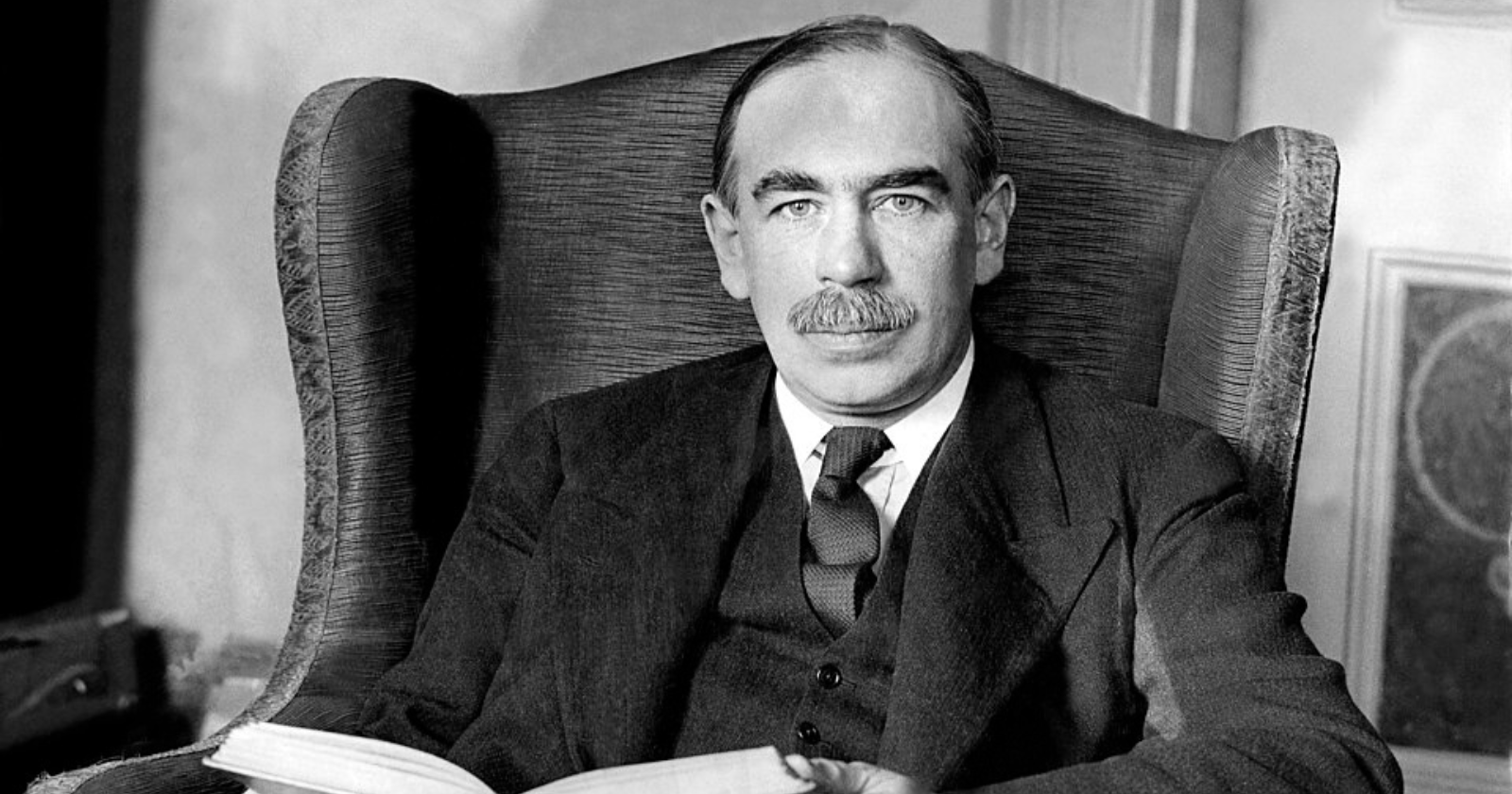
It is unusual for a prediction to be half right and half wrong at the same time, but that is basically what happened in the case of John Maynard Keynes.

The technology arrived. The leisure did not. 

In 1930, as British unemployment was climbing toward Depression-era levels, Keynes wrote a short essay called Economic Possibilities for our Grandchildren. He skipped the present and looked a hundred years out. His reasoning was simple. Technical efficiency was compounding. Capital was accumulating. By 2030, he argued, the standard of life in advanced economies would be four to eight times what it was in 1930. Once basic needs were comfortably met, the rational thing for people to do was work less. “Three-hour shifts or a fifteen-hour week may put off the problem for a great while,” he wrote. “For three hours a day is quite enough to satisfy the old Adam in most of us!”

The U.S. Bureau of Labor Statistics, summarizing a recent reappraisal of the essay, puts the verdict cleanly: “He was right about the large increases in wealth that have occurred, but there has still been no shift in people’s preferences towards increasing leisure and the 15-hour workweek.” The wealth came. The fifteen-hour week did not. 

What perhaps Keynes did not anticipate was how good we would be at finding new things to want. Each productivity gain that could have been taken as time off was, instead, taken as more output, more income, more stuff to buy, more rungs to climb. Houses got bigger. Cars got newer. The basket of “basic needs” quietly expanded to include things that would have looked exotic if not completely alien to a working-class household in 1930 — a second car, an annual trip abroad, a streaming subscription for every interest. And the appetite for status — the part Keynes specifically worried about as a desire for superiority — turned out to be far more durable than he likely hoped. Though he did warn us:

“Needs of the second class, those which satisfy the desire for superiority, may indeed be insatiable; for the higher the general level, the higher still are they.”

There are exceptions worth noting. A UK four-day-week pilot ran sixty-one companies through a six-month experiment in which staff kept full pay for four days of work instead of five. Ninety-two percent of the participating companies kept the policy when the trial ended. Revenue held. Burnout dropped. It is not a fifteen-hour week, but it is the first credible glimpse in a long time of what voluntarily taking productivity gains as time, rather than as money, might actually look like. 

I am not living Keynes’s prediction either. I work, more or less, the same hours as I did when I had a desk in Irish finance — possibly a bit more. The difference is not the hours; it is the autonomy over them. I have, in the years since, also discovered that my actual capacity for the load-bearing kind of work — sitting down and writing something from scratch — caps out at around three hours a day. Past that, the screen is still on, but the work is editing, sorting, admin, deciding. The fifteen-hour deep-work week, by that measure, is closer to my reality than I would have guessed. What I have not done — and I think this is closer to Keynes’s actual point — is let the rest of the day go.

A century in, the verdict splits cleanly. The machines have probably kept their side of the bargain. We did not. The harder problem, it turns out, was never the technology — it was what to do with ourselves once the technology was finished doing the work.




Source link

Tags: approximatelyCenturyCorrectEarlyeconomistFifteengrandchildrenhoursJohnKeynesMaynardpredictedRoughlyStrangetechnologicallyTwentyFirstweekworking
ShareTweetShare
Previous Post

Foreign residents buy Rehavia home for NIS 9.3m

Next Post

Medicare’s ‘June 1’ Update: Why Your Part B Deductions May Look Different on Next Week’s Statement

Related Posts

edit post
Spotify and Universal Music struck a deal to let Premium users make AI covers of UMG songs

Spotify and Universal Music struck a deal to let Premium users make AI covers of UMG songs

by TheAdviserMagazine
May 22, 2026
0

Spotify and Universal Music Group have struck a licensing agreement that will let Premium subscribers create AI-generated covers and remixes...

edit post
SpaceX IPO filing lays out a .75 trillion bet on Mars, AI and Musk control

SpaceX IPO filing lays out a $1.75 trillion bet on Mars, AI and Musk control

by TheAdviserMagazine
May 22, 2026
0

SpaceX is not really selling rockets. At a proposed $1.75 trillion valuation, with Elon Musk locking in just over 85%...

edit post
Africa’s B AI sovereignty plan still runs through 12,000 Nvidia GPUs and Big Tech

Africa’s $60B AI sovereignty plan still runs through 12,000 Nvidia GPUs and Big Tech

by TheAdviserMagazine
May 22, 2026
0

Africa’s AI sovereignty conversation has a vocabulary problem. The word itself suggests independence, self-reliance, a clean break from foreign infrastructure....

edit post
Ten years ago Earth observation startups pitched climate and crop yields; ICEYE just raised €300M in bank debt because the bankable revenue turned out to be something else entirely

Ten years ago Earth observation startups pitched climate and crop yields; ICEYE just raised €300M in bank debt because the bankable revenue turned out to be something else entirely

by TheAdviserMagazine
May 22, 2026
0

Finnish spacetech company ICEYE has originated a €300 million three-year committed revolving credit facility, backed by a seven-bank syndicate of...

edit post
AI doesn’t understand the world yet, and the billion-dollar race to fix that shows the industry is starting to move beyond the architecture it spent three years selling as the path to general intelligence

AI doesn’t understand the world yet, and the billion-dollar race to fix that shows the industry is starting to move beyond the architecture it spent three years selling as the path to general intelligence

by TheAdviserMagazine
May 22, 2026
0

In March 2026, a startup with no product raised more than a billion dollars on the premise that the dominant...

edit post
Quote of the day by Carl Jung: “Loneliness does not come from having no people around, but from being unable to communicate the things that seem important to oneself, or from holding certain views which others find inadmissible.”

Quote of the day by Carl Jung: “Loneliness does not come from having no people around, but from being unable to communicate the things that seem important to oneself, or from holding certain views which others find inadmissible.”

by TheAdviserMagazine
May 22, 2026
0

Carl Jung set down this sentence in the 1950s, late in his working life, when the bulk of his clinical...

Next Post
edit post
Medicare’s ‘June 1’ Update: Why Your Part B Deductions May Look Different on Next Week’s Statement

Medicare’s ‘June 1’ Update: Why Your Part B Deductions May Look Different on Next Week’s Statement

edit post
The Wicked Witch of Eccles Hates Sound Money

The Wicked Witch of Eccles Hates Sound Money

  • Trending
  • Comments
  • Latest
edit post
Supreme Court Delivers More Bad Redistricting News for Democrats

Supreme Court Delivers More Bad Redistricting News for Democrats

May 19, 2026
edit post
From Maine to Michigan, Democrats Are Making Communism Great Again

From Maine to Michigan, Democrats Are Making Communism Great Again

May 16, 2026
edit post
Gavin Newsom issues ‘final warning’ amid California’s dire housing crisis — what’s at stake for millions of residents

Gavin Newsom issues ‘final warning’ amid California’s dire housing crisis — what’s at stake for millions of residents

May 3, 2026
edit post
Florida Warning: With Senior SNAP Benefits Averaging 8/Month, Thousands Risk Losing Assistance in 2026

Florida Warning: With Senior SNAP Benefits Averaging $188/Month, Thousands Risk Losing Assistance in 2026

April 27, 2026
edit post
Minnesota Wealth Tax | Intangible Personal Property Tax

Minnesota Wealth Tax | Intangible Personal Property Tax

May 6, 2026
edit post
It’s Time To Talk About Massie

It’s Time To Talk About Massie

May 23, 2026
edit post
The economist John Maynard Keynes predicted in 1930 that his grandchildren would be working roughly fifteen hours a week by the early twenty-first century — and the strange thing is that, technologically, he was approximately correct

The economist John Maynard Keynes predicted in 1930 that his grandchildren would be working roughly fifteen hours a week by the early twenty-first century — and the strange thing is that, technologically, he was approximately correct

0
edit post
Medicare’s ‘June 1’ Update: Why Your Part B Deductions May Look Different on Next Week’s Statement

Medicare’s ‘June 1’ Update: Why Your Part B Deductions May Look Different on Next Week’s Statement

0
edit post
The Wicked Witch of Eccles Hates Sound Money

The Wicked Witch of Eccles Hates Sound Money

0
edit post
Qorvo Jumps 6.2% Amid Sector-Wide Rally

Qorvo Jumps 6.2% Amid Sector-Wide Rally

0
edit post
Iran Peace Deal Delayed – France and the UN to the Rescue?

Iran Peace Deal Delayed – France and the UN to the Rescue?

0
edit post
Foreign residents buy Rehavia home for NIS 9.3m

Foreign residents buy Rehavia home for NIS 9.3m

0
edit post
The Wicked Witch of Eccles Hates Sound Money

The Wicked Witch of Eccles Hates Sound Money

May 25, 2026
edit post
Medicare’s ‘June 1’ Update: Why Your Part B Deductions May Look Different on Next Week’s Statement

Medicare’s ‘June 1’ Update: Why Your Part B Deductions May Look Different on Next Week’s Statement

May 25, 2026
edit post
The economist John Maynard Keynes predicted in 1930 that his grandchildren would be working roughly fifteen hours a week by the early twenty-first century — and the strange thing is that, technologically, he was approximately correct

The economist John Maynard Keynes predicted in 1930 that his grandchildren would be working roughly fifteen hours a week by the early twenty-first century — and the strange thing is that, technologically, he was approximately correct

May 25, 2026
edit post
Foreign residents buy Rehavia home for NIS 9.3m

Foreign residents buy Rehavia home for NIS 9.3m

May 25, 2026
edit post
Find Affordable World-Class Healthcare on This Historic Mediterranean Island

Find Affordable World-Class Healthcare on This Historic Mediterranean Island

May 25, 2026
edit post
Investec applies for Ireland banking permit – report

Investec applies for Ireland banking permit – report

May 25, 2026
The Adviser Magazine

The first and only national digital and print magazine that connects individuals, families, and businesses to Fee-Only financial advisers, accountants, attorneys and college guidance counselors.

CATEGORIES

  • 401k Plans
  • Business
  • College
  • Cryptocurrency
  • Economy
  • Estate Plans
  • Financial Planning
  • Investing
  • IRS & Taxes
  • Legal
  • Market Analysis
  • Markets
  • Medicare
  • Money
  • Personal Finance
  • Social Security
  • Startups
  • Stock Market
  • Trading

LATEST UPDATES

  • The Wicked Witch of Eccles Hates Sound Money
  • Medicare’s ‘June 1’ Update: Why Your Part B Deductions May Look Different on Next Week’s Statement
  • The economist John Maynard Keynes predicted in 1930 that his grandchildren would be working roughly fifteen hours a week by the early twenty-first century — and the strange thing is that, technologically, he was approximately correct
  • Our Great Privacy Policy
  • Terms of Use, Legal Notices & Disclosures
  • Contact us
  • About Us

© Copyright 2024 All Rights Reserved
See articles for original source and related links to external sites.

Welcome Back!

Login to your account below

Forgotten Password?

Retrieve your password

Please enter your username or email address to reset your password.

Log In
No Result
View All Result
  • Home
  • Financial Planning
    • Financial Planning
    • Personal Finance
  • Market Research
    • Business
    • Investing
    • Money
    • Economy
    • Markets
    • Stocks
    • Trading
  • 401k Plans
  • College
  • IRS & Taxes
  • Estate Plans
  • Social Security
  • Medicare
  • Legal

© Copyright 2024 All Rights Reserved
See articles for original source and related links to external sites.