No Result
View All Result
SUBMIT YOUR ARTICLES
  • Login
Thursday, April 30, 2026
TheAdviserMagazine.com
  • Home
  • Financial Planning
    • Financial Planning
    • Personal Finance
  • Market Research
    • Business
    • Investing
    • Money
    • Economy
    • Markets
    • Stocks
    • Trading
  • 401k Plans
  • College
  • IRS & Taxes
  • Estate Plans
  • Social Security
  • Medicare
  • Legal
  • Home
  • Financial Planning
    • Financial Planning
    • Personal Finance
  • Market Research
    • Business
    • Investing
    • Money
    • Economy
    • Markets
    • Stocks
    • Trading
  • 401k Plans
  • College
  • IRS & Taxes
  • Estate Plans
  • Social Security
  • Medicare
  • Legal
No Result
View All Result
TheAdviserMagazine.com
No Result
View All Result
Home Market Research Startups

Singapore warns residents to avoid Pioneer, Jurong East and Bukit Timah as flash floods hit the city

by TheAdviserMagazine
2 months ago
in Startups
Reading Time: 5 mins read
A A
Singapore warns residents to avoid Pioneer, Jurong East and Bukit Timah as flash floods hit the city
Share on FacebookShare on TwitterShare on LInkedIn


Add Silicon Canals to your Google News feed.

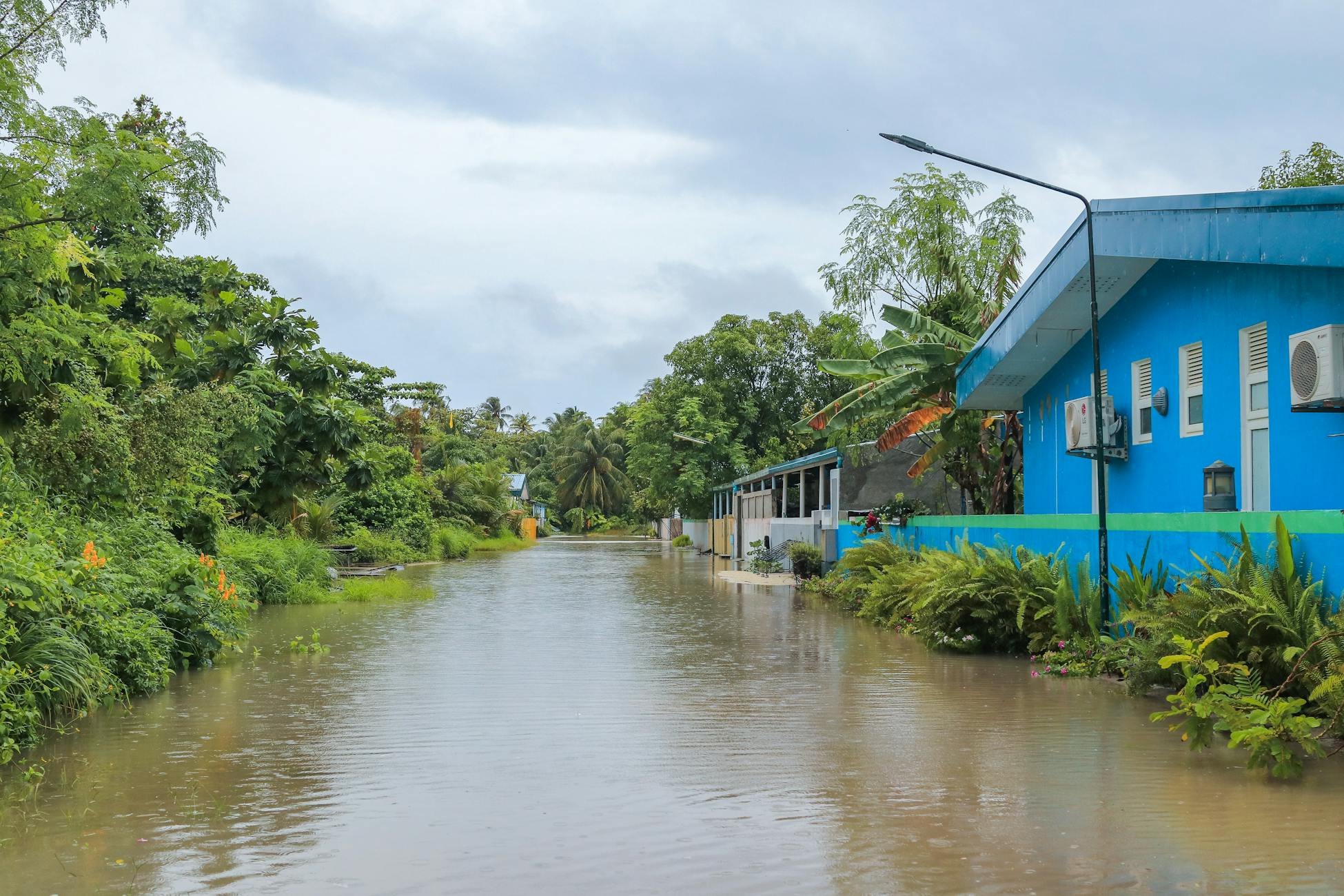
Singapore’s national water agency, PUB, issued urgent advisories on Thursday warning residents to avoid areas in Pioneer, Jurong East, and Bukit Timah as flash floods struck the western reaches of the city-state, submerging roads and disrupting daily life in one of Asia’s most densely built-up corridors.

The warnings, reported by The Straits Times, came as heavy rainfall battered the island on the morning of 19 February 2026, with water levels rising rapidly enough to prompt real-time alerts through PUB’s flood monitoring systems. Authorities urged motorists and pedestrians alike to avoid the affected zones until conditions subsided.

Malaysia’s The Star confirmed the advisories were directed at three distinct areas — Pioneer in the far west, the major residential and commercial hub of Jurong East, and the low-lying Bukit Timah corridor — all of which have documented histories of flash flooding stretching back decades.

A familiar pattern in the western corridor

The flooding on Thursday was not an isolated event. AsiaOne reported flash floods in Jurong amid heavy rain the previous day, on 18 February, suggesting that saturated ground conditions and successive bouts of intense precipitation compounded the problem across the western part of the island over a 48-hour window.

Singapore’s western districts sit in a geological depression that makes them particularly susceptible to rapid water accumulation. The Bukit Timah canal, which runs through the heart of one of the affected zones, has long been identified as a critical flood vulnerability despite billions of dollars in drainage infrastructure upgrades over the past two decades.

PUB has invested heavily in expanding the canal’s capacity, constructing the Bukit Timah First Diversion Canal and deepening existing waterways. Yet the recurrence of flooding in these areas points to a structural tension at the heart of Singapore’s urban planning: the sheer pace of rainfall intensity is outstripping even the most aggressive engineering interventions.

The broader context: climate and urbanisation

Singapore, a low-lying island roughly 730 square kilometres in total land area, has identified flood risk as one of the most pressing consequences of climate change. The government’s long-term climate adaptation plan, published as part of its national strategy, acknowledges that rainfall intensity in Southeast Asia is projected to increase significantly over the coming decades.

The city-state already experiences some of the most intense short-duration rainfall events in the tropics. Storms that dump 70 to 100 millimetres of rain in under an hour are no longer anomalies — they are occurring with a frequency that strains drainage systems designed for historical rainfall patterns.

Jurong East, in particular, occupies a critical position in Singapore’s development trajectory. It is the designated site of the Jurong Lake District, envisioned as Singapore’s second central business district. Billions of dollars in commercial and residential development are either underway or planned for the area, raising the stakes of recurrent flooding far beyond mere inconvenience.

The Pioneer area, meanwhile, is home to industrial estates and a growing number of residential developments. Flash floods in this zone do not merely impede traffic — they threaten supply chains, warehouse inventories, and the livelihoods of workers in Singapore’s manufacturing and logistics sectors.

PUB’s response infrastructure

PUB operates an extensive network of water-level sensors across the island, feeding data into a centralised monitoring system that enables rapid public alerts. The agency uses a combination of SMS warnings, social media updates, and digital signage at flood-prone locations to notify the public when water levels exceed safe thresholds.

This early-warning infrastructure is widely regarded as among the most advanced in Southeast Asia. It was tested in earlier episodes, including flash floods that hit Kembangan and Upper East Coast Road in December 2025, when similar rapid-onset flooding overwhelmed local drainage in the eastern part of the island.

The December episode and Thursday’s western flooding, taken together, illustrate that no part of Singapore is immune. The eastern and western flanks of the island have both experienced significant flash flooding within a span of roughly two months — a pattern that underscores the island-wide nature of the challenge.

Engineering limits and the adaptation gap

Singapore has spent more than S$2 billion on drainage improvements since 2012, according to government figures cited in previous parliamentary sessions. PUB’s approach combines traditional grey infrastructure — larger canals, deeper drains, detention tanks — with green infrastructure such as rain gardens, bioswales, and permeable paving designed to slow runoff before it reaches the drainage network.

The agency’s “Source-Pathway-Receptor” framework aims to manage stormwater at every stage: reducing runoff at its source through absorbent surfaces, increasing the capacity of drainage pathways, and protecting vulnerable receptors — buildings, roads, and critical infrastructure — through physical barriers and elevated designs.

Yet the recurrence of flooding in historically problematic areas like Bukit Timah and Jurong raises pointed questions about whether the current pace of infrastructure investment is keeping up with the accelerating pace of climate change. Drainage systems are typically designed to handle rainfall events with specific return periods — a one-in-ten-year storm, for instance. When storms that were once considered rare become routine, the design parameters themselves become obsolete.

This is not a uniquely Singaporean problem. Cities across Southeast Asia — from Jakarta to Kuala Lumpur to Ho Chi Minh City — face analogous challenges. But Singapore’s case is instructive precisely because of how much the government has invested in mitigation. If the most resourced city-state in the region cannot stay ahead of the problem, the implications for less well-funded municipalities across the tropics are sobering.

What residents experienced

Social media posts and local news footage from Thursday showed waterlogged roads in the Jurong East and Pioneer areas, with vehicles navigating through shin-deep water and some drivers opting to pull over rather than risk damage to their cars. Public transport services in the affected areas reported delays, though no major disruptions to MRT lines were immediately confirmed.

Residents of low-lying HDB estates in the Bukit Timah area described water encroaching on ground-floor corridors, a recurring complaint in a neighbourhood where the terrain funnels runoff toward a handful of narrow drainage channels. PUB’s advisory explicitly warned the public to avoid these zones until water levels receded — a measure that, while sensible, offers little comfort to those who live and work in the flood path.

No injuries were reported as of Thursday afternoon, according to available reports. The human toll of flash flooding in Singapore has historically been limited, a testament to the warning systems and relatively rapid drainage that prevents prolonged inundation. The economic toll, though harder to quantify in real time, accumulates with each successive event — in damaged vehicles, disrupted businesses, and the creeping erosion of property values in flood-prone postcodes.

The road ahead for Singapore’s flood resilience

PUB is currently undertaking a major upgrade to the Bukit Timah canal system, a project that has been in progress for several years and is expected to significantly increase capacity upon completion. The agency has also signalled its intention to expand the use of underground detention tanks beneath public spaces, a strategy borrowed from cities like Tokyo, which has invested heavily in subterranean flood management.

The government’s 2024 National Water Agency masterplan flagged the western corridor — encompassing precisely the districts affected on Thursday — as a priority zone for enhanced flood protection. The plan called for a combination of canal widening, new detention facilities, and nature-based solutions to manage the growing volume of stormwater.

Whether these measures will be sufficient depends on a variable that no government can fully control: the trajectory of global emissions and the resulting intensity of tropical rainfall. Singapore can build bigger drains and smarter warning systems, but it cannot engineer its way out of a changing climate. Thursday’s floods were a reminder that even the most prepared cities are running to stay in place.




Source link

Tags: avoidBukitCityEastFlashFloodshitJurongPioneerResidentsSingaporeTimahWarns
ShareTweetShare
Previous Post

Off by Nearly 1 MILLION Jobs? Why New Jobs Report Will Impact Rentals

Next Post

I’m partnering with Elliott to make sure Norwegian Cruise Lines’ best days are ahead

Related Posts

edit post
The boomer generation wasn’t raised by permissive parents — they were raised by exhausted ones, and what looked like freedom was mostly just the absence of supervision, which produced independence and loneliness in equal measure

The boomer generation wasn’t raised by permissive parents — they were raised by exhausted ones, and what looked like freedom was mostly just the absence of supervision, which produced independence and loneliness in equal measure

by TheAdviserMagazine
April 29, 2026
0

You’ve probably heard the narrative before: Baby Boomers had it easy. Their parents spoiled them, gave them too much freedom,...

edit post
Amperos Health Raises M to Automate Insurance Denial Management for Healthcare Providers – AlleyWatch

Amperos Health Raises $16M to Automate Insurance Denial Management for Healthcare Providers – AlleyWatch

by TheAdviserMagazine
April 29, 2026
0

Healthcare providers in the United States lose $262B in revenue annually to insurance claim denials, then spend an additional $26B...

edit post
The Hidden Cost of Being Your Own Boss Nobody Talks About

The Hidden Cost of Being Your Own Boss Nobody Talks About

by TheAdviserMagazine
April 29, 2026
0

Being a startup founder isn’t all freedom and glory. Running your own business looks fun from the outside, but startup...

edit post
The Dirty Data Problem: Start Here Before Investing in AI

The Dirty Data Problem: Start Here Before Investing in AI

by TheAdviserMagazine
April 28, 2026
0

Every go-to-market team wants AI. Very few have the data to back it up. That’s not cynicism. We surveyed value...

edit post
Navigating the Legal Landscape: Essential Steps Before Launching Your Tech Startup

Navigating the Legal Landscape: Essential Steps Before Launching Your Tech Startup

by TheAdviserMagazine
April 28, 2026
0

Starting a tech company today means working with contradictions. Tools are cheap. Distribution is global. And AI puts serious capabilities...

edit post
At some point, every parent who set out to do it differently from their own parents has to sit with the discovery that doing it differently doesn’t mean doing it without harm — it just means producing a different set of things their children will eventually need to work through, and that humility is the beginning of an honest conversation with the next generation

At some point, every parent who set out to do it differently from their own parents has to sit with the discovery that doing it differently doesn’t mean doing it without harm — it just means producing a different set of things their children will eventually need to work through, and that humility is the beginning of an honest conversation with the next generation

by TheAdviserMagazine
April 28, 2026
0

I spent years convinced I’d break the cycle. My parents, well-meaning as they were, had their shortcomings. Too much criticism...

Next Post
edit post
I’m partnering with Elliott to make sure Norwegian Cruise Lines’ best days are ahead

I'm partnering with Elliott to make sure Norwegian Cruise Lines’ best days are ahead

edit post
Kaiser Aluminum Corporation Reports Fourth Quarter and Full Year 2025 Financial Results

Kaiser Aluminum Corporation Reports Fourth Quarter and Full Year 2025 Financial Results

  • Trending
  • Comments
  • Latest
edit post
Florida Warning: With Senior SNAP Benefits Averaging 8/Month, Thousands Risk Losing Assistance in 2026

Florida Warning: With Senior SNAP Benefits Averaging $188/Month, Thousands Risk Losing Assistance in 2026

April 27, 2026
edit post
Tax Flight Accelerates In Massachusetts

Tax Flight Accelerates In Massachusetts

April 6, 2026
edit post
Property Tax Relief & Income Tax Relief

Property Tax Relief & Income Tax Relief

April 1, 2026
edit post
The Stevia Loophole Why Some Sweetened Drinks are Still SNAP-Legal While Others are Banned in Texas

The Stevia Loophole Why Some Sweetened Drinks are Still SNAP-Legal While Others are Banned in Texas

April 4, 2026
edit post
Virginia Permits ADULT MIGRANT MEN To Attend High School

Virginia Permits ADULT MIGRANT MEN To Attend High School

March 30, 2026
edit post
10 Cheapest High Dividend Stocks With P/E Ratios Under 10

10 Cheapest High Dividend Stocks With P/E Ratios Under 10

April 13, 2026
edit post
Spring Housing Market Update: Deals Are Getting Better (Will It Last?)

Spring Housing Market Update: Deals Are Getting Better (Will It Last?)

0
edit post
How AstraZeneca’s 17,000 AI-certified employees are helping it reach an  billion ‘stretch goal’

How AstraZeneca’s 17,000 AI-certified employees are helping it reach an $80 billion ‘stretch goal’

0
edit post
USAID Funded Aid Programs Abroad, But Mainly Was a Jobs Program for Progressives

USAID Funded Aid Programs Abroad, But Mainly Was a Jobs Program for Progressives

0
edit post
Hyperliquid Challenges Kalshi and Polymarket for a Multi-Billion-Dollar Prediction Market

Hyperliquid Challenges Kalshi and Polymarket for a Multi-Billion-Dollar Prediction Market

0
edit post
Lufthansa Group suspends Israel flights until June

Lufthansa Group suspends Israel flights until June

0
edit post
Gildan Activewear Releases Q1 2026 Financial Results

Gildan Activewear Releases Q1 2026 Financial Results

0
edit post
USAID Funded Aid Programs Abroad, But Mainly Was a Jobs Program for Progressives

USAID Funded Aid Programs Abroad, But Mainly Was a Jobs Program for Progressives

April 30, 2026
edit post
How AstraZeneca’s 17,000 AI-certified employees are helping it reach an  billion ‘stretch goal’

How AstraZeneca’s 17,000 AI-certified employees are helping it reach an $80 billion ‘stretch goal’

April 30, 2026
edit post
Gildan Activewear Releases Q1 2026 Financial Results

Gildan Activewear Releases Q1 2026 Financial Results

April 30, 2026
edit post
Lufthansa Group suspends Israel flights until June

Lufthansa Group suspends Israel flights until June

April 30, 2026
edit post
Texas Instruments (TXN): Bullischer Befreiungsschlag nach Quartalszahlen!

Texas Instruments (TXN): Bullischer Befreiungsschlag nach Quartalszahlen!

April 30, 2026
edit post
Spring Housing Market Update: Deals Are Getting Better (Will It Last?)

Spring Housing Market Update: Deals Are Getting Better (Will It Last?)

April 30, 2026
The Adviser Magazine

The first and only national digital and print magazine that connects individuals, families, and businesses to Fee-Only financial advisers, accountants, attorneys and college guidance counselors.

CATEGORIES

  • 401k Plans
  • Business
  • College
  • Cryptocurrency
  • Economy
  • Estate Plans
  • Financial Planning
  • Investing
  • IRS & Taxes
  • Legal
  • Market Analysis
  • Markets
  • Medicare
  • Money
  • Personal Finance
  • Social Security
  • Startups
  • Stock Market
  • Trading

LATEST UPDATES

  • USAID Funded Aid Programs Abroad, But Mainly Was a Jobs Program for Progressives
  • How AstraZeneca’s 17,000 AI-certified employees are helping it reach an $80 billion ‘stretch goal’
  • Gildan Activewear Releases Q1 2026 Financial Results
  • Our Great Privacy Policy
  • Terms of Use, Legal Notices & Disclosures
  • Contact us
  • About Us

© Copyright 2024 All Rights Reserved
See articles for original source and related links to external sites.

Welcome Back!

Login to your account below

Forgotten Password?

Retrieve your password

Please enter your username or email address to reset your password.

Log In
No Result
View All Result
  • Home
  • Financial Planning
    • Financial Planning
    • Personal Finance
  • Market Research
    • Business
    • Investing
    • Money
    • Economy
    • Markets
    • Stocks
    • Trading
  • 401k Plans
  • College
  • IRS & Taxes
  • Estate Plans
  • Social Security
  • Medicare
  • Legal

© Copyright 2024 All Rights Reserved
See articles for original source and related links to external sites.