No Result
View All Result
SUBMIT YOUR ARTICLES
  • Login
Monday, June 15, 2026
TheAdviserMagazine.com
  • Home
  • Financial Planning
    • Financial Planning
    • Personal Finance
  • Market Research
    • Business
    • Investing
    • Money
    • Economy
    • Markets
    • Stocks
    • Trading
  • 401k Plans
  • College
  • IRS & Taxes
  • Estate Plans
  • Social Security
  • Medicare
  • Legal
  • Home
  • Financial Planning
    • Financial Planning
    • Personal Finance
  • Market Research
    • Business
    • Investing
    • Money
    • Economy
    • Markets
    • Stocks
    • Trading
  • 401k Plans
  • College
  • IRS & Taxes
  • Estate Plans
  • Social Security
  • Medicare
  • Legal
No Result
View All Result
TheAdviserMagazine.com
No Result
View All Result
Home Market Research Startups

Rolex has no owner because of a 1945 foundation a grieving widower built after his wife died — and it’s now the company’s sharpest competitive weapon

by TheAdviserMagazine
1 day ago
in Startups
Reading Time: 6 mins read
A A
Rolex has no owner because of a 1945 foundation a grieving widower built after his wife died — and it’s now the company’s sharpest competitive weapon
Share on FacebookShare on TwitterShare on LInkedIn


Geneva, 1944. Hans Wilsdorf, the Bavarian orphan who had built Rolex from a small London office into one of Switzerland’s most respected watchmakers, buried his wife Florence. They had no children. The company they had built together over four decades was now, in a very literal sense, the only thing he had left.

Within months, the 63-year-old widower had drafted the legal structure that would outlive him by generations. He established the Hans Wilsdorf Foundation in 1945. When he died in 1960, his will transferred his entire stake to it.

From that day forward, nobody has owned Rolex.

That single legal fact is why Bernard Arnault cannot buy the most valuable watch brand on Earth. Neither can the Kering family, the Qatari sovereign fund, or any private equity consortium with a war chest. The company that generated over CHF 11 billion in 2025 watch sales according to estimates by LuxeConsult and Morgan Stanley answers to a Geneva-registered charitable foundation that has held every share since 1960. It is also the reason your local authorised dealer still has a waiting list for a steel Daytona.

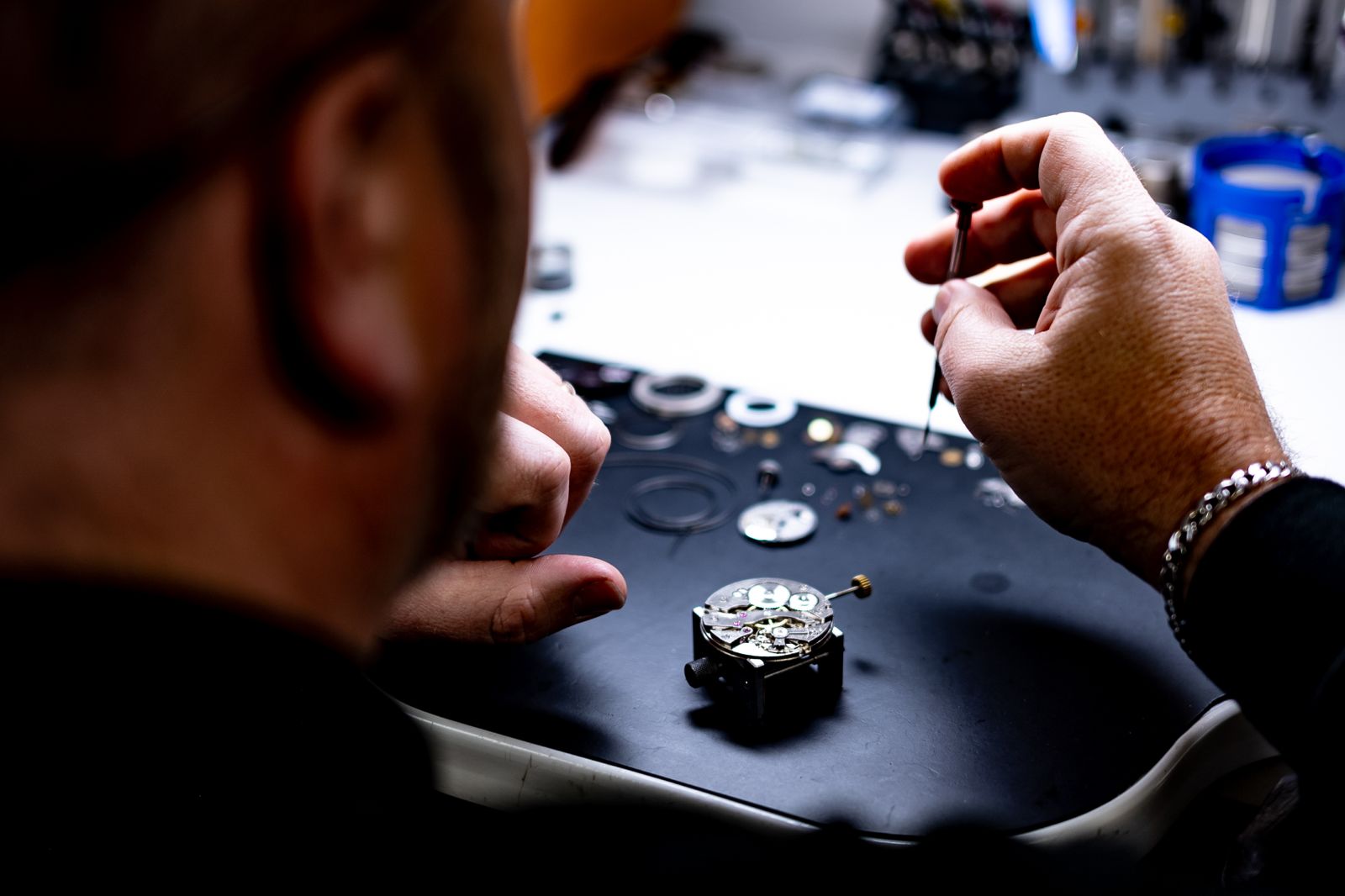
Photo by Quang Viet Nguyen on Pexels

A foundation built out of bereavement

Wilsdorf and Florence Crotty had no children. Florence’s death, according to archival material compiled by Rolex historians and reproduced in trade publications, devastated him. The foundation he created the following year was, on its face, a tax-efficient vehicle to channel profits into philanthropy. It was also something more personal: a mechanism to ensure the company he had built with his wife would never be sold, broken up, or fought over. As Psychology Today has noted, meaning-making after a spouse’s death often takes the form of building something durable. Wilsdorf’s life raft was a Swiss legal entity that would outlive everyone who knew him.

What makes the story commercially interesting, eight decades later, is that the raft turned out to be a fortress.

The four things competitors cannot do

Luxury is a business where most of the heavyweight players are owned by three families. LVMH (Arnault), Kering (Pinault), and Richemont (Rupert) collectively control Cartier, Bulgari, Tag Heuer, Hublot, Vacheron Constantin, IWC, Jaeger-LeCoultre, Panerai, Piaget and dozens of other brands. Each of those companies reports to public shareholders. Each is judged quarterly. Each must show growth.

Rolex is judged by no one outside the foundation’s board. The Financial Times has reported that the company’s finances remain opaque. There are no audited public accounts, no investor calls, no analyst day. Estimates of revenue, market share, and profitability are reverse-engineered by Morgan Stanley and the Swiss consultancy LuxeConsult from import-export data and dealer surveys. The opacity is the moat. Without shareholders demanding quarterly growth, Rolex can do four things that publicly traded competitors structurally cannot.

For the complete history of Rolex’s unusual ownership structure and its competitive implications, watch Silicon Canals’ full investigation below.

Watch the full story on the Silicon Canals YouTube channel.

1. Deliberately under-produce. The waiting lists for steel sports models, including the Submariner, GMT-Master II and Daytona, are not a supply-chain failure. They are a policy. A listed company facing the same demand would build a second factory. Rolex builds scarcity instead, and scarcity is what allows a steel sports watch to trade on the grey market for multiples of its list price.

2. Never discount. Authorised dealers do not run sales. There is no end-of-season clearance. A brand whose only owner is a charitable foundation has no quarter-end to rescue, no margin alarm to silence, no incentive to flood inventory to hit a number. Price discipline is the natural state of a company with no one to answer to.

3. Think in decades. When Rolex bought Bucherer, its largest authorised retailer, in August 2023, the deal sent shares of competing watch retailer Watches of Switzerland sharply lower. Rolex did not need to consult investors. The board approved a deal whose strategic logic would only become clear over ten or twenty years of controlled distribution. No public-company CEO could have done the same without a fight.

4. Give money away. The foundation funds Geneva hospitals, journalism initiatives, scientific awards, and educational programmes. There is no shareholder lobby asking why that money isn’t being returned as a dividend. Philanthropy is not a corporate side project. It is the owner’s purpose.

Submariner watch close-up
Photo by Pragyan Bezbaruah on Pexels

The math the public markets cannot do

For most of business history, the rules of competitive advantage were stable. Henry Ford won on efficiency. Walmart won on supply chain. Amazon won on speed. Rolex’s edge predates all of it and may outlive most of it. The company’s advantage is governance, a piece of corporate architecture so unusual that it cannot be financially engineered around. A competitor with deeper pockets cannot buy what Rolex has, because what Rolex has is the absence of an owner. Morningstar’s framework on economic moats identifies five durable sources of competitive advantage: intangible assets, switching costs, network effect, cost advantage, and efficient scale. Rolex draws on at least three: brand intangibles, efficient scale through controlled distribution, and a unique cost structure that doesn’t include shareholder dividends. The foundation is the meta-moat that protects all the others. Each of the four advantages above (under-produce, never discount, think in decades, give money away) is downstream of it. In practice, the mechanism is almost boringly simple: profits flow up to the foundation, which reinvests in the operating company or disburses to philanthropic causes, and no external party has standing to demand otherwise.

The trust dividend

The luxury industry has spent the last decade trying to manufacture purpose through sustainability reports, foundation gala dinners, and carefully worded mission statements. Rolex has had it baked into its corporate constitution since 1945. The foundation is not a CSR add-on. It is the owner.

That structural authenticity becomes a marketing asset in markets where consumer trust is fragile. CNBC reported in early 2026 that Chinese luxury buyers, after years of pulling back, were beginning to return to Western brands around Lunar New Year, with analysts at Bain and Bernstein flagging a tentative recovery. The brands best positioned to capture that demand are the ones perceived as enduring rather than opportunistic. A brand owned by a charitable foundation reads differently to a sceptical Shanghai buyer than one owned by a French billionaire.

Why the structure has never been copied

If foundation ownership is such a clean competitive weapon, the obvious question is why more luxury companies haven’t adopted it. The answer is that you cannot retrofit it. Once a company has public shareholders or a founding family that expects to extract wealth, transferring full ownership to a non-profit foundation is, for most practical purposes, impossible. The original owners would have to give the company away.

Wilsdorf could do it because he had no one to leave it to. Florence was dead. There were no children. His brother-in-law and longtime business partner Alfred Davis had separated from the company decades earlier. The foundation was not a clever tax strategy. It was the only logical destination for the shares of a man with no heirs and a strong sense that the institution he had built deserved to outlive him.

Patek Philippe, the other great independent Swiss watchmaker, remains family-owned by the Sterns and is therefore theoretically saleable. Audemars Piguet is still controlled by descendants of its founding families. Both can, in principle, be acquired. Rolex cannot.

The widower’s compounding gift

Wilsdorf was 63 when Florence died. He had another sixteen years to live and no successors. What he built in those years was not another product or another factory. He built a legal structure that would still be doing its job 80 years later.

The Hans Wilsdorf Foundation continues to fund local journalism, civic infrastructure, and cultural institutions across the canton. Its disbursements make it one of the largest private philanthropic forces in Switzerland. The watches Wilsdorf produced during his lifetime, including the Oyster, the Datejust and the early Submariner, are now museum pieces. The structure he built around them is the thing still doing work in the market.

Wall Street analysts who cover the watch sector spend most of their time modelling demand curves, average selling prices, and grey market premiums. They spend almost no time on the foundation, because there is nothing to model. It does not have a quarterly earnings call. It does not issue guidance. It does not engage with analysts. And yet every strategic decision Rolex makes, from the under-production to the price discipline to the Bucherer acquisition to the refusal to chase celebrity-driven hype the way smaller Swiss brands do, flows from the fact that the company has no owner demanding a return. The foundation is the silent shareholder whose only demand is continuity.

Hans Wilsdorf built it because he had lost the person he loved most and had no one to pass his company to. Eighty-one years later, the structure born of that loss is the reason a steel sports watch with a 1950s silhouette is one of the most reliably appreciating assets in modern consumer goods. The grief is gone. The architecture remains. And every quarter that LVMH, Kering and Richemont report to their shareholders, the Hans Wilsdorf Foundation reports to no one. Which turns out to be the most expensive luxury of all.




Source link

Tags: BuiltcompanyscompetitiveDiedFoundationGrievingownerRolexsharpestWeaponWidowerwife
ShareTweetShare
Previous Post

Soros Vs India – Trying To Change Foreign Countries

Next Post

The Pistol shrimp snaps its claw so fast it creates a bubble that briefly reaches 4,700°C — nearly the surface temperature of the sun — and stuns prey with a flash of light the animal itself cannot see

Related Posts

edit post
Norway’s sovereign wealth fund owns roughly 1.5% of every listed company on Earth, and the team deciding how it votes at 9,000 annual shareholder meetings is smaller than the compliance department of a single mid-sized European bank

Norway’s sovereign wealth fund owns roughly 1.5% of every listed company on Earth, and the team deciding how it votes at 9,000 annual shareholder meetings is smaller than the compliance department of a single mid-sized European bank

by TheAdviserMagazine
June 14, 2026
0

It is a Tuesday morning in Oslo, and a small team inside Norges Bank Investment Management is working through proxy...

edit post
Britain just convicted four protesters as terrorists without a terrorism trial

Britain just convicted four protesters as terrorists without a terrorism trial

by TheAdviserMagazine
June 14, 2026
0

In a Bristol courtroom this month, a judge reached for a sentencing tool that had never before been applied to...

edit post
People who keep every birthday card, every postcard, and every note their kids ever wrote aren’t sentimental hoarders, they’re building physical evidence that they were loved during years when it didn’t always feel certain

People who keep every birthday card, every postcard, and every note their kids ever wrote aren’t sentimental hoarders, they’re building physical evidence that they were loved during years when it didn’t always feel certain

by TheAdviserMagazine
June 14, 2026
0

A 2019 study tracking 520 people in the Netherlands over six years found that participants high in nostalgia kept larger...

edit post
The Pistol shrimp snaps its claw so fast it creates a bubble that briefly reaches 4,700°C — nearly the surface temperature of the sun — and stuns prey with a flash of light the animal itself cannot see

The Pistol shrimp snaps its claw so fast it creates a bubble that briefly reaches 4,700°C — nearly the surface temperature of the sun — and stuns prey with a flash of light the animal itself cannot see

by TheAdviserMagazine
June 14, 2026
0

When marine acousticians first lowered hydrophones into tropical reefs in the early twentieth century, they reported back a sound like...

edit post
Most people don’t realise the loneliest stretch of adulthood often arrives in the early 50s, when the children have left, the parents are still here but smaller, and nobody in the house is being raised anymore

Most people don’t realise the loneliest stretch of adulthood often arrives in the early 50s, when the children have left, the parents are still here but smaller, and nobody in the house is being raised anymore

by TheAdviserMagazine
June 12, 2026
0

For decades, the dominant warning about midlife went something like this: the empty nest will hit when the last child...

edit post
On October 29, 1969, a UCLA student named Charley Kline tried to send the word ‘LOGIN’ over ARPANET to Stanford, and the system crashed after the letter O — making the first message ever transmitted across the internet the accidental, almost biblical ‘LO’

On October 29, 1969, a UCLA student named Charley Kline tried to send the word ‘LOGIN’ over ARPANET to Stanford, and the system crashed after the letter O — making the first message ever transmitted across the internet the accidental, almost biblical ‘LO’

by TheAdviserMagazine
June 12, 2026
0

At roughly 10:30 p.m. on October 29, 1969, a UCLA graduate student named Charley Kline put on a telephone headset,...

Next Post
edit post
The Pistol shrimp snaps its claw so fast it creates a bubble that briefly reaches 4,700°C — nearly the surface temperature of the sun — and stuns prey with a flash of light the animal itself cannot see

The Pistol shrimp snaps its claw so fast it creates a bubble that briefly reaches 4,700°C — nearly the surface temperature of the sun — and stuns prey with a flash of light the animal itself cannot see

edit post
Trump says Iran peace deal to be signed Sunday, contradicting Tehran

Trump says Iran peace deal to be signed Sunday, contradicting Tehran

  • Trending
  • Comments
  • Latest
edit post
Supreme Court Delivers More Bad Redistricting News for Democrats

Supreme Court Delivers More Bad Redistricting News for Democrats

May 19, 2026
edit post
Florida Roads Become a Battleground for Illegal Immigration

Florida Roads Become a Battleground for Illegal Immigration

June 9, 2026
edit post
From Maine to Michigan, Democrats Are Making Communism Great Again

From Maine to Michigan, Democrats Are Making Communism Great Again

May 16, 2026
edit post
The 8 States That Still Tax Social Security in 2026

The 8 States That Still Tax Social Security in 2026

June 6, 2026
edit post
It’s Time To Talk About Massie

It’s Time To Talk About Massie

May 23, 2026
edit post
A Tax on Social Media – Blue-State Governments’ Newest Ploy

A Tax on Social Media – Blue-State Governments’ Newest Ploy

June 5, 2026
edit post
Asian equities and U.S. futures rally on US-Iran peace breakthrough;

Asian equities and U.S. futures rally on US-Iran peace breakthrough;

0
edit post
Raymond James Is More Than a Capital-Markets Trade

Raymond James Is More Than a Capital-Markets Trade

0
edit post
Britain Prioritizes War On Speech As The Economy Crumbles

Britain Prioritizes War On Speech As The Economy Crumbles

0
edit post
Dogecoin (DOGE) Recovery Gains Traction—Can It Unlock Bigger Gains?

Dogecoin (DOGE) Recovery Gains Traction—Can It Unlock Bigger Gains?

0
edit post
Week 24: A Peek Into This Past Week + what I’m reading, watching, and listening to

Week 24: A Peek Into This Past Week + what I’m reading, watching, and listening to

0
edit post
Rolex has no owner because of a 1945 foundation a grieving widower built after his wife died — and it’s now the company’s sharpest competitive weapon

Rolex has no owner because of a 1945 foundation a grieving widower built after his wife died — and it’s now the company’s sharpest competitive weapon

0
edit post
Dogecoin (DOGE) Recovery Gains Traction—Can It Unlock Bigger Gains?

Dogecoin (DOGE) Recovery Gains Traction—Can It Unlock Bigger Gains?

June 15, 2026
edit post
Asian equities and U.S. futures rally on US-Iran peace breakthrough;

Asian equities and U.S. futures rally on US-Iran peace breakthrough;

June 15, 2026
edit post
Britain Prioritizes War On Speech As The Economy Crumbles

Britain Prioritizes War On Speech As The Economy Crumbles

June 15, 2026
edit post
SoFi Invest Review: All you need to know about SoFi Invest

SoFi Invest Review: All you need to know about SoFi Invest

June 14, 2026
edit post
Markets celebrate U.S.-Iran deal as both sides confirm this time is real

Markets celebrate U.S.-Iran deal as both sides confirm this time is real

June 14, 2026
edit post
Massive Bitcoin Theft Case Draws Guilty Plea in Violent Kidnapping Plot

Massive Bitcoin Theft Case Draws Guilty Plea in Violent Kidnapping Plot

June 14, 2026
The Adviser Magazine

The first and only national digital and print magazine that connects individuals, families, and businesses to Fee-Only financial advisers, accountants, attorneys and college guidance counselors.

CATEGORIES

  • 401k Plans
  • Business
  • College
  • Cryptocurrency
  • Economy
  • Estate Plans
  • Financial Planning
  • Investing
  • IRS & Taxes
  • Legal
  • Market Analysis
  • Markets
  • Medicare
  • Money
  • Personal Finance
  • Social Security
  • Startups
  • Stock Market
  • Trading

LATEST UPDATES

  • Dogecoin (DOGE) Recovery Gains Traction—Can It Unlock Bigger Gains?
  • Asian equities and U.S. futures rally on US-Iran peace breakthrough;
  • Britain Prioritizes War On Speech As The Economy Crumbles
  • Our Great Privacy Policy
  • Terms of Use, Legal Notices & Disclosures
  • Contact us
  • About Us

© Copyright 2024 All Rights Reserved
See articles for original source and related links to external sites.

Welcome Back!

Login to your account below

Forgotten Password?

Retrieve your password

Please enter your username or email address to reset your password.

Log In
No Result
View All Result
  • Home
  • Financial Planning
    • Financial Planning
    • Personal Finance
  • Market Research
    • Business
    • Investing
    • Money
    • Economy
    • Markets
    • Stocks
    • Trading
  • 401k Plans
  • College
  • IRS & Taxes
  • Estate Plans
  • Social Security
  • Medicare
  • Legal

© Copyright 2024 All Rights Reserved
See articles for original source and related links to external sites.