No Result
View All Result
SUBMIT YOUR ARTICLES
  • Login
Friday, July 31, 2026
TheAdviserMagazine.com
  • Home
  • Financial Planning
    • Financial Planning
    • Personal Finance
  • Market Research
    • Business
    • Investing
    • Money
    • Economy
    • Markets
    • Stocks
    • Trading
  • 401k Plans
  • College
  • IRS & Taxes
  • Estate Plans
  • Social Security
  • Medicare
  • Legal
  • Home
  • Financial Planning
    • Financial Planning
    • Personal Finance
  • Market Research
    • Business
    • Investing
    • Money
    • Economy
    • Markets
    • Stocks
    • Trading
  • 401k Plans
  • College
  • IRS & Taxes
  • Estate Plans
  • Social Security
  • Medicare
  • Legal
No Result
View All Result
TheAdviserMagazine.com
No Result
View All Result
Home Market Research Startups

Research suggests that planning on paper and planning through a phone can engage the mind differently: paper may encourage a broader, internally organised view of the day, while apps make it easier to rely on external reminders and prompts.

by TheAdviserMagazine
3 hours ago
in Startups
Reading Time: 6 mins read
A A
Research suggests that planning on paper and planning through a phone can engage the mind differently: paper may encourage a broader, internally organised view of the day, while apps make it easier to rely on external reminders and prompts.
Share on FacebookShare on TwitterShare on LInkedIn


Planning a day involves two different kinds of mental work. First comes arrangement: seeing what competes for the same hour, what depends on something else, and whether the plan can fit into the time available. Later comes retrieval: remembering to act when the relevant moment arrives.

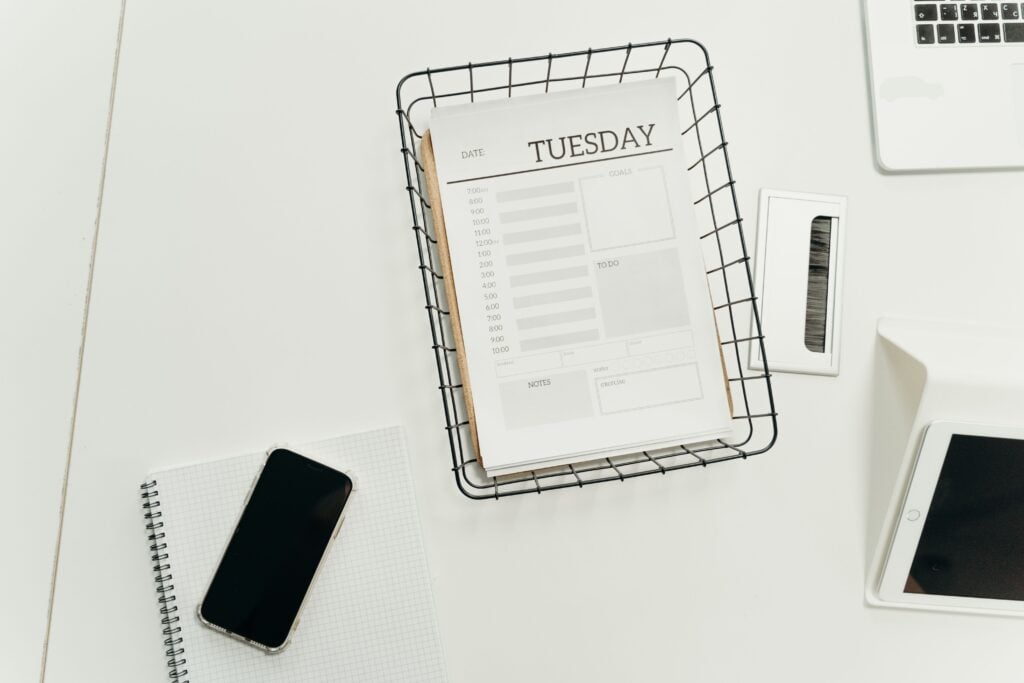
A paper calendar and a phone can support both jobs, but their designs distribute the work differently. Paper often leaves the surrounding schedule visible while a new entry is being made. A phone may conceal much of that context behind a small screen, then return one item at the appointed time as an alert.

Research offers evidence for this distinction. It does not establish a universal contest between analogue and digital planning, or prove that handwriting is always mentally superior. The more defensible reading concerns overview, spatial context and the decision to place part of remembering into an external tool.

What the calendar research actually tested

The most direct evidence comes from Yanliu Huang, Zhen Yang and Vicki Morwitz. Their paper in the Journal of Consumer Psychology compared paper and mobile calendars across three studies.

In the first study, 129 undergraduates were randomly assigned to use a paper or mobile calendar for two weeks. The paper group completed planned activities on time at a rate of 53 per cent, compared with 33 per cent for the mobile group, according to summaries published by the researchers’ institutions.

The second study recruited 450 people who had a home-improvement project to complete. Participants created a plan on paper, on a mobile calendar used normally, or on a mobile calendar with instructions to take a broader, relational view of surrounding activities. Independent raters assessed detail, sequence, priority, feasibility and other features of plan quality.

Plans made on paper were rated more highly than those produced in the normal mobile condition. The difference became marginal when the comparison was paper against the mobile condition that explicitly encouraged a big-picture view. A third study, which used uploaded photographs to validate whether a planned activity had been completed, again found higher completion and broader-view scores among paper users.

This is one research programme, not settled consensus about how everyone should organise a day. It tested particular calendar interfaces, activities and populations. It does not show that every paper plan is sound, that every app creates tunnel vision, or that choosing a notebook reveals a more deliberate personality.

Paper makes relationships among tasks harder to hide

The most useful variable in Huang and colleagues’ work was not paper itself. It was whether the planner considered activities in relation to one another.

A weekly or monthly page can expose a collision before it becomes a commitment. Tuesday’s deadline sits beside Monday’s preparation time. A meeting added on Thursday remains visible against the dense morning already there. The planner is not only storing events. They are comparing the space around them.

That is the closest the research comes to the title’s idea of an internally organised view. The study did not look inside participants’ minds and measure a mental model of the day. It found that paper users reported a broader perspective and produced plans that outside raters judged to be more detailed, coherent and feasible.

The mobile intervention matters because it makes the finding less about nostalgia or stationery. When phone users were directed to consider the wider schedule, their plan quality improved. A digital calendar that holds a stable week view, keeps event detail visible and reduces the need to open dates one by one may support much of the same reasoning.

We recently examined the related question of why some people keep a paper calendar beside a phone. The useful point here is that software is not a neutral container for time. Viewport size, visible detail and the steps required to move between day, week and month all influence what can be compared at once.

Spatial cues may help without making paper universally better

An adjacent experiment led by Keita Umejima at the University of Tokyo offers a possible account of what a fixed page adds. The study in Frontiers in Behavioral Neuroscience involved 48 young Japanese adults divided among a paper notebook, a tablet and a smartphone.

Participants read dialogues containing 14 appointments, entered them into a calendar, and answered questions about them an hour later while undergoing functional brain imaging. The paper group entered the schedule faster, performed better on the easier retrieval questions, and showed stronger activation in several regions associated with memory, visual imagery and language.

Those results need restraint. The sample was small, participants were young, and the study used specific devices and layouts. Group assignment also reflected participants’ existing use of planning tools. Stronger activation cannot be treated as a general score for better thinking, and overall task performance was similar among the groups.

The authors’ narrower proposal is more useful: marks on a physical page have stable spatial positions and tactile context, which may supply additional retrieval cues. An appointment can be remembered partly as something near the lower-right corner. On a screen, the event may move, collapse or disappear as the display changes.

That possibility concerns the encoding of schedule information, not the quality of the schedule itself. Remembering a crowded Tuesday accurately does not make Tuesday less crowded.

Phone prompts transfer part of remembering to the device

Digital calendars have an ability paper cannot reproduce on its own. They can interrupt us at a chosen time or location.

Cognitive psychologists describe this as offloading: placing information or an intention into an external system so it does not need to remain continuously available in internal memory. The person still has to form the intention and set the cue. The device then takes responsibility for presenting it again.

In three experiments reported in the Journal of Experimental Psychology: General, Sam Gilbert and colleagues allowed participants to choose between relying on memory for a larger reward or accepting a smaller reward while using reminders that increased their chance of remembering. Participants showed a stable bias towards external reminders, partly because they were less confident in their unaided memory than their performance justified.

That finding does not mean reminders weaken memory. A separate set of experiments by Dawa Dupont, Qianmeng Zhu and Gilbert found that participants tended to offload higher-value intentions to an external store. Doing so improved performance for saved information and allowed internal resources to be used for other material. The vulnerability appeared when the external store was removed: the important information entrusted to it was then less available internally.

The exchange is practical. An app can reduce the need to monitor the clock and keep an intention active. In return, execution depends on the reminder being correctly set, delivered, noticed and acted upon.

That is reliance by design, not evidence of laziness or cognitive decline.

A prompt cannot repair a plan that never fitted

Remembering to act is only one reason plans fail.

A study published in June 2026, led by Maximilian Haas, followed 102 distance-learning students across two five-day diary periods. Participants recorded 1,823 non-routine intentions for the following day and later explained why some remained unfinished.

Within that sample, forgetting accounted for roughly 10 to 14 per cent of unfulfilled intentions. Situational and motivational explanations were more common. Reminder use was selectively associated with external reasons for non-completion rather than forgetting, although that association does not show that reminders caused the failures.

The result is a useful limit on the whole paper-versus-phone debate. A phone can announce that a task is due. It cannot create a missing hour, remove a dependency, settle a conflict between priorities or restore the reason for doing an activity that no longer makes sense.

Planning quality concerns whether activities can coexist. Reminder quality concerns whether one intention returns at a useful moment. Treating them as the same problem can produce a system that is very good at notifying someone about a day that was never workable.

The practical divide is overview and execution

For a single fixed event, a phone calendar may be the more useful tool. It travels, synchronises, accepts invitations and can issue an alert. For a multi-step project, the ability to inspect the surrounding week or month may matter more than portability at the moment the plan is formed.

That leaves room for paper, a digital calendar designed around a broad view, or a hybrid system. The evidence does not require anyone to duplicate every event or buy another planner. It suggests a more precise question about any planning interface: does it help the user see how the parts fit, or is it mainly good at returning one part later?

Paper and phone calendars both place information outside the mind. They differ in how that information comes back. One can keep the shape of a plan continuously available. The other can call attention to a selected intention on time. A workable day often depends on both functions, whatever tools provide them.



Source link

Tags: AppsbroaderdayDifferentlyEasierencourageengageexternalinternallymindorganisedPaperPhonePlanningpromptsrelyRemindersResearchSuggestsview
ShareTweetShare
Previous Post

Bessent Slams CLARITY Act Critics, Demands Senate Action Now

Next Post

China’s factory activity unexpectedly contracts in July

Related Posts

edit post
The men who become gentler after sixty aren’t the ones who mellowed, they’re the ones who quietly gave up three things, the need to be the most competent person in the room, the scorekeeping, and the belief that softness would cost them respect

The men who become gentler after sixty aren’t the ones who mellowed, they’re the ones who quietly gave up three things, the need to be the most competent person in the room, the scorekeeping, and the belief that softness would cost them respect

by TheAdviserMagazine
July 30, 2026
0

The gentlest older men I know have not become vague, passive or indifferent. They still have standards. They still notice...

edit post
Psychology says the reason competent, dependable people often feel invisible in their own families isn’t modesty, it’s that they became the person everyone relies on before anyone thought to ask what they needed

Psychology says the reason competent, dependable people often feel invisible in their own families isn’t modesty, it’s that they became the person everyone relies on before anyone thought to ask what they needed

by TheAdviserMagazine
July 30, 2026
0

In many families, one person knows which bill is due, who will remember the birthday, what the doctor said, and...

edit post
How to Scale Product Development Without Growing Engineering Costs in 2026

How to Scale Product Development Without Growing Engineering Costs in 2026

by TheAdviserMagazine
July 29, 2026
0

Here’s How to Ship More and Spend Less The roadmap keeps growing. The backlog keeps growing. And the only tool...

edit post
Psychology says the happiest people after 70 aren’t the ones who found purpose — they’re the ones who stopped demanding that every day justify itself, and that permission to exist without producing anything changed everything

Psychology says the happiest people after 70 aren’t the ones who found purpose — they’re the ones who stopped demanding that every day justify itself, and that permission to exist without producing anything changed everything

by TheAdviserMagazine
July 29, 2026
0

I have been thinking about the kind of day that is almost impossible to defend in a culture obsessed with...

edit post
The Network Upgrade Most People Get Wrong

The Network Upgrade Most People Get Wrong

by TheAdviserMagazine
July 29, 2026
0

Entrepreneurs looking to grow their business often hear the same advice: “You need to upgrade your network.” Most people assume...

edit post
Custom Software Development for Startups: What to Know Before You Sign

Custom Software Development for Startups: What to Know Before You Sign

by TheAdviserMagazine
July 29, 2026
0

Most startup MVPs cost between $25,000 and $150,000 and take about 8 to 16 weeks to build. But the bigger...

Next Post
edit post
China’s factory activity unexpectedly contracts in July

China's factory activity unexpectedly contracts in July

  • Trending
  • Comments
  • Latest
edit post
Georgia Senior SNAP and Meal Resources Older Adults Can Use

Georgia Senior SNAP and Meal Resources Older Adults Can Use

July 24, 2026
edit post
New Jersey Tax-Relief Events: Three July Dates Near Seniors

New Jersey Tax-Relief Events: Three July Dates Near Seniors

July 13, 2026
edit post
Bristlecone pines growing in the White Mountains of California germinated before the Great Pyramid was built, and the oldest one alive today, nicknamed Methuselah, has been quietly adding rings for 4,855 years in soil so poor almost nothing else survives beside it

Bristlecone pines growing in the White Mountains of California germinated before the Great Pyramid was built, and the oldest one alive today, nicknamed Methuselah, has been quietly adding rings for 4,855 years in soil so poor almost nothing else survives beside it

July 8, 2026
edit post
Retail giant exits U.S. fashion after multi-million-dollar scandal

Retail giant exits U.S. fashion after multi-million-dollar scandal

July 1, 2026
edit post
Top Democrats Are Trapped in a Catch 22

Top Democrats Are Trapped in a Catch 22

July 6, 2026
edit post
2 judges suspended in separate cases after being indicted on criminal charges

2 judges suspended in separate cases after being indicted on criminal charges

July 9, 2026
edit post
Ozark Trail Stadium Seat only  (Reg. )!

Ozark Trail Stadium Seat only $9 (Reg. $25)!

0
edit post
Research suggests that planning on paper and planning through a phone can engage the mind differently: paper may encourage a broader, internally organised view of the day, while apps make it easier to rely on external reminders and prompts.

Research suggests that planning on paper and planning through a phone can engage the mind differently: paper may encourage a broader, internally organised view of the day, while apps make it easier to rely on external reminders and prompts.

0
edit post
Ship and Debit Automation: A 2026 Guide to Margin Protection

Ship and Debit Automation: A 2026 Guide to Margin Protection

0
edit post
Why women’s retirement planning requires a different approach

Why women’s retirement planning requires a different approach

0
edit post
What is Wisconsin Income Tax? Rates & Tax Brackets –

What is Wisconsin Income Tax? Rates & Tax Brackets –

0
edit post
If Iran Was Weaponizing Smallpox And Other Deadly Pathogens 23 Years Ago, How Much More Advanced Is Their Program Today?

If Iran Was Weaponizing Smallpox And Other Deadly Pathogens 23 Years Ago, How Much More Advanced Is Their Program Today?

0
edit post
China’s factory activity unexpectedly contracts in July

China’s factory activity unexpectedly contracts in July

July 30, 2026
edit post
Research suggests that planning on paper and planning through a phone can engage the mind differently: paper may encourage a broader, internally organised view of the day, while apps make it easier to rely on external reminders and prompts.

Research suggests that planning on paper and planning through a phone can engage the mind differently: paper may encourage a broader, internally organised view of the day, while apps make it easier to rely on external reminders and prompts.

July 30, 2026
edit post
Bessent Slams CLARITY Act Critics, Demands Senate Action Now

Bessent Slams CLARITY Act Critics, Demands Senate Action Now

July 30, 2026
edit post
Andy Jassy said Amazon will spend 0 billion this year—and still won’t have enough capacity

Andy Jassy said Amazon will spend $220 billion this year—and still won’t have enough capacity

July 30, 2026
edit post
Ship and Debit Automation: A 2026 Guide to Margin Protection

Ship and Debit Automation: A 2026 Guide to Margin Protection

July 30, 2026
edit post
If Iran Was Weaponizing Smallpox And Other Deadly Pathogens 23 Years Ago, How Much More Advanced Is Their Program Today?

If Iran Was Weaponizing Smallpox And Other Deadly Pathogens 23 Years Ago, How Much More Advanced Is Their Program Today?

July 30, 2026
The Adviser Magazine

The first and only national digital and print magazine that connects individuals, families, and businesses to Fee-Only financial advisers, accountants, attorneys and college guidance counselors.

CATEGORIES

  • 401k Plans
  • Business
  • College
  • Cryptocurrency
  • Economy
  • Estate Plans
  • Financial Planning
  • Investing
  • IRS & Taxes
  • Legal
  • Market Analysis
  • Markets
  • Medicare
  • Money
  • Personal Finance
  • Social Security
  • Startups
  • Stock Market
  • Trading

LATEST UPDATES

  • China’s factory activity unexpectedly contracts in July
  • Research suggests that planning on paper and planning through a phone can engage the mind differently: paper may encourage a broader, internally organised view of the day, while apps make it easier to rely on external reminders and prompts.
  • Bessent Slams CLARITY Act Critics, Demands Senate Action Now
  • Our Great Privacy Policy
  • Terms of Use, Legal Notices & Disclosures
  • Contact us
  • About Us

© Copyright 2024 All Rights Reserved
See articles for original source and related links to external sites.

Welcome Back!

Login to your account below

Forgotten Password?

Retrieve your password

Please enter your username or email address to reset your password.

Log In
No Result
View All Result
  • Home
  • Financial Planning
    • Financial Planning
    • Personal Finance
  • Market Research
    • Business
    • Investing
    • Money
    • Economy
    • Markets
    • Stocks
    • Trading
  • 401k Plans
  • College
  • IRS & Taxes
  • Estate Plans
  • Social Security
  • Medicare
  • Legal

© Copyright 2024 All Rights Reserved
See articles for original source and related links to external sites.