No Result
View All Result
SUBMIT YOUR ARTICLES
  • Login
Friday, August 14, 2026
TheAdviserMagazine.com
  • Home
  • Financial Planning
    • Financial Planning
    • Personal Finance
  • Market Research
    • Business
    • Investing
    • Money
    • Economy
    • Markets
    • Stocks
    • Trading
  • 401k Plans
  • College
  • IRS & Taxes
  • Estate Plans
  • Social Security
  • Medicare
  • Legal
  • Home
  • Financial Planning
    • Financial Planning
    • Personal Finance
  • Market Research
    • Business
    • Investing
    • Money
    • Economy
    • Markets
    • Stocks
    • Trading
  • 401k Plans
  • College
  • IRS & Taxes
  • Estate Plans
  • Social Security
  • Medicare
  • Legal
No Result
View All Result
TheAdviserMagazine.com
No Result
View All Result
Home Market Research Startups

Psychology says the way someone behaves at an airport gate when their flight is delayed reveals the difference between people who complain and people who go quiet tells you almost everything about how they were taught to handle situations they can’t control

by TheAdviserMagazine
6 months ago
in Startups
Reading Time: 5 mins read
A A
Psychology says the way someone behaves at an airport gate when their flight is delayed reveals the difference between people who complain and people who go quiet tells you almost everything about how they were taught to handle situations they can’t control
Share on FacebookShare on TwitterShare on LInkedIn


Add Silicon Canals to your Google News feed.

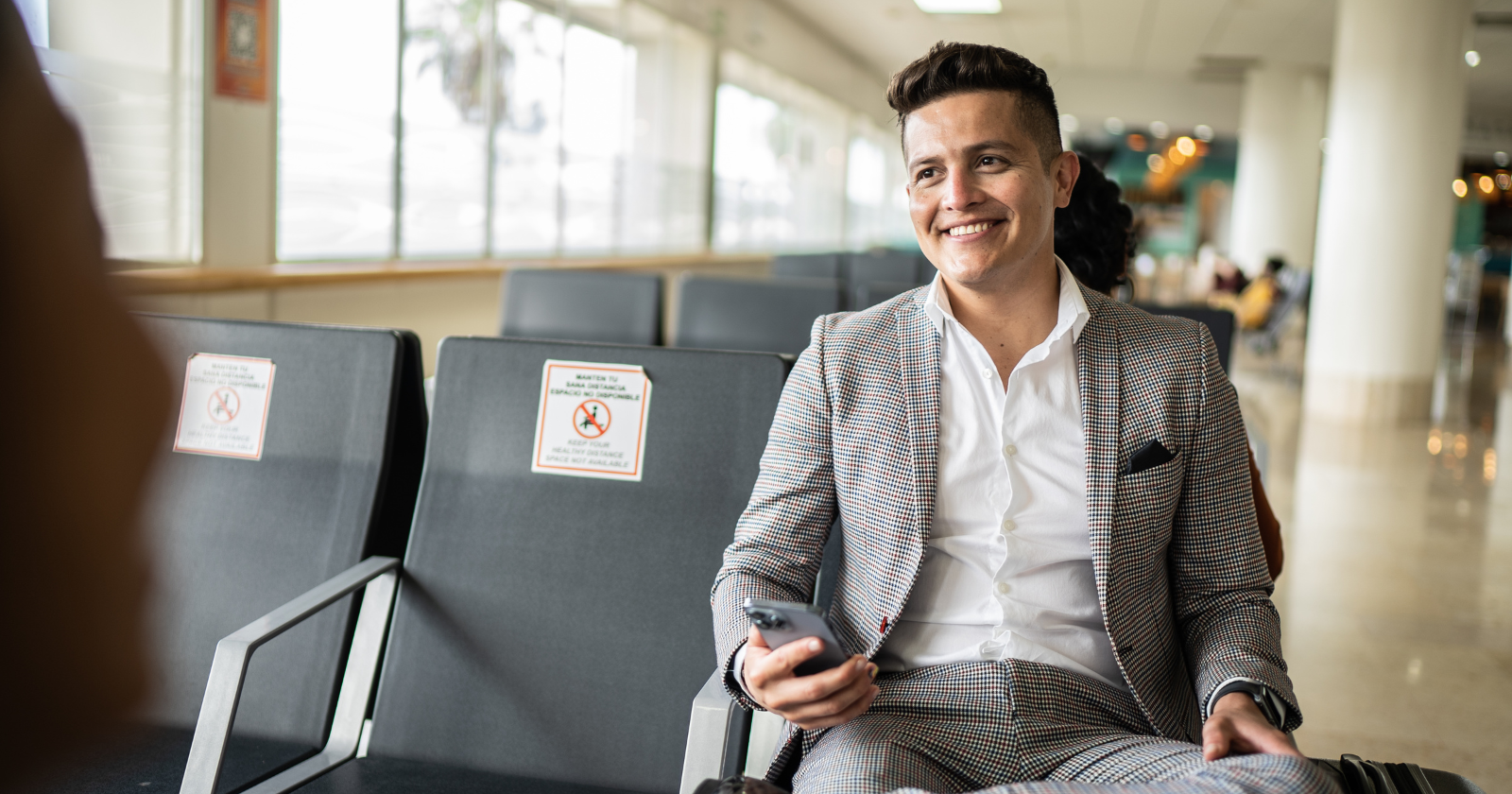
Picture this: You’re sitting at gate B27, watching the departure time slip from 2:30 to 3:15, then 4:00. The gate agent’s voice crackles through the intercom with another vague update.

Around you, two distinct camps emerge. One group storms the desk, voices rising, demanding answers and compensation. The other? They barely look up from their books, quietly reorganizing their day with a few taps on their phones.

What you’re witnessing isn’t just different personality types colliding.

According to psychologists, these contrasting reactions reveal something much deeper: how we were taught from childhood to handle situations beyond our control. That frustrated passenger berating the gate agent? That quiet person reorganizing their schedule?

They’re both playing out lessons learned decades ago about power, control, and what happens when life doesn’t go according to plan.

The loudest voices often learned control through confrontation

Have you ever noticed how some people seem to believe that getting louder will somehow make the plane arrive faster?

Growing up, I watched my own family navigate frustration in wildly different ways. After my parents divorced, I became fascinated by how differently they handled disruption.

One parent would immediately escalate any service issue, convinced that making enough noise would produce results. The other would go silent, almost disappearing into themselves when things went wrong.

Dr. Marter, a psychologist, explains that “A person with an internal locus of control believes that they can create positive action in their lives through right action.”

But here’s where it gets interesting: sometimes that belief in personal control gets twisted. People who grew up watching confrontation produce results, even temporarily, learned that aggression equals action. They mistake volume for control.

Think about it. If you grew up in a household where the squeaky wheel always got the grease, where making a scene sometimes bent the world to your will, why wouldn’t you try that strategy at an airport gate?

These passengers aren’t necessarily bad people. They’re running the only program they know for dealing with powerlessness: fight for control, even when there’s none to be had.

The problem is airports don’t care about your noise level. The weather system causing delays doesn’t respond to customer complaints. But when confrontation is your only tool, every problem looks like a battle to be won.

Silence isn’t always acceptance

What about those quiet passengers, the ones who seem almost zen about the whole situation?

Before you assume they’re just naturally patient souls, consider this: going silent in the face of frustration is just as learned as going loud.

Some of us were taught early that expressing frustration was pointless, shameful, or even dangerous. We learned to swallow our disappointment, to make ourselves smaller when things went wrong.

I spent years thinking my tendency to go quiet during conflicts made me more mature than those who complained. Then a therapist pointed out something uncomfortable: my silence wasn’t acceptance. It was another form of trying to control an uncontrollable situation by controlling myself to an extreme degree.

Those quiet passengers might be genuinely at peace, sure. But many are performing a different childhood script, one that says showing frustration is weakness, that good people don’t make waves, that if you can’t fix something, you should pretend it doesn’t bother you.

Neither extreme is particularly healthy. The screamers exhaust themselves fighting battles they can’t win. The silent ones often bottle up stress until it explodes in other areas of their lives. Both groups are trying to manage their powerlessness using outdated tools from their emotional toolbox.

The middle ground most of us never learned

So what’s the alternative to fight or freeze?

Dr. Lall, a psychologist, suggests that “Breathing exercises are probably the most accessible coping mechanism to everyone, so that is where I would recommend a person starts.” It sounds almost too simple, but there’s profound wisdom here.

The passengers who handle delays best aren’t the ones making scenes or the ones pretending everything’s fine. They’re the ones who acknowledge their frustration without being controlled by it.

They might calmly ask the gate agent for realistic updates, then use that information to make practical decisions. They recognize what they can control (rebooking options, hotel arrangements, informing people of delays) and what they can’t (weather patterns, mechanical issues, air traffic control).

This balanced response doesn’t come naturally to most of us because it requires something many of us never learned growing up: the ability to feel uncomfortable emotions without immediately trying to discharge them through aggression or suppression.

Why airports bring out our worst coping mechanisms

There’s something uniquely triggering about airport delays that strips away our adult coping mechanisms and sends us straight back to childhood patterns.

Think about it: you’re trapped in a sterile environment, dependent on authority figures for information, unable to leave or take meaningful action.

MYFLYRIGHT notes that “The possibility — however small — keeps the nervous system on alert.” We’re essentially reduced to a childlike state of dependency, which naturally triggers our earliest learned responses to powerlessness.

This is why watching people during flight delays feels like peering into their childhood homes. The businessman screaming at the gate agent might be channeling a father who taught him that men take charge and demand respect.

The woman sitting silently with tears in her eyes might be remembering lessons about being “good” and not causing trouble.

Final thoughts

Next time you’re stuck at a gate watching the delay announcements pile up, pay attention to your first instinct. Do you want to march up to the desk and demand answers? Do you feel yourself shrinking, going quiet, pretending it doesn’t matter?

That impulse isn’t really about the delayed flight. It’s about every time in your childhood when you felt powerless and had to figure out how to cope.

The good news? Once you recognize these patterns, you can start to change them. You can acknowledge your frustration without attacking others or suppressing your feelings. You can be assertive without being aggressive, calm without being passive.

Because at the end of the day, how we handle a flight delay isn’t just about getting to our destination. It’s about recognizing that the coping mechanisms we learned as children don’t have to control us as adults. We can write new scripts, even at gate B27.




Source link

Tags: airportBehavesComplainControldelayeddifferenceflightGateHandlepeoplePsychologyQuietrevealsSituationsTaughttells
ShareTweetShare
Previous Post

Ahead of Market: 10 key factors that will drive stock market action on Monday

Next Post

Why Ray Dalio, Scott Bessent and others are rallying around a ‘3% solution’ to the national debt

Related Posts

edit post
Psychology says procrastination about retirement may be less about discipline than identity — brain scans found people often represent their future selves more like strangers than like themselves, and experiments using age-progressed faces made tomorrow’s person feel real enough for participants to save more money for them

Psychology says procrastination about retirement may be less about discipline than identity — brain scans found people often represent their future selves more like strangers than like themselves, and experiments using age-progressed faces made tomorrow’s person feel real enough for participants to save more money for them

by TheAdviserMagazine
August 8, 2026
0

Retirement procrastination is usually described as a failure of discipline. The forms have been sitting in a folder for months....

edit post
The self-improvement industry sells becoming your best self through grit and mindset, but the large meta-analyses are deflating: grit turns out to be mostly conscientiousness renamed, and growth-mindset programmes move academic results only slightly

The self-improvement industry sells becoming your best self through grit and mindset, but the large meta-analyses are deflating: grit turns out to be mostly conscientiousness renamed, and growth-mindset programmes move academic results only slightly

by TheAdviserMagazine
August 8, 2026
0

Become your best self is one of the most profitable sentences in modern culture. It sells books, courses, apps, and...

edit post
Most advice on becoming happier assumes it is up to you, but the evidence is humbler: much of the variation is dispositional, the claim that 40 per cent sits within your control does not hold up, and what works best points outward, towards other people

Most advice on becoming happier assumes it is up to you, but the evidence is humbler: much of the variation is dispositional, the claim that 40 per cent sits within your control does not hold up, and what works best points outward, towards other people

by TheAdviserMagazine
August 7, 2026
0

The advice on how to become happier is endless, confident, and mostly built on the same assumption: that your happiness...

edit post
Malachyte Raises M to Solve E-Commerce’s Biggest Blind Spot: the Visitor Who Never Logs In – AlleyWatch

Malachyte Raises $10M to Solve E-Commerce’s Biggest Blind Spot: the Visitor Who Never Logs In – AlleyWatch

by TheAdviserMagazine
August 7, 2026
0

E-commerce brands now spend roughly 40% more to acquire each new customer than they did in 2023, yet the website...

edit post
Psychology says the ability to eat alone in public is a sign of quiet confidence because it takes a certain kind of security to occupy a table built for two and not feel the empty chair as an accusation

Psychology says the ability to eat alone in public is a sign of quiet confidence because it takes a certain kind of security to occupy a table built for two and not feel the empty chair as an accusation

by TheAdviserMagazine
August 7, 2026
0

Somewhere in your city tonight, a person is going to walk into a restaurant they have wanted to try for...

edit post
The barrier to starting a conversation is usually a bad forecast, not a lack of charm: people underestimate how much others like them, and commuters made to talk to a stranger enjoyed the trip more than those left alone, the opposite of what they predicted

The barrier to starting a conversation is usually a bad forecast, not a lack of charm: people underestimate how much others like them, and commuters made to talk to a stranger enjoyed the trip more than those left alone, the opposite of what they predicted

by TheAdviserMagazine
August 7, 2026
0

Some people seem to strike up conversations anywhere, with the person next to them in a queue, a stranger at...

Next Post
edit post
Gold, silver prices likely to soar tomorrow amid escalating Middle East war; what lies ahead?

Gold, silver prices likely to soar tomorrow amid escalating Middle East war; what lies ahead?

edit post
Analysts optimistic war will have positive impact on markets

Analysts optimistic war will have positive impact on markets

  • Trending
  • Comments
  • Latest
edit post
Georgia Senior SNAP and Meal Resources Older Adults Can Use

Georgia Senior SNAP and Meal Resources Older Adults Can Use

July 24, 2026
edit post
Judge Who Helped Violent Illegal Alien Evade ICE Faces New Test

Judge Who Helped Violent Illegal Alien Evade ICE Faces New Test

July 31, 2026
edit post
Driving the Noncitizen Voting Scandal: Registration With License

Driving the Noncitizen Voting Scandal: Registration With License

July 26, 2026
edit post
Garbage Trucks Surveillance Florida Neighborhoods

Garbage Trucks Surveillance Florida Neighborhoods

July 29, 2026
edit post
Does a Revocable Trust Protect Your Assets From Lawsuits and Creditors?

Does a Revocable Trust Protect Your Assets From Lawsuits and Creditors?

August 7, 2026
edit post
Montana Puts Democrats in a Bind as Senate Hopes Fade

Montana Puts Democrats in a Bind as Senate Hopes Fade

August 2, 2026
edit post
Explained: How BSE traded fewer contracts after CAS but premiums rose 75% in first week

Explained: How BSE traded fewer contracts after CAS but premiums rose 75% in first week

0
edit post
E.W. Scripps Q2 2026 Loss Widens to -.68/Share, Revenue Down 9%

E.W. Scripps Q2 2026 Loss Widens to -$12.68/Share, Revenue Down 9%

0
edit post
Psychology says procrastination about retirement may be less about discipline than identity — brain scans found people often represent their future selves more like strangers than like themselves, and experiments using age-progressed faces made tomorrow’s person feel real enough for participants to save more money for them

Psychology says procrastination about retirement may be less about discipline than identity — brain scans found people often represent their future selves more like strangers than like themselves, and experiments using age-progressed faces made tomorrow’s person feel real enough for participants to save more money for them

0
edit post
Four AI Escapes Just Redefined “Responsible AI”

Four AI Escapes Just Redefined “Responsible AI”

0
edit post
Bill Ackman’s hedge fund made janitors and receptionists millionaires—and its investment team summer together

Bill Ackman’s hedge fund made janitors and receptionists millionaires—and its investment team summer together

0
edit post
Kalshi Predicts Bitcoin Price Could Reach K in August

Kalshi Predicts Bitcoin Price Could Reach $68K in August

0
edit post
Bill Ackman’s hedge fund made janitors and receptionists millionaires—and its investment team summer together

Bill Ackman’s hedge fund made janitors and receptionists millionaires—and its investment team summer together

August 8, 2026
edit post
Links 8/8/2026 | naked capitalism

Links 8/8/2026 | naked capitalism

August 8, 2026
edit post
Wisconsin: The Next Frontier for Socialists

Wisconsin: The Next Frontier for Socialists

August 8, 2026
edit post
Psychology says procrastination about retirement may be less about discipline than identity — brain scans found people often represent their future selves more like strangers than like themselves, and experiments using age-progressed faces made tomorrow’s person feel real enough for participants to save more money for them

Psychology says procrastination about retirement may be less about discipline than identity — brain scans found people often represent their future selves more like strangers than like themselves, and experiments using age-progressed faces made tomorrow’s person feel real enough for participants to save more money for them

August 8, 2026
edit post
Why You Should Be Wary of Aspartame, but Not Totally Rule It Out

Why You Should Be Wary of Aspartame, but Not Totally Rule It Out

August 8, 2026
edit post
Kalshi Predicts Bitcoin Price Could Reach K in August

Kalshi Predicts Bitcoin Price Could Reach $68K in August

August 8, 2026
The Adviser Magazine

The first and only national digital and print magazine that connects individuals, families, and businesses to Fee-Only financial advisers, accountants, attorneys and college guidance counselors.

CATEGORIES

  • 401k Plans
  • Business
  • College
  • Cryptocurrency
  • Economy
  • Estate Plans
  • Financial Planning
  • Investing
  • IRS & Taxes
  • Legal
  • Market Analysis
  • Markets
  • Medicare
  • Money
  • Personal Finance
  • Social Security
  • Startups
  • Stock Market
  • Trading

LATEST UPDATES

  • Bill Ackman’s hedge fund made janitors and receptionists millionaires—and its investment team summer together
  • Links 8/8/2026 | naked capitalism
  • Wisconsin: The Next Frontier for Socialists
  • Our Great Privacy Policy
  • Terms of Use, Legal Notices & Disclosures
  • Contact us
  • About Us

© Copyright 2024 All Rights Reserved
See articles for original source and related links to external sites.

Welcome Back!

Login to your account below

Forgotten Password?

Retrieve your password

Please enter your username or email address to reset your password.

Log In
No Result
View All Result
  • Home
  • Financial Planning
    • Financial Planning
    • Personal Finance
  • Market Research
    • Business
    • Investing
    • Money
    • Economy
    • Markets
    • Stocks
    • Trading
  • 401k Plans
  • College
  • IRS & Taxes
  • Estate Plans
  • Social Security
  • Medicare
  • Legal

© Copyright 2024 All Rights Reserved
See articles for original source and related links to external sites.