No Result
View All Result
SUBMIT YOUR ARTICLES
  • Login
Saturday, July 4, 2026
TheAdviserMagazine.com
  • Home
  • Financial Planning
    • Financial Planning
    • Personal Finance
  • Market Research
    • Business
    • Investing
    • Money
    • Economy
    • Markets
    • Stocks
    • Trading
  • 401k Plans
  • College
  • IRS & Taxes
  • Estate Plans
  • Social Security
  • Medicare
  • Legal
  • Home
  • Financial Planning
    • Financial Planning
    • Personal Finance
  • Market Research
    • Business
    • Investing
    • Money
    • Economy
    • Markets
    • Stocks
    • Trading
  • 401k Plans
  • College
  • IRS & Taxes
  • Estate Plans
  • Social Security
  • Medicare
  • Legal
No Result
View All Result
TheAdviserMagazine.com
No Result
View All Result
Home Market Research Startups

Psychology says people who reach retirement age without close friends aren’t cold or difficult, they were often the person everyone leaned on so heavily that no one thought to ask what they actually needed

by TheAdviserMagazine
48 minutes ago
in Startups
Reading Time: 5 mins read
A A
Psychology says people who reach retirement age without close friends aren’t cold or difficult, they were often the person everyone leaned on so heavily that no one thought to ask what they actually needed
Share on FacebookShare on TwitterShare on LInkedIn


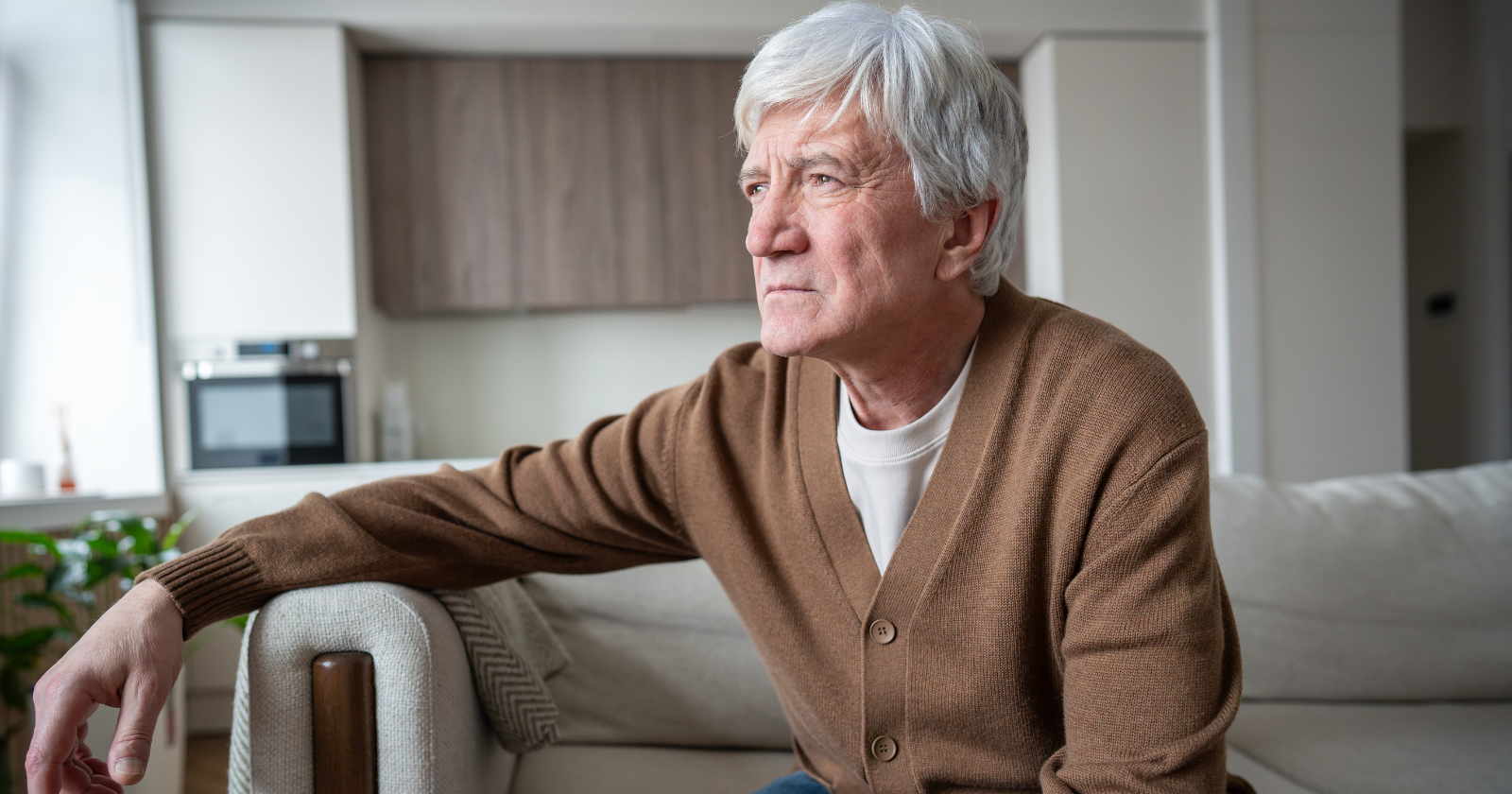
When someone reaches retirement age without close friends, the easy assumption is that they must have pushed people away. We imagine a cold person, a difficult person, someone too guarded or demanding to build lasting bonds.

Psychology suggests another possibility. Some people arrive in later life without close friends because they were never short on relationships. They were short on reciprocity. They were the person everyone leaned on so heavily that no one thought to ask what they actually needed.

This is not a diagnosis, and it is not the story behind every lonely older adult. Retirement-age loneliness can come from bereavement, illness, disability, poverty, relocation, family estrangement, divorce, retirement itself, or the slow thinning of social life over decades. But the pattern is real enough to name: a person can spend a lifetime being useful, available and emotionally steady, and still end up with no relationship in which they are fully cared for in return.

Loneliness is not the same as being unlikeable

The first mistake is moralising loneliness. A person without close friends is often treated as though their social life reveals their character. If no one is close to them, we assume there must be a reason.

There may be. Some people have behaved in ways that made intimacy hard. But large-scale research on later-life loneliness points to a wider set of forces. The National Academies of Sciences, Engineering, and Medicine has described social isolation and loneliness among older adults as serious public health risks, not niche personality problems. A 2021 systematic review and meta-analysis in PLOS ONE found that about one in four older adults in high-income countries experience loneliness at least some of the time.

That matters because it moves the question away from blame. If loneliness is this common, then it cannot be explained only by people being unpleasant. It also reflects life structure, health, social norms, caregiving demands and the quality of relationships available to a person.

And quality is the point. A person can have children, neighbours, former colleagues, siblings, church friends, cousins and acquaintances, yet still have no one who knows how tired they are. Social contact and emotional intimacy are not the same thing.

The person everyone leans on

Some people become the emotional infrastructure of their families and communities. They remember appointments. They mediate conflict. They provide rides, money, meals, patience, childcare, eldercare and steady conversation. They are the ones who answer the phone when someone is frightened, ashamed, angry or falling apart.

Because they are so reliable, people stop seeing them as someone with needs. Their role becomes their identity. They are the strong one, the calm one, the practical one, the one who can handle it.

That role can be loving, meaningful and deeply chosen. Caregiving is not automatically a trap. Many people find purpose in being there for others. The problem begins when a relationship only has room for one person’s distress. Over time, the reliable person may learn that their value depends on not needing much.

This is how a socially connected person can become emotionally alone. Their days may be full of people, but the flow of care mostly travels outward. They are needed, but not known. Appreciated, but not checked on. Central, but not held.

When caring becomes self-erasure

Psychologists have a useful language for this. One concept is unmitigated communion, a pattern in which concern for others becomes so excessive that the self is neglected. Heidi Fritz and Vicki Helgeson’s work distinguished healthy communion from a more costly form of over-involvement with other people’s problems.

Another related concept is self-silencing. Dana Crowley Jack and Diana Dill’s Silencing the Self Scale examined patterns in which people inhibit their own expression in order to preserve connection and avoid conflict in intimate relationships.

Put simply, some people are trained, by family, culture, marriage, gender roles or early survival, to maintain relationships by becoming low-maintenance. They do not ask directly. They do not complain. They keep the peace. They anticipate others. They minimise their own loneliness because someone else always seems to have the bigger problem.

That can look like kindness. Often, it is kindness. But if it becomes a lifelong rule, it can prevent close friendship from forming. Friendship needs generosity, but it also needs self-revelation. If one person never brings their own needs into the room, others may never learn how to meet them.

Retirement can reveal what work was hiding

Retirement age makes this pattern more visible because so much scaffolding falls away. Work used to provide routine contact. Children may be grown. Parents may be gone. A spouse may have died, left, become ill, or remained emotionally unavailable. The old role of being useful may remain, but the daily systems that created casual belonging may shrink.

For someone who has spent decades as the helper, this can be a shock. They may discover that many people relied on them, but few people built a reciprocal friendship with them. They may have been a crisis contact for everyone else, yet have no one they can call without apologising for being a burden.

This is one of the quiet costs of being over-relied on. The relationship can appear strong from the outside because contact is frequent and dependence is high. But dependence is not intimacy. A person can be essential to someone else’s functioning without being emotionally close to them.

That distinction is painful. It explains why some older adults feel lonely even inside busy families. They may be surrounded by people who love them in some way, but who have never practiced curiosity about them. No one asks what they need because everyone assumes they are the one who provides.

The hidden bargain

Over-giving often rests on a bargain the person may not consciously notice: if I am useful enough, I will not be abandoned. If I am easy enough, I will not be rejected. If I take care of everyone else, there will always be a place for me.

The bargain can work for years. It earns trust, praise and belonging. But it does not always create closeness, because closeness requires the risk of being inconvenient. It requires saying, “I am scared,” “I am lonely,” “I am angry,” “I need help,” or “I cannot be the strong one today.”

For someone who has built their identity around being the dependable one, those sentences can feel almost morally wrong. They may fear that need will make them selfish. They may fear that honesty will upset the fragile balance of the family. They may fear that if they stop being useful, there will be nothing left for people to love.

So they keep giving. People keep taking. Not always maliciously. Often, no one is trying to exploit them. Everyone has simply adapted to an arrangement in which one person’s needs are visible and the other person’s needs are implied not to exist.

What this changes

The point is not to romanticise loneliness or pretend all friendlessness is noble suffering. It is to complicate the reflexive judgement.

A person who reaches retirement age without close friends may not be cold. They may have been emotionally over-employed for most of their life. They may have spent so long listening that they forgot what it feels like to be asked a real question. They may have confused being needed with being known because, for decades, being needed was the only stable form of love available.

The U.S. Surgeon General’s 2023 advisory on social connection warned that loneliness and isolation are linked with higher risks of heart disease, stroke, dementia, depression, anxiety and premature death. That makes the emotional pattern more than a sad private story. It is a health issue, a family issue and a social issue.

For the person inside it, the first step is often not finding a crowd. It is finding one relationship where the old role can soften. One place where they do not have to be impressive, useful, cheerful or endlessly understanding. One person who asks, and keeps asking, “What do you need?”

Close friendship is not built by contact alone. It is built by mutual attention. And for some people who reach later life lonely, the wound is not that they never gave enough. It is that they gave so much for so long that nobody noticed they were waiting to receive.




Source link

Tags: AgearentcloseColddifficultFriendsheavilyleanedneededpeoplepersonPsychologyreachretirementThought
ShareTweetShare
Previous Post

Yes Bank Q1 business update: Advances rise 18% to Rs 2.85 lakh crore, deposits up 14%

Related Posts

edit post
I use an AI as an external hard drive for my own memory, and the strange part is how much better my thinking got once I stopped asking my brain to store everything

I use an AI as an external hard drive for my own memory, and the strange part is how much better my thinking got once I stopped asking my brain to store everything

by TheAdviserMagazine
July 3, 2026
0

I started using AI as an external memory. Somehow, it made me feel more human — which feels like it...

edit post
Thought of the day by Helen Mirren: “You die young or you get old. There’s nothing in between.”

Thought of the day by Helen Mirren: “You die young or you get old. There’s nothing in between.”

by TheAdviserMagazine
July 3, 2026
0

For most of human history, the average person did not live to see their thirty-fifth birthday. As late as 1900,...

edit post
Roughly one in eight American adults is now on a GLP-1 drug like Ozempic — a class that grew out of a hormone one Bronx doctor found in Gila monster venom, then patented himself after his own employer passed on it

Roughly one in eight American adults is now on a GLP-1 drug like Ozempic — a class that grew out of a hormone one Bronx doctor found in Gila monster venom, then patented himself after his own employer passed on it

by TheAdviserMagazine
July 3, 2026
0

John Eng, a Bronx endocrinologist working at the Veterans Affairs Medical Center, spent years hunting for a hormone that could...

edit post
An American pays a 9 list price for the same insulin-class weight-loss pen a German gets for around €59 — and the reason traces back to a century-old Danish rescue mission

An American pays a $969 list price for the same insulin-class weight-loss pen a German gets for around €59 — and the reason traces back to a century-old Danish rescue mission

by TheAdviserMagazine
July 3, 2026
0

Ozempic, the once-weekly injector pen that made Novo Nordisk one of the most valuable companies in Europe, carries a US...

edit post
There’s a German idea that explains why the most globally dominant companies in their field are ones you’ve never heard of — quiet, family-run, mid-sized firms that would rather own an obscure world market than ever be famous

There’s a German idea that explains why the most globally dominant companies in their field are ones you’ve never heard of — quiet, family-run, mid-sized firms that would rather own an obscure world market than ever be famous

by TheAdviserMagazine
July 2, 2026
0

If you own a dog, there is a reasonable chance its retractable lead was made by a company called Flexi,...

edit post
Nebex Raises M to Connect Sovereign Buyers, Space Companies, and Capital in One Platform – AlleyWatch

Nebex Raises $30M to Connect Sovereign Buyers, Space Companies, and Capital in One Platform – AlleyWatch

by TheAdviserMagazine
July 2, 2026
0

For decades, the global space industry operated as a closed loop: a handful of legacy defense contractors built hardware for...

  • Trending
  • Comments
  • Latest
edit post
Mass Fraud in Massachusetts Committed by Illegal Immigrants Discovered

Mass Fraud in Massachusetts Committed by Illegal Immigrants Discovered

June 22, 2026
edit post
New York Seniors: 6 STAR Tax Relief Rules That Could Put a Bigger Check in Your Mailbox

New York Seniors: 6 STAR Tax Relief Rules That Could Put a Bigger Check in Your Mailbox

June 20, 2026
edit post
5 Pennsylvania Rebate Rules Seniors Should Check Before the Property Tax/Rent Deadline

5 Pennsylvania Rebate Rules Seniors Should Check Before the Property Tax/Rent Deadline

June 18, 2026
edit post
Florida Roads Become a Battleground for Illegal Immigration

Florida Roads Become a Battleground for Illegal Immigration

June 9, 2026
edit post
Retail giant exits U.S. fashion after multi-million-dollar scandal

Retail giant exits U.S. fashion after multi-million-dollar scandal

July 1, 2026
edit post
Same Portfolio. Same Retirement. A 10-Mile Move Costs One Couple ,000 A Year

Same Portfolio. Same Retirement. A 10-Mile Move Costs One Couple $10,000 A Year

June 27, 2026
edit post
Psychology says people who reach retirement age without close friends aren’t cold or difficult, they were often the person everyone leaned on so heavily that no one thought to ask what they actually needed

Psychology says people who reach retirement age without close friends aren’t cold or difficult, they were often the person everyone leaned on so heavily that no one thought to ask what they actually needed

0
edit post
Florida Hospitals Act Fast To Discharge Gun Victims — Especially if They’re Not Insured

Florida Hospitals Act Fast To Discharge Gun Victims — Especially if They’re Not Insured

0
edit post
Fireworks, Firm Raises, And Fantasy Vacations — See Also

Fireworks, Firm Raises, And Fantasy Vacations — See Also

0
edit post
Bitcoin and ethereum prices today, Friday, July 3, 2026: ‘Green’ July off to a solid start

Bitcoin and ethereum prices today, Friday, July 3, 2026: ‘Green’ July off to a solid start

0
edit post
Is Walmart Open or Closed on Fourth of July? Here’s What to Know

Is Walmart Open or Closed on Fourth of July? Here’s What to Know

0
edit post
Bitcoin Realized Profit Loss Ratio Falls to 43-Month Low

Bitcoin Realized Profit Loss Ratio Falls to 43-Month Low

0
edit post
Psychology says people who reach retirement age without close friends aren’t cold or difficult, they were often the person everyone leaned on so heavily that no one thought to ask what they actually needed

Psychology says people who reach retirement age without close friends aren’t cold or difficult, they were often the person everyone leaned on so heavily that no one thought to ask what they actually needed

July 4, 2026
edit post
Yes Bank Q1 business update: Advances rise 18% to Rs 2.85 lakh crore, deposits up 14%

Yes Bank Q1 business update: Advances rise 18% to Rs 2.85 lakh crore, deposits up 14%

July 4, 2026
edit post
Bitcoin Realized Profit Loss Ratio Falls to 43-Month Low

Bitcoin Realized Profit Loss Ratio Falls to 43-Month Low

July 4, 2026
edit post
Is Walmart Open or Closed on Fourth of July? Here’s What to Know

Is Walmart Open or Closed on Fourth of July? Here’s What to Know

July 4, 2026
edit post
CLARITY Act: Law Enforcement Group Shifts From Opposition to Neutral on DeFi Provision

CLARITY Act: Law Enforcement Group Shifts From Opposition to Neutral on DeFi Provision

July 3, 2026
edit post
I use an AI as an external hard drive for my own memory, and the strange part is how much better my thinking got once I stopped asking my brain to store everything

I use an AI as an external hard drive for my own memory, and the strange part is how much better my thinking got once I stopped asking my brain to store everything

July 3, 2026
The Adviser Magazine

The first and only national digital and print magazine that connects individuals, families, and businesses to Fee-Only financial advisers, accountants, attorneys and college guidance counselors.

CATEGORIES

  • 401k Plans
  • Business
  • College
  • Cryptocurrency
  • Economy
  • Estate Plans
  • Financial Planning
  • Investing
  • IRS & Taxes
  • Legal
  • Market Analysis
  • Markets
  • Medicare
  • Money
  • Personal Finance
  • Social Security
  • Startups
  • Stock Market
  • Trading

LATEST UPDATES

  • Psychology says people who reach retirement age without close friends aren’t cold or difficult, they were often the person everyone leaned on so heavily that no one thought to ask what they actually needed
  • Yes Bank Q1 business update: Advances rise 18% to Rs 2.85 lakh crore, deposits up 14%
  • Bitcoin Realized Profit Loss Ratio Falls to 43-Month Low
  • Our Great Privacy Policy
  • Terms of Use, Legal Notices & Disclosures
  • Contact us
  • About Us

© Copyright 2024 All Rights Reserved
See articles for original source and related links to external sites.

Welcome Back!

Login to your account below

Forgotten Password?

Retrieve your password

Please enter your username or email address to reset your password.

Log In
No Result
View All Result
  • Home
  • Financial Planning
    • Financial Planning
    • Personal Finance
  • Market Research
    • Business
    • Investing
    • Money
    • Economy
    • Markets
    • Stocks
    • Trading
  • 401k Plans
  • College
  • IRS & Taxes
  • Estate Plans
  • Social Security
  • Medicare
  • Legal

© Copyright 2024 All Rights Reserved
See articles for original source and related links to external sites.