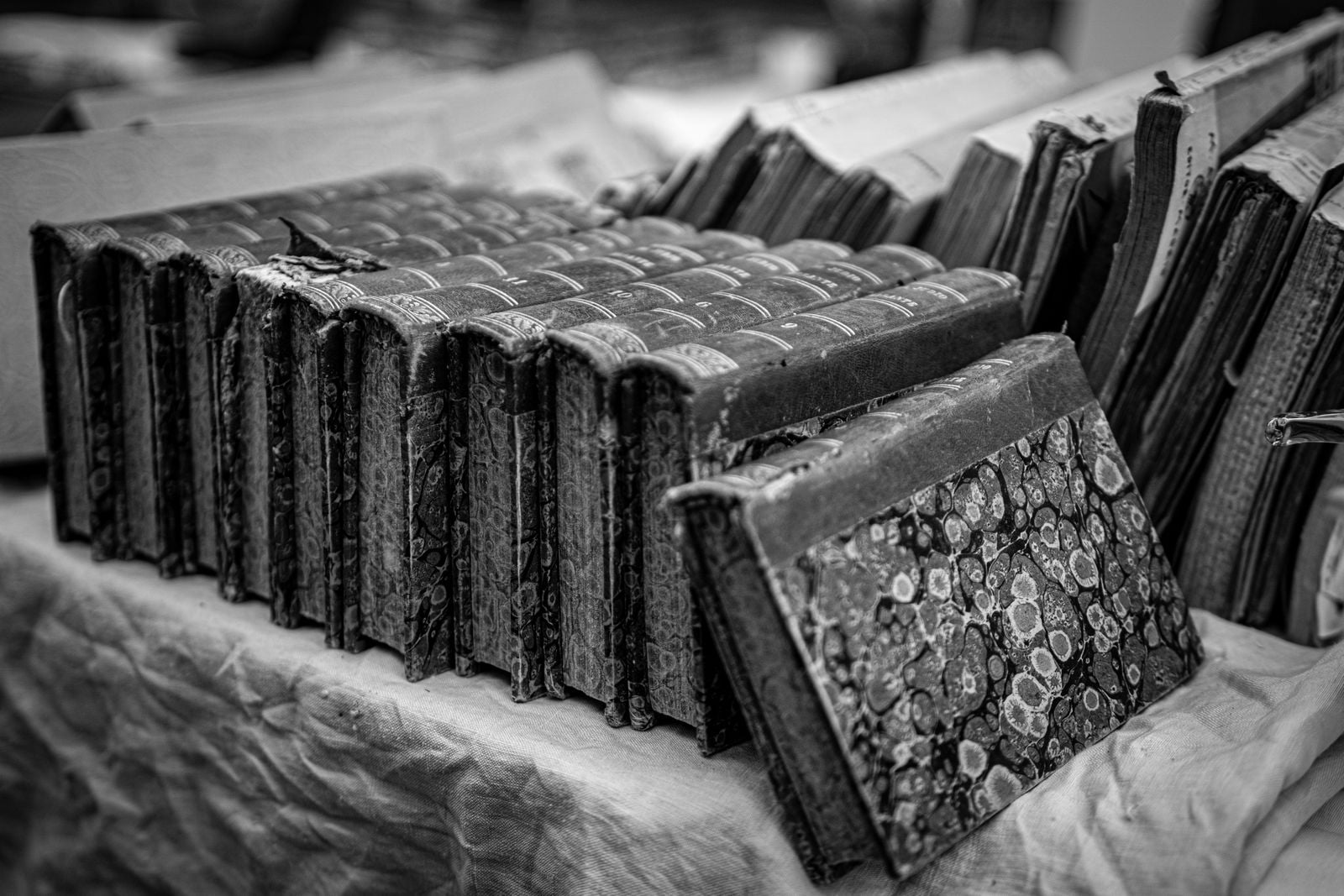
There is a particular kind of cardboard box that lives in attics, under beds, and at the back of closets in adult homes across the world. Inside it: a copy of Charlotte’s Web with a child’s name written in the front in shaky capitals, a battered paperback of Matilda, maybe a hardback fairy tale collection with a torn spine. The box is rarely opened. It is also never thrown away.
To an outsider, this looks like sentimentality. A reluctance to let go. The kind of mild domestic clutter people apologise for when they move house.
It is something else.
The conventional reading of object attachment is that adults who hold onto childhood things are struggling to grow up, or are emotionally fused to the past, or have a mild tendency toward hoarding. The clinical literature does not really support that framing. Hoarding disorder, as psychologists describe it, involves persistent difficulty discarding possessions regardless of their actual value, with the accumulation interfering with daily life. A single box of childhood books, untouched and out of the way, is the opposite pattern. It is curated. It is contained. It is preserved.
The question worth asking is what, exactly, is being preserved.
The version of you that existed before usefulness
The child who first read those books was not yet anyone’s employee, partner, parent, caregiver, or fixer. They had not yet been asked to be reliable. They had not yet learned to scan a room for the mood of the person holding the car keys. They read because reading was the thing they were doing, and nobody was waiting for the output.
That child existed. The box is the evidence.
For a lot of adults, this matters more than it should have to. Because somewhere between then and now, a quieter exchange happened: the self that read for pleasure was traded in for a self that performed competently for other people. The trade was often a good one. It paid the rent. It got the promotions. It kept the family functional.
But the original self did not disappear. It got stored.
Identity, in the psychoanalytic sense, is not the same as self
The psychoanalyst D. W. Winnicott developed a distinction between a true self and a false self. The false self is not a lie. It is a coping structure, often built early, that allows a child to meet the emotional requirements of the people around them. Writing for Psychology Today, the therapist Andrea Mathews describes the false self as a coping mechanism, usually formed unconsciously, meant to protect the true self when early experiences make authentic expression unsafe. Identity is something you identify with. Caretaker. Achiever. The reliable one. The funny one. The fixer. Self is who is doing the identifying. The box of books belongs to the second category. It is not a souvenir of an identity. It is a small, quiet archive of the person who existed before the identity got built on top of them.
Why the box stays closed
Here is the part that often surprises people: the not-opening is the point.
Opening the box would require reading the books. Reading the books would require sitting still for a long time with the version of yourself who could sit still for a long time. For an adult whose entire functional life is built on being available, productive, and emotionally legible to other people, that is a strange and slightly destabilising thing to ask of an evening.
The closed box does something more practical. It says: this exists. It is not lost. It will be here later.
That is enough.
Compare this to the pattern in hoarding disorder, where the difficulty is the discarding itself, regardless of meaning. A widely cited twin study published in the American Journal of Psychiatry found that genetic factors accounted for roughly 50 percent of the variance in compulsive hoarding among women, with non-shared environmental factors and measurement error accounting for the rest. The mechanism is internal and largely indiscriminate. The keeper of a single book box is doing the opposite: making a precise, narrow exception inside a life that has otherwise let go of a great deal.
The people most likely to keep the box
There is a recognisable profile. Not universal, but consistent.
It tends to be the adult who became useful early. The eldest child who managed younger siblings. The kid who learned to read the room before they learned long division. The one whose parents praised them for being mature, low-maintenance, easy.
These adults often arrive at midlife having been the dependable person for a very long time. As we’ve explored before, the cost of being the one everyone leans on is that you never quite learn the reciprocal motion. You don’t develop the muscle for needing.
What you do develop, instead, is a quiet defensive practice of keeping small evidence of the time before. A box. A drawer. A folder of drawings. A shoebox of cassette tapes.
None of it gets opened. All of it gets kept.
Objects as proof, not nostalgia
The mistake the word sentimental makes is assuming the emotion attached to the object is longing. Often it isn’t. Often it is closer to verification.
People attribute a kind of historical authenticity to original objects that copies cannot replicate. A reproduction of your childhood copy of The Velveteen Rabbit would not do. It has to be the actual book. The one with the actual stain on page forty.
The object isn’t standing in for the memory. The object is functioning as a witness. It was there. You were there. The thing happened.
For people whose early life involved a lot of being defined by other people’s needs, this matters in a specific way. The book is one of the few things that knew them before they were useful. It is harder to gaslight a paperback.
What the closed box protects against
There is a particular adult fear that the box quietly addresses, which is the fear of having become only the roles. Only the job title, only the parent, only the partner, only the person who keeps the household running. The fear is not exactly that those roles are bad. It is that they have crowded out something underneath.
When children grow up in environments that demand they perform a particular function, they often build what therapists call an identity that suits their environment rather than themselves. The identity becomes the survival strategy. It also becomes the cage.
This is not only a question of trauma in the dramatic sense. It applies in milder forms to a great many people who grew up in functional but high-expectation families, in households where love arrived conditionally, in school systems that rewarded a specific kind of legible competence.
The box is the thing the identity didn’t get to.

Why people refuse to declutter it
Minimalist culture has, for about fifteen years now, applied steady pressure on adults to justify what they keep. The question of whether something sparks joy became a kind of moral test. Anything that did not actively delight you on a Tuesday afternoon should leave the house.
This framework works reasonably well for cardigans. It works badly for objects whose function is evidentiary rather than experiential.
The box of childhood books does not spark joy in any immediate sense. It is not pretty. It is not in use. Asked whether it brings joy, most owners would shrug.
Ask instead: does it bring relief that it exists?
The answer there is usually yes.
That distinction matters. Joy is an active feeling. Relief is a structural one. The box provides structural reassurance that there is a self underneath the schedule, and that self has a small physical address in the world.
The unopened box and the examined life
There is a school of thought that says the healthy thing to do would be to open the box. Read the books. Integrate the past. Stop hiding the child self in the attic and bring them down into the living room.
This is well-meant and often wrong.
Some people do eventually open their box, usually after a serious life event: a parent dies, a long relationship ends, a career hits a wall. The box gets pulled down because something else has cracked open and made room for it. The reading is slow. The recognition is private. It does the work it was always going to do, when it was ready.
But for many adults, the box doing its job is the closed state. The presence of the evidence is itself the integration. The owner does not need to revisit the page to know who wrote their name on it.
Keeping it is not avoidance. Keeping it is the practice.
What to do with the box you have
Notice, though, what the question itself reveals. Somewhere along the way, a square foot of floor became something we are expected to defend in court. Every shelf, every drawer, every cubic metre of a home is now supposed to file a productivity report. The cardigan earns its keep by being worn. The blender earns its keep by being used. And the box of books, which exists to remember a person who was not yet a unit of output, is asked to justify itself in the same vocabulary that erased that person in the first place.
That is the trick worth refusing. The pressure to discard the box is not really about the box. It is about a quieter assumption: that the parts of you which never produced anything for anyone do not deserve room in the house you pay for. Ask who benefits from that assumption. It is not the child who wrote their name in the front of Charlotte’s Web.
Keep the box. Or don’t. But notice that you were ever asked to argue for it.