
Add Silicon Canals to your Google News feed. 
Africa’s creator economy is experiencing significant growth, with Nigeria sitting at the centre of that expansion. The country’s skit-makers, streamers, and comedy creators have built massive audiences across Instagram, YouTube, and TikTok, producing content that rivals professional film production in ambition and reach.
Yet many of the continent’s creators earn modest incomes. The gap between cultural output and financial return tells a structural story that extends well beyond any individual creator’s hustle. It is a story about who captures value in the global platform economy, which governments build the infrastructure for creative industries to scale, and why talent alone has never been sufficient to produce wealth.
The production quality nobody sees
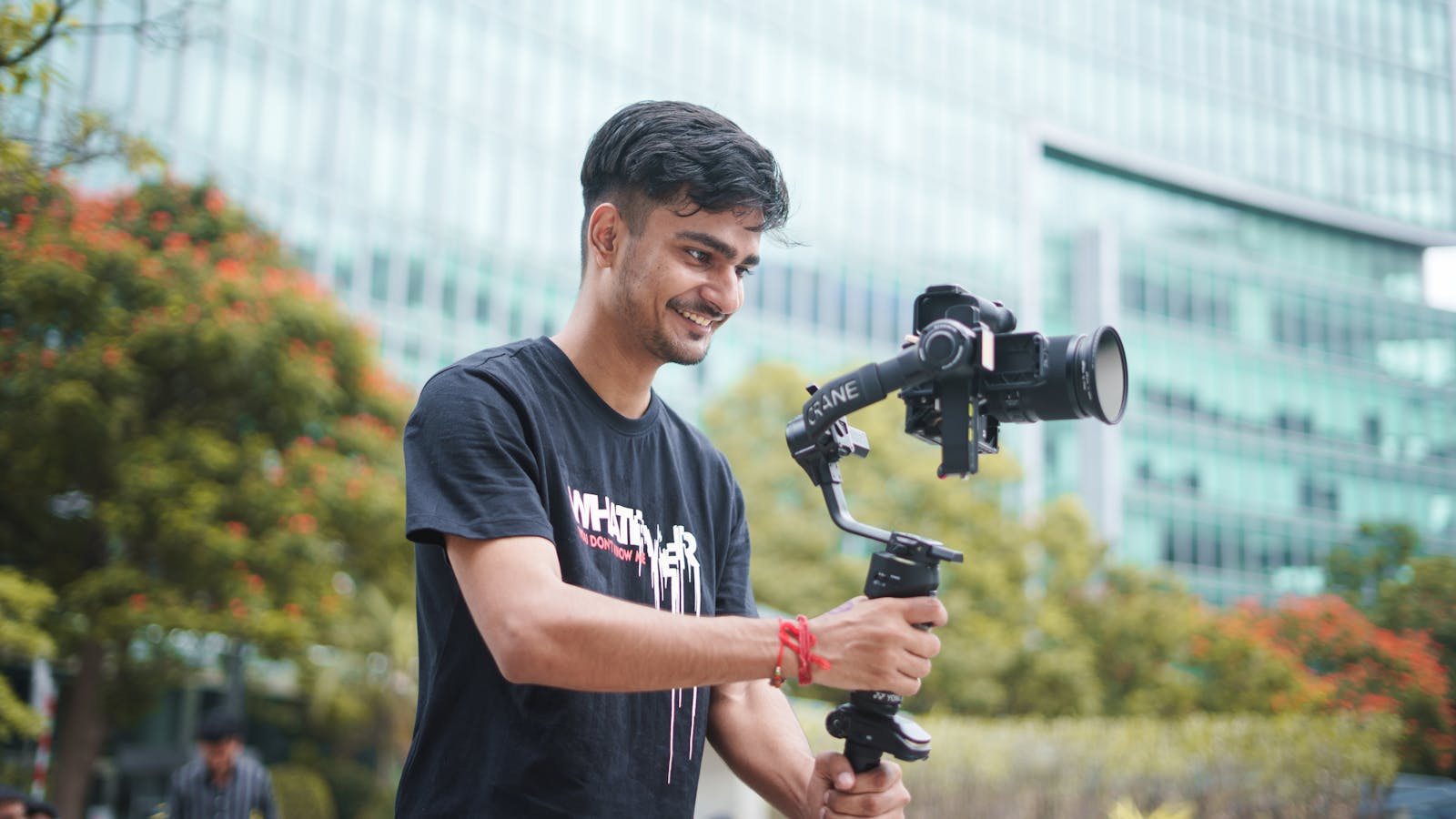
Broda Shaggi, the Nigerian comedian and actor who has amassed millions of followers on Instagram, represents the top tier of Nigeria’s creator economy. His operation is not a phone propped against a wall. Industry observers describe Shaggi’s approach in production terms: “He shoots like he’s doing a movie… It’s serious business now … people don’t understand how difficult it is to keep up creating content every day because it has to be new content.”
That framing matters. The most successful Nigerian creators have effectively built independent production studios, investing in equipment, crew, locations, and post-production. The content that reaches audiences as a casual three-minute comedy skit often requires the same logistical planning as a short film. Nigeria’s online video skit economy has generated millions for a select few creators who have cracked the code on brand partnerships and live events. But the economics of that production model only work for those at the very top of the distribution curve.
For the vast majority, the investment-to-return equation is brutal. Many African creators view their work as hobbies rather than careers. That classification is revealing: it reflects not a lack of seriousness but the absence of reliable income streams that would allow creators to treat their work as a profession.
The platform arithmetic working against African creators
The structural problem is straightforward. Global platforms like YouTube and Instagram generate advertising revenue based on the purchasing power of the audience viewing the content. A creator in Lagos producing identical engagement metrics to a creator in Los Angeles will earn a fraction of the ad revenue, because advertisers pay less to reach Nigerian audiences than American ones. The platform takes the same percentage. The algorithm makes the same demands. But the payout is fundamentally different.
This is the mechanism through which many African creators earn less than $100 monthly despite the sector’s overall growth trajectory. The platforms are designed to extract attention globally while distributing revenue based on regional advertising markets. African creators produce the attention. Silicon Valley captures the economics.
The pattern is familiar. As Silicon Canals has explored in coverage of Meta’s strategic pivots and workforce restructuring, the major platforms are increasingly orienting their business models around AI infrastructure and developed-market advertising spend. The creator monetization tools rolled out in emerging markets are often afterthoughts, adapted from templates designed for the North American advertising ecosystem. Content creators are seeking greater control amid growing censorship and monetization challenges, but the structural disadvantage is steepest in markets where advertising CPMs remain low.
Meanwhile, even the distribution infrastructure has a foreign tilt. Foreign music distributors control a majority of Nigeria’s streaming market, a parallel dynamic that shows how value extraction works across the broader creative sector. Nigerian talent generates the content; international intermediaries capture the margin.
Where the money doesn’t go
Industry observers identify a critical gap in how public capital flows in Nigeria. “In Nigeria, public capital is not readily available to digital creators … it doesn’t exist,” according to reporting. “A lot of the public capital that we find goes to filmmakers and infrastructure players, people building physical spaces.”
The distinction is telling. Governments worldwide have historically understood how to subsidise physical creative infrastructure: film studios, music venues, broadcasting facilities. The creator economy operates in digital space, making it largely invisible to traditional industrial policy frameworks. There is no factory to incentivise, no building to inaugurate, no ribbon to cut. The result is that an industry projected to generate billions in value receives almost no structured public support.
The tax framework compounds the problem. In Nigeria, high earners face significant tax rates as part of a bracket for freelancers and remote workers. For the small number of creators who do break through to meaningful income, the state’s first interaction with them is extraction rather than enablement. There are no offsetting tax incentives for content production, no subsidised data costs to reduce the expense of uploading and distributing content, and no structured pathways to attract international monetization companies to operate locally.
Consider the contrast: South Korea’s government has invested heavily in cultural export infrastructure, producing the institutional conditions for K-pop and Korean drama to become globally dominant industries. Nigeria’s creator economy has achieved its current scale largely without any comparable state support, which makes its growth remarkable but its fragility predictable.

Infrastructure as bottleneck
Beyond policy, the physical realities of content creation in Nigeria impose costs that creators in more developed markets simply do not face. Unstable power supply means that many creators must invest in generators or alternative energy sources just to maintain a production schedule. Internet connectivity, while improving, remains expensive relative to income. Each of these costs is borne individually by creators rather than absorbed by public infrastructure.
The cumulative effect is a creator economy where the barriers to entry are deceptively low but the barriers to sustainability are formidable. Anyone with a smartphone can post a video. Producing content at a level that attracts brand partnerships and meaningful advertising revenue requires capital investment that most Nigerian creators cannot access.
This dynamic creates a winner-take-most structure that mirrors the broader platform economy. A handful of top creators like Broda Shaggi build sustainable businesses. A larger middle tier hustles across multiple revenue streams. And the majority produce content at a financial loss, subsidising the platforms with their creativity and attention while waiting for a monetization breakthrough that the structural economics make unlikely.
What an enabling environment actually requires
Industry stakeholders are increasingly specific about what they need. The framework is simple: “As long as we have [an] enabling environment, every creator can thrive.” But the specifics of that enabling environment amount to a comprehensive industrial policy for a digital sector.
The asks include tax incentives for content production, reduced internet data costs (which would lower the operational expense of both creating and consuming content), and government policies designed to attract international companies that specialise in creator monetization to establish Nigerian operations. Each of these interventions would require the Nigerian government to treat the creator economy as a strategic economic sector rather than an informal cultural phenomenon.
There is precedent for this kind of policy shift. Nigeria’s film industry, Nollywood, went through a similar evolution: initially dismissed as informal and unserious, it eventually attracted government attention and infrastructure investment as its economic scale became impossible to ignore. The creator economy may follow a similar trajectory, but the pace of that transition matters. By the time governments recognise the sector’s importance, the monetization infrastructure may already be locked in by foreign platforms on terms that are difficult to renegotiate.
The broader pattern
Nigeria’s creator economy story is ultimately a case study in how the global digital economy distributes value. The platforms are global, the audiences are global, and the talent is global. But the revenue flows back through advertising markets that are segmented by geography and purchasing power, ensuring that creators in lower-income countries subsidise the ecosystem’s growth while capturing a disproportionately small share of the returns.
This pattern extends well beyond content creation. It shapes how AI training data is sourced, how gig economy labour is priced, and how digital services are valued across different markets. The structural incentives of the platform economy reward scale and network effects, both of which concentrate value in the markets where the platforms are headquartered.
For Nigeria’s creators, the path forward requires more than individual talent or better content strategy. It requires institutional change: government policy that treats the creator economy as infrastructure, platform economics that reflect the value of African audiences, and local monetization pathways that don’t depend entirely on foreign intermediaries. The growth potential is significant. The question is whose balance sheet that value will appear on.
Feature image by Matheus Bertelli on Pexels
From the editors
Undercurrent — our weekly newsletter. The sharpest writing from Silicon Canals, curated reads from across the web, and an editorial connecting what others cover in isolation. Every Sunday.
Free. No spam. Unsubscribe anytime.