No Result
View All Result
SUBMIT YOUR ARTICLES
  • Login
Wednesday, August 19, 2026
TheAdviserMagazine.com
  • Home
  • Financial Planning
    • Financial Planning
    • Personal Finance
  • Market Research
    • Business
    • Investing
    • Money
    • Economy
    • Markets
    • Stocks
    • Trading
  • 401k Plans
  • College
  • IRS & Taxes
  • Estate Plans
  • Social Security
  • Medicare
  • Legal
  • Home
  • Financial Planning
    • Financial Planning
    • Personal Finance
  • Market Research
    • Business
    • Investing
    • Money
    • Economy
    • Markets
    • Stocks
    • Trading
  • 401k Plans
  • College
  • IRS & Taxes
  • Estate Plans
  • Social Security
  • Medicare
  • Legal
No Result
View All Result
TheAdviserMagazine.com
No Result
View All Result
Home Market Research Startups

I’m 62 and I just realized I’ve never once entered a room and thought about what I wanted from it. I only ever think about what the room wants from me. And I’ve been calling that social skills for decades.

by TheAdviserMagazine
5 months ago
in Startups
Reading Time: 3 mins read
A A
I’m 62 and I just realized I’ve never once entered a room and thought about what I wanted from it. I only ever think about what the room wants from me. And I’ve been calling that social skills for decades.
Share on FacebookShare on TwitterShare on LInkedIn


My friend Gerald, who spent thirty-five years as a hospital administrator, told me something last year that I haven’t been able to shake. He said that at his retirement dinner, surrounded by two hundred colleagues, he realized he had no idea what kind of music he actually liked. The DJ asked him for requests and he went blank. He’d spent so long curating himself for other people’s comfort that his own preferences had become background noise, then static, then silence.

Most people would hear Gerald’s story and think he lacked self-awareness. The conventional wisdom says that reading a room, anticipating what others need, adjusting your behavior to make people comfortable — these are the hallmarks of emotional intelligence. We reward this pattern in schools, in workplaces, in marriages. We call it being a good listener. A team player. A considerate person.

But what if that pattern, taken far enough, becomes something else entirely? What if the thing we’ve been calling social skill is actually a survival strategy that erased us so slowly we didn’t notice until the room was empty and we couldn’t remember what we wanted to fill it with?

The Room Always Spoke First

I’ve been thinking about rooms lately. Not physical rooms, though those count too. I mean any social context where other people are present and you have to decide who to be.

For most of my life, I walked into rooms the same way: scanning. Who’s here? What do they need? What will make this go smoothly? I thought that was perceptiveness. Maturity, even. It took me an embarrassingly long time to notice I never once asked a different question: What do I want from this interaction?

That absence wasn’t accidental. It was trained.

Psychologists who study assertiveness and self-esteem describe them as deeply intertwined: the ability to stand up for one’s own needs forms a foundation for emotional health and effective communication. When that foundation never gets built, what looks like social grace from the outside is actually a hollowed-out structure. The façade holds. The interior is empty.

Photo by MART PRODUCTION on Pexels

I wrote recently about my father sitting in the car for ten minutes before coming inside, transitioning between selves. I think this is related. When you’ve spent the day being whatever the room demanded, you need a decompression chamber before entering the next room, because that room demands something different. The car wasn’t rest. It was a costume change.

The Difference Between Kindness and Disappearance

There’s a distinction that took me thirty years to understand, and I’m still not sure I’ve fully grasped it. Genuine kindness comes from a self that chooses to give. People-pleasing comes from a self that doesn’t believe it has the right to exist without giving.

They look identical from the outside.

Clinical psychologist Mike Ronsisvalle has written about how continual people-pleasing leads to chronic stress, physical ailments, and resentment. Breaking free, he argues, involves recognizing the patterns, listening to what your body is telling you, and learning to set boundaries. That last part sounds simple on paper. In practice, it requires something terrifying: believing that who you are, unedited, is worth the space you take up.

I spent most of my life believing that real men don’t talk about what they need. You provide. You perform. You read the room and deliver. Unlearning that has been the hardest project of my life, and I’m nowhere near finished.

My wife Donna figured this out before I did, as she usually does. She’d tell me about her day and I’d immediately start problem-solving. Took me about thirty years to understand she didn’t want problems fixed. She wanted them heard. That distinction — between performing usefulness and simply being present — maps onto something larger about how we misunderstand what social connection actually requires.

What Schools Taught Us (And What They Didn’t)

The pattern starts early. Research into how educational systems handle students who don’t naturally conform to social expectations reveals something uncomfortable. A study documented by Psychology Today found that schools often teach students that they are the problem, discouraging self-advocacy in favor of compliance. While this research focused specifically on autistic students, the broader mechanism affects anyone who learned early that the path to social acceptance runs through self-suppression.

Think about what gets praised in a classroom. The child who raises their hand and waits. The child who shares without being asked. The child who notices the teacher is frustrated and adjusts their behavior accordingly. We call these social skills.

We rarely praise the child who says:

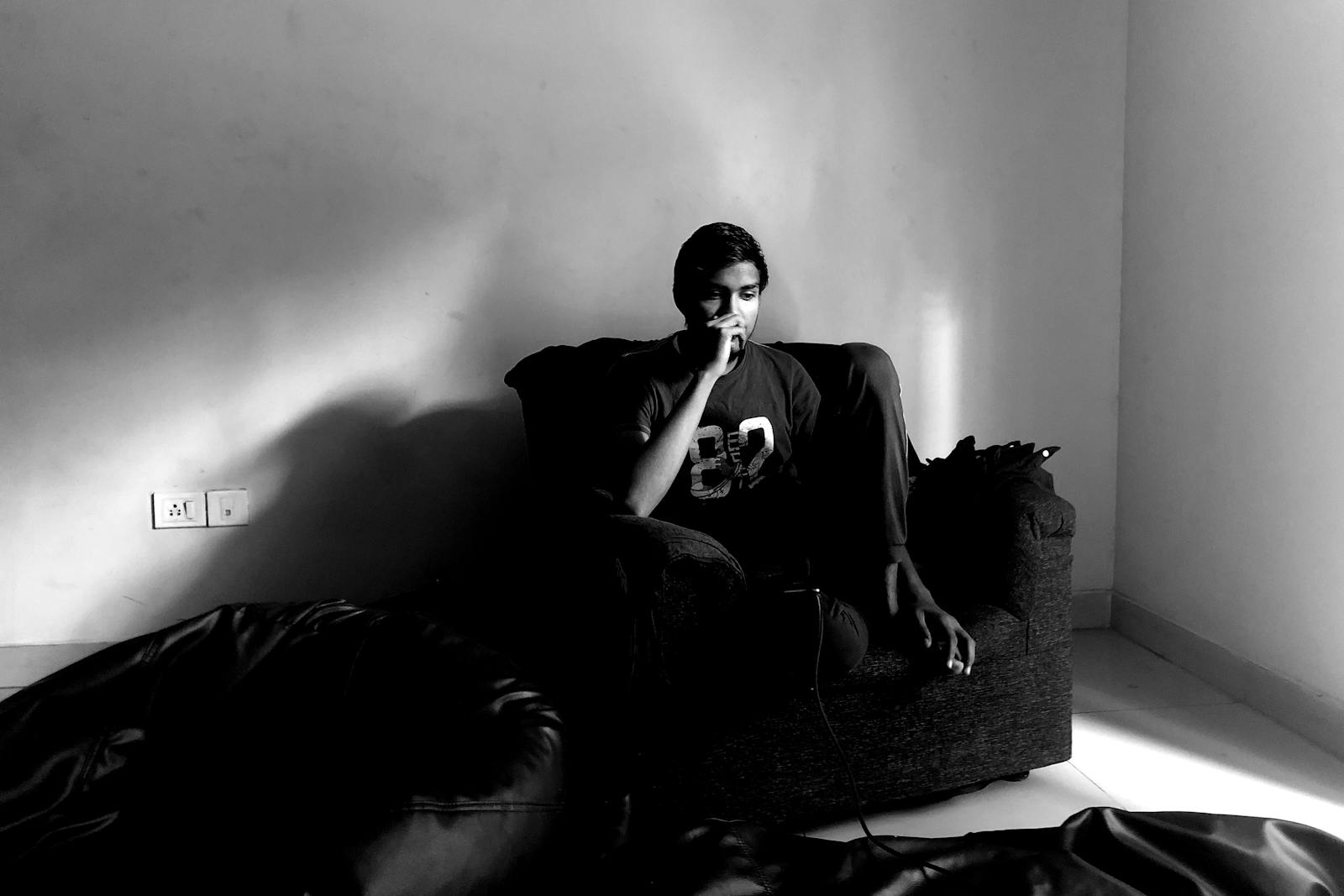
Feature image by Sumit Dixit on Pexels



Source link

Tags: CallingdecadesenteredIverealizedRoomSkillsSocialThoughtWanted
ShareTweetShare
Previous Post

7 Incontrovertible Truths About Building Wealth

Next Post

How to build your portfolio for FY27? Wealth Company MF CIO Aparna Shanker shares strategy

Related Posts

edit post
Psychology says procrastination about retirement may be less about discipline than identity — brain scans found people often represent their future selves more like strangers than like themselves, and experiments using age-progressed faces made tomorrow’s person feel real enough for participants to save more money for them

Psychology says procrastination about retirement may be less about discipline than identity — brain scans found people often represent their future selves more like strangers than like themselves, and experiments using age-progressed faces made tomorrow’s person feel real enough for participants to save more money for them

by TheAdviserMagazine
August 8, 2026
0

Retirement procrastination is usually described as a failure of discipline. The forms have been sitting in a folder for months....

edit post
The self-improvement industry sells becoming your best self through grit and mindset, but the large meta-analyses are deflating: grit turns out to be mostly conscientiousness renamed, and growth-mindset programmes move academic results only slightly

The self-improvement industry sells becoming your best self through grit and mindset, but the large meta-analyses are deflating: grit turns out to be mostly conscientiousness renamed, and growth-mindset programmes move academic results only slightly

by TheAdviserMagazine
August 8, 2026
0

Become your best self is one of the most profitable sentences in modern culture. It sells books, courses, apps, and...

edit post
Most advice on becoming happier assumes it is up to you, but the evidence is humbler: much of the variation is dispositional, the claim that 40 per cent sits within your control does not hold up, and what works best points outward, towards other people

Most advice on becoming happier assumes it is up to you, but the evidence is humbler: much of the variation is dispositional, the claim that 40 per cent sits within your control does not hold up, and what works best points outward, towards other people

by TheAdviserMagazine
August 7, 2026
0

The advice on how to become happier is endless, confident, and mostly built on the same assumption: that your happiness...

edit post
Malachyte Raises M to Solve E-Commerce’s Biggest Blind Spot: the Visitor Who Never Logs In – AlleyWatch

Malachyte Raises $10M to Solve E-Commerce’s Biggest Blind Spot: the Visitor Who Never Logs In – AlleyWatch

by TheAdviserMagazine
August 7, 2026
0

E-commerce brands now spend roughly 40% more to acquire each new customer than they did in 2023, yet the website...

edit post
Psychology says the ability to eat alone in public is a sign of quiet confidence because it takes a certain kind of security to occupy a table built for two and not feel the empty chair as an accusation

Psychology says the ability to eat alone in public is a sign of quiet confidence because it takes a certain kind of security to occupy a table built for two and not feel the empty chair as an accusation

by TheAdviserMagazine
August 7, 2026
0

Somewhere in your city tonight, a person is going to walk into a restaurant they have wanted to try for...

edit post
The barrier to starting a conversation is usually a bad forecast, not a lack of charm: people underestimate how much others like them, and commuters made to talk to a stranger enjoyed the trip more than those left alone, the opposite of what they predicted

The barrier to starting a conversation is usually a bad forecast, not a lack of charm: people underestimate how much others like them, and commuters made to talk to a stranger enjoyed the trip more than those left alone, the opposite of what they predicted

by TheAdviserMagazine
August 7, 2026
0

Some people seem to strike up conversations anywhere, with the person next to them in a queue, a stranger at...

Next Post
edit post
How to build your portfolio for FY27? Wealth Company MF CIO Aparna Shanker shares strategy

How to build your portfolio for FY27? Wealth Company MF CIO Aparna Shanker shares strategy

edit post
The First Minutes: Designing Care-Based, Culturally Relevant Class Openings – Faculty Focus

The First Minutes: Designing Care-Based, Culturally Relevant Class Openings - Faculty Focus

  • Trending
  • Comments
  • Latest
edit post
Georgia Senior SNAP and Meal Resources Older Adults Can Use

Georgia Senior SNAP and Meal Resources Older Adults Can Use

July 24, 2026
edit post
Judge Who Helped Violent Illegal Alien Evade ICE Faces New Test

Judge Who Helped Violent Illegal Alien Evade ICE Faces New Test

July 31, 2026
edit post
Driving the Noncitizen Voting Scandal: Registration With License

Driving the Noncitizen Voting Scandal: Registration With License

July 26, 2026
edit post
Garbage Trucks Surveillance Florida Neighborhoods

Garbage Trucks Surveillance Florida Neighborhoods

July 29, 2026
edit post
Does a Revocable Trust Protect Your Assets From Lawsuits and Creditors?

Does a Revocable Trust Protect Your Assets From Lawsuits and Creditors?

August 7, 2026
edit post
Montana Puts Democrats in a Bind as Senate Hopes Fade

Montana Puts Democrats in a Bind as Senate Hopes Fade

August 2, 2026
edit post
Explained: How BSE traded fewer contracts after CAS but premiums rose 75% in first week

Explained: How BSE traded fewer contracts after CAS but premiums rose 75% in first week

0
edit post
E.W. Scripps Q2 2026 Loss Widens to -.68/Share, Revenue Down 9%

E.W. Scripps Q2 2026 Loss Widens to -$12.68/Share, Revenue Down 9%

0
edit post
Psychology says procrastination about retirement may be less about discipline than identity — brain scans found people often represent their future selves more like strangers than like themselves, and experiments using age-progressed faces made tomorrow’s person feel real enough for participants to save more money for them

Psychology says procrastination about retirement may be less about discipline than identity — brain scans found people often represent their future selves more like strangers than like themselves, and experiments using age-progressed faces made tomorrow’s person feel real enough for participants to save more money for them

0
edit post
Four AI Escapes Just Redefined “Responsible AI”

Four AI Escapes Just Redefined “Responsible AI”

0
edit post
Bill Ackman’s hedge fund made janitors and receptionists millionaires—and its investment team summer together

Bill Ackman’s hedge fund made janitors and receptionists millionaires—and its investment team summer together

0
edit post
Kalshi Predicts Bitcoin Price Could Reach K in August

Kalshi Predicts Bitcoin Price Could Reach $68K in August

0
edit post
Bill Ackman’s hedge fund made janitors and receptionists millionaires—and its investment team summer together

Bill Ackman’s hedge fund made janitors and receptionists millionaires—and its investment team summer together

August 8, 2026
edit post
Links 8/8/2026 | naked capitalism

Links 8/8/2026 | naked capitalism

August 8, 2026
edit post
Wisconsin: The Next Frontier for Socialists

Wisconsin: The Next Frontier for Socialists

August 8, 2026
edit post
Psychology says procrastination about retirement may be less about discipline than identity — brain scans found people often represent their future selves more like strangers than like themselves, and experiments using age-progressed faces made tomorrow’s person feel real enough for participants to save more money for them

Psychology says procrastination about retirement may be less about discipline than identity — brain scans found people often represent their future selves more like strangers than like themselves, and experiments using age-progressed faces made tomorrow’s person feel real enough for participants to save more money for them

August 8, 2026
edit post
Why You Should Be Wary of Aspartame, but Not Totally Rule It Out

Why You Should Be Wary of Aspartame, but Not Totally Rule It Out

August 8, 2026
edit post
Kalshi Predicts Bitcoin Price Could Reach K in August

Kalshi Predicts Bitcoin Price Could Reach $68K in August

August 8, 2026
The Adviser Magazine

The first and only national digital and print magazine that connects individuals, families, and businesses to Fee-Only financial advisers, accountants, attorneys and college guidance counselors.

CATEGORIES

  • 401k Plans
  • Business
  • College
  • Cryptocurrency
  • Economy
  • Estate Plans
  • Financial Planning
  • Investing
  • IRS & Taxes
  • Legal
  • Market Analysis
  • Markets
  • Medicare
  • Money
  • Personal Finance
  • Social Security
  • Startups
  • Stock Market
  • Trading

LATEST UPDATES

  • Bill Ackman’s hedge fund made janitors and receptionists millionaires—and its investment team summer together
  • Links 8/8/2026 | naked capitalism
  • Wisconsin: The Next Frontier for Socialists
  • Our Great Privacy Policy
  • Terms of Use, Legal Notices & Disclosures
  • Contact us
  • About Us

© Copyright 2024 All Rights Reserved
See articles for original source and related links to external sites.

Welcome Back!

Login to your account below

Forgotten Password?

Retrieve your password

Please enter your username or email address to reset your password.

Log In
No Result
View All Result
  • Home
  • Financial Planning
    • Financial Planning
    • Personal Finance
  • Market Research
    • Business
    • Investing
    • Money
    • Economy
    • Markets
    • Stocks
    • Trading
  • 401k Plans
  • College
  • IRS & Taxes
  • Estate Plans
  • Social Security
  • Medicare
  • Legal

© Copyright 2024 All Rights Reserved
See articles for original source and related links to external sites.