Tomorrow, SpaceX is expected to become one of the most valuable public companies on Earth.
At a reported valuation of roughly $1.75 trillion, Elon Musk’s rocket and satellite company could pull off the largest IPO in history.
And I understand why investors are excited. But this week’s chart offers a warning.
Because a great company is not always a great stock on IPO day.
The Biggest IPOs Rarely Come Cheap
This week’s chart comes from Rand Group Research.
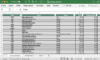
It ranks some of the biggest U.S. IPOs by first-day market cap, then shows how those stocks performed over their first six months as public companies.
Image: Rand Group Research
The pattern is hard to miss.
According to Rand Group, of the 10 biggest IPOs in history — until today — nine traded lower six months after going public.
Only Roblox was positive after six months.
What’s more, the average decline was 35%.
And that doesn’t mean all these companies were failures.
Airbnb became one of the most important travel platforms in the world. Uber changed transportation. Coinbase became the leading crypto exchange in the United States. Snowflake helped define the modern cloud data business.
In many cases, investors were right about the company.
They were just too eager to own the stock at any price.
That’s because IPOs are designed to sell excitement.
By the time a famous company finally reaches the public market, years of growth, hype and private-market gains may already be reflected in the price.
Early investors typically buy in when the story is still uncertain. Public investors usually arrive after the story is obvious.
And when the story is obvious, a company’s valuation can leave very little room for error.
That’s especially true for SpaceX.
Reuters reports that SpaceX is targeting a valuation of about $1.75 trillion and a raise of at least $75 billion. The company’s revenue rose 33% last year to $18.67 billion, helped by Starlink’s growth. But SpaceX also posted a nearly $5 billion net loss in 2025, partly tied to its xAI acquisition.
In other words, investors aren’t being asked to pay for what SpaceX is today.
They’re being asked to pay for what SpaceX might become many years from now.
And that might work out over time.
SpaceX is one of the most impressive companies ever built. It dominates the launch market. It created the world’s largest satellite internet network in Starlink. And it has a realistic shot at becoming the backbone of the space economy.
But even transformational companies can be bad buys at the wrong price.
That’s what today’s chart reminds us.
University of Florida finance professor Jay Ritter has spent decades studying IPO returns. His research shows that IPOs often enjoy a first-day pop, but then underperform the broader market over longer periods.
According to Ritter’s data, investors who bought IPOs at the end of the first trading day and held for three years historically earned about 21% less than they would have by owning a value-weighted market index.
That’s not because every IPO company is bad.
It’s because the public often gets its chance after the best private-market returns have already happened.
And that creates a strange setup for investors.
You can be completely right about the future of a company and still lose money if you pay too much for it.
Here’s My Take
I’m not bearish on SpaceX at all.
But I’m also not chasing SpaceX the moment it starts trading.
Because I believe the better opportunity may come from looking one layer beyond it.
If SpaceX becomes the backbone of the space economy, then other companies will need to help build the nerves, muscles and connective tissue around it.
That’s why I’m excited about the long-term space story, even if this week’s chart argues for caution on this specific IPO.
After all, the biggest companies often arrive with the biggest expectations.
And when expectations are that high, even great businesses can stumble out of the gate.
Regards,
 Ian KingChief Strategist, Banyan Hill Publishing
Editor’s Note: We’d love to hear from you!
If you want to share your thoughts or suggestions about the Daily Disruptor, or if there are any specific topics you’d like us to cover, just send an email to [email protected].
Don’t worry, we won’t reveal your full name in the event we publish a response. So feel free to comment away!