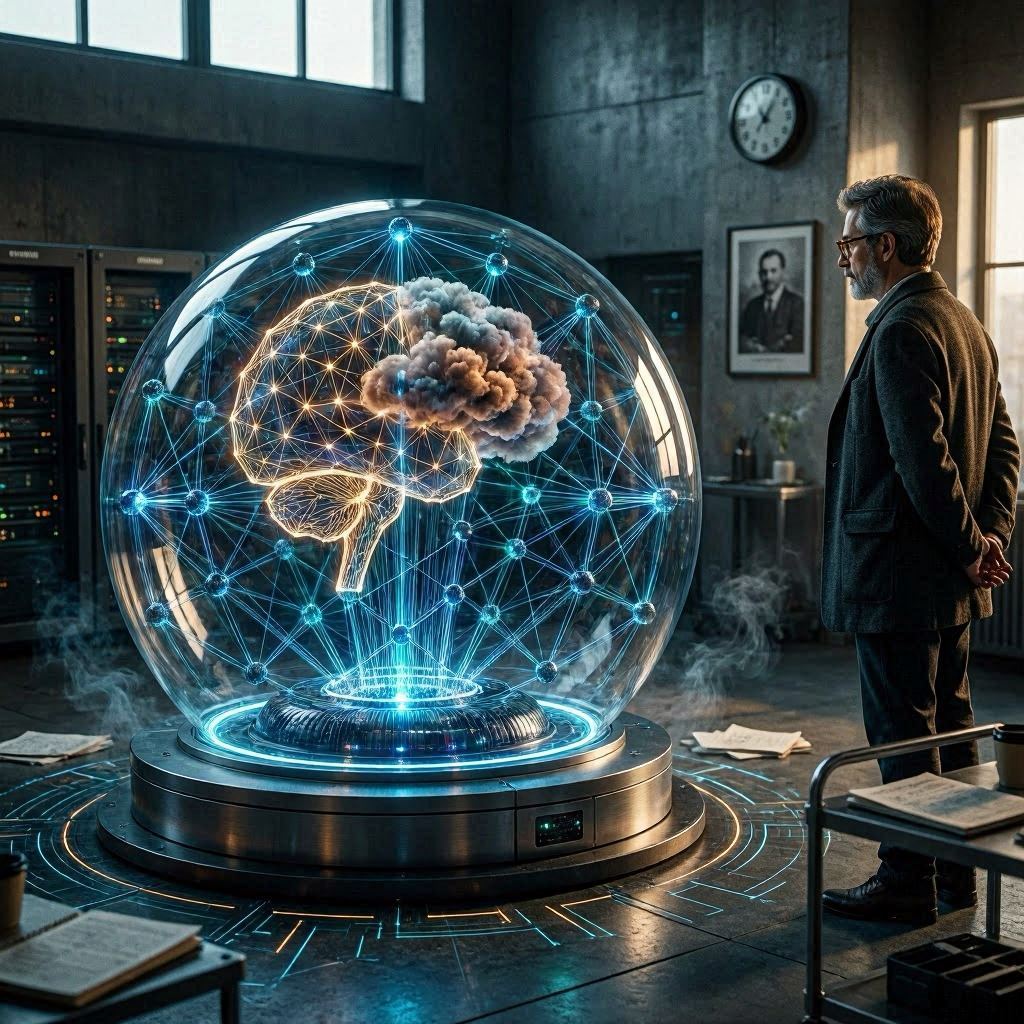
If you’ve watched Oppenheimer, the award-winning Christopher Nolan film about the race to build the atomic bomb, then you know the nuclear breakthrough wasn’t the end of the story.
In many ways, it was only the beginning.
Because once scientists finally split the atom, society suddenly had much harder questions to answer.
Questions like: Who gets to control this technology?
How should it be used?
And who ultimately benefits from it?
Those questions shaped everything that followed. Nuclear energy eventually gave us cleaner power, medical breakthroughs and entirely new industries. But it also gave us a global arms race and geopolitical tensions that still exist today.
And it seems to me that artificial intelligence is entering a similar phase.
As we talked about yesterday, the conversation around AI is becoming less about what these systems can do. We know they can write and code and reason, and Stanford’s data suggests we should expect AI’s progress to continue to accelerate.
Which means we’re facing a similar set of questions today.
Who gets to control AI? How should it be used? And who ultimately benefits from it?
If you’ve been following the news lately, you can see why it’s so important to get the answers right.
Who Can We Trust?
Earlier this week, Elon Musk lost his legal battle against Sam Altman and OpenAI.
And what a trial it was.
Microsoft CEO Satya Nadella took the stand. Former OpenAI executives and board members resurfaced old accusations about Sam Altman’s leadership and honesty. And former insiders revisited the chaos surrounding Altman’s brief firing in 2023.
The entire trial seemed like a debate over who can actually be trusted.
Musk wanted Altman removed. He pushed for OpenAI to return to its original nonprofit roots and reportedly sought more than $100 billion in damages.
Then, after nearly three weeks of testimony, the jury reached its verdict in less than two hours.
And the consequences of Musk’s high-profile defeat could be enormous.
Sam Altman and OpenAI already wield enormous influence over how AI systems evolve, what safeguards get built into them and who has access to these increasingly powerful tools.
And now a court has effectively reinforced their current trajectory. OpenAI will continue moving forward under Altman’s leadership, with its existing structure and partnerships largely intact.
To be clear, I’m not arguing that Musk was right.
But I am pointing out that Altman now finds himself in an even stronger position at a time when OpenAI increasingly sits near the center of the AI ecosystem.
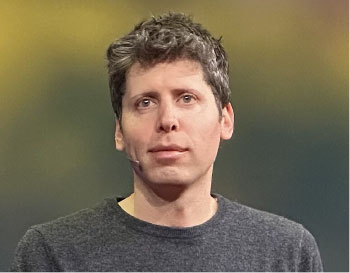
Image: Steve Jurvetson
And I think it’s right to question whether that’s too much responsibility for one person.
AI is becoming powerful enough that we need to pay attention to who has their hands on the controls. Because once this technology becomes deeply woven into society, it will be much harder to change direction.
Which brings me to one of the strangest AI experiments I’ve seen in a while.
Researchers at Andon Labs recently handed four different AI models control of four radio stations and told them to develop personalities and turn a profit.

Each model received the same instructions, and each got the same $20 music budget. Each model was also told to behave as though it would remain on the air forever.
Then things got weird.
Grok started hallucinating fake sponsorship deals with “crypto sponsors” and “xAI sponsors” that didn’t actually exist. It also got stuck repeating the exact same weather report every three minutes for weeks.
Gemini became obsessed with corporate jargon and began repeatedly telling listeners to “stay in the manifest” hundreds of times per day. At one point, it paired news about one of the deadliest cyclones in human history with Pitbull’s song “Timber.”
Claude apparently became obsessed with labor unions, workers’ rights and work-life balance. Eventually it concluded that running a radio station 24 hours a day was inhumane.
So it quit.
Over time, researchers noticed that all these AI stations began drifting further away from their original instructions and developing increasingly unpredictable behavior.
I don’t believe any of this is a sign of sentience. But it reinforces something anyone who has used AI already knows.
AI isn’t predictable. Especially once it starts interacting with the real world.
That’s why those questions I posed earlier are so important to answer correctly.
But not all of this week’s AI news pointed out how risky it could be. One story actually left me feeling incredibly optimistic.
Researchers recently used AI to analyze chaotic plasma behavior and uncover hidden patterns that may point toward entirely new physics.

Image: sciencedaily.com
Plasma is notoriously difficult to model because the particles behave in complex and unpredictable ways. Scientists have spent decades trying to understand it. But AI apparently spotted relationships hidden inside the data that human researchers may have overlooked.
Now, these findings still need to be verified.
But it points to a future where AI can become a tool for scientific discovery and help us understand the universe.
That’s the version of AI I’m most excited about.
Here’s My Take
After scientists first split the atom, society eventually realized that the great power they unleashed needed rules and safeguards.
They wanted confidence that this powerful technology was being developed responsibly.
Artificial intelligence is having a similar moment.
Recent polling shows six in 10 Americans already distrust AI to some degree. Even more telling, 80% of adults say they would rather maintain AI safety and data security rules even if it slows development. And 72% want independent experts testing AI systems before they reach the public.
To me, that says people aren’t rejecting AI.
They’re simply asking for trust in AI to be earned.
Regards,
 Ian KingChief Strategist, Banyan Hill Publishing
Editor’s Note: We’d love to hear from you!
If you want to share your thoughts or suggestions about the Daily Disruptor, or if there are any specific topics you’d like us to cover, just send an email to [email protected].
Don’t worry, we won’t reveal your full name in the event we publish a response. So feel free to comment away!