No Result
View All Result
SUBMIT YOUR ARTICLES
  • Login
Thursday, March 5, 2026
TheAdviserMagazine.com
  • Home
  • Financial Planning
    • Financial Planning
    • Personal Finance
  • Market Research
    • Business
    • Investing
    • Money
    • Economy
    • Markets
    • Stocks
    • Trading
  • 401k Plans
  • College
  • IRS & Taxes
  • Estate Plans
  • Social Security
  • Medicare
  • Legal
  • Home
  • Financial Planning
    • Financial Planning
    • Personal Finance
  • Market Research
    • Business
    • Investing
    • Money
    • Economy
    • Markets
    • Stocks
    • Trading
  • 401k Plans
  • College
  • IRS & Taxes
  • Estate Plans
  • Social Security
  • Medicare
  • Legal
No Result
View All Result
TheAdviserMagazine.com
No Result
View All Result
Home Market Research Investing

Unlocking Stock Market Success: Why You Should Embrace the Skew

by TheAdviserMagazine
1 year ago
in Investing
Reading Time: 6 mins read
A A
Unlocking Stock Market Success: Why You Should Embrace the Skew
Share on FacebookShare on TwitterShare on LInkedIn


When we talk about stock returns, most people assume that individual stocks should yield positive returns. That’s because the stock market has historically outperformed other asset classes like bonds. But surprisingly, the median monthly return for a large sample of individual stocks is — drumroll, please – zero. That’s right. A study conducted by Henric Bessembinder and published in the Financial Analysts Journal in April 2023 found that on a monthly basis, individual stocks generate returns centered around zero. In fact, this paints a “half-full, half-empty” scenario. Half the stocks produce positive returns, while the other half have negative returns.

As an investor or advisor, how do you and your clients react to this? If this zero-median return statistic were the only way to look at stock performance, it would be hard to justify investing in stocks at all. Convincing clients to invest in equities would be an uphill battle, especially if they’re seeking short-term gains.

Volatility

In fact, there are many ways to evaluate stock returns beyond just focusing on median monthly performance. One common approach is to measure stock returns in terms of volatility. Volatility refers to how much a stock’s price fluctuates, and it’s often measured using standard deviation. On average, the annual standard deviation for stock returns is about 50%, which means that the price of an individual stock can swing wildly throughout the year. If we apply the 95% confidence interval often used in statistics, this implies that an individual stock’s return could vary by roughly +/- 100% in a given year. This is huge. Essentially, an individual stock could double or lose all its value within 12 months.

This level of uncertainty can make stocks seem daunting, especially for those looking for stability. The idea that individual stocks are a “half-full, half-empty” proposition monthly, and are even more volatile annually, can scare away potential investors. But it’s important to remember that stocks are primarily intended to be long-term investments.

The short-term ups and downs, while nerve-wracking, are part of the journey toward long-term wealth creation.

So, what happens when we shift our focus to long-term individual stock returns? Shouldn’t we expect more consistency over time? Bessembinder also looked at long-term stock performance, and the findings weren’t exactly comforting. Over the long run, 55% of US stocks underperformed US Treasury Bill returns, meaning that more than half of individual stocks did worse than the safest government-backed investments. Perhaps even more alarming is the fact that the most common outcome for individual stocks was a 100% loss — complete failure. These findings suggest that investing in individual stocks is a high-risk endeavor, even when taking a long-term approach.

Typically, when investors and financial analysts assess stock performance, they focus on two key statistical measures: central value (such as the mean or median return) and volatility (as measured by standard deviation). This traditional method of analysis often leads to a negative or at least discouraging narrative about investing in individual stocks.

If returns are largely zero in the short term, highly volatile in the medium term, and risky in the long term, why would anyone invest in stocks?

The answer, as history shows, is that despite these challenges, stocks have significantly outperformed other asset classes like bonds and cash over extended periods. But to truly understand why, we need to look beyond the typical first two parameters used in analyzing stock returns.

The Third Parameter for Assessing Stock Performance: Positive Skew

While traditional analysis focuses heavily on the first two parameters — central value and volatility — it misses a crucial component of stock returns: positive skew. Positive skew is the third parameter of stock return distribution, and it’s key to explaining why stocks have historically outperformed other investments. If we only focus on central value and volatility, we are essentially assuming that stock returns follow a normal distribution, similar to a bell curve. This assumption works well for many natural phenomena, but it doesn’t apply to stock returns.

Why not? Because stock returns are not governed by natural laws; they are driven by the actions of human beings, who are often irrational and driven by emotions. Unlike natural events that follow predictable patterns, stock prices are the result of complex human behaviors — fear, greed, speculation, optimism, and panic. This emotional backdrop means that stock prices can shoot up dramatically when crowds get carried away but can only drop to a limit of -100% (when a stock loses all its value). This is what creates a positive skew in stock returns.

In simple terms, while the downside for any stock is capped at a 100% loss, the upside is theoretically unlimited. An investor might lose all their money on one stock, but another stock could skyrocket, gaining 200%, 500%, or even more.

It is this asymmetry in returns –the fact that the gains can far exceed the losses — that generates positive skew.

This skew, combined with the magic of multi-period compounding, explains much of the long-term value of investing in stocks.

Learn to Tolerate Tail Events

If you examine stock return distributions, you’ll notice that the long-term value from investing in the market comes primarily from tail events. These are the rare but extreme outcomes that occur at both ends of the distribution. The long, positive tail is what produces the outsized returns that more than make up for the smaller, frequent losses. For stocks to have generated the high returns we’ve seen historically, the large positive tail events must have outweighed the large negative ones.

The more positively skewed the return distribution, the higher the long-term returns.

This might sound counterintuitive at first, especially when traditional portfolio management strategies focus on eliminating volatility. Portfolio construction discussions often center around how to smooth out the ride by reducing exposure to extreme events, both positive and negative.

The goal is to create a more-predictable and less-volatile return stream, which can feel safer for investors. However, in avoiding those unnerving tail events, investors eliminate both the big losses and the big gains. This reduces positive skew and, as a result, dramatically reduces overall returns.

The Hidden Cost of Managed Equity

A typical “Managed Equity” strategy eliminates all stock losses (no returns less than zero) while capping upside returns. For example, a well-known investment company offers a managed S&P 500 fund that avoids all annual losses while limiting returns to less than 7%. Since it is virtually impossible to predict daily returns, this return feat is accomplished by simply holding a zero cost S&P 500 options collar. Over the last 40+ years, when the S&P 500 generated more than 11% annually, this strategy would have yielded a meager 4% annual return.

In other words, avoiding emotional tail events means you miss out on the very returns that are the major drivers of long-term wealth creation. Investors who focus too much on smoothing returns end up with more consistent but dramatically lower returns over time.

To truly benefit from stock investing, it’s necessary to embrace both the emotions and the rewards that come with positive skew. This means learning to live with tail events. They may be uncomfortable when they occur, but they are an integral part of long-term success in the stock market.

The most successful investors recognize this and accept that volatility and tail events that are simply unavoidable are crucial for achieving high returns. By learning to appreciate positive skew and its associated tail events, investors can unlock the full potential of stock market gains.

Learn to love, not fear the skew.

Financial Analysts Journal Current Issue Tile


Source link

Tags: EmbracemarketskewstockSuccessUnlocking
ShareTweetShare
Previous Post

Medicare Changes 2025 & the Importance of HIICAP Counselors

Next Post

Wall Street’s Latest Flood: Private Credit

Related Posts

edit post
Dividend Aristocrats In Focus: Roper Technologies

Dividend Aristocrats In Focus: Roper Technologies

by TheAdviserMagazine
March 4, 2026
0

Updated on March 4th, 2026 by Nathan Parsh Roper Technologies (ROP) has increased its dividend payout for 33 consecutive years,...

edit post
5 Systems Every Rookie Investor Needs for Faster Rehabs and Bigger Profits

5 Systems Every Rookie Investor Needs for Faster Rehabs and Bigger Profits

by TheAdviserMagazine
March 4, 2026
0

Many rookies are freaked out by the thought of tackling rental renovations and things going south. But what if there...

edit post
International Women’s Day: Women Leaders Put Nutrition First

International Women’s Day: Women Leaders Put Nutrition First

by TheAdviserMagazine
March 3, 2026
0

Women are three times more likely than men to invest in eating well. What’s your healthiest habit, and why are...

edit post
10 Big Oil Dividend Stocks For Rising Oil Prices

10 Big Oil Dividend Stocks For Rising Oil Prices

by TheAdviserMagazine
March 3, 2026
0

Published on March 3rd, 2026 by Bob Ciura On February 28th, the U.S. and Israel attacked Iran. In the immediate...

edit post
NLP and Yield Curve Prediction From Central Bank Minutes

NLP and Yield Curve Prediction From Central Bank Minutes

by TheAdviserMagazine
March 3, 2026
0

Can Natural Language Processing Unlock Signals in Central Bank Minutes? Natural language processing is already reshaping equity research and macro...

edit post
75,000 “Relistings” Could Hit the Market

75,000 “Relistings” Could Hit the Market

by TheAdviserMagazine
March 3, 2026
0

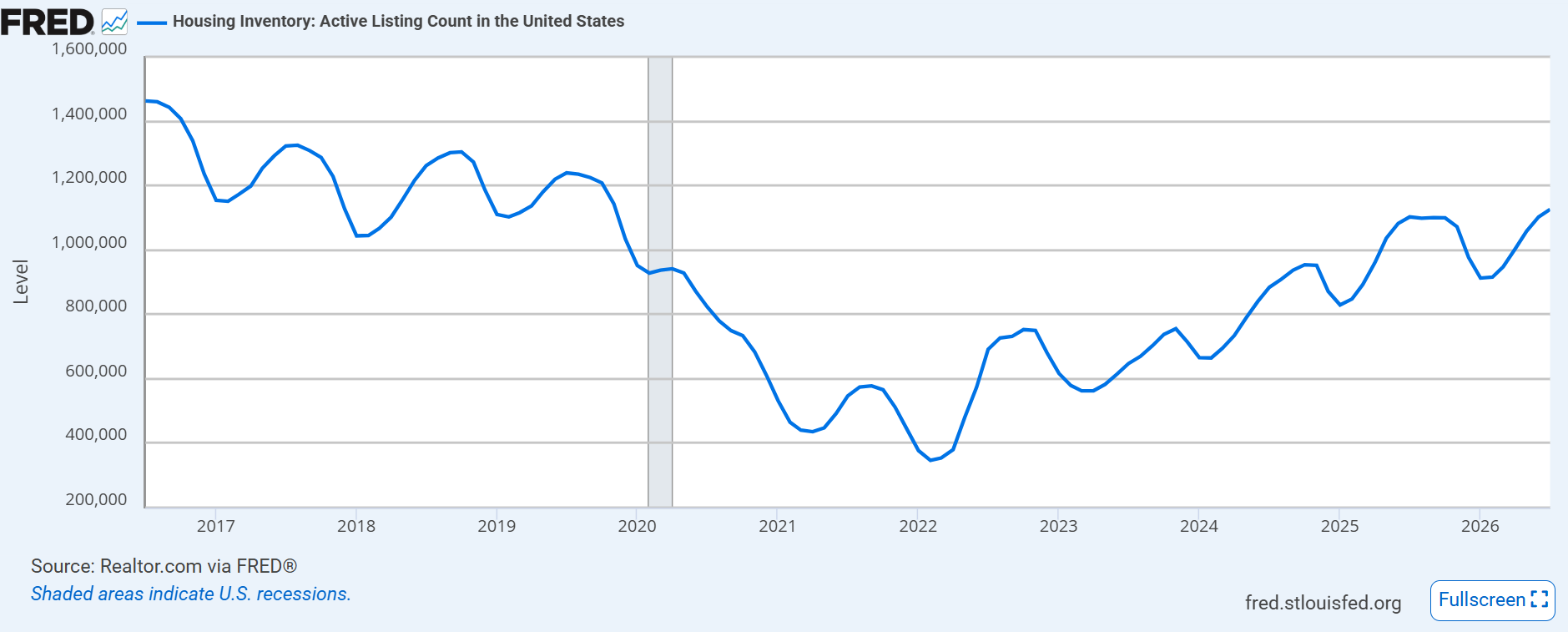
Dave:If you’re watching inventory climb right now, it can look like supply is surging. But a big part of what...

Next Post
edit post
Wall Street’s Latest Flood: Private Credit

Wall Street’s Latest Flood: Private Credit

edit post
6 Critical Reasons Why It’s Important to Establish or Update Your Estate Plan Before the End of the Year

6 Critical Reasons Why It's Important to Establish or Update Your Estate Plan Before the End of the Year

  • Trending
  • Comments
  • Latest
edit post
Foreclosure Starts are Up 19%—These Counties are Seeing the Highest Distress

Foreclosure Starts are Up 19%—These Counties are Seeing the Highest Distress

February 24, 2026
edit post
North Carolina Updates How Wills Can Be Stored

North Carolina Updates How Wills Can Be Stored

February 10, 2026
edit post
Gasoline-starved California is turning to fuel from the Bahamas

Gasoline-starved California is turning to fuel from the Bahamas

February 15, 2026
edit post
Where Is My 2025 Oregon State Tax Refund

Where Is My 2025 Oregon State Tax Refund

February 13, 2026
edit post
7 States Reporting a Surge in Norovirus Cases

7 States Reporting a Surge in Norovirus Cases

February 22, 2026
edit post
Medicare Fraud In California – 2.5% Of The Population Accounts For 18% Of NATIONWIDE Healthcare Spending

Medicare Fraud In California – 2.5% Of The Population Accounts For 18% Of NATIONWIDE Healthcare Spending

February 3, 2026
edit post
Economic Warfare – US V Spain

Economic Warfare – US V Spain

0
edit post
Geopolitics, crude risk and the IT conundrum: Sridhar Sivaram on why investors may need to stay selective

Geopolitics, crude risk and the IT conundrum: Sridhar Sivaram on why investors may need to stay selective

0
edit post
Justin Sun-backed Tron Inc. adds K in TRX to treasury

Justin Sun-backed Tron Inc. adds $50K in TRX to treasury

0
edit post
Leopold Aschenbrenner’s hedge fund is betting on power and bitcoin miners to fuel the AI boom

Leopold Aschenbrenner’s hedge fund is betting on power and bitcoin miners to fuel the AI boom

0
edit post
China to boost defense spending by 7%, slowest pace since 2021

China to boost defense spending by 7%, slowest pace since 2021

0
edit post
The Secret Reason Older Adults Are Skipping Flu and COVID Shots — And Why It’s Dangerous

The Secret Reason Older Adults Are Skipping Flu and COVID Shots — And Why It’s Dangerous

0
edit post
Leopold Aschenbrenner’s hedge fund is betting on power and bitcoin miners to fuel the AI boom

Leopold Aschenbrenner’s hedge fund is betting on power and bitcoin miners to fuel the AI boom

March 5, 2026
edit post
Geopolitics, crude risk and the IT conundrum: Sridhar Sivaram on why investors may need to stay selective

Geopolitics, crude risk and the IT conundrum: Sridhar Sivaram on why investors may need to stay selective

March 5, 2026
edit post
Justin Sun-backed Tron Inc. adds K in TRX to treasury

Justin Sun-backed Tron Inc. adds $50K in TRX to treasury

March 5, 2026
edit post
From 240B To 7B: Decoding The Massive Velocity Slump Paralyzing XRP Trading Activity On Binance

From 240B To 7B: Decoding The Massive Velocity Slump Paralyzing XRP Trading Activity On Binance

March 5, 2026
edit post
Economic Warfare – US V Spain

Economic Warfare – US V Spain

March 5, 2026
edit post
Wait for dust to settle before taking fresh bets, says Maulik Patel

Wait for dust to settle before taking fresh bets, says Maulik Patel

March 4, 2026
The Adviser Magazine

The first and only national digital and print magazine that connects individuals, families, and businesses to Fee-Only financial advisers, accountants, attorneys and college guidance counselors.

CATEGORIES

  • 401k Plans
  • Business
  • College
  • Cryptocurrency
  • Economy
  • Estate Plans
  • Financial Planning
  • Investing
  • IRS & Taxes
  • Legal
  • Market Analysis
  • Markets
  • Medicare
  • Money
  • Personal Finance
  • Social Security
  • Startups
  • Stock Market
  • Trading

LATEST UPDATES

  • Leopold Aschenbrenner’s hedge fund is betting on power and bitcoin miners to fuel the AI boom
  • Geopolitics, crude risk and the IT conundrum: Sridhar Sivaram on why investors may need to stay selective
  • Justin Sun-backed Tron Inc. adds $50K in TRX to treasury
  • Our Great Privacy Policy
  • Terms of Use, Legal Notices & Disclosures
  • Contact us
  • About Us

© Copyright 2024 All Rights Reserved
See articles for original source and related links to external sites.

Welcome Back!

Login to your account below

Forgotten Password?

Retrieve your password

Please enter your username or email address to reset your password.

Log In
No Result
View All Result
  • Home
  • Financial Planning
    • Financial Planning
    • Personal Finance
  • Market Research
    • Business
    • Investing
    • Money
    • Economy
    • Markets
    • Stocks
    • Trading
  • 401k Plans
  • College
  • IRS & Taxes
  • Estate Plans
  • Social Security
  • Medicare
  • Legal

© Copyright 2024 All Rights Reserved
See articles for original source and related links to external sites.