It’s the middle of Spring, traditionally the busiest time in the housing market. But this year…things have changed. The market isn’t following regular patterns; some new concerns and opportunities are emerging and starting to approach the horizon.
We’re back with this month’s housing market update, going over everything from mortgage rates to foreclosures and housing crash risk, how long homes are sitting on the market, and a silver lining for investors that most Americans are missing. But there are some concerns.
One all-important metric for real estate investors is changing, and many rental property owners aren’t prepared for it. This could lead to lower profits, reduced cash flow, and, for those already struggling to pay the mortgage, foreclosures. Who’s in danger, and which areas of the country are most at risk?
Plus, with delinquency rates rising and foreclosures increasing, are we at the tipping point of entering a dangerous housing market, or is this merely a return to normal, working its way through the system?
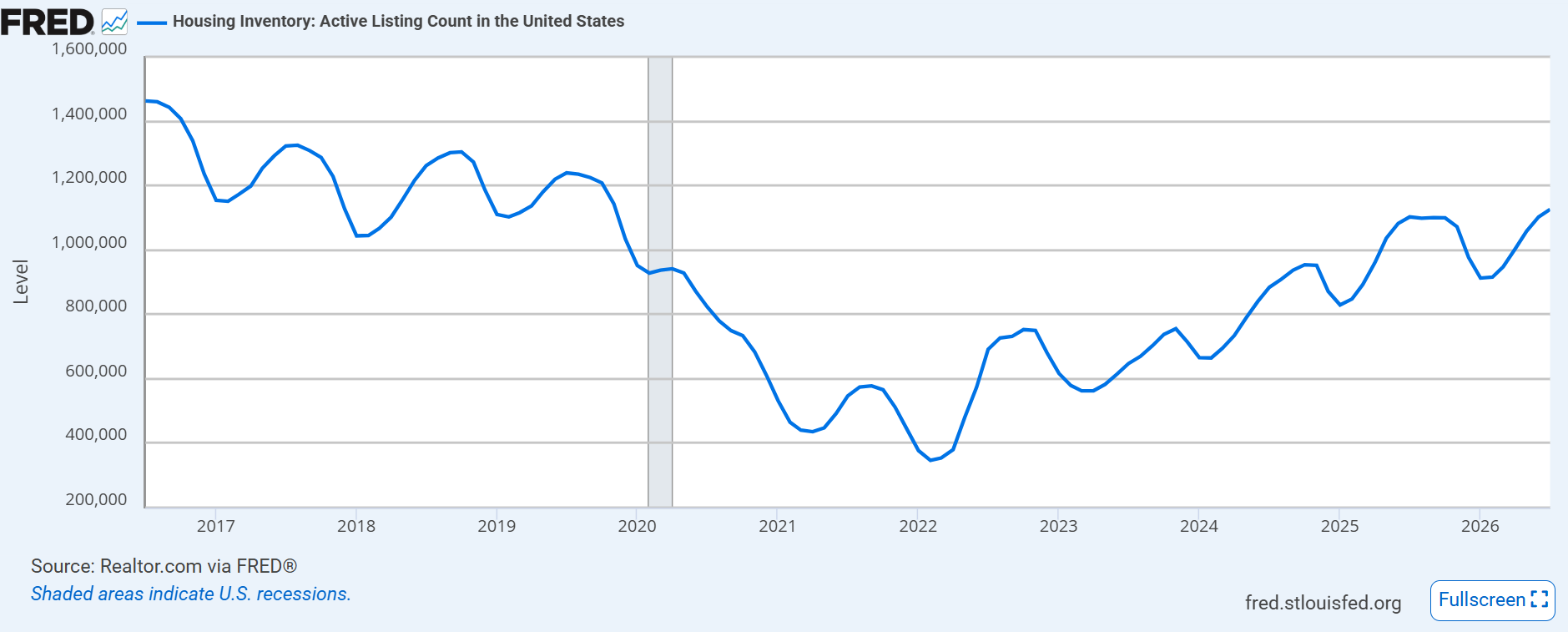
Dave:It is the middle of spring now, which is supposed to be the busiest, most active time for the housing market. A great time to sell a home. Lots of new inventory for those looking to buy. But this year hasn’t been so straightforward. With rate volatility, geopolitical turmoil and a general sense of economic uncertainty, the housing market isn’t following its usual patterns. But that does not mean that it’s all bad. In fact, there are a lot of silver linings emerging in the housing market that real estate investors should be paying attention to. And today in our May housing market update, we’re going to make sure you understand exactly what’s going on, what risks you should be avoiding and what opportunities you should be looking.Hey everyone. Welcome to the BiggerPockets Podcast. I’m Dave Meyer, chief investment officer at BiggerPockets, housing market analyst, real estate investor for 16 years now. Today we are doing our monthly housing market update and we have a lot to go over. The spring housing market is actually starting to shape up at least a little bit, but it’s different from previous quote unquote normal years in the housing market. And understanding how this is evolving for you can really be the difference between finding great opportunities and missing out. So we’re going to dig into this all today. Specifically, we’re going to take a look at the spring data, where the inventory is, what’s going on with prices, where you can score a good deal and where the markets are pretty risky. Next, we’re going to look at a new survey. This is new data we’re understanding about homeowner behavior that I personally think is super interesting because it could shape the housing market for years to come.We’re also going to get into rental data today, which we haven’t talked about in a while, but is really going to impact performance of your existing portfolio and help you understand how you should be underwriting for any new deals you’re looking at. And then as we do every month, we’ll look at our risk report, which is just talking about the stuff that really indicates if we’re just in a normal correction or are we heading towards a potential crash? So we’ll look at the foreclosure and delinquency data there, make sure you’re all up to date on that. That’s the plan for today’s episode. Let’s get to it. First and foremost, let’s do our spring housing market update. What I think we’re seeing big picture stuff here is that maybe home buyers or investors aren’t too sensitive to mortgage rates in this six, six and a half percent range.I myself was a little bit concerned when I saw rates spike back up just that psychologically or emotionally people would be tired of this rate Seesaw and maybe would just take a step back from the housing market and wait and see where things went, but we are actually seeing that demand has remained strong. There are a lot of different ways to measure this. You can look at this in terms of purchase applications. It’s something we talk about a lot on this show. I track mortgage purchase applications and those are up 5% year over year. So despite everything going on, 5% more people are going out to lenders and applying for mortgages than a year ago. So that’s a little bit contrary to what we hear in the media lot or on social media that there are no buyers, that no one wants to be in the housing market.Actually, at least in this way of measuring it, 5% more people want to be in the housing market than this time last year. And that is not the only way to measure demand and all of them are kind of showing this trend. Google search volume, another way to look at this for homes for sale, if you just go and search that, that’s at the highest level it’s been in nine months and that’s up 20% year over year, right? That’s pretty significant. And then of course sort of the most important stat here is pending sales. So if you haven’t heard this data point, pending sales are just basically properties that were listed. They’ve now gone under contract to be purchased and they’re just waiting to close. Those I think are the most important because it actually, it’s not just applying or a Google search, it’s people actually going out and signing a contract.Those are up 8% year over year and up a lot just over the last week. So to me, this is encouraging. When I’m saying that we’re starting to see a little bit of a spring market, this is what I’m talking about. There is still demand in the market. We are seeing people not hypersensitive to this recent changes in mortgage rates. And although this is not going to be a year like 2019 or 2018, or certainly not like what was going on during the pandemic, we are not seeing a leg down. And I have said before, I was a bit concerned when the war in Iran started that we would see an even slower market. When we started the year, I thought we would see an uptick in home sales this year, a little bit from four million maybe to 4.1 million. But I was a little concerned when we saw the war in Iran start that we would see a leg down, but that actually hasn’t happened and we’re staying consistent at least with what we’ve seen over the last couple of years, still slow by historical standards, but the good news is that it’s not getting worse and we are seeing some of the normal seasonality that we should expect in the market.And to me, that’s good. That’s good news. Beyond just that, looking at demand, we are also seeing that the market is pretty stable. We always talk a lot about inventory because inventory is our measurement of supply and demand and how well they’re balanced. This is how we try to understand where prices are going, right? If inventory is imbalanced and there are more sellers than there are buyers, then we’re going to see prices go down. If we see more buyers than there are sellers, we’re going to see prices go up. Right now, what we’re seeing is active inventory is pretty much flat. I know that this narrative in the media is like, “Oh my God, there’s so many more homes for sale. Inventory is going through the roof. There’s going to be a crash.” Not really. That is not what the data actually says. You can go and Google it, but if you look at this, what you see is that inventory, active inventory, according to Redfin at least, is down 1% year over year.It’s down. If you look at other sources like Altos, they say that it’s up but 2%. So either way, it’s pretty much flat. And again, what that shows us is that the market is somewhat in equilibrium. There are not tons of homes flooding the market where we’re going to see a crash. There’s also not a ton of demand bidding up the prices of homes and we’re starting to see things fly off the shelf. Instead, we’re sort of stuck. It’s why I’ve been calling it the great stall for years. We’re in this stuck area. That hasn’t changed. So all those crash bros out there can chill a little bit because there is no evidence that that is actually happening. So we’re seeing one, that’s steady demand and two, just not that many people are listing their homes for sale. If we were in a crash, we would see people listing their homes for sale.According to Redfin, 2% less people are listing their homes for sale than this time last year. That is not a sign of a crash. For a crash to happen, what needs to happen is people start panic selling or are forced to sell through foreclosures or something like that. That is not happening. Inventory as of right now remains somewhat stable. Now, one thing that has actually changed, and I think this is one of these silver linings here for real estate investors, is that days on market has gone up. It’s actually the highest it’s been in several years. We’re now at 43 days for something to go under contract. I want to just put this in context because prior to the pandemic it would take two months to sell a home is normal. Expectations of that have been totally reset because during the summer of 2022, 2023, I mean, the average was like 30 days.Some markets, they were going in like seven days, right? But going up to 43 days is not crazy by any historical standard. Clearly homes are not just languishing on the market. That’s six weeks. Six weeks to sell a home in any time outside of COVID is totally normal. But the psychological thing that’s going on here is important because at least what I’ve been seeing is people are cutting their rates and prices faster than I would expect. When I started in the early 2010s, people wouldn’t cut their price in six weeks. They’d probably wait longer or just wait for someone to offer underasking and not proactively lower their price. But sellers’ brains have sort of been reoriented now to think that if their property is sitting on the market for two or three weeks, all of a sudden it’s going to go stale and there is some truth to that, right?The psychology of the buyer has changed too. And so what we’re seeing is greater ability for people to negotiate on these deals. Even though days on market has not gone crazy, your ability to have a good productive conversation with a seller is now maybe after three weeks. Maybe it’s after four weeks, but that means you don’t have to sit and look for listings that are out there for 180 days. You can do this in a month. And if you’re looking to buy stuff that is encouraging for investors, at least in my opinion. Now, of course, this is a little bit of positive news, right? Seeing some life in the housing market, seeing that’s not getting worse is good news in my opinion, but we are still in what I’ve called the great stall for a while now and I still think that’s the case. I don’t think the war in Iran, at least as of now, has changed that.If inflation continues to go up, that could change. I think that’s the real risk here. But as of right now, still in the great stall. And as we talk about all the time, there are ways to buy good deals in the great stall. And I think that’s what you should be focusing on. How do you buy deals in this market? Because if you’re expecting prices to the bottom to fall out, probably not going to happen anytime soon. If you’re expecting rates to come down really quickly, sorry to say, I don’t think that’s going to happen. I think we are in the great stall. I think the data that I just talked to you about represents that. And I also wanted to share with you this other survey that I found this week that I think just confirms what I’ve been talking about for years now is that this slow housing market could be here to stay.There’s a company called Point. They did a study and they found that 48% of homeowners right now did not consider moving in the past 12 months. That is up from 41% just two years ago. And in two years ago, we were already in the lock-in effect, right? So people are getting more locked in two years later. We’re four years into this lock-in effect and people are more and more saying that they are going to stay put. Now, it’s not just mortgage rates. Mortgage rates are the biggest reason. 45% of people say the reason they’re not going to move is because of mortgage rates, but that’s actually going down and now it’s like 30% of people are just saying it’s life circumstances. It’s the job market, concerns about their own jobs or their income or AI or just whatever’s going on in their life. And the shocking thing about this, this is the thing that makes me think that the market’s really going to stay stuck is 83% of people, so basically everyone, right?83% of people say they would need rates below 5% to consider moving. In 2024, two years ago, during the lock-in effect, only 64%, two-thirds of people said that they would need rates below 5%. Now it’s 83%. I think that’s a reflection of just things getting more expensive. Inflation is going up across the economy. So people are saying, I’m getting stretched elsewhere. So for me to give up this amazing rate I have or the equity I have in this home or whatever, I need rates to really come down. And if you listen to this show, you know, I don’t think that’s happening. Rates below 5%. We need to see inflation get really low, below 2%. It’s moving in the other direction. We need to see a big recession. No one really wants that. Or we would need to see quantitative easing unlikely in this political environment, although it is possible.And so this is what we got everyone. It’s not great. I wish the housing market would pick up. I wish affordability got better, but I think as investors, we need to just accept reality. Appreciation is probably going to be slow in most places, right? That’s nationally. There are obviously places where it’s growing, there’s places where it’s shrinking, but we’re going to have a flatish market on a national basis. Inventory is not going through the roof. We’re probably going to see a little bit better inventory, but we’re not going to have some crazy influx of deal flow, but at the same time, the bottom hasn’t fallen out. And so the three things I would recommend to take advantage of this market, because there are good things happening in it are number one, patience. A lot of bad deals, right? A lot of bad listing prices where prices need to come down.And so in being patient, one, in finding a deal and two, being patient when you find a property you want to buy, be patient and negotiate. That’s probably number one right now. There are good assets for sale. Being able to get them at a price that makes sense with low risk is super important and all you need to do is be patient and negotiate. Number two is deal flow. Now, I think there’s better and better deals coming on the MLS, but you have to be patient for it. The other thing that I’m noticing, and this isn’t in data, this is just anecdotal and the agents that I work with or the real estate investors that I’m friends with and talk to. There’s sort of like this shadow distressed inventory, right? The total number of foreclosures we’ll talk about later, but there are people who are struggling and they want to sell their properties off market.They don’t want to go out and list it and have it sit there for weeks. But I hear people who are flipping homes and aren’t doing well or have rentals that aren’t profitable and they just want to get rid of them. Now that is a sign of distress. I don’t think it’s going to tank the market, but I do think it means there’s opportunity out there. And so you got to figure out how are you going to find those. You got to find an agent who knows this stuff. You got to either do direct to seller marketing or talk to other investors. I think investors are going to be trading to one another more than they have in the past. You an investor who needs to sell a property to pay off a different one, maybe you can offload that rental to a different investor.Maybe you can bring on a partner to finish that flip in exchange for equity. So figure out how you’re going to get that deal flow. I think networking, number one way to do it. Third thing is underwriting. You got to underwrite well. This is always true, but I would underwrite for low appreciation and you need to understand what’s going on with rents. If you are a rental property investor, people have been for years just saying, “Oh, rents are going to go up. They’re going to go up.” That is true in certain markets. It’s not true in other markets. And that’s actually what we’re going to get into right after this break. We’re going to break down what’s going on with single family, multifamily rents, where there are bright spots, where there are weak spots. Stick with us. We’ll be right back.Welcome back to the BiggerPockets Podcast. I am Dave Meyer going through our May 2026 housing market update. Before the break, we talked about the spring housing market. Now I want to focus in on rent trends. This is something we talk about maybe quarterly. It’s super important for investors. The data’s a little bit harder to find. It’s not as consistent. That’s why I don’t talk about it every single month, but I have aggregated data from a ton of different sources to try and give you all the big picture of what’s going on with rent. The big headline is that rent is slowing down. Rent growth is slowing down, depends who you ask. Totality says it’s since 2010. Zillow says it’s since 2020, but basically most of them are showing flat rent growth up to 2%. Now, this is to me a concern for investors because our rent growth is going up slower than inflation at this point, right?Inflation now close to 3.5%. And so as an investor, what you have to expect is that your expenses in terms of maintenance costs or repair costs are going to go up faster than your rent and that’s going to eat into your profit. It’s going to eat into your cashflow for new deals. That is the important thing that you need to be aware of. I would expect this to continue depending on what kind of property you have and your location. Again, this is nationally, but we are seeing rent growth slow down pretty much everywhere. So even if it was 7% last year, it’s 4% this year, right? Or if it was 2% last year, now it’s zero. Now there are differentiations between asset classes here and I think this is a really interesting thing here is that higher price properties are still growing or are growing the most.According to totality, high priced A class kind of property still going up 2% year over year. That’s pretty good. I mean, you’d want it to be at 3%, but 2%, I can live with that. But the lower end properties, if your C or B class, sort of like that kind of property, those are going up only about a half a percent. That’s eating two and a half percent of your cash flow next year, that’s not great. And so you need to understand and mitigate those risks. That’s something that you’re going to need to think about and I’ll give you some advice for that in just a second. Just also want to talk about some of the other differentiation we’re seeing in the single family area. We are seeing that detached homes, single family growing the best. So that’s just like your regular single family home.Those are close to one, one and a half percent attached rentals. So either town homes, row homes, condos, those are only going up half a percent. So it’s not huge variation, but as you’re planning for how to optimize your portfolio in the next year or two, right, you should be thinking about this stuff. So that’s what’s happening, but why? Well, there’s basically a couple things. One is the supply glut. We talk about this a lot. Everyone talks about it because it’s a real thing. We built a lot of multifamily in 2022, 2023, or started them. Those things have been coming online since late 2024. That’s pushed a lot of housing units into the market too fast. We need those housing units, but if you put them on all at the same time, just not enough people are moving and so they don’t get absorbed. Landlords have to compete for tenants and the way they compete is by lowering prices or offering concessions.So that is one thing that is pushing down prices. The second thing is just the pull forward effect. We had rent growth during the pandemic that is not sustainable. We basically had five, six, 10 years of rent growth in like two or three years. So having a bit of a hangover where rent growth is flat is kind of expected just because it’s not sustainable for rents to grow that much. It is not affordable for tenants to pay that much for rent, keep paying 5% more year over year. That is not going to happen. And so that’s the other thing that I think we need to remember here. If you’ve owned a property since 2015, the fact that rents are growing below inflation that they’re flat, honestly, I don’t think you should care that much. Look at the fact that rents grew like 30% during the pandemic and say, “I got my rent growth.” That’s good, right?The fact that it’s flattening out fine. You saw your margins go up. I think the people that are going to be hurting from this and who need to really think about how they’re going to handle their properties are people who bought in 23 and 24 at a high price where the margins were thin. So that small sub-segment needs to think hard about this. But if you’ve hold onto the property and seen huge rent growth, I wouldn’t worry about this too much. The other thing that I want to mention here is that in certain markets, the change in immigration policy is absolutely impacting markets like Miami, Houston, Phoenix, markets where have large international immigration, or at least they did over the last couple of years, that demand is pulling back. It is super hard to measure. I’ve tried to find reliable data and most of what I can find is anecdotal.So I just want to be honest about that. But I just think you can see it, you can see it in the data that there is sort of like a turning point in certain of these markets, San Antonio, Houston, and that is probably going to remain that way. And so you have to look at that too when you’re forecasting your own market. Now, I know this doesn’t sound great, but I do want to call out here that there is, again, a silver lining in all this data. Home prices are going down in real terms, right? They’re flat right now. I think they’ll probably end the year down nominally literally last month. I think NIR had it at 0.2% growth. So they’re probably going to go down a little bit, but rents are still going up. So what does that mean? It means that rent to price ratios are getting better.That is a proxy for cashflow, meaning that cashflow is likely to get easier to find over the next couple of months. And I’m not saying we’re going back to 2014, but if this continues, if these trends continue where home prices are flat are going down a little bit and rent growth is modest, that creates better potential for margin. You can buy more cash flow at a lower price. That is a good opportunity for investors. Now this is something you should be looking for. Look for places where prices are going down but rents are staying up That’s an opportunity to buy. That’s an opportunity for cashflow, right? So this is what I mean when I say, “Yeah, we’re in a great stall, but there are good things. There are positive signals for investors and this potential for better cash flow, although it’ll be slow and modest and gradual, that is a silver lining.What about the big news about a crash and foreclosures? We’ve gotten some recent data about this. It’s been making a lot of headlines. So I want to get into that. Every month we do our risk report and I want to share with you what risks exist in this housing market. We’re going to do that right after this quick break.Welcome back to the BiggerPockets Podcast. I’m Dave Meyer. This is our May 2026 housing market report. Before the break, we talked about the emerging, modest, mini spring housing market that we have. We’ve talked about the fact that we’re in the great stall and we’re going to probably stay there for a while. We’ve talked about that rent growth has slowed but is still positive in most areas of the country and even nationally it’s still positive, which could make for some silver linings over the next couple of months where cashflow gets a little bit easier to find. Now we do every month also talk about the elephant in the room, which is the risk of a market crash. It is hard to talk to anyone, whether they know anything about real estate or not, or to read any newspaper and not read about fears of a crash.So I like to do a little risk report every single month where we talk about really the one or two data signals you really need to be paying attention to. Everything matters. Supply matters, demand matters, but as we talked about before, we’re seeing pretty balanced inventory. So if you’re trying to evaluate risk by new listings and inventory, not a lot of risk there, at least as of today. So what we really need to look at is delinquencies and foreclosures. And the most recent data that we have, this comes from a company called ICE. They track mortgage rates and mortgage performance. And what they’re showing is a national delinquency rate on mortgages. Again, this is kind of the canary in the coal mine here. That delinquency rate is at 3.72%. The long run trend going back to the year 2000 is 4.54. So we’re still below that.We’re still at 80 basis points below the long-term trend. We’re still below where we were in 2019 before the pandemic we were just below 4%. So we’re getting close to that, but we’re still below that. So no one was worried about delinquencies in 2019. And although we are going up, the data right now suggests we are doing more of what is called like a reversion to the mean. We’re getting closer to the long-term average. There’s no reason right now why we should be below that average. We are seeing strained affordability. If anything, there are reasons we should be slightly above that average. And even if we go a little bit above, I won’t be super concerned. It’s when we start to see it really skyrocket. In 2006, 2007, it literally went from 4% to 11% in like two or three years. That’s skyrocketing, right? We have seen it move from about 3% to 3.7% in four years, totally different scale of what we are talking about.So keep that in mind when you hear these crash fears. There are, however, sections in the market that are showing a little bit of concern and that is mostly in the FHA loans. If you look at FHA loans, the rate of delinquencies have gone up from under 4% to closer to 6% as of right now. Different people measure that differently, but that’s a significant increase. And if you look at the rate of change, again, like how quickly is it going up? It’s going up fast. I don’t want to sugarcoat this. I just want to be honest with you. We’re seeing that delinquency rate go up a lot. And I think there is reason to be concerned about people who used FHA loans from 2022 to now. Generally, FHA loans, you can put as little as 3.5% down. We are seeing a correction in a lot of part of the country.So we are seeing areas where not only are people delinquent, but they could be underwater on their mortgages. I think this is an area of distress that we need to keep an eye on. Now the important thing to remember here is that FHA loans, although we talk about them a lot on the show, they’re great for house hacking, they make up about 10, 11% of the total market. So if we’re talking about seven, 8%, even if it goes up a little bit more delinquent, seven or 8% of 11%, that’s less than 1% of all homes. So let’s just keep that in context. That matters to those homeowners. It matters in certain areas, but let’s just keep that in context. So you’re probably going to see headlines, FHA delinquencies going up. It is true. It is concerning. Is it going to cause a cascading effect throughout the market?Probably not. At least the evidence for that right now, very low. If you look at more conventional mortgages like Fannie Mae, Freddie Mac, even VA loans, they’ve gone up a little bit, like I said, reversion to the mean, not at concerning levels, at least as of now. But again, this is something we’re going to keep an eye on. So as of right now, I’ve always said this, I do not think a crash is imminent, but it’s always possible. At the beginning of the year, I pegged it at about a 10% chance. Maybe it’s 10 or 15% chance right now, but I still do not think it’s likely, just given the data, inventory is stable, delinquency rates below pre-pandemic levels. They’re below the long-term average. Keep that stuff in mind. Now, if you look at the foreclosure data, it’s up 6% from the previous quarter, up 26% over a year ago.And so you might see that headline and again, be concerned. But again, everyone, zoom out a little bit, zoom out because although you hear foreclosure’s up 26%, that’s scary. It is concerning. No one wants to hear that, but they’re below where we were pre-pandemic levels. I just want to keep reiterating this, right? No one in 2019 was screaming about a foreclosure crisis. If they keep growing quarter after quarter after quarter after quarter, yes, we will be concerned and I will talk to you about it. That’s why we do the risk report every month. But as of right now, seeing them go back to normal levels is not overly concerning for me. If we start to see accelerate might be a concern. If we start to See the unemployment rate go up and this go up might be of a concern. But as of right now, I still think the risk of a crash in that 10 to 15% range, we are in the great stall.I have been talking about this for years and it’s just true. Look at the data. It supports what we’ve been talking about on the show, which I get is kind of frustrating because people want to see more deals, more volume, better opportunities, but they’re coming. They’re just coming slowly. That’s the whole premise of the Great Stall is that we’re getting back to better affordability. We’re probably going to get back to better cashflow opportunities, but it’s not going to happen overnight. It’s not going to be this dramatic thing. It’s going to play out over the course of months or probably several more years. So what do you do? Follow the upside playbook that we’ve been talking about. Buy for cashflow, buy defensively, buy great assets in great locations and negotiate those prices down and make sure that you’re in the market for when it turns around.Be sure that you have upsides in every deal so that when the market shifts, we don’t know if it’s a year now or three years from now, but when that market shifts, you got to be in the market and you have to have properties that have upside, that’s zoning upside, rent growth upside, value add upside. Those are the kinds of things that you should be looking for in your deals. And if you’re patient, if you have good deal flow, if you underwrite and you find those opportunities, those silver linings that exist in the housing market can turn into realities for you. They can turn into high performing, excellent, long-term assets that help you on your path to financial freedom. So don’t just get spooked by all the headlines. Understand what we’re talking about here today and take what the market is giving you. That is the job of an investor and it’s what all of you, I know all of you can go out there and do.That’s our show for today. I’m Dave Meyer for BiggerPockets. Thank you so much for listening. If you like this episode, we always appreciate a good review. If you want to do that on Apple or Spotify, subscribe to us on YouTube. We really do appreciate it. Thanks again for watching. I’m Dave Meyer. See you next time.
Help us reach new listeners on iTunes by leaving us a rating and review! It takes just 30 seconds and instructions can be found here. Thanks! We really appreciate it!
Interested in learning more about today’s sponsors or becoming a BiggerPockets partner yourself? Email [email protected].