No Result
View All Result
SUBMIT YOUR ARTICLES
  • Login
Saturday, August 15, 2026
TheAdviserMagazine.com
  • Home
  • Financial Planning
    • Financial Planning
    • Personal Finance
  • Market Research
    • Business
    • Investing
    • Money
    • Economy
    • Markets
    • Stocks
    • Trading
  • 401k Plans
  • College
  • IRS & Taxes
  • Estate Plans
  • Social Security
  • Medicare
  • Legal
  • Home
  • Financial Planning
    • Financial Planning
    • Personal Finance
  • Market Research
    • Business
    • Investing
    • Money
    • Economy
    • Markets
    • Stocks
    • Trading
  • 401k Plans
  • College
  • IRS & Taxes
  • Estate Plans
  • Social Security
  • Medicare
  • Legal
No Result
View All Result
TheAdviserMagazine.com
No Result
View All Result
Home Market Research Investing

How Asset Allocation Is Changing in Core 401(k) Menus

by TheAdviserMagazine
5 months ago
in Investing
Reading Time: 4 mins read
A A
How Asset Allocation Is Changing in Core 401(k) Menus
Share on FacebookShare on TwitterShare on LInkedIn


Five Trends Shaping Asset Allocation in Core DC Menus

Defined contribution plans have become a central pillar of the US retirement system, and the asset allocation embedded in their core menus is evolving in ways that investment professionals should not ignore. As target-date funds continue to absorb a growing share of plan assets, core menu allocations are becoming increasingly concentrated in US large-cap equities, with a growing tilt toward growth, while fixed-income diversification remains limited.

Drawing on a decade of 401(k) plan data, this analysis examines the changing composition of core menu allocations. The full research was recently released through the DCIIA Retirement Research Center.

There are five notable trends we think investment professionals need to be aware of given the growing importance of defined contribution (DC) plans as a primary retirement savings vehicle for American workers.

1. Target-Date Funds (TDFs) Are Taking Over

Default investments, in particular TDFs, continue to capture an increasing portion of plan assets. With more than $4 trillion in assets, TDFs have emerged as the predominant default investment option in DC plans, vastly exceeding assets in the other two “qualified” options, which include balanced funds and managed accounts. Consensus estimates suggest TDFs have about 40% of DC assets today and could increase to over 50% by the year 2030[1].

The impact of the rise of TDFs has interesting implications on the absolute dollars in traditional core menu funds (think non-default investments) and depends both on how the aggregate size of the DC market evolves and whether other default options gain acceptance in the future. For example, Cerulli (2025) forecasts that total DC assets could increase from $13.6 trillion in 2024 to $19.3 trillion by 2030. Therefore, even if TDFs continue to gather assets, core menu assets could remain flat, or even be net positive, especially if managed accounts and other default investment structures that build portfolios leveraging the core menu continue to gain traction.

2. US Large-Cap Equity Dominance Is Increasing

Among non-default options, US large-cap equities account for the largest share of core menu allocations, and that share has increased over time, likely reflecting the strong recent performance of US large-cap stocks.

The weights to the respective US market-cap groups (large, mid, and small) are somewhat surprising, especially when viewed against US or global equity market capitalization. For example, US large-cap equities hold roughly four to five times more assets in core menus than US mid- and small-cap equities, even though mid- and small-cap equities represent a much larger share of total market capitalization (approximately 16 and 25 times greater, respectively). This gap suggests that menu availability, rather than market size, plays a significant role in shaping allocations.

3. Growth Trumps Value:

While US large-cap growth funds are only slightly more prevalent than US large-cap value funds in core menus, they hold more than twice the assets, and their share of allocations has increased over the past decade. Growth allocations also tend to exceed those of other US equity styles, although the differences narrow at smaller capitalization levels.

This growing growth tilt is consistent with the strong recent performance of growth stocks, but it also increases exposure to style rotation risk should market leadership shift toward value.

4. Limited Fixed Income Depth in Core Menus

While options abound for equities, especially US equities, there is generally a relative lack of diversification options within fixed income in core menus. For example, while there are typically close to 12 equity options available in a core menu, the average 401(k) plan in our study only had roughly 4.5 fixed income funds, primarily a single cash option, and two US intermediate bond funds.

Fixed income is likely to be increasingly important if more DC participants decide to stay in the plan during retirement, since older investors tend to select more conservative portfolios. In our view, this makes the limited change in fixed-income offerings in core menus over the past decade a gap that plan sponsors will need to address.

5. Bigger plans are more basic

Larger DC plans tend to offer fewer diversifiers than smaller plans and, as a result, allocate a greater share of assets to more traditional asset classes. This is a somewhat surprising finding, given that larger plans are typically more familiar with the potential benefits of alternative investments, particularly those that also sponsor defined benefit plans. In theory, larger plans should also have greater access to specialized investment options, including private assets, than smaller plans. How this apparent disconnect evolves will be worth watching.

Taken together, these trends suggest that asset allocation within DC core menus is shaped not solely by deliberate portfolio construction, but also by defaults, availability, and plan design choices. For investment professionals, understanding how those forces interact is increasingly important as DC plans continue to play a larger role in retirement savings.

[1] Cerulli (2025)


Source link

Tags: 401kAllocationAssetChangingCoreMenus
ShareTweetShare
Previous Post

Ironlight raises $21M to expand regulated infrastructure for tokenized securities

Next Post

Why Does Affirm (AFRM) Appear so Attractive

Related Posts

edit post
All signs are pointing to the total and imminent collapse of the United States housing market.

All signs are pointing to the total and imminent collapse of the United States housing market.

by TheAdviserMagazine
August 7, 2026
0

All signs are pointing to the total and imminent collapse of the United States housing market.What is about to happen...

edit post
Those That Were Considered To Be “Dirt Poor” In 1987 Would Be Considered To Be Very Wealthy In 2026

Those That Were Considered To Be “Dirt Poor” In 1987 Would Be Considered To Be Very Wealthy In 2026

by TheAdviserMagazine
August 6, 2026
0

by MichaelAmericans are facing the longest and most painful affordability crisis in our entire history, and young people are being...

edit post
The Lows Are In… Get Ready for ,000 Gold

The Lows Are In… Get Ready for $7,000 Gold

by TheAdviserMagazine
August 6, 2026
0

via gainspainscapitalOn July 27th, 2026, I penned an article proclaiming, “Gold may have just bottomed.”I missed the exact lows by...

edit post
Could Treasury Yields Break the AI Boom?

Could Treasury Yields Break the AI Boom?

by TheAdviserMagazine
August 4, 2026
0

Skip to contentInvestment Watch Blog Menu Menu HomeAboutSubscribeMonthly Subscription6-Month SubscriptionYearly SubscriptionMember’s AreaMember HubLoginAccountPrivacy PolicyDisclaimerAugust 5, 2026, 1:17 am by Alex...

edit post
Conversations with Frank Fabozzi, Featuring Kari Vatanen

Conversations with Frank Fabozzi, Featuring Kari Vatanen

by TheAdviserMagazine
August 4, 2026
0

Key discussion pointsBeyond the traditional 60/40 portfolio: Why investors are rethinking the role of bonds, diversification, and portfolio objectives.Total portfolio...

edit post
“Sweet Spot” Rentals Every Rookie Should Buy

“Sweet Spot” Rentals Every Rookie Should Buy

by TheAdviserMagazine
August 4, 2026
0

There’s a rental property out there with your name on it—the “sweet spot” property every rookie investor wants. It’s the...

Next Post
edit post
Why Does Affirm (AFRM) Appear so Attractive

Why Does Affirm (AFRM) Appear so Attractive

edit post
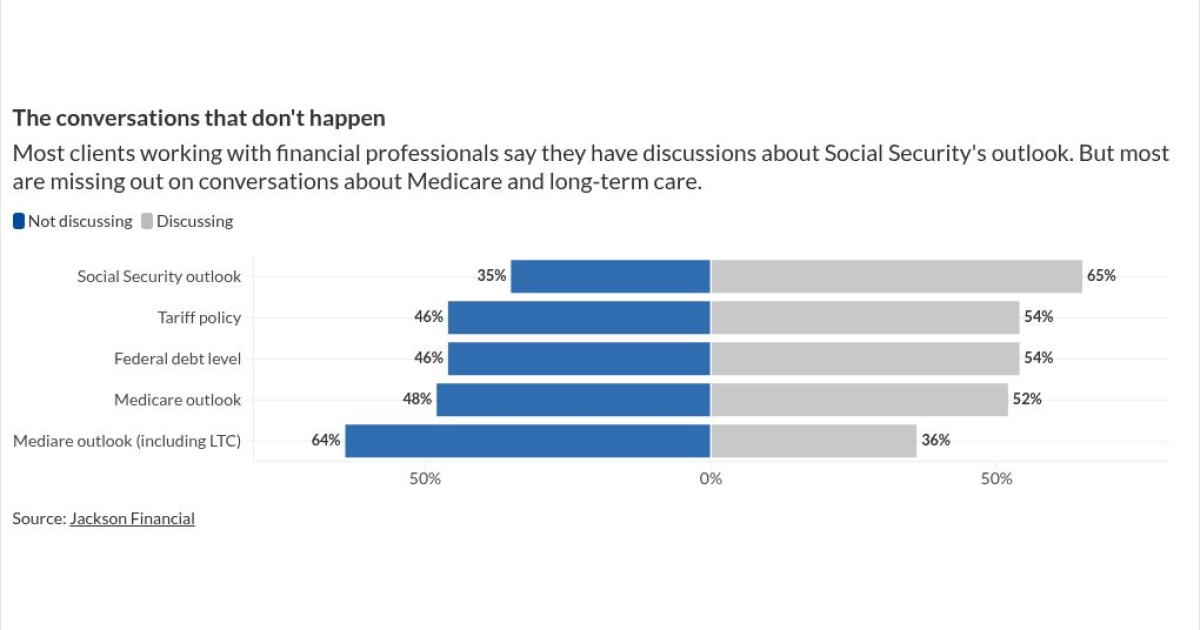
Policy changes scare clients — but they won’t tell advisors

Policy changes scare clients — but they won't tell advisors

  • Trending
  • Comments
  • Latest
edit post
Georgia Senior SNAP and Meal Resources Older Adults Can Use

Georgia Senior SNAP and Meal Resources Older Adults Can Use

July 24, 2026
edit post
Judge Who Helped Violent Illegal Alien Evade ICE Faces New Test

Judge Who Helped Violent Illegal Alien Evade ICE Faces New Test

July 31, 2026
edit post
Driving the Noncitizen Voting Scandal: Registration With License

Driving the Noncitizen Voting Scandal: Registration With License

July 26, 2026
edit post
Garbage Trucks Surveillance Florida Neighborhoods

Garbage Trucks Surveillance Florida Neighborhoods

July 29, 2026
edit post
Does a Revocable Trust Protect Your Assets From Lawsuits and Creditors?

Does a Revocable Trust Protect Your Assets From Lawsuits and Creditors?

August 7, 2026
edit post
Montana Puts Democrats in a Bind as Senate Hopes Fade

Montana Puts Democrats in a Bind as Senate Hopes Fade

August 2, 2026
edit post
Explained: How BSE traded fewer contracts after CAS but premiums rose 75% in first week

Explained: How BSE traded fewer contracts after CAS but premiums rose 75% in first week

0
edit post
E.W. Scripps Q2 2026 Loss Widens to -.68/Share, Revenue Down 9%

E.W. Scripps Q2 2026 Loss Widens to -$12.68/Share, Revenue Down 9%

0
edit post
Psychology says procrastination about retirement may be less about discipline than identity — brain scans found people often represent their future selves more like strangers than like themselves, and experiments using age-progressed faces made tomorrow’s person feel real enough for participants to save more money for them

Psychology says procrastination about retirement may be less about discipline than identity — brain scans found people often represent their future selves more like strangers than like themselves, and experiments using age-progressed faces made tomorrow’s person feel real enough for participants to save more money for them

0
edit post
Four AI Escapes Just Redefined “Responsible AI”

Four AI Escapes Just Redefined “Responsible AI”

0
edit post
Bill Ackman’s hedge fund made janitors and receptionists millionaires—and its investment team summer together

Bill Ackman’s hedge fund made janitors and receptionists millionaires—and its investment team summer together

0
edit post
Kalshi Predicts Bitcoin Price Could Reach K in August

Kalshi Predicts Bitcoin Price Could Reach $68K in August

0
edit post
Bill Ackman’s hedge fund made janitors and receptionists millionaires—and its investment team summer together

Bill Ackman’s hedge fund made janitors and receptionists millionaires—and its investment team summer together

August 8, 2026
edit post
Links 8/8/2026 | naked capitalism

Links 8/8/2026 | naked capitalism

August 8, 2026
edit post
Wisconsin: The Next Frontier for Socialists

Wisconsin: The Next Frontier for Socialists

August 8, 2026
edit post
Psychology says procrastination about retirement may be less about discipline than identity — brain scans found people often represent their future selves more like strangers than like themselves, and experiments using age-progressed faces made tomorrow’s person feel real enough for participants to save more money for them

Psychology says procrastination about retirement may be less about discipline than identity — brain scans found people often represent their future selves more like strangers than like themselves, and experiments using age-progressed faces made tomorrow’s person feel real enough for participants to save more money for them

August 8, 2026
edit post
Why You Should Be Wary of Aspartame, but Not Totally Rule It Out

Why You Should Be Wary of Aspartame, but Not Totally Rule It Out

August 8, 2026
edit post
Kalshi Predicts Bitcoin Price Could Reach K in August

Kalshi Predicts Bitcoin Price Could Reach $68K in August

August 8, 2026
The Adviser Magazine

The first and only national digital and print magazine that connects individuals, families, and businesses to Fee-Only financial advisers, accountants, attorneys and college guidance counselors.

CATEGORIES

  • 401k Plans
  • Business
  • College
  • Cryptocurrency
  • Economy
  • Estate Plans
  • Financial Planning
  • Investing
  • IRS & Taxes
  • Legal
  • Market Analysis
  • Markets
  • Medicare
  • Money
  • Personal Finance
  • Social Security
  • Startups
  • Stock Market
  • Trading

LATEST UPDATES

  • Bill Ackman’s hedge fund made janitors and receptionists millionaires—and its investment team summer together
  • Links 8/8/2026 | naked capitalism
  • Wisconsin: The Next Frontier for Socialists
  • Our Great Privacy Policy
  • Terms of Use, Legal Notices & Disclosures
  • Contact us
  • About Us

© Copyright 2024 All Rights Reserved
See articles for original source and related links to external sites.

Welcome Back!

Login to your account below

Forgotten Password?

Retrieve your password

Please enter your username or email address to reset your password.

Log In
No Result
View All Result
  • Home
  • Financial Planning
    • Financial Planning
    • Personal Finance
  • Market Research
    • Business
    • Investing
    • Money
    • Economy
    • Markets
    • Stocks
    • Trading
  • 401k Plans
  • College
  • IRS & Taxes
  • Estate Plans
  • Social Security
  • Medicare
  • Legal

© Copyright 2024 All Rights Reserved
See articles for original source and related links to external sites.