There’s a rental property out there with your name on it—the “sweet spot” property every rookie investor wants. It’s the kind of deal that can give you cash flow, appreciation, and tax benefits and become the launching pad for your entire portfolio. In this episode, we’ll show you what these properties are and where to find them!
Welcome back to the Real Estate Rookie podcast! Today, we’re breaking down why buying a small multifamily property is often the easiest and lowest-risk way for a rookie to get started. We’ll walk you through the “stack” method that could help you scale from zero to nine units in just a few years, and we’ll even compare real numbers from a duplex and a single-family home on the same street.
But that’s not all. Stick around until the end, as we reveal some of the markets where these deals are penciling out right now. If you’ve been looking for a beginner-friendly way to start building wealth with real estate, this episode is the playbook you need!
Ashley:There’s a property out there with your name on it, and it’s the sweet spot rental every rookie investor wants, the kind that can give you the cashflow, appreciation, tax benefits, and most importantly, a launching pad for building your own rental portfolio.
Tony:Single family homes, they’re hard to scale and don’t always cash flow. Multifamily apartments, they’re way outside of most rookies’ price range, but this rental property is one you can buy even if it’s your first.
Ashley:And honestly, it’s the exact type of rental property we’d be buying if we were starting from zero in 2026. It’s often affordable, it’s less risky than many other properties, and you can get in with very little money down.
Tony:If you haven’t figured it out yet, we’re talking about small multifamily. And luckily for you guys, we have the small multifamily queen on the podcast here with us today. We’re going to be talking about duplexes, triplexes, and even fourplexes. And for the rookie without a ton of money or experience, it might just be literally the easiest way to get into real estate investing. And we’re about to show you why and give you a clear roadmap for getting started.
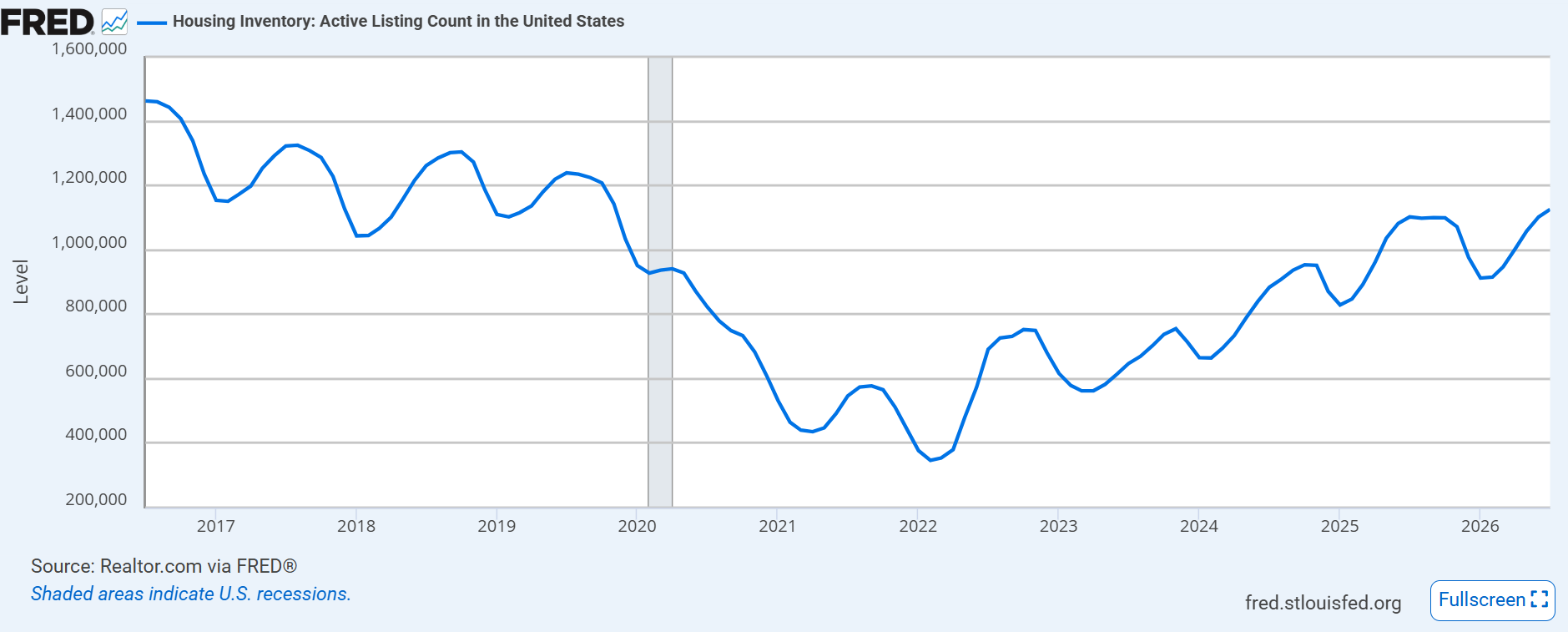
Ashley:Let’s start with some of the pros and benefits of going after small multifamily. Right now, you can get better pricing on a small multifamily such as a duplex or a triplex than you can on a single family home. And first of all, it’s because it’s a buyer’s market, but also not as many people are going after investment properties as they are single family homes. Single family homes, you’re competing with homeowners along with investors. So you have less competition. You can get into the property with low money down by actually house hacking one of these. So you have an even better advantage if you’re going to live in the property than someone who’s just going to buy it as an investment property, because you’re only going to have to put down three and a half percent if you do a VHA loan or just 5% for a conventional loan versus an investment property where you’re going to need to put down 20%.It’s also, I think, in my opinion, easier to house hack a property that has multiple units than buying a single family home and renting out room by room because you can have the entire unit to yourself and you don’t have to share space with anyone, share a kitchen, share a living room. Maybe you have to share a little entryway into the duplex, but I would prefer myself to have a separate unit. It’s also easier to scale because in one transaction, one purchase, you’re getting two to four doors. Instead of having to buy two to four separate transactions, you have to go out and find four different deals. You have to go ahead and make offers on four different deals. You have to actually get funding for four different deals. You have to close on four different deals. So it’s easier to manage because it’s all under one roof.And then also less risk in that one property. If you have one property with one unit, that has a vacancy. Now you have no rental income coming in and you have to cover all your expenses by yourself. But if you have two to four units, you have one vacancy, you still have the other units bringing in some rental income. So you’re not out of pocket all of your expenses if there’s a turnover in the property.
Tony:Now, I don’t own any small multifamily, but when we decided to move out of single family Airbnb investing, we bought our first hotel a couple of years ago. And two things ring super true for me. First is the easier to manage. We have 13 rooms in the hotel and managing those 13 rooms under one roof is so, so, so much easier than managing 13 separate single family home Airbnbs. We have a cleaner who can show up in one spot, go knock out all 13 rooms if they need to, back to back to back. We have one centralized location where we can store all of our inventory where we can do laundry, where we can have maintenance supplies and all those other items. But for my portfolio of single family homes, it’s spread out. Cleaners have to stop by this one central location to pick up supplies and do this and do that.So the management is so much easier. And the risk part that you talked about, Ash, that’s a big one for us as well. As we were thinking about scaling our portfolio, we though about, hey, do we go buy a $2 million massive Airbnb property? Or do we go buy a similarly priced or valued commercial property? And the reason that we went commercial was the fact that I’ve got 13 rooms in this hotel. It’s very rare that all 13 are going to be empty. So on any given day, at least I have some level of income coming into the property. So that was a big one for me as well. So I love both of those reasons. But Ash, I guess just give us some of your experience, right? I mean, because you started off and kind of made a lot of your early portfolio was in the small multifamily space.Why did you feel that that was a good place for you to start as a rookie investor?
Ashley:Yeah. I never thought I was going to buy any single family because I just thought one roof and you have four doors underneath it, way less overhead. It’s all on one property. It’s easier to manage, which we will talk about some cons later on and I’ve definitely discovered some. But I started off with just small multifamily. It was duplexes, triplexes, and a four unit, then a six unit. So I definitely liked the idea of doing one purchase and getting as many doors as I could in that one purchase. And also I felt like there was less risk as I was growing my portfolio, knowing that if someone didn’t pay rent, that the other unit would be able to cover it. And my first couple of years, I did go through an eviction and it was in a duplex. And luckily I still had somebody in that other unit to cover the majority of the expenses where it wasn’t as terrifying as to here I am just in my second year of investing and I already have an eviction I’m going through.So I think having that kind of safety net of multiple units under one roof really did kind of get me over a mindset hurdle too, of being able to jump into real estate investing. I also was working for a property manager that had apartment complexes. So I just saw how much cashflow was possible with just having one building with multiple units. So obviously I couldn’t go out and buy a 40 unit apartment complex day one. So I had to start smaller. But the idea, the goal was always to buy that small multifamily and maybe one day convert into large multifamily, which I think I’ve pivoted and changed on actually wanting to go after that, but I still love my small multifamily portfolio.
Tony:Ash, what do you think about the rookie who’s listening and they’re telling themselves, “I want to self-manage, but the idea of self-managing one door, let alone two or three or four, I just can’t wrap my head around. I’ve got a busy W-2 job, I’ve got a day job, I’ve got a family, I’ve got children, community commitments. I don’t know if I can do multiple units on my first deal.” What do you say to the folks who are thinking that?
Ashley:I think if you have that mindset, sit down and write out why do you think you can’t do it? Is it because you’re working a W-2 job when you won’t be available to take a phone call? Is it because you don’t think that you would like it and you aren’t friendly and you would get nasty on the phone with their tenants if they complain about something? So what are actually those blockers that think that you can’t do it? Write them out. And then what would be a solution to problem solve that? So for example, you have a W-2 job, you can’t pick up the phone and talk to a tenant during the middle of your workday. So there’s property management software out there now where all of your messaging is done through the app. And so you can message back and forth with your tenant.You can also set expectations of these are the times that I’m available. I’m available from 5:00 PM to 8:00 PM Monday through Friday. I actually just saw a reel somebody had done where they actually send out a notification on holiday weekends and say, “Just a reminder, we will not be available until this was for the 4th of July, until July 6th. If you have maintenance requests or any communication with us, it will not be answered until…” And this was somebody that just has a small portfolio. It’s not like a big company or anything, but they set out that expectation. Obviously if it’s an emergency or something like that, there was a way to reach them, but like anything else. So I think there are ways around it. It’s just setting those expectations upfront with your tenants and then putting those restrictions in place. And sometimes that’s even easier for the tenants.If I was a tenant, I would way rather submit a maintenance request online. I’d rather just message you and text you through the app than actually pick up the phone and call you. Now, I definitely have one tenant that’s older and refuses to use any of this technology. But other than that, everybody else is usually pretty gracious. So make that list. What are your pain points? Why don’t you think you’d be good at it? And if there are still blockers for you, then when you analyze deals, put in property management in place and run the numbers based on having that management
Tony:In place. Yeah. I think even for people that want to do short term, that same question kind of comes up. And I love your example, Ash, of like, hey, you can kind of set the expectations around what you want your guests to do. And while I think telling your guests like, “Hey, don’t bother me at all for 4th of July weekend’s probably harder on a short-term rental.” You can say like, “Hey, between the hours of…” Say, Ash, you’re staying at one of my places. I would say something like, “Ashley, I’m super excited to host you. And while I love giving great experiences to my guest, I still do this part-time in addition to my normal working job. So just know that if you do reach out between the hours of nine and five, I might be a little slow to respond, but just no one understand.I’m going to get back to you as quickly as I can. And hey, if there’s an actual emergency, call 911.” Or like, “Hey, here’s my cleaner who can maybe help in a really immediate situation.” So there’s always the opportunity to set the right expectations to still make sure that you can get these assets, get the cash flow, get the appreciation without it turning into a full-time job for you. I
Ashley:Think too, a lot of the times when it is an emergency situation, it’s more of an emergency for us as the property owner than the actual person, either the tenant or the guest. For example, I went to Colorado and rented a condo at a ski resort, and I did a load of laundry during the night. I woke up in the middle of the night and I went out to the washer because it was like those all-in-ones where you start a wash load and then you switch it to dryer. And I went to switch it to dryer. There was water all over the floor. The washer had leaked all over. And I tried messaging through the Airbnb app and it gave me this thing as we are only available from 7:00 AM to 5:00 PM or whatever for the host. So then I started looking for the number to call and I left a voicemail just saying, “Hey, just so you know, the property is flooding.” And they messaged me back on Airbnb at their 7:00 AM or whatever time it was.And they just said, “Okay, thank you so much for letting us know. Sometimes if you do this,” and they gave me a code to get to the water shut off and stuff or whatever. But when I though about it, it was like, okay, for me, not really emergency. For them, I thought it was. So I didn’t really care that much if they didn’t want to come in and take care of it, whatever. It’s their property they are ruining. So sometimes those things that come up, they’re actually. It’s up to you to decide if they’re emergency or not for you. And sometimes it doesn’t even really impact the tenant that much. I think of something that, or a guest that would really impact them was they can’t get into the property. We have three different backup ways that’s automated through hospitable that they can actually get access into the property where that’s not going to be something I need to be available for.So I think sometimes it’s worse for you than it actually is for the tenant or guest. All
Tony:Right. So now how do you buy these sweet spot rentals and scale your portfolio? Well, we’re going to give you a proven strategy you can follow right now after a quick word from our show sponsors. All right guys, welcome back. Now we’re going to show you exactly how you can get into that first property and scale it up. So let’s talk a little bit about the stack method. So the stack method popularized as far as I know on the BPRE, the BiggerPockets Real Estate podcast, that’s where I first heard it at least. But basically the idea here is that you start with a traditional single family home, then you buy a duplex, then you buy a fourplex, then you buy an eighplex, then you buy a 16plex, then you buy a 32plex. And basically with every subsequent transaction, you just get a little bit bigger on each deal.And it’s that kind of gradual growth that allows you to scale up your portfolio with each subsequent deal. Now in this case, we’re just going to start with a duplex. Then we buy a triplex, then we buy a fourplex. And that even by itself is nine units in three simple years. So it’s starting small, testing, getting proof of concept, going a little bit bigger, then going a little bit bigger, and going a little bit bigger and stretching our comfort zone just a bit with every subsequent
Ashley:Deal. Okay. So let’s start with an example. You’re going to buy a duplex as your first property. Let’s say it’s going to be a $300,000 home. So if it’s going to be your primary residence, that’s three and a half percent. So 10,500 down compared to 60,000 if you were going to do a 20% down payment. With this property, we’re not going to house hack it where a single family home or you have to rent out the rooms. We’re going to give you your own unit and then you’re going to rent out the other unit. You can take it to the extreme and you can still rent out the rooms in your unit to really, really maximize the potential of house hackling. So your next one is going to get rented out. You’re going to live in the property for one year because this is what most mortgages require when you buy it as your primary residence to live in the property for one year.Then after that, you are going to move out and you are going to buy a triplex. By this point, you should have more savings because you lived for very little in this property because your tenants were paying the majority of your mortgage. And you also probably have a little equity in that residence over the course of the year. So you could even tap into a home equity line of credit where you can go ahead and get that onto the property before you go and purchase another one. So now you have access to some capital. So you’re going to move out of the duplex and move into the triplex. You’re going to rent out the vacant unit and the duplex that you just moved out of. So now your duplex is fully rented. You have a mortgage on it, and then you also have a line of credit.You could use that line of credit to be your down payment on the next property, or you can just keep that there for reserves, rainy day fun, but other ways that’s like capital that you have access to now, maybe to do a rehab. With the triplex, you’re going to rent out two of the units and you’re going to live in one of them. Okay? And once again, we’re going to do the same thing. Stash away as much rental income from these properties as possible and save up to buy the quadplex fourplex. Same thing, tap into a line of credit before you actually move into the next deal so you have access to the capital. When I got started, I had bought a bunch of properties using a partner using the funds that he had. Then afterwards, he liked it so much. We did two properties together.Then he went and got a line of credit on his primary residence. Then we used that to purchase properties and then we’d go and refinance, pay his line of credit back, and we repeated that. Then I actually built up some equity in the properties I bought myself. I went out and got a line of credit, a commercial line of credit on those investment properties. And that’s how I was able to purchase and pay for rehabs. And I still use it to actually funnel money through to buy deals, to cover rehabs. And then when I refinance, I go and pay them back off and I just have it there to be able to repeat. So you can do this as you scale from a duplex, a triplex, a quadplex. So once this is year three already, you’re a quadplex, you got a four unit, a three unit and a two unit right off the bat.Now that’s nine units in a rental portfolio and you only had to buy three properties over the course of three years. Tony, as maybe a comparison to this is what did it look like for you buying short-term rentals to buy your first three short-term rentals? Because you weren’t house hacking, it wasn’t your primary residence. What did the difference look like as far as capital and how easy it was to actually acquire three compared to doing it this way?
Tony:Yeah. My situation was slightly different because I did have a decently high paying W-2 income and we were only living on a fraction of what I was making at work. So we had a decent amount of just money set aside to fund our first three deals. So the first year that we bought, it was truly just with money that I had from work.
Ashley:And how much did you put down on each of them though?
Tony:It was 10% down on each one.
Ashley:So just already there’s a big comparison of if you’re house hacking at putting only three and a half to 5% down compared to 10. Yeah.
Tony:10%. Yeah. Our first one, it was like a 60K down payment. Then the second one I think was a 40K down payment. And then the next one, I think it was even like 30K a little bit less. So yeah, we just had to fund that with our cash flow. But the story that I think about often, I was just looking up the episode number, but episode 596 with Matt Krueger. I love Matt’s story because he’s just got a super simple, super unsexy process for stacking his rentals. Now he did all single family homes, but the thought process is the same. It’s like he was living in a property, stayed there for a year, bouht the next one. Stayed there for a year, bought the next one. Stayed there for a year, bought the next one. And he did that every 12 to 18 months for seven, I think seven or 10 years.And now he’s got a really great portfolio. You could do that same thing, but now instead of just buying single family homes, you’re buying a duplex and then a threeplex, then a fourplex. And it’s like each subsequent deal helps you fund the next deal because now you’ve got cashflow coming from property number one that helps you buy property number two. And then one and two help you buy property number three. So the time between each deal can actually get shorter. So I love Matt’s story. So episode 596, if you guys want to go back and hear how he stacked a bunch of primary residences and turned that into a rental portfolio.
Ashley:And I think too, it’s like there’s multiple different ways to get started. And this is just one example. Tony’s way is another example. If you are a high income W2 earner and you’re stacking away cash, that is a very simple also game plan to use is just actually pay the down payment that most people try to avoid where you’re not going to be over-leveraged. You have more equity in the property because you’re putting more down. So there’s advantages to both, but I think no matter what your situation is, there’s multiple options to be able to get into a property. But if you need a place to live, you don’t have a lot of money, this is a really great game plan is to doing this house hacking strategy with small multifamily to get started. Or even Matt Krieger’s example of going through his timeline too.So you’ve got a clear game plan for buying three of these sweet spot properties over the course of three years. Next, we’ll break down the actual numbers and show you how to find these properties right after the break. All right, now let’s run the numbers to show you that it actually is possible in 2026. So we’re going to go through an example property. So here’s two examples. They’re both around the same purchase price located on the same street and B class neighborhood. So these are actually in West Alice, Wisconsin. Never heard of it. Never
Tony:Been. Tony, have you? I actually grew up there in West Alice, Wisconsin. If you didn’t own that, no, I’ve never heard of West Alice. You
Ashley:Don’t really have the Wisconsin accent. I heard
Tony:A lot of people
Ashley:Think I’m from Wisconsin.
Tony:You do have a little bit of Midwest twang. Yeah. Yeah. So again, these are two separate properties. One’s a duplex, one’s a single family home. So we just want to walk through these numbers so we can see, hey, what does the difference actually look like in how these properties perform? So the duplex, and editors will have you guys throw up some photos so folks who are watching on YouTube can follow along with it here. But the duplex, it’s a two-one. So two bedroom, one bath on each side. It’s a 330 purchase price. We’ll assume a 3.5% down payment if we’re house hacking. On that, we’ll have a mortgage of about 2,800. And the rental income per unit, and again, these are approximations, is about 1,575. Now, if we were to just buy this as a rental, 20% down, there’d be a $66,000 down payment, and your mortgage would be about 2,400 bucks per month, ballpark at today’s rates.So if we’re house hacking, again, three and a half percent down. Our numbers look roughly like this. About 2,000 bucks for principal and interest. Another 150, give or take for mortgage insurance, 538 for property taxes, 100 bucks for insurance. So we’ll just call it about 2,800 bucks per month. So we’ve got round numbers here. Total rents of 3,150 minus 2,800 for your expenses we’re at about 350 per month in cashflow. Now, obviously, we’re not renting out both units. So you’re not necessarily making the whole 350 because you’re going to pay that other 1,500 bucks yourself, but your living expenses are still lower. The other option at 20% down, and again, just like ballpark numbers here, we’re at about 2,400 bucks per month in total expenses. Again, we’ll just round that up there. And if you’ve got 3,150 coming in in rents, again, 2,400 bucks in expenses, we’re looking about 750 in cashflow on this deal.So that’s the duplex. It’s kind of what we’re looking at if we were to house hack the duplex.
Ashley:So next we’re going to look at a single family home. This one’s built in 1925, three bed, one bath, $300,000 purchase. And we’re going to say that we’re doing a 20% down payment at $60,000. And our mortgage payment is going to be $2,180 per month. In this area, you can expect to get about $2,100 per month for rental income on this. So this property is pretty much breaking even after your expenses. But if you do factor in like you should, your vacancy and maintenance, it’s actually negative. So just to give you an idea, we’re looking at your principal and interest, about 1,600 property tax, 475, insurance around $100 per month. So that’s $2,171 per month. And then after rents are 2,100. So 2,100 minus 2,180, we’re looking at negative $80 a month. So traditionally, this does not look like a good cashflowing property because it doesn’t even cash flow.So this is just in comparison as to how the single family home actually compares to the duplex property. So with the duplex, you actually have the opportunity to offset your living expenses on day one. So then when you actually decide to move out of the duplex in 12 months and rent your unit out, you’re going to start cash flowing right away. So that’s just a comparison of same street, same neighborhood, similar properties, but yet one single family home and one’s a duplex.
Tony:And Ash, I think you hit on a point that’s important. It’s like people talk a lot about how real estate investing is dead. No deals work, but a lot of times it’s the strategy. We have two properties on the same exact street with very different outcomes in terms of potential profitability and the quality of those investments. So guys, a lot of times it really just comes down to, can you find the right strategy in the right market and the right property? And if you can combine those elements together, well then yeah, there are deals to be had. But yeah, maybe plopping down 20% on a A-class property isn’t going to produce the best cashflow today. That’s okay. We adjust the strategy to find what actually is working. But guys, there are people every single day, every single day people are closing on deals that are producing cashflow.You just got to find the right opportunity.
Ashley:Now we actually went through and found some of these sweet spot potential markets for you guys to save you some of the legwork. But before we reveal them, make sure that you are verifying and doing your own market research on these markets because just because they work for one investor doesn’t mean that they’ll actually work for you. Depends on what strategy, what asset class, what type of property, the actual property you buy, if it’s going to be a good deal or not. But oftentimes these sweet spot markets are found in the Midwest, Southeast, kind of the sunbelt, and even in the mountain west region. So number one, Kansas City, Missouri.
Tony:Indianapolis, Indiana.
Ashley:Then we have Cincinnati, Ohio.
Tony:Oklahoma City, Oklahoma, which I actually took a trip to. I think it was last summer.
Ashley:And then Louisville, Kentucky.
Tony:Columbus, Ohio.
Ashley:Pittsburgh, Pennsylvania, where I’m actually going tomorrow.
Tony:We’ve got a Chicago, Illinois.
Ashley:Greenville, South Carolina.
Tony:And Milwaukee, Wisconsin.
Ashley:So those are just some of the markets that we put together. Of course, there are many, many more. If you are watching this on YouTube though, let us know in the comments if you are actually investing in any of these markets. And maybe if you have the time, give us a little deal breakdown. What do your deals actually look like that you have bought in these markets? So let’s kind of recap here. When analyzing markets, try to look for small multifamily duplexes, triplexes, and quadplexes. The next thing you should be looking for when doing market research is strong job growth and also population growth. You want to make sure that people aren’t leaving the area and there goes all your potential renters, that there’s actually strong jobs available and make sure there’s multiple industries. I was actually listening to a BiggerPockets Money episode the other day, and Mindy was talking about a market that she had lived in where there was one big factory or industry in the town and it shut down and literally everybody left.And the town just kind of depleted to nothing. And so make sure there’s several industries actually supporting that town and that city and not just one industry.
Tony:And guys, you can go through the catalog. We talked about so many different episodes of what makes a market a good market? BPRE, the BiggerPockets Real Estate podcast on the market. It’s a lot of topical market related things. But the piece of advice that I always share with rookie investors is that I think oftentimes they over complicate market selection. The truth is that there are 20,000 plus cities in the United States. So the chances of there being only one right market for you to invest into, that’s not the case. There were hundreds, if not thousands of places that you can go across the United States and still be a successful investor. So the goal isn’t to find the one specific market. The goal is to simply find, again, three to five markets that align with your specific goals of investing and then focusing on those markets.And if you can do that, we can take away some of that analysis paralysis that folks tend to feel when it comes to choosing the right market.
Ashley:So when you’re looking at your new market, just a couple other things to kind of look at is just make sure it’s within your budget and also that the prices are actually affordable to what the rents are. So the rent to price ratios as to you’re not paying 500,000, but you can only rent it for $500 per month. Then also look at kind of the supply and the demand in the area for not only rentals, but also what is new development? Are you going to be competing with new builds that are coming into the area that are going to saturate the supply in the area? There’s so many other things you can look at. You can go to biggerpockets.com/resources. And we actually have a page of checklists, templates, downloadables that you can download. And there’s several on there that can help you guide you through selecting a market and different things that you should look at.So when selecting a market, you have two options. You can try your own market. That’s how I started. I didn’t know any better. I just though you had to invest because you needed to be near the property to go look at the property to manage the property. Or you can invest, they call it out of state, but out of your area so means, and both work. I would start if you’re going to start not up where you live, start picking markets to look at to analyze where you already have an advantage or a leg up. Maybe you have a boots on the ground, you have somebody there, maybe you lived there in the past, maybe your family is from there. So use those as a starting point where you already have an advantage or maybe you have a great agent already that knows that area.But either way, get started because there are deals out there in 2026. Thank you guys so much for joining us. I’m Ashley, he’s Tony, and we’ll see you guys on the next episode.
Help us reach new listeners on iTunes by leaving us a rating and review! It takes just 30 seconds and instructions can be found here. Thanks! We really appreciate it!
Interested in learning more about today’s sponsors or becoming a BiggerPockets partner yourself? Email [email protected].