Ever since the economic reform and opening of Chinese Mainland markets in the 1980s, Chinese Mainland enterprises have long desired to raise funds via equity and bond issuance to foreign investors. Even amidst the peak of onshore domestic growth, Chinese Mainland firms have been actively engaged in offshore listings to access foreign capital pools backed by hard (fully-convertible) currencies, such as the US dollar.
This post builds on my earlier analysis of Hong Kong SAR market’s IPO resurgence. In this piece, I examine the broader forces behind the phenomenon, including how shifting regulations, US–China tensions, and Hong Kong Exchanges and Clearing Limited (HKEX) reforms are reshaping global capital flows and channeling Chinese Mainland listings back to Hong Kong SAR.
Up until 2025, more than 300 Mainland Chinese companies had listed overseas and raised hundreds of billions of US dollars in total. In 2020, during the COVID-19 pandemic, which marked the last peak of IPOs, companies listed on the HKEX raised around $50 billion from IPO proceeds, driven primarily by secondary listings in the Hong Kong market from already US-listed Chinese Mainland tech giants like JD and NetEase.
From Wall Street to Central: How China’s Capital Flows Are Rebalancing
For decades, global IPO activity has been dominated by the NYSE and NASDAQ, exchanges that together account for over $50 trillion in market capitalization. Ranked #1 and #2, these US exchanges surpass the total market cap of the rest of the top 10 stock exchanges in the world. Indeed, for decades, the NYSE and Nasdaq have dominated the global IPO market. The United States possesses a combination of structural, economic, and institutional advantages that attract global companies, including those from the Chinese Mainland, which have consistently demonstrated a strong appetite for US listings.
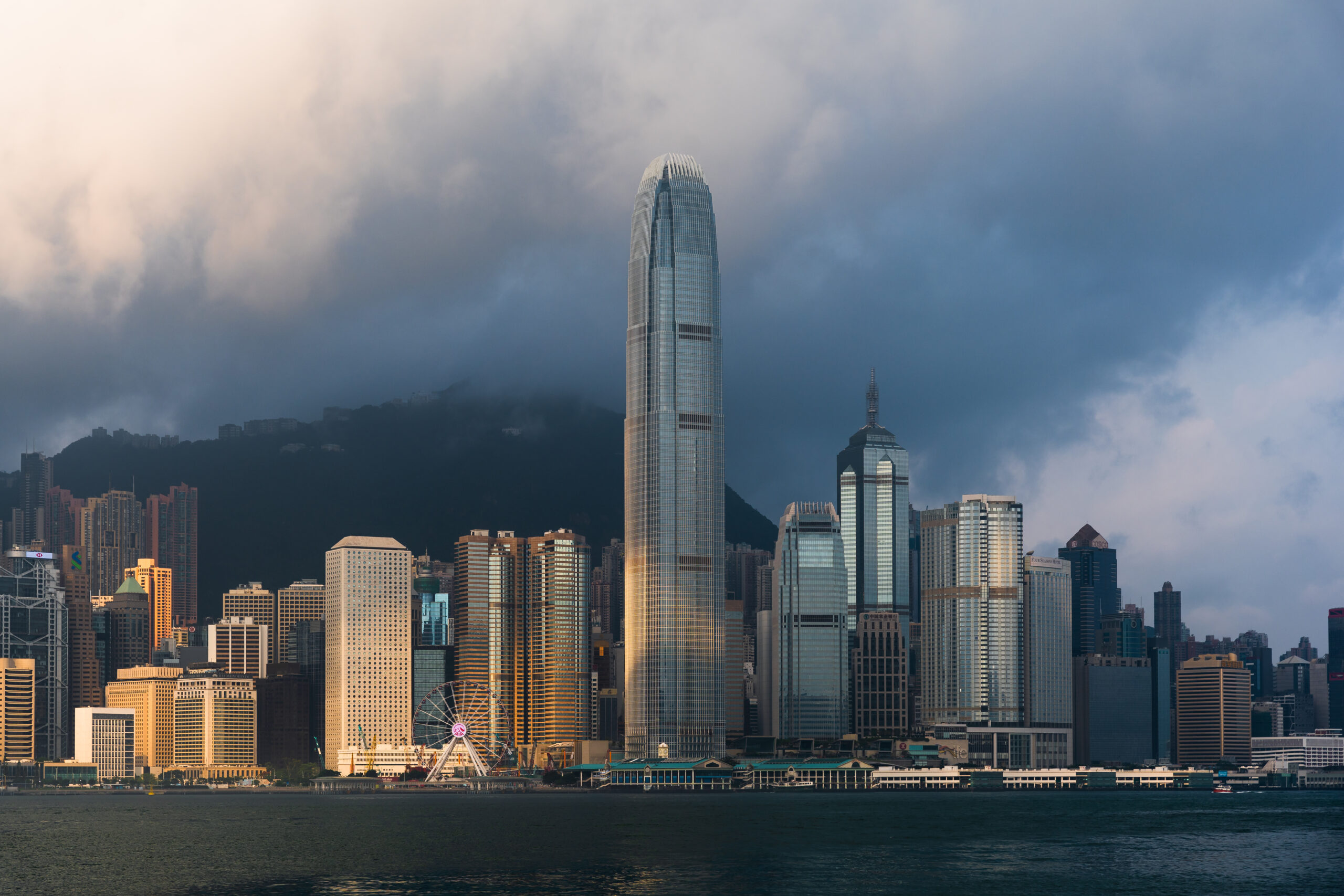
The HKEX, despite being outranked by the US market in both issuance volume and proceeds, remains among the major stock exchanges globally, frequently ranking among the top three exchanges worldwide in terms of IPO proceeds, and is undoubtedly the regional gateway for the Greater China market.
Chinese Mainland companies seeking offshore capital have typically faced a binary choice: The United States (NYSE/Nasdaq) or Hong Kong SAR (HKEX). The US market was often preferred, especially for tech and growth companies, due to its global visibility, valuation premiums, and deep liquidity.
Chinese Mainland firms rarely consider major stock exchanges in other markets, such as the United Kingdom, Continental Europe, India, or Japan, because of a mix of factors, including a lack of investor familiarity, valuation disadvantages, cultural barriers, and political factors.
Source: SEC, HKEX, LSEG. Notes: 1. The US consists of both the NYSE and the Nasdaq; 2. Proceeds include only IPO issuances, excluding transfer and introduction.
For global investors, this rebalancing means new access points to Chinese Mainland growth — but through a market more tightly linked to domestic policy and liquidity cycles.
Regulation, Risk, and Realignment
Chinese Mainland’s path to overseas capital has fundamentally changed over the past decade, shaped by deepening US–China tensions and new layers of regulation. Chinese Mainland companies are now facing more stringent requirements to access US capital markets. Consequently, the number of new listings from Chinese Mainland companies on US exchanges has almost halved from 19 in 1H23 to 11 in 1H25.
The passage of the Holding Foreign Companies Accountable Act (HFCAA)[1] in the United States in 2020 was a landmark, which forces mandatory delisting from the US market if a foreign company fails to comply with the PCAOB’s inspection of its audit papers.
Chinese Mainland national security laws prohibit the sharing of certain financial and operational information with foreign entities, however. For instance, Chinese Mainland Data Security Law[2] imposes strict controls on cross-border data transfers, which directly collide with US requirements.
The combined impact of regulatory barriers, delisting waves, and geopolitical uncertainty has led to a structural realignment in global capital markets. In addition, the increasing popularity of private market capital raising in the United States further diminished the appeal for public listings.
Global PE funds raised $424.6 billion in 1H2025, already more than the total in 2024. To date, only a minor portion of delistings of Chinese Mainland firms have been driven by PE acquisition compared to the forced delistings. However, greater flexibility, confidentiality, fewer disclosure requirements, and strategic control render the private market an emerging attractive alternative.
This shift is not temporary. It’s a structural recalibration of how companies list, how investors evaluate, and where capital flows. As US–China decoupling deepens, HKEX is positioning itself as the new gateway for Chinese Mainland’s global ambitions.
Investors must adapt as the investable universe of Chinese Mainland equities shifts from ADRs to Hong Kong SAR listings, reshaping liquidity, governance, and valuation dynamics.
Table: Notable delistings of Chinese Corps in the US exchanges.

Source: SEC, NYSE, Nasdaq.
The Gateway Reinvented: HKEX’s Structural Advantage
HKEX’s recent reforms build on a long-held advantage: proximity and policy alignment that make it the natural destination for Chinese Mainland listings.
The Stock Connect was developed and launched by HKEX, Chinese exchanges, and ChinaClear in 2014 to build a mutual market access system between Chinese Mainland and Hong Kong SAR, allowing Chinese Mainland investors to trade Hong Kong SAR stocks via local brokers, largely boosting liquidity and valuation potential and maintaining domestic coverage for Hong Kong SAR-listed Chinese Mainland firms.
These changes make HKEX not only the listing venue of choice for issuers, but an increasingly important conduit for investors seeking diversified exposure to Chinese Mainland’s innovation economy.
For a long time, Chinese Mainland firms preferred U.S. exchanges for dual-class share structures that allow them to retain control while raising capital; in 2018, HKEX introduced weighted voting rights for innovative companies, offering equivalent flexibility and eliminating regulatory arbitrage.
In addition, HKEX’s sectoral focus on biotech, tech, and green energy firms strategically aligns with the Chinese Mainland government’s initiatives, leaving aside the cultural and geographic proximity to the Chinese Mainland Together, these factors, combined with the recent structural reforms, have transformed HKEX into a venue that is now the de facto choice for Chinese Mainland firms seeking international expansion.

The New Face of Chinese IPOs: Lessons from CATL
The surge in IPOs on the HKEX in this year’s first half is the culmination of the regulatory landscape, structural reform, and geopolitical sentiments — a new chapter in how Chinese Mainland firms access international capital and expand.
The most prominent listing in this emerging HK IPO landscape is CATL. On May 20, Contemporary Amperex Technology Co. Ltd. (CATL), the Chinese Mainland battery giant, completed the largest IPO globally of the year, raising $5.2 billion on HKEX. The IPO was oversubscribed, and CATL exercised the overallotment option due to strong demand. Almost all the proceeds were used for their European expansion, including an EUR8.2 billion battery plant in Hungary.
CATL’s A+H listing strategy paid off. Its shares priced at a premium on the HKEX — a signal of strong international investor confidence. This IPO is a clear display of the dynamics of the new chapter of HKEX IPOs, with a Chinese Mainland tech giant successfully raising a large amount through an A+H listing, utilizing the structural reform and sectoral focus advantages of HKEX to fuel its international expansion.
Including CATL, HKEX held four of the world’s 10 largest IPOs in this year’s first half. The $14 billion of proceeds marked a 723% YoY growth, outperforming all other global exchanges. Moreover, HKEX has 207 active listing applicants in the pipeline for 2H 2025, suggesting strong momentum and market optimism. In 1H 2025, HKEX reported revenue and other income of HKD14.08 billion, a 33% YoY growth, and a net profit of HKD8.52 billion, a 39% YoY growth. As an essential market liquidity measurement, average daily turnover reached HKD240.2 billion, surging 118% YoY.
Beyond the Boom: Concentration Risk and What Comes Next
Yet behind the record-breaking IPO surge lies a more complicated reality, one that exposes Hong Kong SAR’s growing dependence on the Chinese Mainland. The total market cap of HKEX currently consists of around 80% from Chinese Mainland companies. This level of concentration brings significant exposure to the Chinese Mainland’s economic cycles, regulatory shifts, and policy regimes. Furthermore, there is the increasing integration of Chinese Mainland governance into Hong Kong SAR’s institutional framework.
Moreover, many IPOs were priced aggressively, making them vulnerable to their post-IPO performance. The Hang Seng index rose more than 20% YTD, but many regard this growth as being driven by short-term liquidity inflows rather than sustainable economic fundamentals. The momentum largely depends on continued regulatory support, investor confidence, and stable macroeconomic conditions.
For portfolio managers, the takeaway is clear: Hong Kong SAR’s resurgence expands opportunity, but heightens correlation risk. Differentiating cyclical recovery from structural realignment will be key.
References
Bloomberg New Economy: Top China Economist Says Beijing Just Wants Respect – Bloomberg
The Future of Investing: 2024/25 Edition—Overview | Franklin Templeton Institutional
PCAOB Secures Complete Access to Inspect, Investigate Chinese Firms for First Time in History | PCAOB
Chinese Companies Listed on Major U.S. Stock Exchanges
China battery giant CATL is expanding globally: Here’s why it matters
Hong Kong’s ECM Landscape in H1 2025
Hong Kong’s IPO Boom Roars Back: Inside the $14 Billion First-Half Surge and What’s Driving It
Private equity fundraising rises in H1 2025, more capital hinges on IPO exits | S&P Global
HKEX Revenue and Profit Surge Over 30% in H1, Stock Soars 50% Year-to-Date – Yuan Trends
[1] Holding Foreign Companies Accountable Act: The HFCAA was enacted on Dec 18, 2020, as Public Law 116-222, amending the Sarbanes-Oxley Act of 2002, SEC.gov | Holding Foreign Companies Accountable Act.
[2] Data Security Law of PRC: Enacted on June 10, 2021, mandates a classified and categorized data protection system on “important” and “core” data, and triggers legal liability for any threat to “national security,” Data Security Law of the People’s Republic of China.